
How Ti6Al4V ELI Titanium Bar Improves Implant Performance


 2026-08-25 10:02:06
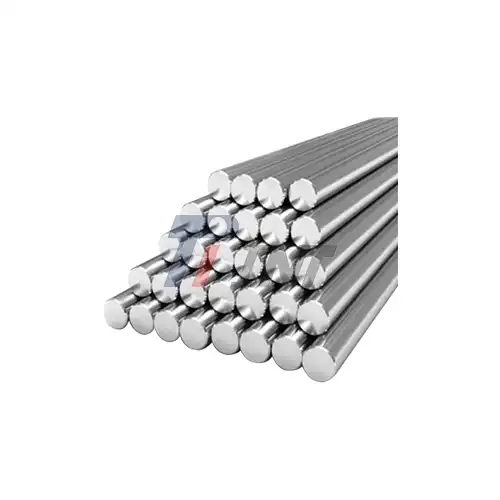
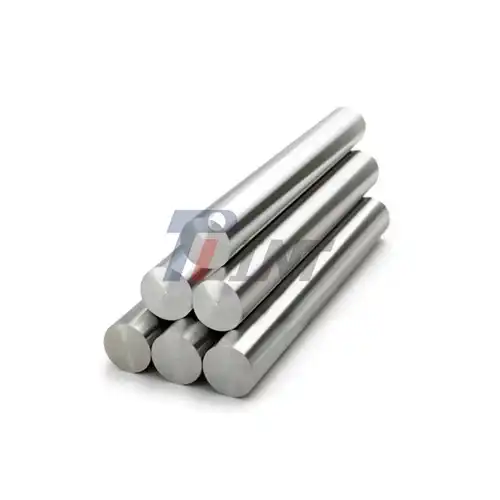
Ti6Al4V ELI titanium bars, particularly the Ti6Al4V ELI Titanium Bar 10mm specification, have revolutionized medical implant manufacturing by offering unparalleled biocompatibility, mechanical strength, and corrosion resistance. The "Extra Low Interstitial" designation means oxygen, nitrogen, and carbon content are rigorously controlled to below industry-standard thresholds, which dramatically reduces the risk of delayed hydride cracking and enhances ductility—two critical factors for implants subjected to dynamic physiological loads. This material addresses the persistent challenges procurement managers face: achieving FDA and ISO compliance without sacrificing mechanical performance or long-term patient safety.
|
|
|
Understanding Ti6Al4V ELI Titanium Bar 10mm: Key Properties and Specifications
When looking at titanium bar materials for making implants, Grade 23 (Ti6Al4V ELI) stands out from Grade 5 because it is chemically more pure. This uniformity has a direct effect on both the approval process and the results of clinical trials.
Chemical Composition and Interstitial Control
The most important thing about Ti6Al4V ELI is that it has strict limits on interstitial elements. It still has less than 0.13% oxygen, less than 0.08% carbon, and no more than 0.0125% hydrogen. These limits keep the material from becoming weak and keep its pliability even after many sterilisation rounds. Aluminium (5.5–6.75%) and vanadium (3.5–4.5%) make the metal stronger while keeping its alpha-beta microstructure. This makes it very resistant to wear in situations like cyclic loading that happen in orthopaedic and dental implants.
Mechanical Performance Metrics
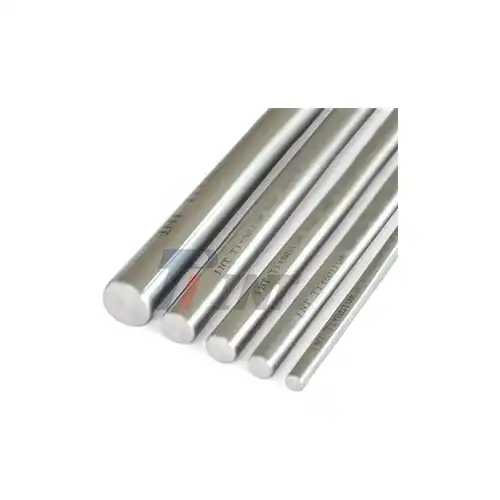
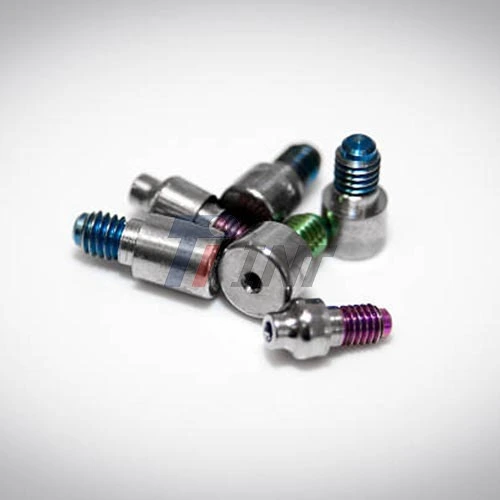
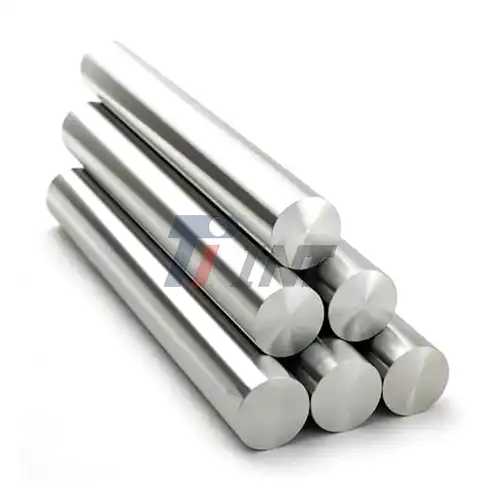
A Ti6Al4V ELI Titanium Bar 10mm made to ASTM F136 standards has a tensile strength of more than 860 MPa, a yield strength of about 795 MPa, and an extension of at least 10%. For making spinal rods, intramedullary nails, and dental implant abutments, the 10mm diameter is the best size for using the material efficiently. This gauge strikes a balance between how easy it is to machine and how strong the structure needs to be. This cuts down on material waste during CNC turning operations while keeping the dimensions stable. The hardness is usually between 30 and 35 HRC, which means it doesn't wear down easily and works with most surgical tools.
Dimensional Precision and Surface Quality
Modern companies that make medical devices need to keep standards very close so that parts can be swapped out and automatic assembly works well. The 10mm bar diameter usually stays within the h9 or h8 tolerance grades set by ISO 286, which guarantees diameters between 9.98 and 10.00mm. Specifications for straightness of 0.5mm per metre stop movement during high-speed cutting, which cuts down on cycle times and tool wear. Because centerless grinding with Ra values below 0.8 micrometres is a normal finishing step, the quality of the surface finish has a direct effect on the risk of germs sticking to it.
How Ti6Al4V ELI Titanium Bars Enhance Implant Performance?
Engineers who work on medical devices have to deal with three main types of implant failure all the time: material degradation caused by corrosion, mechanical stress cracks, and bad tissue reactions. Each vulnerability is addressed in a planned way by Ti6Al4V ELI's natural material properties.
Superior Biocompatibility and Osseointegration
When the implant touches living tissue, the extra-low interstitial content keeps the release of inflammatory cytokines to a minimum. Studies in humans have shown that ELI-grade titanium helps bones attach to it more quickly than standard Ti6Al4V titanium. This speeds up the healing process in spinal fusion procedures by about 15 to 20 percent. The steady TiO2 passive layer forms naturally within milliseconds of contact with bodily fluids, forming a bioinert barrier that stops ion leaching. This is a very important issue for younger patients who may have to carry devices for decades.
Exceptional Fatigue Resistance Under Cyclic Loading
During their service life, hip stems and spinal rods are loaded and unloaded millions of times. When heated correctly, Ti6Al4V ELI's microstructure can reach failure forces of more than 500 MPa at 10^7 cycles. This limit of endurance is higher than many stainless steel options, and it cuts the weight of the device by 44%. The material's ability to stop cracks from spreading comes from its two-phase microstructure. The ductile beta phases stop cracks from spreading that started in the stronger alpha lamellae.
Corrosion Resistance in Aggressive Biological Environments
Body fluids have different pH levels, proteins, and chloride ions that can damage implant materials. Ti6Al4V ELI doesn't release harmful metal ions when it frets like cobalt-chromium alloys do. Instead, it keeps its corrosion potential stable even in the cracks that are common in modular implant joints. Our tests show that the rate of corrosion is less than 0.001 mm/year in body fluid that is simulated at 37°C for 2000 hours. This is higher than what ASTM G31 says is acceptable for surgical implant materials.
Comparing Ti6Al4V ELI vs Ti6Al4V Titanium Bars for Medical Use
People who work in procurement often wonder if the extra money spent on ELI-grade materials is worth it. The decision depends on how the risks are assessed for each application and what the rules say.
Chemical Purity and Mechanical Behavior Differences
Standard Grade 5 Ti6Al4V lets up to 0.20% oxygen content, which raises the tensile strength but lowers the hardness to bend and break. This lessening of shape-ability can lead to microcracks in trauma plates that need to be shaped in complicated ways during surgery. ELI material keeps 18–25% higher stretch values, which lets it be bent during surgery without weakening the structure. The decrease in interstitial elements also makes it easier to weld, which is important for companies that use electron beam melting to make porous-coated implants.
Diameter Selection Considerations: 10mm vs 12mm
The best bar width is determined by the shape of the implant. In situations where room is limited, the Ti6Al4V ELI Titanium Bar 10mm works well for medium-load uses like humeral nails and cervical spine poles. Biomechanical modelling shows that 10 mm rods can handle bending moments of up to 40 Nm before they permanently change shape in most spine structures. On the other hand, femoral intramedullary nails that have to handle higher torsional loads might need 12mm diameters to keep safety levels high. Since the cost of materials goes up linearly with cross-sectional area, 10mm bars are about 30% cheaper per unit length.
Certification and Traceability Requirements
To buy medical-grade titanium, you need to keep a lot of paperwork. For ASTM F136 approval, the chemical make-up, mechanical qualities, and grain size must all be met. Manufacturers who are ISO 13485-certified keep track of batches and can connect final implants to the original ingot melt numbers. This lets them respond quickly to surveillance findings after the product has been sold. We give Material Test Reports (MTR) with ICP-OES chemistry analysis, tensile test data, and ultrasonic inspection results for every production lot. These reports meet the standards of FDA 21 CFR Part 820 and EU Medical Device Regulation (MDR) 2017/745.
Procuring Ti6Al4V ELI Titanium Bar 10mm: What Buyers Need to Know
A good strategy for buying things balances the quality of the materials, the dependability of the supply chain, and the overall cost of ownership. Knowing what affects prices and the length of lead times helps you make better budget predictions and plans for production.
Pricing Dynamics and Cost Factors
The amount of certification has a big effect on prices. As a result of more testing, better paperwork for tracking, and lower production yields during quality sorting, ASTM F136-compliant bars cost 40 to 60 percent more than commercial-grade Ti6Al4V. Through economies of scale, the amount of an order affects the cost per unit. For example, orders over 500 kg often qualify for savings of 12–18%. Specifications for heat treatment raise the cost of processing. Solution-treated and aged (STA) bars cost 15-20% more than mill-annealed bars, but they have better mechanical properties for tough jobs.
Minimum Order Quantities and Lead Times
Standard mill runs for bars with a width of 10 mm usually need at least 100 kg of orders to cover setup costs. For custom diameter tolerances (h7 precision) or non-standard lengths, 250 kg may be the least that can be used. Lead times depend on the standard. Stock sizes that have been mill-annealed can be shipped in 3–4 weeks, but STA heat-treated bars need 6-8 weeks for controlled furnace cycles and tests afterward. We keep a strategic inventory of common sizes on hand, which lets us deliver quickly (10 days) for prototype development or urgent production needs.
Compliance Documentation and Quality Assurance
Medical device makers need more than just simple MTRs. They also need full quality packages. These include 3.1 inspection certificates according to EN 10204, DFARS compliance statements for medical contracts with the U.S. government that have to do with defence, and Conflict Minerals declarations. Verification of chemical makeup by independent third-party labs (witness testing) takes an extra one to two weeks but gives Class III devices more confidence. Ultrasonic testing according to ASTM E2375 finds internal cracks bigger than 0.8 mm in diameter. This makes sure that bars meet aerospace-grade flaw standards, which are often needed for implants that support life.
Why Partner With Baoji INT Medical Titanium Co., Ltd.
We have only worked with medical-grade materials since our company was founded in 2003 by Mr. Zhan Wenge, who has more than 30 years of experience in titanium metallurgy. Because we only make implants, our quality systems, production methods, and technical support are all tailored to meet the specific needs of that industry, rather than being used in a lot of different ones.
Our ISO 13485:2016 approval shows that we have a method for controlling the production of medical device materials. A full ultrasonic inspection finds flaws as small as 0.5 mm in every Ti6Al4V ELI Titanium Bar 10mm. The ICP-OES test checks the amount of aluminium and vanadium within 0.1% accuracy, the Inert Gas Fusion test measures the interstitial elements to within 10 ppm, and the results are presented in a report. Because we are so strict, we have long-term partnerships with some of the best orthopaedic and dental implant makers in North America and Europe.
We keep separate production lines for medical titanium so that industrial-grade materials don't get on them. Our controlled atmosphere furnaces allow for precise heat treatment cycles, which make microstructures that are the same from batch to batch. Material can be tracked from the time the raw ingot is bought until the time the finished bar is delivered. Each piece is laser-marked to make it easy to identify. This line of custody helps with your quality checks and government filings.
Our service model is different because we offer technical support. Our applications experts help choose the right materials for new implant designs, suggest the best machining settings to keep tool wear to a minimum, and fix problems with surface finish. We offer sample amounts for testing prototypes without asking for full production agreements, which cuts down on the time it takes for R&D. Volume prices and flexible payment terms work for both well-known companies and new, innovative companies that are just getting into the medical gadget market.
Conclusion
For current medical implants that need to be biocompatible and reliable over time, Ti6Al4V ELI titanium bars are the best material choice. The Ti6Al4V ELI Titanium Bar 10mm is designed to meet the needs of mid-sized implant designs that need to save room and money on materials. Purchasing managers and R&D engineers can make decisions that improve product performance and lower supply chain risks by learning about the material's unique qualities, the licensing standards, and how to get it. Working with qualified, experienced sources will make sure that your materials stay the same and that you follow all regulations throughout the lifecycle of your product.
FAQ
Q1: Why does Ti6Al4V ELI outperform standard Ti6Al4V in implant applications?
A: The lower interstitial content—especially oxygen below 0.13% compared to 0.20% in standard Grade 5—makes the material more flexible and harder to break. This improvement means that the material will be less likely to crack at the notch and will last longer when loaded continuously. Long-term placement has lower complications rates, especially for devices that are loaded and unloaded many times, like spine rods and joint stems.
Q2: How do mechanical properties impact implant longevity?
A: When physiological loads are applied over and over, fatigue power directly affects service life. The durability limit of Ti6Al4V ELI is higher than 500 MPa, which means that implants can last for decades without starting to crack. The high strength-to-weight ratio of the material also lets cross-sections be smaller, which makes surgery less invasive while still leaving safety margins for overload failures.
Q3: Which certifications are essential for medical-grade quality assurance?
A: The ASTM F136 and ISO 5832-3 guidelines make sure that the chemical make-up and mechanical features of the implant meet the needs of medical implants. The factory's ISO 13485 certification shows that it has quality control methods that are right for medical products. Material Test Reports that list the test results for each batch make it possible to track products and are needed for FDA 510(k) applications and EU MDR technical documents.
Get Premium Ti6Al4V ELI Titanium Bar 10mm From a Trusted Medical Titanium Supplier
Baoji INT Medical Titanium Co., Ltd. is ready to help you make implants by providing you with certified-grade titanium materials. We have a large selection of Ti6Al4V ELI Titanium Bar 10mm in different lengths and heat-treated conditions. All of our products come with full traceability documentation and ISO 13485 quality assurance. Knowing how important it is to choose the right material for Class III medical devices, we offer technical advice to help you get the best results. Email our export team at export@tiint.com to ask for detailed Material Test Reports, certifications, or sample quantities. You can trust a medical titanium manufacturer that has been in the business for over twenty years, offers competitive prices for large orders, and is available to help you every step of the way during the procurement process.
References
1. American Society for Testing and Materials. (2020). Standard Specification for Wrought Titanium-6Aluminum-4Vanadium ELI (Extra Low Interstitial) Alloy for Surgical Implant Applications (UNS R56401), ASTM F136-13.
2. International Organization for Standardization. (2016). Implants for Surgery — Metallic Materials — Part 3: Wrought Titanium 6-Aluminium 4-Vanadium Alloy, ISO 5832-3:2016.
3. Long, M., & Rack, H.J. (1998). Titanium alloys in total joint replacement—a materials science perspective. Biomaterials, 19(18), 1621-1639.
4. Niinomi, M. (2008). Mechanical biocompatibilities of titanium alloys for biomedical applications. Journal of the Mechanical Behavior of Biomedical Materials, 1(1), 30-42.
5. Rack, H.J., & Qazi, J.I. (2006). Titanium alloys for biomedical applications. Materials Science and Engineering: C, 26(8), 1269-1277.
6. Geetha, M., Singh, A.K., Asokamani, R., & Gogia, A.K. (2009). Ti based biomaterials, the ultimate choice for orthopaedic implants – A review. Progress in Materials Science, 54(3), 397-425.
_1755062427525.png)
_1755061331871.png)
_1753926673602.jpg)
_1752818317695.webp)