Titanium Square Disc Applications in Precision Machining


 2026-08-25 10:02:03
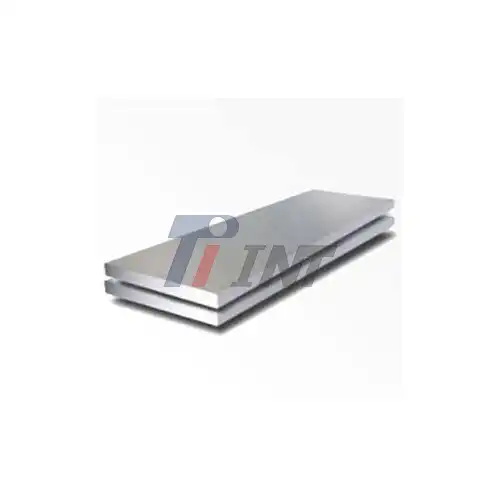
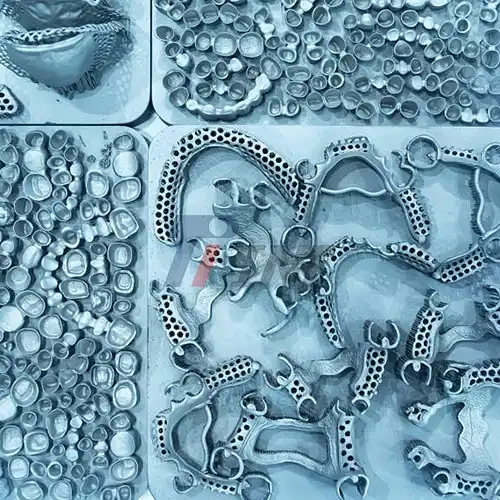
When engineers and procurement managers evaluate materials for precision machining, the Gr5 Titanium Square Disc consistently emerges as a transformative solution. Comprised of Ti-6Al-4V alloy, this material delivers exceptional mechanical strength, biocompatibility, and corrosion resistance—attributes essential for medical device manufacturing, aerospace components, and high-performance industrial applications. The square disc format provides geometric advantages for CNC machining, minimizing material waste while enabling intricate geometries required for surgical instruments, orthopedic implants, and dental prosthetics.
|
|
|
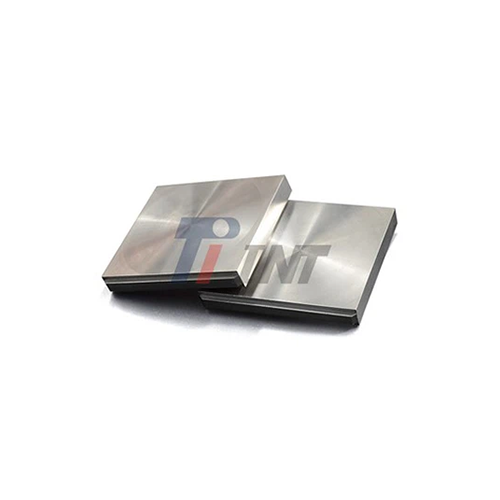
Understanding GR5 Titanium Square Discs and Their Mechanical Properties
What Makes Ti-6Al-4V the Gold Standard?
Over half of all the titanium used in the world is Ti-6Al-4V, which is also known as Grade 5 titanium. This alpha-beta alloy has 6% aluminium, 4% vanadium, and small amounts of iron and oxygen. It was designed to fix the problems with pure titanium without being too heavy like steel alternatives. The finished product has a tensile strength between 895 and 930 MPa, which is higher than Grade 2 pure titanium's 345 MPa. It is also very flexible and hard to break.
Heat Treatment Impact on Performance
Gr5 Titanium Square Discs' mechanical properties change a lot when they are heated. Annealed material is strong and easy to work with at the same time, making it good for making complicated surgery tool shapes. Solution-treated and aged versions have tensile strengths of more than 1100 MPa, which makes them perfect for orthopaedic implants that hold weight, like hip stems and spinal fixation devices. From what we've seen at Baoji INT Medical Titanium, the right thermal processing gets rid of any residual stresses from forging. This keeps the dimensions from becoming unstable during precision milling operations.
Fatigue Resistance in Cyclic Loading Environments
During their working life, medical implants go through millions of stress cycles. Grade 5 titanium has about half of its ultimate tensile strength as wear strength. This makes it much better than stainless steel for long-term implant uses. The material's ability to stop cracks from spreading is very important when making parts like surgical drill bits that are used to prepare bones and are subjected to repeated torsional loads.
Comparing GR5 Titanium Square Discs with Alternative Materials
GR5 Versus GR2 Pure Titanium
Grade 2 titanium is very good at resisting corrosion and being able to be shaped, but it is not very strong, so it can't be used in medical devices that hold a lot of weight. The Gr5 Titanium Square Disc has almost three times the tensile strength of Grade 2, which lets wall sections be thinner and implant designs be lighter without affecting the structure's strength. Purchasing teams often have to choose between these grades: Grade 2 is good for electrochemical uses and non-structural parts, while Grade 5 is best for situations that need high mechanical performance while also being biocompatible.
Stainless Steel Comparison: Weight and Corrosion Factors
Due to established supply lines and lower material prices, stainless steel 316L is still widely used in the production of medical devices. Titanium metal, on the other hand, is 45% lighter than stainless steel while still being as strong. This weight benefit directly improves patient comfort for orthotic devices that are worn, and it also makes surgeons less tired during long procedures with handheld tools. Because Grade 5 titanium doesn't rust, you don't have to worry about the chloride-induced pitting that can happen in stainless steel devices after being sterilised many times.
Aluminum Alloys: Strength-to-Weight Analysis
Aluminium alloys made for aerospace use, like 7075-T6, are very easy to machine and are cheaper. But aluminum's 70 GPa elastic stiffness makes it hard to hide stress in orthopaedic implants, where bone loss can happen around implants that are too stiff. Titanium's 110 GPa stiffness is more like cortical bone's (10–30 GPa), which helps it fuse with the bone better. Biocompatibility is still a problem—aluminum can't be used for lasting implants because it might be harmful to nerves.
Precision Machining Applications of GR5 Titanium Square Discs
Gr5 Titanium Square Discs are very useful in many high-stakes businesses where failure of the material can have very bad results.
Medical Device Manufacturing
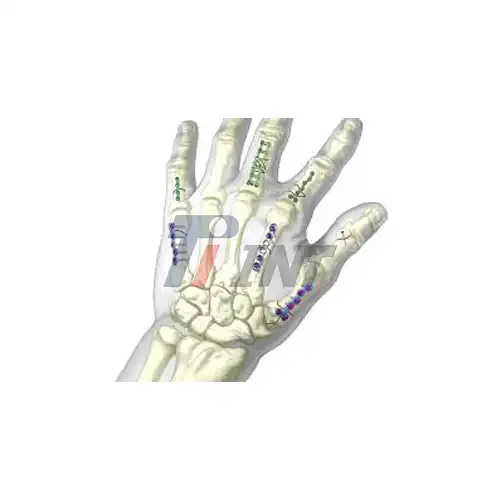
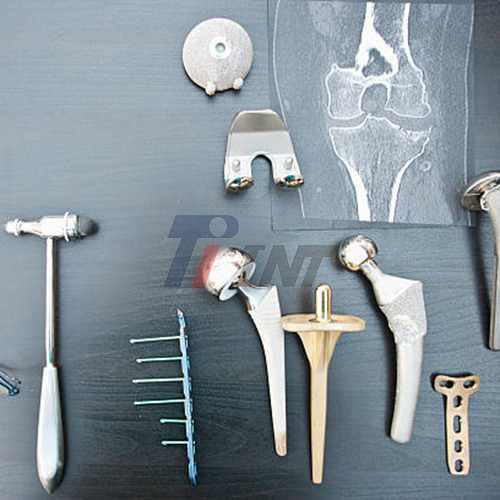
Grade 5 titanium is used by companies that make surgical instruments for parts that need to be resistant to sterilisation and work with magnetic resonance imaging. Dental implant abutments made from square disc stock are strong and don't corrode in the mouth, which makes them good for osseointegration. The alloy's wear resistance is used in orthopaedic trauma plates and intramedullary nails. The square disc shape makes five-axis CNC cutting a quick and easy way to make the parts. We've sold medical-grade titanium to companies that make more than 200,000 implantable devices a year, and we've seen how well it works in hip arthroplasty systems and head fixation gear.
Aerospace Structural Components
Grade 5 titanium is used by aircraft makers for landing gear bushings, bolts, and compressor blades that can work in temperatures from -55°C to 400°C. The square disc shape makes it easier to make custom brackets and fittings, and lowering their weight has a direct effect on how well they burn fuel. Aerospace procurement standards say that materials must be able to be tracked back to heat lot certifications. We meet this need by providing comprehensive material test certificates that are in line with AMS 4928 standards.
Marine and Industrial Machinery
Parts of desalination plants and offshore bases are exposed to harsh saltwater conditions for many years. Titanium square discs are used to make seawater pump impellers, valve parts, and heat exchanger plates that don't rust when microbes attack them. Because the material is stable in chloride-rich environments, it doesn't need to be maintained as often as stainless steel alternatives do. This lowers the overall cost of ownership, even though the initial investment is higher.
Procurement Guide for GR5 Titanium Square Discs in B2B Markets
Identifying Reliable Manufacturers
Finding suppliers of safety-critical products requires a thorough review of each one. Look for companies that are both ISO 9001 processes certified and ISO 13485 certified for medical device quality management. Using X-ray fluorescence to check the chemical composition makes sure that the Gr5 Titanium Square Disc is real and not a lower-grade substitute. Reliable providers give test results for each lot that show the tensile strength, yield strength, elongation, and reduction of area values that meet ASTM B381 or AMS 4928 standards.
Pricing Models and Bulk Advantages
Titanium prices change based on the markets for raw materials and how hard it is to process. When buying more than 500 kg of heated material, square discs usually cost between $35 and $55 per kilogram. Solution-treated versions cost 15–20% more. Tiered pricing systems are often unlocked by promises of more than 1,000 kg per year. Customised measurements cost more for the first few production runs because of the cost of the tools, but they save money in later orders because they take less time to machine.
Lead Times and Minimum Order Quantities
Standard square discs with widths between 50 mm and 300 mm and thicknesses between 10 mm and 100 mm ship within 4 to 6 weeks from the time they are stocked. Forging die preparation and heat treatment processes take 8 to 12 weeks for custom specs. For stock sizes, the minimum order quantity is usually 50 kg. For custom shapes, it may be 200 kg in order to warrant investing in tools. Planning the buying processes around these dates keeps production from being held up.
Certification and Traceability Requirements
Manufacturers of medical devices must keep full records of all their products, from the raw materials they use to the finished ones. Material Test Certificates should include heat lot numbers, chemical analyses, and mechanical property data. They should also refer to specific ASTM standards (B265 for plates and B381 for forgings). Devices that are controlled by the FDA must use materials that come from sources who follow current Good Manufacturing Practices. Europe's markets need CE marking paperwork that shows where the materials came from and how they got there through supply chains.
Ensuring Quality and Performance: Heat Treatment, Certification, and Supplier Selection
Heat Treatment Process Control
Grade 5 titanium is usually heated to 730–850°C and then cooled at controlled rates during annealing processes. The strongest properties are reached after solution treating at 955°C and then ageing at 540°C. When heat processing isn't done right, hydrogen embrittlement or too much grain growth can happen, which weakens the mechanical qualities. Suppliers should show calibrated furnace equipment with recorded temperature uniformity surveys and controls for an inert atmosphere that keep the surface from getting dirty.
Essential Material Certifications
Beyond ISO certifications, medical-grade Gr5 Titanium Square Disc procurement should verify ASTM B265 compliance for plate products and ASTM F136 for surgical implant applications (which specifies extra-low interstitial grade, or ELI variant). The European Pressure Equipment Directive says that materials must meet the certification levels set by EN 10204 3.1. Aerospace uses use AMS specifications instead of ASTM standards, so suppliers need to know how to meet the needs of military specs.
Evaluating Technical Support Capabilities
Because titanium machining is so complicated, suppliers need to offer more than just selling raw materials. When you need technical help, you should be able to get advice on things like cutting speeds, tool geometries, coolant systems, dimensional tolerances, and non-destructive testing methods. When quality problems happen, suppliers with in-house metals labs can do failure analysis faster to find the root cause. At Baoji INT Medical Titanium, our engineering team often helps clients choose the right tools for drilling tasks and improve the surface finish of implanted parts.
After-Sales Service and Long-Term Partnerships
From the idea stage to the market acceptance stage, the development of a medical gadget takes years. Suppliers of materials become important partners along this trip; they provide example materials for biocompatibility testing, help with design validation testing, and make sure that the properties of materials stay the same from one production batch to the next. Being able to store material samples that are linked to specific device serial numbers lets you look into performance problems that happened in the field, which is a key feature for post-market tracking needs.
Conclusion
Titanium square discs made from the Ti-6Al-4V alloy have the mechanical strength, biocompatibility, and corrosion resistance needed for precise machining in the aerospace, medical, and industrial sectors. The Gr5 Titanium Square Disc is more durable and lighter than stainless steel, which makes up for its higher price by improving device performance and patient outcomes. To be successful in procurement, you need to work with certified suppliers who can show strict quality control, full technical support, and clear documentation for traceability. As medical devices get more complicated and are closely inspected by regulators, it becomes very important to choose well-known makers with a history of success.
FAQ
Q1: Can GR5 titanium square discs be machined using conventional equipment?
A: When cutting Gr5 Titanium Square Discs, there are some things that need to be kept in mind, but standard CNC equipment can still be used. Sharp carbide or polycrystalline diamond tools keep the work from hardening, and flood coolant systems control the production of heat. Cutting speeds should be slowed down by 40 to 50 percent compared to aluminium, but feed rates should stay the same to avoid rubbing. When compared to cylinder stock, the square disc shape makes workholding easier and improves accuracy in dimensions during multi-axis operations.
Q2: How does material thickness affect lead times for custom orders?
A: Forging cycles and heat treatment times need to be longer for thicker sections. Square discs with a width of less than 50 mm usually ship within the standard lead time. For 75–100 mm pieces, it takes an extra two to three weeks for the microstructure to form evenly. According to flight standards, anything thicker than 75 mm must be tested for internal flaws using ultrasonic waves. This adds time to the checking process.
Q3: What distinguishes medical-grade from commercial-grade GR5 titanium?
A: Medical-grade material uses the ELI (Extra Low Interstitial) variant, which limits the amount of oxygen to 0.13% at most, while commercial grade limits it to 0.20%. This change makes the material more flexible and less likely to break, which is important for implanted devices that are loaded and unloaded many times. To support FDA regulatory submissions, chemical composition tolerances get tighter and more traceability documentation has to be provided. Commercial-grade material is good enough for surgical tools that aren't implanted and aircraft uses.
Partner with Baoji INT Medical Titanium for Certified Gr5 Titanium Square Disc Solutions
Since 2003, Baoji INT Medical Titanium has been specialising in medical-grade titanium materials. Our founder, Mr. Zhan Wenge, has led the company to over 30 years of experience in the titanium business. We are a producer of Gr5 Titanium Square Discs with ISO 13485:2016 and CE certifications. We work with companies in North America and Europe that make medical devices, supply aircraft, and do precision machining. Our thorough testing methods for materials include PMI verification, tensile testing to ASTM F136 standards, and full traceability documentation that can be used to support FDA submissions.
We keep square discs that have been annealed and solution-treated in stock in sizes ranging from 50mm to 250mm. We can also forge custom shapes to fit specific needs. Our expert team can help you with machine parameters, material choices, and quick responses throughout the whole process of making a new product. Get in touch with our export team at export@tiint.com to talk about your precision cutting needs and get material certifications for review. We want purchase managers and research and development engineers to see for themselves how reliable our relationships with top medical device makers have been for more than ten years.
References
1. Donachie, M.J. (2000). Titanium: A Technical Guide, 2nd Edition. ASM International, Materials Park, Ohio.
2. Peters, M., Kumpfert, J., Ward, C.H., and Leyens, C. (2003). "Titanium Alloys for Aerospace Applications." Advanced Engineering Materials, Vol. 5, No. 6, pp. 419-427.
3. ASTM International (2021). ASTM F136-13: Standard Specification for Wrought Titanium-6Aluminum-4Vanadium ELI Alloy for Surgical Implant Applications. West Conshohocken, Pennsylvania.
4. Niinomi, M. (2008). "Mechanical Biocompatibilities of Titanium Alloys for Biomedical Applications." Journal of the Mechanical Behavior of Biomedical Materials, Vol. 1, No. 1, pp. 30-42.
5. Boyer, R., Welsch, G., and Collings, E.W. (1994). Materials Properties Handbook: Titanium Alloys. ASM International, Materials Park, Ohio.
6. Veiga, C., Davim, J.P., and Loureiro, A.J.R. (2012). "Properties and Applications of Titanium Alloys: A Brief Review." Reviews on Advanced Materials Science, Vol. 32, No. 2, pp. 133-148.
_1752821449466.webp)
_1752462435099.webp)