

How to inspect the quality of pure titanium bars?


 2026-05-09 14:51:02
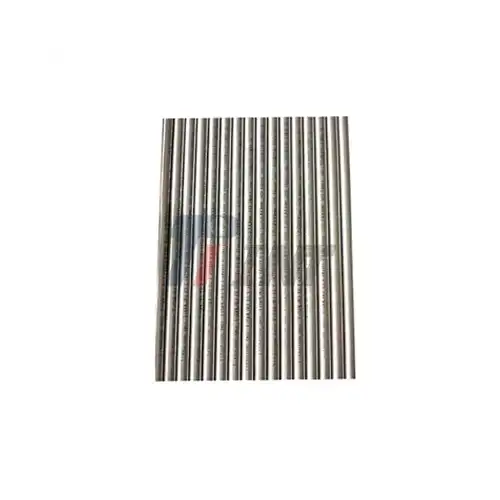
To check the quality of pure titanium bars, you need to follow a set procedure that includes eye inspection, mechanical testing, and chemical analysis to make sure they meet medical-grade standards. The stakes are even higher when we think about uses like titanium bars in chest surgery, especially the Nuss Procedure for pectus excavatum repair. Material flaws can put patients at risk, which can cause implants to fail, allergic reactions, or problems during surgery. Chemical purity, mechanical qualities, surface integrity, and certification compliance are all checked as part of a thorough inspection procedure. This makes sure that the titanium fits the standards set by ASTM F67, ISO 5832-2, and the FDA for implantable devices.
|
|
|
Understanding the Quality Parameters of Pure Titanium Bars
Chemical Composition and Purity Requirements
Strict limits on the elements that can be in pure titanium bars meant for medical implants must be followed. Titanium grades 1 through 4 that are commercially pure (CP) have different amounts of oxygen, nitrogen, carbon, hydrogen, and iron that affect how they behave mechanically and how well they work with living things. The most popular type of titanium used in surgery is Grade 2 CP, which allows up to 0.25% oxygen, 0.30% iron, and 0.08% carbon. When these chemicals are placed in biological settings, even tiny amounts above these limits can cause cytotoxic effects or lower corrosion resistance.
When we buy something, we check batch-specific mill test results (MTRs) that show chemical analysis done with X-ray fluorescence or optical emission spectrometry. The testing standards on these certificates should be ASTM E1409 or ISO 14284. Suppliers with ISO 13485 certification have quality control systems that are consistent and built to make medical devices. This makes it easier to tell the difference between production lots.
Mechanical Properties That Matter
The way titanium bars are made affects how well they work in the body, where they are loaded and unloaded over and over again. Tensile strength, yield strength, elongation, and resistance to wear are all factors that can't be changed. Depending on the grade, medical-grade titanium usually has a tensile strength between 240 and 550 MPa. It also has a minimum stretch value of 20 to 24%, which is enough to keep it from breaking easily.When looking at materials for lung uses, we pay special attention to the elastic modulus.
Pure titanium has an elastic modulus of about 105 GPa, which is very close to bone and much higher than the 200 GPa of stainless steel. Because of this, there is less stress buffering, which can lead to bone loss around implants. Using the Rockwell or Vickers methods to test for hardness is a quick way to see how consistent the material is and how well the heat treatment works across bar cross-sections.
Surface Quality and Defect Recognition
Implantable gadgets are very dangerous when they have flaws on the surface. Cracks, laps, gaps, pits, and inclusions all create stress concentration points that speed up wear failure and give bacteria a place to live. Medical titanium bars should have smooth, oxide-free surfaces with roughness values (Ra) that are usually less than 1.6 μm for cut bars and even less for polished parts.
Common flaws happen when dealing with hot metal, extruding, or storing it incorrectly. Alpha case, a thin, brittle layer of oxygen-rich material that forms during high-temperature processing, needs to be fully removed by either milling or cutting. Even though the bars meet the required dimensions, they often have mill scale, machining marks, or handle damage that makes them unsuitable for medical use.
Certification Standards as Quality Benchmarks
The framework for judging quality is set by international norms. ASTM F67 lays out the standards for graded titanium implants that aren't alloyed. It covers grades 1 through 4 and gives specific limits on makeup and mechanical properties. The European counterpart is ISO 5832-2, which has similar but sometimes tighter rules. Because the FDA recognizes these agreement standards through 21 CFR Part 820, companies that want to sell their goods in the U.S. must follow them.
In addition to meeting material standards, makers should keep their ISO 13485 certification, which shows that they can handle the quality of medical devices. According to the Medical Device Regulation (MDR 2017/745), a CE mark means that the device has been tested and found to be safe for use in Europe. We check these certifications directly with informed bodies instead of just believing what the seller says, because fake paperwork does get into global supply chains sometimes.
Step-by-Step Inspection Process for Pure Titanium Bars
Visual and Dimensional Verification
The first part of the check is a careful visual study in good lighting. We look for clear flaws on the surface, coloring that means the item has been contaminated, and geometrical errors. Using calibrated micrometers, calipers, and coordinate measuring machines (CMM) to check the dimensions shows that the diameter errors are usually kept to ±0.1mm for medical precision.
Straightness readings find bowing or warping that makes cutting more difficult. We use dial markers along the length of the bar at different rotational points. For medical-grade stock, 0.5 mm per meter of deviation is generally considered okay. Photographs used for documentation make visible records that help decide whether to accept or reject a provider during audits.
Non-Destructive Testing Methods
Non-destructive testing (NDT) finds flaws inside a material without damaging it. This is very helpful for medical-grade titanium that costs a lot. Using more than one way gives you more information about the state of a thing.High-frequency sound waves are used in ultrasonic tests to find internal cracks, holes, and laminations. Depending on the width of the material and how sensitive the equipment is, immersion or touch methods using frequencies between 2 and 10 MHz can find flaws as small as 1 to 2 mm.
To measure equipment sensitivity and train operators, we set reference standards using samples that have been purposely damaged.Using X-rays or gamma rays for a radiographic test creates pictures that show internal gaps, inclusions, and changes in density. Compared to film-based methods, digital radiography is more sensitive, and computer-aided analysis can find small problems. This method works especially well for finding high-density inclusions like tungsten carbide pieces that come from tool wear.Liquid penetrant screening finds flaws that break the surface that can't be seen with the human eye. Dye penetrants that are fluorescent or visible seep into cracks and holes and show up after the surface is cleaned and developer is applied. This easy and cheap method can find cracks as small as 0.001mm, so it is usually used to check new materials before they are sent out.
Mechanical Testing Protocols
Conformance to specifications is checked by destructive mechanical tests on samples from each production lot that are meant to be representative. The maximum tensile strength, yield strength, and elongation numbers are found through ASTM E8 tensile testing. Controlled loads are applied to test models made from bar stock until they break. During the test, extensometers record the strain behavior.Using Rockwell or Vickers indenters for hardness tests is a quick way to figure out a mechanical feature. We usually take several measures along the length and width of a bar, looking for consistency that means the microstructure is stable. Large differences in hardness could mean that the material wasn't heated properly or that its makeup isn't uniform, which needs more research.
Chemical Analysis Verification
Supplier-provided composition data is checked by an independent chemistry study. We hire third-party labs that are qualified and hold ISO/IEC 17025 accreditation to do spectroscopic analysis on samples that were cut from bars that we bought. Optical emission spectroscopy (OES) or inductively coupled plasma (ICP) can be used to measure all of the important pollutants and alloying elements.Interstitial elements (oxygen, nitrogen, carbon, and hydrogen) are given extra attention because they have a big impact on mechanical qualities and biocompatibility. Standard spectroscopic methods have a hard time finding these light elements, but inert gas fusion research can measure them correctly. Any change from the composition values given leads to material rejection and calls for corrective action from the seller.
Documentation and Traceability Requirements
Medical device tracking depends on having a lot of paperwork that shows the product's quality history. Every package needs to have a mill test certificate with heat numbers, chemical analysis results, mechanical test data, and an account of how the wood was processed. We check the MTR data against the buy specs and let you know about any problems before the material goes into production.Material safety data sheets (MSDS), certificates of compliance, biocompatibility testing records, and, if needed, third-party review results should all be in certification packages. Batch-level tracking makes it easy to quickly find the devices that are affected if problems are found after the product has been sold. We keep these records for longer than the device's useful life plus the time required by law, which is usually 10 to 20 years.
Evaluating Titanium Bars Specifically for Chest Surgery Applications
Why Titanium Dominates Thoracic Implants
Titanium is the best material for chest surgery implants, like those used to fix pectus excavatum, because it has a unique set of qualities. The metal is very biocompatible because it has a titanium dioxide layer on the surface that forms on its own. This layer is very good at integrating with flesh and doesn't cause the foreign body reactions that other metals do. Even when the pH changes in physiological settings, this inactive oxide layer stays the same.Titanium is stronger than stainless steel despite having a much lower density (4.5 g/cm³ vs. 8.0 g/cm³), which means that implants can be made lighter without losing their structural integrity.
Patients gain from implants that are lighter and cause less pain and muscle stress during the two to three years that titanium bars in chest usually need to be implanted.Corrosion resistance in body fluids that are high in chloride stops metal ions from escaping and damaging the whole body or just a small area of tissue. Titanium almost never corrodes in settings with human flesh, so its structure stays strong forever. This is very different from stainless steel implants, which can sometimes show pocket corrosion or stress corrosion cracks after being in place for a long time.
Performance Criteria from Clinical Perspectives
When surgeons look at chest bars, they put a high priority on a few practical standards that must be checked by quality control. Enough hardness keeps the bar from deforming during the insertion and flipping movements needed for the Nuss Procedure. On the other hand, enough flexibility lets the bar be shaped to fit each patient's body without the risk of breaking. We've seen bars with a tensile strength of less than 340 MPa bend when they are put in place on adults whose chest walls are stiff.Radiolucency makes imaging easier after surgery, so beneath lung structures can be seen clearly on follow-up CT or MRI scans.
Titanium doesn't show as many image flaws as stainless steel, which lets doctors get a better look at the heart and lungs near the implant. Imaging compatibility is very important for keeping an eye on possible problems or other lung conditions that may be happening at the same time.Long-term security that doesn't break down maintains corrective forces during the treatment time. In vivo performance can be predicted by studying materials under physiological conditions, such as cyclic loading at body temperature in artificial body fluid. Studies that use accelerated aging help find possible failure modes before they are used in real life.
Comparative Analysis with Alternative Materials
Stainless steel implants, which have been used for a long time for chest surgery, contain nickel and chromium, which cause allergic reactions in 2–5% of patients. Patch testing before surgery finds people who are likely to be sensitive, but titanium completely gets rid of this problem for patients who are sensitive to nickel. Titanium usually costs three to five times more than stainless steel, but the higher cost is worth it because it lowers the risk of complications and makes patients more comfortable.
Cobalt-chromium metals are stronger, but they aren't always biocompatible and cause a lot of flaws in MRIs, which makes it hard to get images after surgery. Polymer-based implants don't have the right mechanical qualities to raise the sternum and keep its shape over time when they are loaded continuously.From the point of view of procurement cost-benefit, titanium's higher material cost is balanced by lower rates of revision surgery, fewer problems linked to allergies, and higher patient happiness scores. The economy of healthcare are moving more toward titanium, even though it costs more at first.
Potential Risks and Mitigation Strategies
There are risks with all implants, even high-quality metal ones, that quality control helps lower. Bar movement happens about 5–15% of the time, and it can be caused by materials that aren't stiff enough or wrong sizes. This risk is lowerened by making sure bars meet the design standards through strict dimensional checking and mechanical testing.Infection is still the worst problem, happening to 1-3% of people. Checking the quality of the surface gets rid of rough surfaces and dirt that help bacteria stick.
Some makers use special surface processes, such as anodization, to help the bone fuse together better and make it less likely that an infection will spread.About 10% of patients have chronic pain, which is sometimes caused by bar pressure on nerves between the ribs or intercostals. Material consistency makes sure that the mechanical behavior is known, so doctors can plan for it during placement. A thorough quality check stops changes in stiffness that come as a surprise and could make the patient uncomfortable.
Procurement Best Practices for B2B Buyers of Titanium Bars in Chest Surgery
Supplier Qualification and Audit Strategies
To find good titanium bars in chest providers, you need to do more than just compare prices. We give more weight to manufacturers who have ISO 13485 certification, which means they have built quality control systems that are created especially for making medical devices. We do on-site audits of production tools, quality control labs, and process documentation because certification alone doesn't ensure performance.Material tracking systems, calibration records for testing equipment, staff training records, and corrective action processes should all be on audit reports. We check with current customers, especially those in similar medical device markets, to see how responsive the provider is to quality problems.
Long-term relationships form with providers who communicate clearly and take an active role in quality management.Checking for regulatory compliance means making sure that an establishment is registered with the FDA for goods going to the U.S. and looking over technical files that support CE marking under MDR standards. We need proof that the biocompatibility tests were done according to ISO 10993 guidelines. These tests should include cytotoxicity, sensitivity, and implantation studies. Suppliers who won't provide this paperwork are automatically ruled out, even if they offer better prices.
Cost Management Without Compromising Quality
The price of medical-grade titanium depends on how pure the material is, how much it costs to certify, and how much it costs to make in small quantities. Prices for Grade 2 CP titanium bars on the market right now range from 35 to 55 USD per kilogram, based on the size, number, and strictness of the requirements. Knowing what causes costs helps buying teams deal well while keeping quality standards high.People who commit to buying in bulk can often get better prices, but we have to weigh the costs of keeping goods against the saves we get per unit. Just-in-time shipping plans lower the amount of operating capital that is needed while still making sure that materials are available on time for production schedules.
Some sellers offer exchange inventory programs that only transfer ownership when the items are used up. This helps medical device companies that are growing with their cash flow.Total cost of ownership calculations should include inspection costs, rejection rates, and cutting fees. Sometimes, slightly more expensive quality materials are better at being machined and have lower scrap rates, which cancel out any differences in the starting cost. We keep an eye on these measures across all of our sources to find the real value, not just the price.
Managing International Supply Chains
Getting medical titanium from around the world adds organizational challenges that need to be carefully managed. We work with freight forwarders who have shipped medical devices before and know how to keep things at the right temperature, avoid contamination, and meet paperwork needs. Titanium bars need to be protected from moisture, salt, and physical force that could cause surface flaws. Proper packaging keeps them safe during shipping.Customs labeling under Harmonized Tariff Schedule codes that are specific to medical products makes sure that the right duties are paid and that the goods are cleared by the government.
We give customs officials thorough material specs and certificates, which makes the process of importing easier. If you know the rules of the country where you're sending your package, you can avoid costly delays or rejects at the border.Lead time management includes production plans (8–12 weeks for custom orders), international shipping times (2–6 weeks based on origin and mode of transport), and customs clearance times (1-2 weeks). We keep a backup stock of enough for three to six months of consumption to cover any supply problems and keep our goods from becoming too old too quickly.
Case Studies and Real-World Examples
Success Stories from Leading Medical Device OEMs
A well-known orthopedic implant maker cut the number of rejected titanium bars from 12% to less than 2% after using NDT methods to improve their arriving inspection procedures. When the company bought ultrasonic testing tools and taught quality staff how to find defects, they found underlying porosity that wasn't seen before the machining process. Within eight months, the project paid for itself through lower scrap costs and better output efficiency.In a different case, a business that makes specialized surgery instruments switched from making custom titanium bars in chest reconstruction bars out of stainless steel to titanium.
It took six months for the sourcing team to carefully evaluate five possible sources through sample testing, facility checks, and pilot production runs for the initial material qualification. The chosen partner showed better documentation skills and open discussion about changes to the process. Over the course of three years, on-time supply rates were higher than 98%, with zero material-related field failures recorded.It was hard for a new medical device business that was making innovative pectus treatment systems to get small amounts of specific grades of titanium.
The company's limited operating capital was put to the test by traditional suppliers' minimum order amounts that were too high to meet. In the end, they teamed up with a service center that specialized in medical supplies and kept a wide range of items in stock and provided cut-to-length services. Even though it cost a little more per unit, this setup allowed for faster time-to-market and quick prototyping iterations.
Lessons from Quality Failures
Failures in material tracking can sometimes have serious effects, showing how important it is to be very careful with paperwork. An issue with mixed material lots—where Grade 1 titanium was used instead of a certain Grade 2—wasn't found until implants deformed in a way that wasn't expected during surgery. The study into the root cause showed that the supplier's lot separation processes were not good enough and that the device manufacturer's incoming inspection was missing some verification steps.
As part of the fix, portable XRF scanners were used to test every arriving lot for positive material identification (PMI).An implant infection cluster happened at a medical center that used chest bars from a certain production batch because they were stored incorrectly, which contaminated the surfaces. The problem was found to be caused by the fact that the titanium bars were kept in a building near industrial chemicals, which let volatile organic compounds stick to the titanium. Because of what happened, the whole industry had to look again at how to store and handle medical-grade metals. This led to updated advice papers that stress the need for environmental controls for these metals.
In order to cut costs, the company switched to a non-certified source, but batches were rejected when third-party tests showed that they had too much oxygen in them, which made them brittle. The purchasing team only looked at price and didn't check quality control systems or material certifications enough. After the failed sourcing choice, it took four months to qualify an alternative source, which cost a lot more than the money that was expected to be saved. This experience confirmed the idea that buying medical titanium requires making decisions based on quality first.
Conclusion
Checking the quality of pure titanium bars needs a multifaceted method that includes chemical testing, mechanical testing, looking at the surface, and making sure the paperwork is correct. Medical apps have strict rules that can't be broken, especially when they are used for important things like titanium bars in chest surgery implants. Costs must be weighed against the absolute necessity of getting materials that meet strict standards for cleanliness, industrial performance, and biocompatibility by people who work in procurement.
Quality assurance programs that work well combine the ability to check things in-house with strategic relationships with suppliers that are based on openness and a shared dedication to patient safety. As rules about medical devices change around the world, top makers stay up to date on standard requirements and new best practices. This sets them apart from companies that have to deal with costly compliance fails or performance problems in the field. Spending money on thorough quality checks saves both patients and the business's ability to stay in business in this tough market.
FAQ
What is the typical lifespan of titanium bars in chest surgery?
How long do titanium bars in chest surgery typically last? Titanium bars are usually put in place for two to three years before they are surgically removed after pectus excavatum repair. During this time, the material keeps its shape and doesn't break down, rust, or lose its functional qualities. The titanium could keep working forever, but when it is taken out depends on how long it takes to permanently change the shape of the chest wall, not on any material limits. Some people have to wear bars longer for medical reasons, and there have been cases where they were worn for more than five years without any negative effects on the material.
Which certifications are most critical to verify before purchasing medical titanium bars?
Which licenses should you check for the most before buying medical titanium bars? Getting ISO 13485 certification shows that a supplier is dedicated to medical equipment quality control systems. Following the rules set by ASTM F67 or ISO 5832-2 for a material makes sure that it has the right chemical makeup and mechanical qualities for use in implants. Registration with the FDA as an establishment means that the company is allowed to make medical device materials for sales in the United States. CE stamp under MDR 2017/745 proves that European rules are being followed. Also, check third-party material test certificates from recognized labs and biocompatibility testing records that meet the requirements of the ISO 10993 series.
What are potential side effects or risks associated with titanium chest implants?
What are some possible risks or side effects of metal chest implants? Titanium is much less likely to cause allergies than stainless steel options and is very compatible with living things. Bar movement (5–15%), infection (1-3%), and constant pain (about 10–12%) are some of the problems that could happen. When high-quality, approved titanium is used, these problems are usually caused by the way the surgery was done or by the patient himself or herself, not by the material itself. True titanium hypersensitivity is still very uncommon; less than 0.6% of people are affected. Impurities or changes in mechanical properties are less of a risk when the right material is chosen through quality testing.
Partner with a Trusted Medical Titanium Bar Supplier
From more than 30 years of experience, Baoji INT Medical Titanium Co., Ltd. has been making medical-grade titanium products that meet the strict standards needed for titanium bars in chest surgery. Our wide range of products includes commercially pure titanium and Ti6Al4V ELI alloy in bars, wires, plates, and precision forged parts. All of these are made under ISO 13485:2016 approval and come with full paperwork that shows where they came from.
Our quality control procedures use high-tech inspection methods like ultrasound testing, chemical analysis, and checking the material properties of each batch to make sure it meets the standards set by ASTM F67 and ISO 5832-2. We know how important it is for implantable devices to have materials that are biocompatible and provide full mill test results, biocompatibility certificates, and custom paperwork to back up your regulatory applications.We are a well-known company that makes medical titanium bars and has worked with orthopedic implant makers, surgical instrument makers, and dental device makers all over the world.
We offer technical advice to help with choosing materials, creating specifications, and improving quality control. Our engineering team works with your R&D team to meet the special needs of each application, whether they are standard specs or the creation of a new alloy.To talk about your unique needs for medical-grade titanium bars, please email our product experts at export@tiint.com. We offer free evaluations of samples, thorough inspection reports, and variable order numbers that can meet the needs of both large-scale production and prototype development. Visit inttitanium.com to learn more about how we can help the medical device business around the world by providing materials that put patient safety and production efficiency first.
References
1. American Society for Testing and Materials. "Standard Specification for Unalloyed Titanium, for Surgical Implant Applications (UNS R50250, UNS R50400, UNS R50550, UNS R50700)." ASTM F67-13, 2017.
2. International Organization for Standardization. "Implants for Surgery — Metallic Materials — Part 2: Unalloyed Titanium." ISO 5832-2:2018.
3. Disegi, J.A. and Eschbach, L. "Stainless Steel in Bone Surgery." Injury: International Journal of the Care of the Injured, Volume 31, Supplement 4, December 2000, Pages D2-D6.
4. Steinemann, S.G. "Titanium — The Material of Choice?" Periodontology 2000, Volume 17, Issue 1, June 1998, Pages 7-21.
5. Kelly, R.E. and Goretsky, M.J. "Complications and Management After Minimally Invasive Pectus Excavatum Repair." Seminars in Pediatric Surgery, Volume 27, Issue 3, June 2018, Pages 151-157.
6. Niinomi, M. "Mechanical Biocompatibilities of Titanium Alloys for Biomedical Applications." Journal of the Mechanical Behavior of Biomedical Materials, Volume 1, Issue 1, January 2008, Pages 30-42.
_1753429871786.webp)
_1752819172472.webp)
_1752817116199.webp)
_1750663525879.webp)