







Medical Titanium Bar vs Titanium Rod: What Should Buyers Choose?


 2026-09-16 14:45:16
When sourcing raw titanium stock for surgical instrument manufacturing, the distinction between a medical titanium bar and a titanium rod matters more than most buyers initially expect. Simply put: bars feature square or rectangular cross-sections, while rods are cylindrical. Both are produced from biocompatible alloys such as CP Ti Grade 2, Ti-6Al-4V (Grade 5), and Ti-6Al-4V ELI (Grade 23), conforming to ASTM F136 and ISO 5832-3. Your choice should be driven by your machining process, instrument geometry, and end-use application — not habit or availability alone.
|
|
|

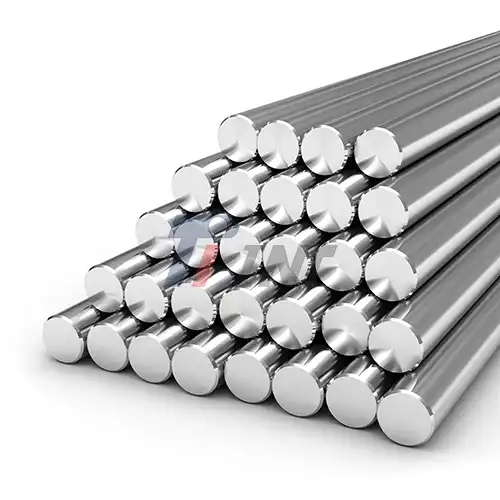
Understanding Medical Titanium Bars and Titanium Rods
What Separates a Bar from a Rod?
The physical geometry is the starting point. A titanium bar has flat, straight sides that make milling processes easier to set up. This is helpful when making instrument handles or rectangular shaft parts. The round cross-section of a titanium rod, on the other hand, works well for lathe-based turning, which is why it is usually used for cylinder shafts, hinge pins, and instrument working ends.
Vacuum arc remelting (VAR) and controlled thermomechanical processes are used on both forms to make the substructure uniform and free of segregation and holes. The end result is titanium stock that passes ASTM F67 (CP grades) or ASTM F136 (Ti-6Al-4V ELI), which are the basic rules for surgical-grade titanium stock around the world.
In both types, Grade 23 (Ti-6Al-4V ELI) is still the most common metal. It has a controlled amount of oxygen and nitrogen, which lowers interstitial contamination and raises fracture toughness and ductility. These are important qualities to have when cutting thin-walled instrument parts.
Key Technical Properties and Performance Comparison
Mechanical Strength, Fatigue Life, and Dimensional Precision
The choice between bars and rods isn't just based on shape; it's also based on how they work, and the use of medical titanium bar is a critical factor that procurement experts must consider alongside the following most important success indicators.
- High strength-to-weight ratio: Ti-6Al-4V ELI has a tensile strength of at least 895 MPa while being only 60% as dense as stainless steel. Handles and shaft sections of instruments stay light without losing their structural integrity when they are loaded surgically.
- Exceptional fatigue resistance: Titanium is much more resistant to wear than regular stainless steels when it comes to cycle stress, like repeated clamping, torquing, or bending in a surgery setting. This keeps material wear down to a minimum over the life of the instrument.
- Low elastic modulus (~110 GPa): Titanium's modulus is much closer to that of human cortical bone (15–25 GPa) than steel's is (about 200 GPa). For parts of instruments that touch bone, this lowers the amount of stress at the contact points.
- Biocompatibility via stable TiO₂ layer: Titanium forms a passive oxide layer on its own that doesn't rust in body fluids, saline, or sterilization agents. No ion leaching and no immune reaction, which is very important for devices that are close to implants.
These features are the same for both bars and rods, but the size limits are different. Rods with widths between 6 mm and 150 mm can be held to tight tolerances that are good for CNC turning, and bars help milling tools reference flat faces. You can choose between polished or sandblasted surface finishes to meet the needs of downstream processing.
Because of these factors, titanium stock is a better material than 316L stainless steel for companies that want to make high-end medical instruments.
Applications and Use Cases in the Medical Field
When to Specify a Bar, When to Specify a Rod
Knowing where each form does its best work helps procurement teams match the choice of materials with the flow of work in the workshop.
Titanium bars are often used in parts where a flat reference shape speeds up setup time, like instrument grips, rectangular handle blanks, and flat-body forceps stock. When shaping non-circular cross-sections, bars cut down on material waste, which directly leads to lower per-unit costs on high-SKU instrument lines.
Titanium rods are most often used in situations where the output shape is cylindrical. Rod stock with lengths between 1,000 mm and 3,000 mm is often used to turn shafts, pivot pins, trocar bodies, and retractor handles. This cuts down on handling between cuts and scrap. For applications requiring a rectangular or flat cross-section instead of cylindrical forms, medical titanium bar offers an alternative geometry that better suits such designs. As long as Grade 5 strength isn't required, CP Ti Grade 2 rods are still a good choice for lighter-duty instrument parts. This helps keep material costs low.
A company in Sialkot that makes fine tools might ask for small-diameter rod stock (6–12 mm) in Gr2 or Gr4, but a company in Germany that makes heavy retractor systems might ask for Gr5 bar stock with bigger cross-sections. In both cases, the material formula needs to be the same from batch to batch, because measuring correctly doesn't protect CNC tools from differences in the way they're built.
Procurement Considerations for Medical Titanium Bars and Rods
Evaluating Suppliers Beyond Price
In the supply chain for medical instruments, price concern is a real thing. It's hard to make a profit, and the cost of raw materials has a direct effect on how competitive bids are. But buying things based only on unit price comes with risks that show up later, like when customers audit, regulators review, or production stops.
When looking for a medical titanium bar or rod provider, these factors are very important:
- Certifications on file: ISO 9001:2015, ISO 13485:2016, and EU CE certification are all on file and must be met by manufacturers who sell to OEM customers in Europe or North America. Each package must have a mill certificate with a heat number that can be tracked.
- Grade and size coverage: Gr1, Gr2, Gr4 CP titanium and Ti-6Al-4V / Ti-6Al-4V ELI in stocked widths (6–150 mm) and lengths (1,000–3,000 mm) cut down on the need to buy from multiple suppliers.
- MOQ flexibility: Instrument lines with a lot of SKUs need small orders of multiple specifications. A supplier that is willing to split orders between different sizes and grades without setting strict MOQ levels frees up working capital that would otherwise be locked up in inventory.
- Lead time reliability: A steady delivery window of three to four weeks lets instrument makers do rolling monthly restocking without having to add to their backup stock.
- Document turnaround: Material test reports (MTR) with traceable heat numbers need to be sent out quickly; delays in paperwork slow down customs clearance and customer factory audits.
Over a 12–24 month procurement horizon, strategic supplier relationships based on clear documents and predictable delivery always do better than single-factor price optimization.
How to Choose: Decision-Making Guide for Buyers
A Practical Framework for Specification Selection
Three questions help you find the right titanium stock form—whether it's medical titanium bar or other shapes—for your production needs: What shape does the result take? What kind of cutting do you do most of the time? In what grade does your customer's order call for?
If most of the machines in your shop are CNC lathes that make circular parts, rod stock in the right grade is what you should use. If your line does a lot of cutting of flat or curved parts, bar stock makes your fixtures work better and increases the amount of material you can make.
When choosing a grade, Gr2 CP titanium is a good choice because it is less expensive and has good corrosion protection and machinability. It is also good for making smaller instrument parts. In the CP family, Gr4 has the highest strength. Ti-6Al-4V ELI (Grade 23) is the standard to use when you need the best strength-to-weight ratio, resistance to fatigue, and ASTM F136 approval in your customer paperwork.
Before negotiating prices, the requirements for documents should affect which suppliers are chosen. A mill certificate that doesn't have a traceable heat number isn't very useful during a customer audit. Make sure that your supplier gives you full material traceability documents as a normal service, not as an extra.
Conclusion
Medical titanium bars and rods both meet the requirements for biocompatibility, corrosion resistance, and mechanical performance in the production of surgical instruments. The best option depends on how you normally do your machining, the shape of the output, the grade requirements, and the paperwork your customers want. Your production plan and your relationships with customers will be safe if you buy from a qualified provider who offers full-grade coverage, variable order sizes, and reliable lead times. Think of choosing materials and qualifying suppliers as one choice; that's what they are.
FAQ
What is the difference between a medical titanium bar and a titanium rod?
The cross-section of a bar is square or rectangular, while the cross-section of a rod is round. Both are made from the same biocompatible alloys—CP Ti or Ti-6Al-4V ELI—and meet the same medical standards. However, the shape of the two different types affects how they are fixed, how they are machined, and how much material they produce.
Which titanium grade is most commonly used for surgical instruments?
CP Titanium Grades 2 and 4 are often used to make smaller parts for instruments. When higher tensile strength (≥895 MPa) and ASTM F136 approval are needed, Ti-6Al-4V ELI (Grade 23) is the best choice.
What certifications should a medical titanium supplier hold?
First, you need to get ISO 9001:2015, ISO 13485:2016, and EU CE approval. Shipments should have mill certificates with traceable heat numbers on them to help with customs processing and checks by OEM customers.
Is small-quantity, multi-spec ordering realistic for surgical instrument manufacturers?
If a supplier serves this market segment, they should be able to handle split orders for more than one grade or diameter without imposing a strict minimum order quantity. Make sure this is possible before you place a trial order.
How long does standard lead time run for certified titanium stock?
Standard grades and diameters should be sent out by a reliable supplier within 3–4 weeks of order confirmation. Turnaround times are often faster for long-term customers with rolling replenishment agreements.
Partner With Baoji INT Medical Titanium Co., Ltd. for Reliable Supply
Since 2003, Baoji INT Medical Titanium Co., Ltd. has sold approved titanium raw materials. We have Pure Ti, Ti-6Al-4V, and Ti-6Al-4V ELI medical titanium bars and rods in diameters ranging from 6 mm to 150 mm. Each package comes with full ISO 13485:2016 and EU CE paperwork. Flexible MOQ, wait times of 3–4 weeks, and mill documents that can be tracked are all normal. To get a price from a reliable medical titanium bar maker, email our team at export@tiint.com or go to inttitanium.com.
References
1. ASTM International. ASTM F136: Standard Specification for Wrought Titanium-6Aluminum-4Vanadium ELI Alloy for Surgical Implant Applications. ASTM International, 2023.
2. International Organization for Standardization. ISO 5832-3: Implants for Surgery — Metallic Materials — Part 3: Wrought Titanium 6-Aluminium 4-Vanadium Alloy. ISO, 2021.
3. Geetha, M., Singh, A.K., Asokamani, R., & Gogia, A.K. "Ti Based Biomaterials, the Ultimate Choice for Orthopaedic Implants." Progress in Materials Science, 2009.
4. Rack, H.J., & Qazi, J.I. "Titanium Alloys for Biomedical Applications." Materials Science and Engineering: C, 2006.
5. Long, M., & Rack, H.J. "Titanium Alloys in Total Joint Replacement — A Materials Science Perspective." Biomaterials, 1998.
6. Niinomi, M. "Mechanical Biocompatibilities of Titanium Alloys for Biomedical Applications." Journal of the Mechanical Behavior of Biomedical Materials, 2008.