Medical Titanium vs Dental Titanium Material Differences


 2026-08-14 14:25:20
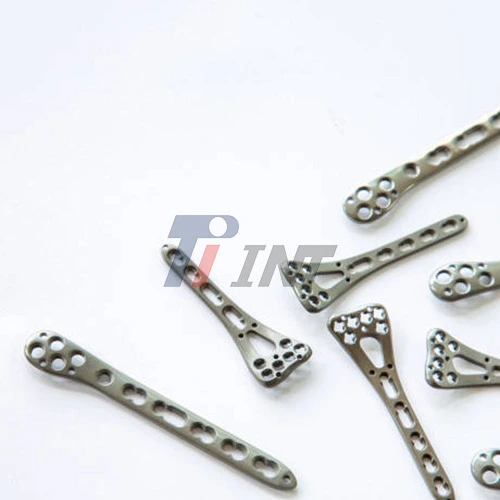
When sourcing materials for surgical implants or dental devices, understanding the distinctions between medical titanium bar products and dental titanium materials becomes a strategic imperative. While both stem from titanium's exceptional biocompatibility and corrosion resistance, medical titanium bars typically emphasize high-strength alloys like Ti6Al4V ELI for orthopedic trauma plates and spinal fixation systems that endure continuous load-bearing stress. Dental titanium, conversely, often utilizes commercially pure grades optimized for osseointegration in jaw environments where flexibility and surface reactivity matter more than ultimate tensile strength. This fundamental divergence shapes everything from procurement specifications to regulatory compliance pathways.
|
|
|
Introduction
Specialised titanium products that meet strict standards for safety, longevity, and tissue compatibility are used in the medical field. When choosing between medical titanium bars made for orthopaedic implants and dental titanium alloys made for mouth therapy, companies that make medical devices have to make a very important choice. This difference is more than just a name; it includes differences in chemical makeup, mechanical performance, surface treatments, and legislative frameworks that have a direct effect on product responsibility, patient results, and manufacturing costs.
When they are in charge of contracts for trauma plates, spine cages, or oral implant systems, procurement managers need to be very aware of these differences. When you choose the wrong materials, you could end up with recalled devices, failed clinical studies, or a broken supply chain. In this talk, we'll look at grade specifications, tradeoffs in mechanical properties, and procurement strategies that help R&D engineers and purchasing supervisors make decisions based on facts. The information here comes from decades of experience in the field and follows the rules for ISO 13485 quality management. It gives B2B buyers the technical knowledge they need to work with suppliers with confidence.
Understanding Medical Titanium and Dental Titanium: General Overview
Defining Medical Titanium Bars and Their Composition
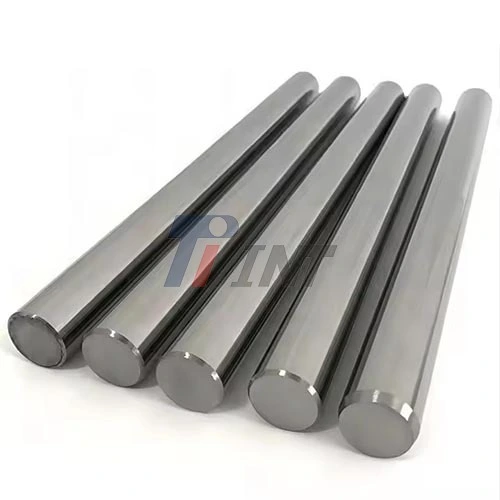
Medical titanium bars are made from biocompatible materials that meet the requirements of ASTM F136 and ISO 5832-3. Ti6Al4V ELI (Extra Low Interstitial) is the most common alloy. It is made up of 6% aluminium and 4% vanadium. It has a tensile strength of over 895 MPa and can bend over 10%. This mixture is a good mix of mechanical strength and workability. It lets makers make complicated shapes like locking compression plates or intramedullary nails without creating tiny cracks.
Pure titanium types (ASTM F67 Grade 2 and Grade 4) are also used in medical settings where low stiffness and better shapeability are more important than strength. These economically pure versions go through vacuum arc remelting processes that get rid of as many oxygen and nitrogen inclusions as possible. This lowers the risk of premature wear in settings that are loaded and unloaded many times. The finished product has a density of 4.51 g/cm³, which is about 45% lighter than stainless steel. It is also stronger than most medical metals by the same amount, or about 20%.
Dental Titanium Materials and Their Unique Characteristics
Surface chemistry and osseointegration kinetics are more important than pure mechanical strength in dental applications. This market is mostly made up of commercially pure titanium (CP Ti Grades 1 through 4). Grade 4 is hard enough for implant threads while still being flexible enough for screw-retained prosthesis. Not having any alloying elements like aluminium or vanadium means there are no worries about ions escaping in the acidic mouth, where pH levels change during meals and microbes work to create toxic conditions that don't exist in orthopaedic sites that are sealed.
Surface treatments make dental titanium stand out even more. Sandblasted, large-grit, acid-etched (SLA) surfaces make them rougher to help bone cells stick to them during the first three to six months after implantation. On the other hand, polished medical titanium bars are used in sliding interfaces like hip stems, and their ultra-smooth finishes keep friction and wear debris to a minimum. When making dental materials, the rules stress on keeping track of the paperwork—like batch-specific mechanical test certificates and elemental composition reports—that meets FDA 510(k) premarket notification pathways that are different from those for Class II or Class III orthopaedic device submissions.
International Quality Standards Governing Both Materials
Both types of materials are regulated by different but overlapping sets of rules. ISO 9001:2015 sets the basic standards for quality management systems. ISO 13485:2016 adds controls for medical devices that deal with risk management, design validation, and monitoring after the product has been sold. These are the mechanical limits set by ASTM: F136 for wrought Ti6Al4V ELI medical implants, F67 for unalloyed titanium, and F1472 for wrought Ti6Al4V used in surgical tools that aren't implants.
The Medical Device law (MDR 2017/745) in the European Union requires CE marking. This law also put in place stricter clinical evaluation standards that will go into effect in May 2021. When suppliers go to the U.S. market, they have to figure out how to deal with the FDA's classification system. Titanium rods for permanent implants are usually Class II devices that need 510(k) clearance to show that they are substantially equivalent to suspect devices. Because of these rules, makers have to keep detailed technical files with information about material certifications, biocompatibility testing according to the ISO 10993 series, and validation of sterilisation methods. Smart buyers carefully look over this information during source checks.
Material Differences Between Medical Titanium and Dental Titanium
Grade Variations and Alloy Specifications
The choice of grades is very different between areas. Orthopaedic makers like medical titanium bars made from Ti6Al4V ELI for load-bearing parts like hip stems, knee tibial trays, and spine pedicle screws because its 110 GPa elastic modulus is close to (but still higher than) the 20 GPa modulus of cortical bone. This difference in stiffness, known as stress shielding, is still a design challenge that can only be solved by improving the geometry rather than switching materials. Dental implant makers prefer Grade 4 CP titanium because it has a 105 GPa modulus. They are willing to deal with a little more hardness in return for a 40-year track record of success in endosseous uses.
Emerging dental trends look into Ti6Al4V for situations that need better fatigue resistance, like narrow-diameter implants in the back of the mandible or immediate-loading protocols where chewing forces engage implants before they fully fuse with the bone. Unalloyed grades are still the most common type of grade, so these are still niche uses. Engineers who work on medical devices have to say not only the grade but also the shape of the product (bar, plate, wire), because hot-working processes change the structure of the grains and cause mechanical anisotropy. When building devices that will last 10 million load cycles, it's important to know that rods made by rotary forging have finer grains and longer wear life than rods made by casting.
Mechanical Performance and Microstructure Differences
The history of processing affects performance, which can be seen through microstructural analysis. The two-phase α+β structure of Ti6Al4V ELI is made up of aluminium stabilising the hexagonal close-packed α phase and vanadium stabilising the body-centered cubic β phase. This two-phase setup improves the work-hardening capacity, which means the material can handle cold forming operations without too much spring-back, which is great for companies that make plates with anatomical shapes. For certain uses, annealing temperatures between 700°C and 850°C are best. Lower temperatures keep the strength, while higher temperatures make the metal more flexible.
Dental-grade pure titanium has a single-phase α structure that makes it less likely to work harden and more likely to weld. This is important to keep in mind when dental labs laser-weld frames for implant-supported bridges. Since there are no β-stabilizing elements, the temperature range for hot working is also smaller. This means that stricter process controls are needed to avoid surface rust, which could hurt wear performance. The ability of both materials to fight fatigue depends on the amount of inclusions they contain. Vacuum arc remelting processes reduce oxide stringers that can cause cracks to start. Ultrasound inspections are done by premium suppliers to make sure the implants are internally sound. This is an important quality control step that supports the higher prices for critical implant uses.
Biocompatibility Nuances and Corrosion Behavior
Biocompatibility testing under ISO 10993-5 (cytotoxicity) and ISO 10993-10 (sensitisation) shows that both materials are inert, but long-term corrosion studies show some small differences. The passive titanium oxide layer (TiO₂) forms naturally in oxygenated spaces and is about 2–6 nm thick on pure titanium and 3–7 nm thick on alloys. This oxide barrier stops ions from escaping when the pH level is normal (7.35-7.45), but the pH levels in the mouth (4.5-8.0) and the chloride-rich saliva present in the mouth create localised corrosion risks that are not present in orthopaedic surfaces that are sealed.
Aluminium and vanadium ions from Ti6Al4V are usually kept inside the oxide structure, but regulators are paying close attention to how much of them build up in the tissues around implants. Researchers using inductively coupled plasma mass spectrometry to measure ion release have found aluminium levels in nearby bone that are 2 to 5 times the background level.
However, the clinical significance of these levels is still being discussed because they are well below the toxic thresholds. Dental manufacturers completely avoid this controversy by using unalloyed titanium instead, which means they have to accept slightly lower strength claims for clear biocompatibility claims. Medical device firms respond with clinical data from millions of Ti6Al4V implants showing very low rates of adverse reactions. They use this proof when they submit their products to regulatory bodies.
Surface Treatment and Application-Specific Requirements
Surface engineering is very different from one another. The articulating surfaces of orthopaedic plates are often polished (Ra < 0.2 μm) to keep polyethylene wear in joint prostheses to a minimum. The bone-contacting undersides of these plates may have grit-blasted textures (Ra 2–5 μm) that help soft tissue adhere and keep the fixation stable. All dental implants have surfaces that are roughened by sandblasting to a depth of 1-2 μm and then acid-etching to make nanoscale pits that help osteoblasts connect. This two-scale terrain speeds up the rate at which bones fuse together, which can be measured by histomorphometry. In good cases, this cuts treatment times from six months to twelve weeks.
Another oral treatment is plasma spraying of hydroxyapatite coats, but worries about delamination have kept it from becoming widely used. As machining processes would remove the top layers after treatment, medical-grade rods don't get coated very often. Orthopaedic manufacturers instead focus on subsurface integrity, making sure that the alpha-case depth (the oxygen-hardened layer from heat treatment) stays below 0.02 mm to avoid brittle fracture. Specifications for purchases need to spell out these surface requirements clearly, since general terms like "medical-grade" don't define important factors.
Procurement Considerations for Medical Titanium Bars vs Dental Titanium Materials
Sourcing from Certified and Experienced Manufacturers
Verification of ISO 13485:2016 approval is the first step in qualifying a supplier. This is a requirement for all medical device material providers and cannot be changed. Audit teams look at suppliers' manufacturing control plans to see how they make sure that important process factors are met, such as vacuum pressure during melting, cooling rates during heat treatment, and the number of times that the parts are inspected for size limits. Manufacturers with a lot of experience keep material tracking systems that connect each output lot to the chemistry of the source ingot, process logs, and mechanical test data. This way, if problems happen in the field, they can quickly figure out what went wrong.
Longevity in the medical titanium market means that process knowledge has been built up that younger companies don't have. Suppliers that have been in business for 20 years or more have been through many changes to regulations and have been able to keep their services running smoothly by changing their quality systems to new standards. They keep extra equipment in order to keep deliveries going during maintenance periods, and they keep safety stock to reduce the impact of sudden changes in the supply of raw materials. Procurement teams should ask for customer examples from relationships that last 5 years or more, to make sure that deliveries are made on time and that the company responds quickly to urgent requests. These are signs of business maturity that go beyond paper certifications.
Price Trends, MOQ, and Supply Chain Logistics
The price of a medical titanium bar depends on the cost of the raw materials, how hard it is to process, and the cost of getting it certified. Ti6Al4V ELI costs 15–25% more than Grade 5 Ti6Al4V because it needs more vacuum cycles to achieve tighter interstitial element controls (oxygen 0.13%, nitrogen 0.05%, and carbon 0.08%). The price of certified bar stock in common diameters (10–50 mm) is currently between $35 and $50 per kilogram. Smaller diameters cost more because they produce more scrap.
Minimum order amounts depend on the mix of products and the supplier's ability. Large-scale manufacturers that work with orthopaedic OEMs may set minimum orders at 500 kg, while specialised suppliers that work with dental OEMs can handle orders of 50 to 100 kg with only small increases in unit cost. For normal grades, lead times are 8 to 12 weeks. For special chemicals or odd sizes, they are 16 to 20 weeks. In global supply chains, transit times are important to think about.
For example, ocean freight from Asian suppliers takes 4 to 6 weeks to get from one port to another. Depending on the import rules of the destination country, customs clearance can add another 1 to 2 weeks. Air freight cuts down on wait times to one to two weeks, but it also increases handling costs by five to eight times, so it's only practical for quick testing needs.
Customization and OEM Manufacturing Opportunities
Value-added processing turns ordinary bar stock into partially finished parts that fit into the production workflows of customers. As part of our services, we offer precision centerless grinding with tight diameter limits (±0.01 mm), cut-to-length processes that make rods in the right length for the job, and surface conditioning to certain roughness levels. OEM partnerships go even further; they include contract production of finished implant parts like machined bone screws, cast femoral stems, or wire-form spine cages. This is done by taking advantage of suppliers' economies of scale in titanium machining skills.
When talking about customisation, tolerance stackup analysis should come up. This is where differences in dimensions build up over time as more operations are done. Suppliers who can do statistical process control (SPC) tracking show Cpk values of 1.33 or more for key measurements, which means that 99.7% of parts meet the requirements. This feature is very important for parts like modular implant tapers, where interface geometry tolerances below 5 μm determine how well they resist fretting corrosion and mechanical interlock integrity. Contracts for buying things should spell out how often to inspect, what the acceptance criteria are, and what to do if something doesn't meet those criteria. This will set up quality assurance systems that protect everyone's interests.
Comparative Advantages: Medical Titanium Bars vs Other Medical Materials
Performance Benchmarking Against Stainless Steel and Cobalt Alloys
The most common surgical alloy is stainless steel 316L, which has a tensile strength of about 540 MPa and a density of 8 g/cm³, giving it a strength-to-density ratio of 67.5 kN·m/kg. Medical titanium bars made from Ti6Al4V ELI reach 895 MPa at 4.43 g/cm³ density, giving it a 202 kN·m/kg ratio, which is almost three times as efficient as stainless steel. Because of this difference, implant masses can be cut by 40–50% while still providing the same level of power. This means that muscles don't get tired as quickly in uses involving the limbs, and patients are more comfortable. Cobalt-chromium metals are better at resisting wear in articulating joints, but their 8.5 g/cm³ density and 230 GPa modulus make stress shielding problems worse at the contact between bone and implant.
Clinical Evidence and What Surgeons Want
In orthopaedic journals, titanium's clinical track record over millions of patient-years is shown. Joint replacement databases (Australian Orthopaedic Association National Joint Replacement Registry, Swedish Hip Arthroplasty Register) show that titanium-stemmed hip implants have mortality rates higher than 95% after 10 years, which are the same as or higher than cobalt-chrome options. Studies on fracture fixation show that titanium plates have lower infection rates. This is partly because bacteria don't stick as well to oxide surfaces than to the rougher passivation layers on stainless steel.
Surgeons are choosing titanium more and more because it works well with MRIs, which is a big plus as post-operative imaging protocols grow. Stainless steel and cobalt alloys cause large image artefacts that hide nearby anatomy, making it harder to keep an eye on tumours or test the brain. Because titanium is not easily magnetised, it can be used for imaging without any artefacts.
This means that cardiologists can do MRI scans on patients who have titanium sternal lines or pacemaker housings. This feature affects the choice of gadget, especially in oncology reconstruction, where doctors expect to be able to see the results of their work for years. Material decisions made during procurement have effects on whole care paths. This shows why purchasing managers need to understand more than just mechanical specs when it comes to clinical impacts.
Conclusion
To tell medical titanium bars apart from dental titanium materials, you need to look at the basics of metalworking, the rules that apply, and the performance standards that are needed for each application. For load-bearing orthopaedic roles, medical-grade rods focus on alloy strength and fatigue endurance, while dental materials focus on osseointegration kinetics and corrosion resistance in oral environments. To do great procurement, you need to work with certified providers who can show that their processes are mature and that they have traceability systems and expert help that works with you. As the development of medical devices speeds up, from bioresorbable scaffolds to patient-specific implants made through additive manufacturing, the basic properties of titanium materials that make it the best biomaterial for permanent implantation—biocompatibility, corrosion resistance, and mechanical reliability—remain the same.
FAQ
Q1: What makes medical titanium bars superior to stainless steel for implants?
A: Medical titanium bars are three times stronger than stainless steel bars, so they can reduce the weight of an implant by up to half while still holding the same amount of weight. The naturally occurring titanium oxide layer protects against rusting in body fluids and stops the release of nickel ions that cause allergic reactions in 10–15 percent of people who use stainless steel devices. Titanium's 110 GPa elastic modulus is closer to bone's 20 GPa modulus than stainless steel's 200 GPa. This means that titanium doesn't protect against stress as well as stainless steel does, which stops bone loss around implants.
Q2: Can dental-grade titanium be used for orthopedic applications?
A: Titanium that is used in dentistry implants is commercially pure and meets biocompatibility standards for orthopaedic use. However, it is not strong enough to be used in high-stress uses like hip stems or trauma plates. The tensile strength of Grade 4 CP titanium is 550 MPa, while Ti6Al4V ELI's is 895 MPa. This is a 40% difference that could lead to mechanical failure in load-bearing skeletal sites. Dental materials are great at osseointegration, but they can't be used instead of alloys when wear strength under repeated loading is a design factor that can't be changed.
Q3: What are typical lead times and minimum order quantities for medical titanium bar procurement?
A: Standard diameter rods (10–50 mm) in Ti6Al4V ELI grade usually have lead times of 8–12 weeks from approved sources. For specialised suppliers, the minimum order quantity is 50 kg, while for high-volume makers, it is 500 kg. Custom diameters or proprietary chemicals make lead times 16 to 20 weeks longer because of the need to prepare tools and test the process. For urgent R&D needs, expedited production is still possible, but there are higher costs (20–30%) and less MOQ freedom.
Partner with a Proven Medical Titanium Bar Supplier
Baoji INT Medical Titanium Co., Ltd. has been in the titanium business for 30 years and can help medical device makers figure out the complicated world of implant-grade materials. Our ISO 13485:2016-certified production lines make medical titanium bars with widths from 6 to 150 mm and lengths from 1000 to 3000 mm. These bars come in pure titanium, Ti6Al4V, and Ti6Al4V ELI grades and are guaranteed to have a tensile strength of at least 895 MPa and an elongation of at least 10%. Each production lot comes with full mill test certificates that show the chemistry, mechanical properties, and traceability to the source ingots. These certificates are the basis of the paperwork you need for regulatory submissions and supplier audits.
Our technical team works with R&D engineers to help choose the right materials. They can give you advice on how to get the best grade for the loading conditions and surface finish requirements that work with your manufacturing processes. Our customisation options can be changed to fit your production processes, whether you need precisely ground bar stock for CNC machining or semi-finished blanks for forging. Contact export@tiint.com to talk about your medical titanium bar needs, ask for samples of the material to be tested for quality assurance, or look into OEM relationship opportunities that let you use our advanced production infrastructure for your next-generation implant designs.
References
1. American Society for Testing and Materials. (2021). ASTM F136-13: Standard Specification for Wrought Titanium-6Aluminum-4Vanadium ELI Alloy for Surgical Implant Applications. ASTM International, West Conshohocken, PA.
2. Geetha, M., Singh, A.K., Asokamani, R., & Gogia, A.K. (2009). Ti based biomaterials, the ultimate choice for orthopaedic implants – A review. Progress in Materials Science, 54(3), 397-425.
3. International Organization for Standardization. (2016). ISO 5832-3:2016 Implants for surgery — Metallic materials — Part 3: Wrought titanium 6-aluminium 4-vanadium alloy. ISO, Geneva, Switzerland.
4. Niinomi, M., & Nakai, M. (2011). Titanium-based biomaterials for preventing stress shielding between implant devices and bone. International Journal of Biomaterials, Article ID 836587.
5. Okazaki, Y., & Gotoh, E. (2005). Comparison of metal release from various metallic biomaterials in vitro. Biomaterials, 26(1), 11-21.
6. Steinemann, S.G. (1998). Titanium—the material of choice? Periodontology 2000, 17(1), 7-21.

_1752818186472.webp)