




Gr1 Titanium Disc for Medical Components: Complete Guide


 2026-11-25 09:40:35
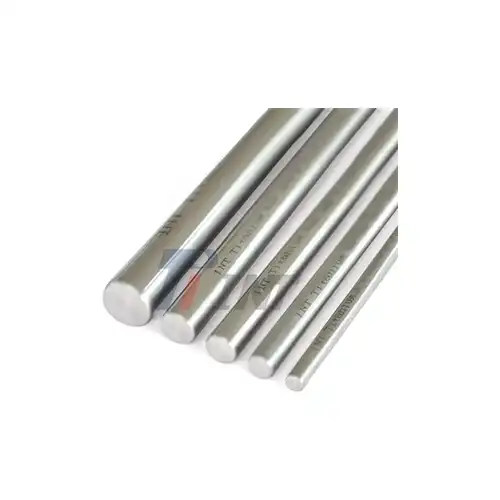
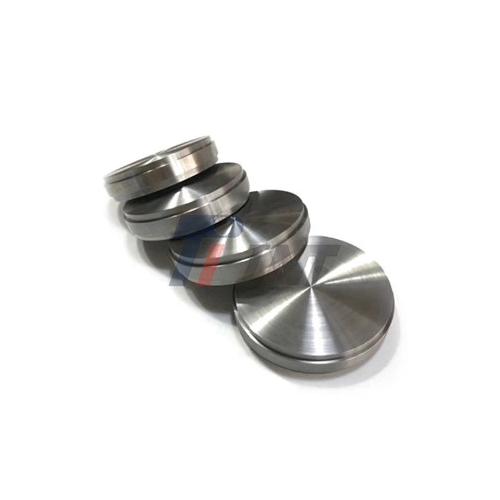
If you work in medical device manufacturing or dental CAD/CAM milling, sourcing the right raw titanium material is not a minor decision. A Gr1 titanium disc — commercially pure Grade 1 titanium conforming to ASTM F67 — sits at the foundation of implant-grade component production. With its exceptional biocompatibility, zero-alloy purity, and proven corrosion immunity, this material blank serves dental prosthetics laboratories, orthopedic blank fabricators, and OEM brand builders who demand both traceability and dimensional consistency across every production run.
|
|
|
Understanding Gr1 Titanium Disc: Properties and Composition
What Defines Grade 1 Purity?
In the family of commercially pure (CP) titanium, Gr1 titanium disc is the softest and most malleable grade. Its mechanical behavior is controlled directly by its interstitial element ceiling, which is Iron ≤ 0.20%, Oxygen ≤ 0.18%, Carbon ≤ 0.08%, and Nitrogen ≤ 0.03%. Tensile strength must be at least 240 MPa, and elongation must be at least 24%, which is the highest of all CP grades. Because it is so flexible, it can be cold shaped, heated, and precisely cut with CAD/CAM without developing internal stress cracks.
Manufacturing Process and Quality Control
Every Gr1 titanium disc blank at Baoji INT Medical Titanium Co., Ltd. starts with hot rolling or forging to smooth out the grain structure and make it more resistant to wear. Then, ultrasonic flaw detection is used on each piece to make sure it is completely solid before it is shipped. The annealed delivery state keeps the residual stress stable, which is very important when milling processes further down the line need the material to respond in a predictable way. The company has three types of certifications: ISO 9001:2015, ISO 13485:2016, and EU CE. This is enough for procurement teams in both the US and EU markets to be happy.
Why Gr1 Titanium Disc Is Ideal for Medical Components?
Medical fields have very strict requirements for raw materials: they must not corrode in body fluids, stay structurally stable over time, and not affect living things in any way. All three can be answered with Gr1 titanium disc. Its naturally regenerating TiO₂ oxide layer makes it almost immune to chloride-induced stress corrosion cracking, a type of failure that destroys stainless steel parts within years of being put in place. Also important, its density of 4.51 g/cm³ gives it a strength-to-weight ratio that stainless steel can't match without adding more mass.
Because this grade is made of good materials, it is often used as a blank base in medical making.
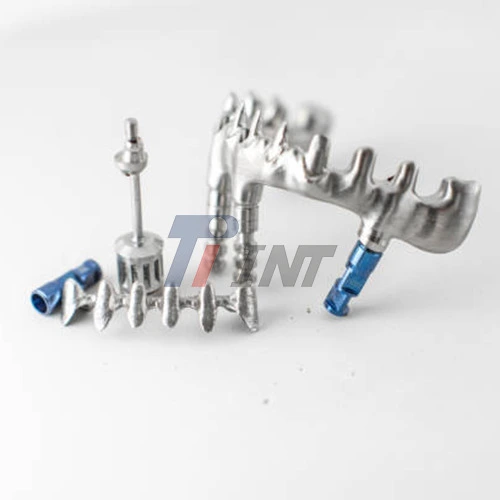
- Biocompatibility verified by ASTM F67: The Gr1 titanium disc feedstock is safe to use for making bone plates, dental crowns, and spinal blanks because it has low levels of oxygen and iron, which lowers the risk of cytotoxicity.
- Corrosion resistance in physiological environments: Gr1 titanium disc doesn't pit or corrode in saltwater solutions at temperatures up to 80°C like cobalt-chrome or 316L stainless steel does. This is an important performance standard for making implanted devices.
- Lightweight yet durable: The material is about 40% lighter than steel, which makes cutting tools last longer and makes it possible to make thinner, more patient-friendly parts.
- Excellent fatigue resistance: The hot-forging and annealing process creates a uniform microstructure that can withstand cyclic loads. This is important for dental milling Gr1 titanium discs that have to go through dozens of cutting operations every day.
These benefits lower the amount of scrap in milling, make cutting tools last longer, and give dental lab leaders and orthopedic blank processors the batch-to-batch stability their work processes need.
Gr1 Titanium Disc Selection Guide for Medical Component Procurement
Verifying Material Authenticity
The procurement team should ask for a full material test record (MTR) that goes all the way back to the mill heat number. Lab tests using Optical Emission Spectrometry (OES) or Inert Gas Fusion confirm that the iron content stays below 0.20% and the oxygen content stays below 0.18%. These are the two levels that separate Grade 1 from Grade 2. Portable XRF readers are good for quick screening, but lab-grade analysis is still the best way to make sure that things are safe in controlled supply lines for the Gr1 titanium disc.
Evaluating a Supplier's Customization Capability
When it comes to dental milling centers that use five-axis machines, Gr1 titanium disc diameter and thickness tolerances can't be changed. A good seller must be able to consistently supply parts with diameters from 3 mm to 200 mm and thicknesses from 1 mm to 50 mm. Surface finish choices, like polished or sandblasted, affect how the disc fits into CAD/CAM holders. To avoid chucking failures and wasted cuts, make sure you know the finish specifications before placing a large order.
Balancing Cost Against Compliance
Medical-grade Gr1 titanium disc costs more than industrial-grade titanium, and that price difference is fair. Discs that don't have the right ISO 13485:2016 paperwork for tracking can make it impossible to register a device in the FDA and EU MDR frameworks further down the line. A slightly lower unit price from a source that can't be trusted leads to regulatory re-qualification costs that are much higher than the initial savings.
Comparing Gr1 Titanium Disc with Alternative Materials for Medical Components
When purchasing managers look at models for making dental or orthopedic parts, they usually compare three types of materials.
Grade 1 vs. Grade 2 Titanium: Grade 2 has a higher yield strength (about 275 MPa vs. about 170 MPa for Grade 1) but is less flexible. For structural parts that need to be shaped or deeply drawn, Gr1 titanium disc is the best base. Grade 2 can be used for structure pieces that will hold weight.
Grade 1 vs. Grade 5 (Ti-6Al-4V ELI): Ti-6Al-4V ELI is very strong and can be used for load-bearing implants like hip stems, but its metal makeup makes it harder to machine. Gr1 titanium disc works better in situations that need it to be easy to shape, compatible with soft tissues, and have simple milling parameters. This is often the case in dental prosthetic workflows.
Grade 1 Titanium vs. Stainless Steel or Aluminum: Stainless steel blocks are thicker and more likely to corrode from chloride over time. Aluminum is not biologically inert, which is needed for any application that comes into contact with tissue. The osseointegration compatibility that makes the Gr1 titanium disc the standard in dentistry and orthopedic implant making can't be found in either of these materials.
Procurement, Supply Chain, and Trusted Brands for Gr1 Titanium Discs
It takes more than just looking at online listings to find genuine, implant-grade titanium discs from a reputable Gr1 titanium disc manufacturer. One of the world's most concentrated titanium production centers is in Baoji, China. Since 2003, Baoji INT Medical Titanium Co., Ltd. has been a part of this environment. The company was started by Mr. Zhan Wenge, who has worked directly in the titanium business for more than 30 years. It has grown into a standard for supplying medical-grade titanium materials to partners in the US, Europe, India, the Middle East, and Southeast Asia.
INT's OEM capability is a useful way for US-based dental milling shops and OEM brand creators to set themselves apart. Brand companies can release private-label Gr1 titanium disc lines without letting the public know about their secret sizes thanks to custom laser marking, custom packing, and NDA-protected specification management. You can test free samples to see if they meet your needs. This cuts down the time it takes to go from trial to purchase from months to weeks. Standard lead times and MOQ structures make it easy for both large wholesalers and smaller digital dentistry labs to scale up their material buying.
Conclusion
Gr1 titanium disc material is an important part of making blank medical parts that can't be replaced. It is proven to be biocompatible, resistant to corrosion, strong, lightweight, and easy to shape with a milling tool, which makes it the best choice for dental CAD/CAM processes, processing orthopedic blanks, and making OEM products. It is necessary to get that material from a certified, experienced supplier that can be tracked back to its source. It is the basis of a reliable, compliant production chain.
FAQ
Q1: What distinguishes a Gr1 titanium disc from a Gr2 disc in dental milling?
A: Grade 1 has less iron and oxygen, which makes it softer and easier to shape. In CAD/CAM grinding, this means that the cutting will go more smoothly and the tools will last longer. Grade 2 is stronger, but it can make it more likely for the surface to chip when dental crowns are milled with small details.
Q2: How do I verify that a disc is genuinely Grade 1 and not a lower-purity substitute?
A: Ask for the mill heat certificate and compare it with the OES lab reports that show Fe ≤ 0.20% and O ≤ 0.18%. According to ASTM F67, these two levels are the only ones that can be used to identify Grade 1.
Q3: What certifications should a medical-grade titanium disc supplier hold?
A: For sure, you need to have ISO 9001:2015, ISO 13485:2016, and EU CE certification. These include quality control, medical device tracking, and European market compliance. They are all important for both US and foreign purchasing.
Q4: Can custom diameters and thicknesses be ordered in small quantities?
A: Yes, Baoji INT Medical Titanium Co., Ltd. allows OEM customization with variable minimum order numbers and gives away free samples to check the size and cutting performance of the Gr1 titanium disc.
Q5: What surface finishes are available, and do they affect milling performance?
A: You can get surfaces that are either polished or sanded. For precise clamping in CAD/CAM holders, polished surfaces work best. Sandblasted surfaces, on the other hand, have a uniform matte texture that is better for some orthopedic blank workflows.
Partner with Baoji INT Medical Titanium Co., Ltd. for Your Titanium Disc Supply
Baoji INT Medical Titanium Co., Ltd. has been selling implant-grade titanium products to partners around the world for more than 20 years. Our team is prepared to support your qualification process, from free sample shipping to full-volume supply, whether you need a certified Gr1 titanium disc provider for dental milling, OEM private-label production, or orthopedic blank buying. You can email us at export@tiint.com to ask for details and prices.
References
1. ASTM International. ASTM F67: Standard Specification for Unalloyed Titanium for Surgical Implant Applications. ASTM International, 2023.
2. Rack, H. J., & Qazi, J. I. "Titanium alloys for biomedical applications." Materials Science and Engineering: C, 2006.
3. Niinomi, M. "Mechanical biocompatibilities of titanium alloys for biomedical applications." Journal of the Mechanical Behavior of Biomedical Materials, 2008.
4. ISO. ISO 13485:2016 — Medical Devices: Quality Management Systems. International Organization for Standardization, 2016.
5. Elias, C. N., et al. "Biomedical applications of titanium and its alloys." JOM: Journal of the Minerals, Metals & Materials Society, 2008.
6. Brunette, D. M., et al. Titanium in Medicine: Material Science, Surface Science, Engineering, Biological Responses and Medical Applications. Springer, 2001.