




Top 5 Gr5 Titanium Disc Uses in Aerospace and Medical Components


 2026-11-23 10:33:30
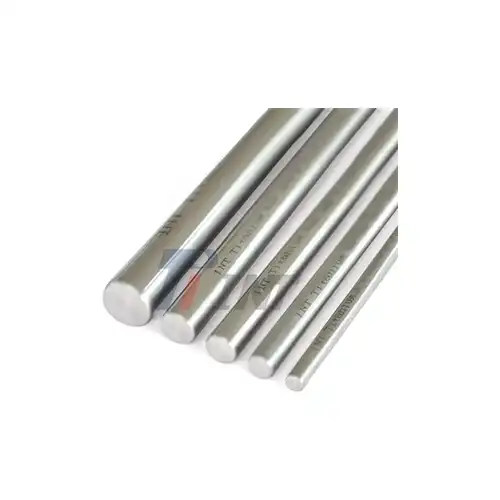
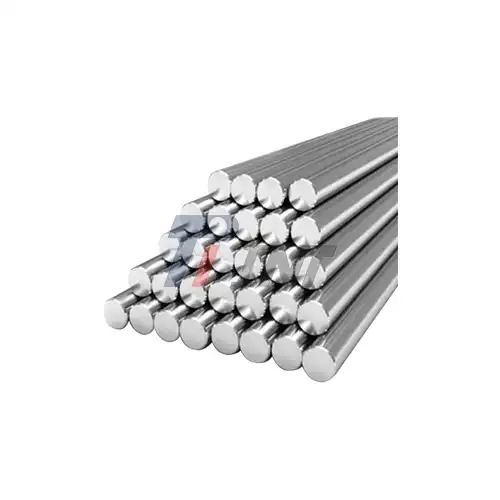
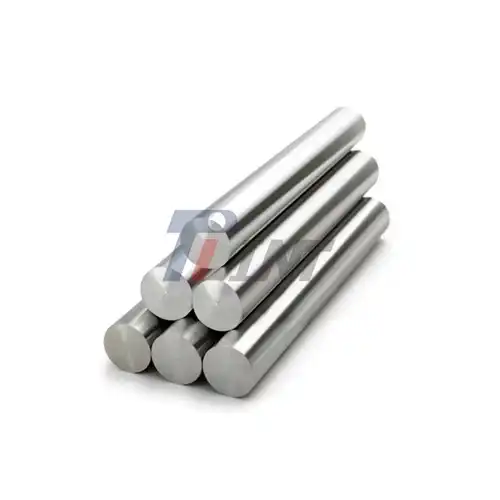
The top five Gr5 titanium disc uses in aerospace and medical components are airframe structural parts, orthopedic implant forging blanks, engine and high-temperature hardware, prosthetic and rehabilitation equipment, and custom billets for forging or machining. Gr5 titanium, also called Ti-6Al-4V, pairs a density of 4.43 g/cm³ with high tensile strength and natural corrosion resistance. Those traits let engineers cut weight without giving up fatigue life. At Baoji INT Medical Titanium Co., Ltd., we supply Gr5 titanium disc stock from 10 mm to 300 mm in diameter, so forging teams can match blank size to the part drawing.
|
|
|
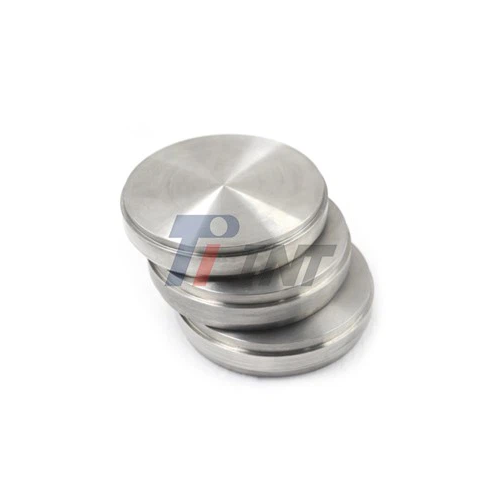
Gr5 Titanium Disc Properties and Specifications
Chemical Composition and Mechanical Performance
It is made up of a mix of aluminum (5.5–6.75%) and vanadium (3.5–4.5%). Titanium is what the metal is made of. You can only have so much oxygen, iron, and carbon because they change how flexible and fatigue behavior is. When the metal is hot, most standards say it should have a minimum tensile strength of about 895 MPa and a minimum yield strength of about 825 MPa. A lot of steels are 7.8 g/cm³, which is almost twice as much as Gr5 titanium disc stock. Every time you buy something, you should write down the norm, the situation, and the test method. This is because the features of the item change when it is heat treated and formed.
Corrosion and Temperature Resistance
It is known that Gr5 titanium has a stable layer of oxide on its surface. That film doesn't react with chlorides, body fluids, or seawater, which is why it's used on things like implants and airplane parts that will be in water. Make sure you check the temperature more often. Most of the time, service can only go on for about 400°C (750°F) at a time. Above that point, the surface rusts faster, and the creep strength drops. The continuous temperature, the peak temperature, and the exposure time should all be written in the specification. When a part needs to run faster, a near-alpha metal like Ti-6242 is often used instead of platinum. Good things don't get lost. This check makes sure that doesn't happen.
Baoji INT Gr5 Titanium Disc Specifications
In order for your forging and NDT experts to compare our Gr5 titanium disc to a drawing, we've provided the following information.
| Attribute | Details |
|---|---|
| Material | Grade 5 Titanium (Ti-6Al-4V) |
| Diameter Range | Customizable, 10 mm to 300 mm |
| Thickness | 0.5 mm to 50 mm |
| Tolerance | ±0.01 mm |
| Surface Finish | Polished, sandblasted |
| Certification | ISO 9001:2015, ISO 13485:2016, CE |
| Customization | Available |
We hot roll and forge the metal to shape it, and ultrasonic testing is used to look for flaws inside it.
Core Product Advantages
When our customers compare titanium sources, these are the main pros they look at.
- Lightweight and durable: Gr5 titanium weighs 4.43 g/cm³ and is very strong for its weight. It's also very strong and will last a long time. Forged or machined parts are strong even though they are lighter. In cases where extra weight makes things harder for the patient or costs more to run over the part's lifetime, that balance works well for both hip parts and aircraft braces.
- Corrosion resistance and fatigue strength: It can handle human fluids and chlorides, and the natural oxide film doesn't get worn down easily, so it can be used over and over again for a long time. To find flaws inside the part, we use ultrasonic testing as part of our process. This makes sure that the forged part has the right grain flow and the billet is clean.
- Customization and certified quality: we cut plates that were 10 mm to 300 mm across and 0.5 mm to 50 mm thick, with a ±0.01 mm error. Titanium waste is less when the sizes are close to what you need for cutting. When they are looking for a supplier, a lot of people ask us for ISO 9001:2015, ISO 13485:2016, and EU CE certification for our goods.
These advantages address two common sourcing problems: oversized blanks that waste costly titanium, and unclear quality records. These benefits fix both of these issues.
Five Leading Uses of Gr5 Titanium Discs
Use #1: Aerospace Structural Components
The strong and light Gr5 titanium discs are used by space engineers to make mounting discs, flanges, rings, and parts for actuators. Most of the time, Ti-6Al-4V titanium is used in airplane parts. Designers still check the grain direction, hole quality, and edge angles of parts that are likely to wear out. People who want to buy something should ask for records of chemistry tests, tensile tests, ultrasonic tests, and heat numbers that can be used to track the metal from the block to the shipment. This paper can be used to find the melt source of any finished part.
Use #2: Orthopedic Implant Forging Blanks
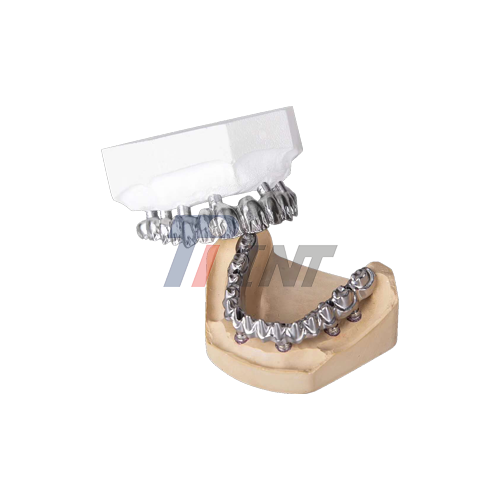
The femur heads, acetabular cups, and stems that are used to make hips and knees are made from titanium disc and billet stock. Forging flow lines and fatigue life depend on the quality of the blank. Before any die touches the blank, it is important to use ultrasound to check its quality. ASTM F136 talks about the Ti-6Al-4V ELI form, and ISO 5832-3 has its own rules for material that is good for implants. Don't ever think that an implant grade is standard Gr5 titanium. Ti-6Al-4V ELI is also sold by Baoji INT, so users can be sure that the grade meets their needs. Iron loss can also be cut with blanks that are close to the size of the forge model.
Use #3: Aerospace Engine and High-Temperature Hardware
Because it is not very dense, titanium is used in engine programs for parts of the fluid system, retaining rings, and hardware in the compressor area. This is because it lowers the mass that needs to be supported. Gr5 titanium stays strong up to about 400°C (750°F). Also, alloys like Ti-6242 or nickel-based materials are needed for oxidation and creep. It's important to carefully check engine parts because flaws inside them make them less reliable. Many types of checks are used, such as ultrasonic testing, dye penetrant testing, hardness testing, tensile testing, and metallographic review. If the provider writes down each step, your NDT lead will have a clear record to look over.
Use #4: Prosthetic and Rehabilitation Equipment
Parts that are lighter work better with prosthetic joints, orthotic fittings, mounts for rehabilitation equipment, and frames that people carry or move around all day. Because they don't rust, these parts can handle sweat, humidity, and being cleaned a lot. Titanium is easy to machine to get smooth surfaces, but cutting speeds and coolants need to be carefully managed because it doesn't conduct heat well. To begin, machinists can always work with discs that have already been cleaned or sanded. Make sure you know the standards for loading, sterilization, and surface before you place your order. These are very different for a prosthesis part that goes inside the body and an external orthotic.
Use #5: Custom Billets for Forging and Machining
People use custom discs when a normal size is too small or when the picture needs traits that are close to a net shape. With forged discs, you can control the flow of grain in parts that are very heavy. Proofs and small groups of discs cut from a plate that has been accepted cost less. With waterjet cutting, there is no heat damage that needs to be checked out like there might be with laser cutting. We have discs that are 10 mm across to 300 mm across and 0.5 mm thick to 50 mm thick. You can send a picture of your forging and get back a disc that is almost the same size.
How Gr5 Titanium Discs Compare with Other Materials
Gr5 vs Pure Titanium and Grade 2
The Grade 2 titanium is very bendable, easy to shape, and doesn't rust. When stretched, it can hold about 345 MPa of force, while Gr5 titanium can hold about 895 MPa. So, Gr5 titanium disc stock is best for parts that have to hold weight or wear out over time. Grade 2 is best for parts that are heavily formed and used in chemical processing. Because it's harder to shape and make Gr5 titanium, your cost model should take longer to run. It's not enough to just look at price; you should also look at the load, technique, and standard.
Gr5 vs Stainless Steel
316L stainless steel weighs about 8 g/cm³ and Gr5 titanium weighs 4.43 g/cm³. The difference between these two types is important for both space parts and portable medical equipment. It costs less to make things out of stainless steel. This works well for plans that don't depend on weight. Titanium is better than 316L at stopping crevice corrosion in chloride environments, but you should still check to see if it can work with other metals nearby. Instead of just comparing the prices of the materials, you should also look at how much they will cost to maintain and fix over time.
Gr5 vs Aluminum and How to Choose
This metal is cheap, easy to work with, and light (about 2.7 g/cm³), so it can be used for many low- to medium-load items. In high temperatures, Gr5 titanium works much better and is stronger. It also doesn't rust or wear down as quickly. Think about the load, the climate, the temperature range, the goal mass, the design life, and the certification needs before you choose a material. When something needs to last a long time or be used in tough conditions, Gr5 titanium is worth the extra money. If your provider has worked with titanium before, they can help you try it out before you decide to go with it.
How to Specify and Inspect Gr5 Titanium Discs?
Information to Include in an RFQ
When you make a full request, the work doesn't have to be redone. The standard, the material condition, the diameter, the thickness, the quantity, the tolerance, the surface finish, and the edge requirements should all be listed. The alloy should be Gr5 titanium disc material or Ti-6Al-4V. If you want to forge something, include a picture or 3D model of it and a list of the tests you want to be done, like an ultrasound acceptance level, a chemical analysis, and mechanical results. Write down where the delivery is going to happen and how much packing is needed. Ultrasonic acceptance standards in Europe and the US may be different, so make sure that everyone agrees on the exact criteria in writing before you start making anything. Once the forging is done, that one step ends most disagreements.
Inspection and Documentation
The first step in quality control is to check for chemistry and mechanics that are linked to a heat number. Testing that doesn't damage anything is the next step. Cracks in thick or formed metal can be found with ultrasound, and cracks on the outside can be found with dye penetrant tests. Surface checks look for cracks, laps, and scale that is built in. Dimensional checks check the part's size, thickness, smoothness, and centering. Ask for an inspection report, a material test certificate, and a certificate of conformity for each lot. To make sure they can trust a new source, many buyers check samples with ultrasonic and metallographic tests and then make one or two heats as a test.
Supplier Qualification and Cost Factors
More important than the price per kilogram is how much titanium costs all together. The price changes based on the disc's size, thickness, number of tests, surface finish, and paperwork. Making a blank that fits close to the forged shape saves time and metal. To pick a provider, you should check how quickly they respond to technical questions, if they have quality certificates, testing tools, and the ability to keep track of goods. Baoji INT Medical Titanium Co., Ltd. was started by Mr. Zhan Wenge. He's been in the metal business for over 30 years. EU CE, ISO 13485:2016, and ISO 9001:2015 have all approved our products.
Conclusion
Gr5 titanium disc material is very dense (4.43 g/cm³), has a tensile strength of about 895 MPa after being annealed, and has a stable oxide film that doesn't let oil or body fluids stick to it. It can be used for five main things because of these traits: aerospace structures, orthopedic forging blanks, engine hardware up to 400°C, prosthetic and rehabilitation equipment, and custom billets. There is no better material than Gr5 titanium when you need strength, long life, and low weight all at the same time. The other materials are better for needs with less weight or less money. For work on implants, standards like ASTM F136 say that you need to be a Ti-6Al-4V ELI grade worker. An agreed upon RFQ, full heat-number traceability, and blank dimensions that are close to the final part's dimensions are all important.
FAQ
Is a standard Gr5 titanium disc suitable for implants?
Not all the time. ISO 5832-3 sets the rules for implants and ASTM F136 talks about Gr5 titanium disc ELI. Get confirmation from your regulatory team about the grade, how it can be tracked, and how clean it is. We also have Ti-6Al-4V ELI.
What is the maximum service temperature?
Most of the time, service can only go on for about 400°C (750°F) at a time. Oxidation speeds up above that point, and the creep strength drops. This is why near-alpha alloys like Ti-6242 work better.
Why choose a forged disc over a disc cut from plate?
When you forge, you make grain flow that follows the shape of the disc. That shape is stronger and less likely to break than a circle cut from cross-rolled plate.
What size range do you supply?
These range in size from 10 mm to 300 mm across and from 0.5 mm to 50 mm thick. You can also make your own.
Request a Gr5 Titanium Disc from Baoji INT Medical Titanium Co., Ltd.
Looking for a Gr5 titanium disc maker who has experience making blocks for forging? Baoji INT Medical Titanium Co., Ltd. can make measures from 10 mm to 300 mm that are just right for you. They also do ultrasonic testing and have a limit of ±0.01 mm. They are certified by ISO 9001:2015 and ISO 13485:2016. For help with testing and drawing, email export@tiint.com. The people on our team will look over your needs and get back to you with a quote.
References
1. Materials Science and Engineering A, 1996 – "An overview on the use of titanium in the aerospace industry" (R. R. Boyer)
2. Materials Science and Engineering C, 2006 – "Titanium alloys for biomedical applications" (M. Rack and J. I. Qazi)
3. Progress in Materials Science, 2009 – "Ti based biomaterials, the ultimate choice for orthopaedic implants – A review" (M. Geetha et al.)
4. Titanium: A Technical Guide, 2nd Edition, ASM International, 2000 (M. J. Donachie)
5. Titanium and Titanium Alloys: Fundamentals and Applications, Wiley-VCH, 2003 (C. Leyens and M. Peters)
6. ASTM F136, Standard Specification for Wrought Titanium-6Aluminum-4Vanadium ELI Alloy for Surgical Implant Applications, ASTM International, 2013