


 2026-01-28 09:08:50
Medical device makers must make important choices that have a direct influence on patient outcomes and regulatory compliance when choosing premium titanium rod suppliers for surgical applications. Because titanium rods are essential parts of orthopedic procedures, spinal fusion surgeries, and fracture repair operations, the market for titanium bar surgery needs extraordinary quality requirements. Offering medical-grade titanium products that satisfy strict international requirements, Baoji INT Medical Titanium Co., Ltd. is one of the top suppliers. In order to guarantee dependable access to surgical-grade titanium goods, our thorough investigation shows that effective procurement methods include a rigorous assessment of supplier capabilities, material certifications, and long-term relationship possibilities.
|
|
|


Comprehending Titanium Rods in Surgical Applications
Titanium rods' remarkable mechanical qualities and biocompatibility have transformed contemporary surgery. Surgeons depend on these medical equipment' durability and resistance to corrosion for effective patient outcomes during orthopedic surgeries.
Critical Role in Fracture Fixation and Bone Reconstruction
Because of its special blend of strength and biocompatibility, surgical titanium rods are excellent for fracture fixation treatments. Titanium rods provide crucial structural support throughout the healing process for patients with complicated bone fractures, especially those involving weight-bearing bones like the femur or tibia. The material's modulus of elasticity is very similar to that of human bone, which lessens the effects of stress shielding that may jeopardize the results of long-term healing.
Because titanium's osseointegration properties provide direct bone-to-implant contact without the creation of fibrous tissue, medical experts value this property. When compared to other materials like stainless steel or cobalt-chromium alloys, this characteristic makes titanium bar surgery treatments more successful and predictable.
Common Surgical Procedures and Recovery Timelines
One of the most common uses of titanium rods in surgical settings is intramedullary nailing. In order to provide rapid stabilization and facilitate earlier patient movement, a titanium rod is inserted via the medullary canal of shattered long bones. Simple fractures usually heal in 6–12 weeks, while severe cases might take up to 4-6 months to fully heal.
Titanium rods are also widely used in spinal fusion surgeries, where surgeons use them to preserve correct vertebral alignment while incorporating bone grafts. Because titanium is biocompatible, long-term inflammatory reactions are not a worry, which makes it perfect for situations involving permanent implantation.
Criteria for Selecting Top Titanium Rod Suppliers for Surgical Use
In order to guarantee continuous product quality and regulatory compliance, procurement managers must consider a number of variables when choosing titanium rod suppliers. The intricacy of medical device specifications necessitates a comprehensive evaluation of suppliers in terms of technical, quality, and commercial aspects.
Essential Quality Certifications and Regulatory Compliance
Suppliers of medical-grade titanium are required to have their ISO 13485 accreditation, which shows that they are dedicated to medical device-specific quality management systems. Additional regulatory requirements for suppliers to the US and European markets include FDA 510(k) clearance and CE marking, respectively. Ti6Al4V ELI (Extra Low Interstitial) is the gold standard for orthopedic applications. ASTM F136 and F67 standards provide the precise titanium alloy compositions that are suitable for surgical implants.
Procurement teams should ask for thorough evidence of material traceability throughout the manufacturing process and confirm that suppliers are following Good Manufacturing Practices (GMP). These certifications guarantee that titanium bar surgery materials satisfy the strict standards required for both regulatory clearance and patient safety.
Material Specifications and Customization Capabilities
To meet a range of surgical needs, top titanium suppliers have extensive product portfolios that include different rod diameters, lengths, and surface finishes. The diameter of standard titanium rods is normally between 4 and 20 mm, and for certain uses, they may be as long as 500 mm. For some surgical situations, surface treatments like acid etching or plasma spraying may improve osseointegration characteristics.
The ability to customize sets premium suppliers apart from commodity suppliers. For complicated instances needing non-standard dimensions or geometries, the ability to make patient-specific implants based on CT scan data or surgeon requirements provides substantial value.
Supply Chain Reliability and Technical Support
For medical device manufacturers with strict manufacturing schedules, consistent product availability is still crucial. Reputable vendors provide reasonable lead times, usually between 4 and 8 weeks for basic items and 8 to 12 weeks for unique solutions, and maintain appropriate inventory levels. Throughout product development cycles, manufacturers are assisted in navigating difficult engineering issues by technical support services like as design optimization, failure analysis, and metallurgical consultancy.
Top Titanium Rod Suppliers and Brands in the Market
Both specialist regional suppliers and well-known international firms are present in the worldwide titanium rod market, and each has unique benefits for medical device procurement methods.
International Market Leaders and Their Strengths
Large titanium suppliers have set up extensive international networks to assist producers of medical devices all around the globe. These businesses usually provide the following fundamental services that meet important procurement needs:
- Extensive product portfolios: Titanium alloys in a variety of forms, including rods, bars, wires, and special forgings, including commercially pure grades and Ti6Al4V variations
- Advanced manufacturing technologies: Modern melting techniques that guarantee better material qualities and uniformity include vacuum arc remelting (VAR) and electron beam melting (EBM)
- Global quality standards: International product distribution is made possible by multi-site certifications that encompass ISO 13485, AS9100, and regional medical device standards
- Research and development capabilities: Continuous investment in process enhancements and material science breakthroughs that propel next-generation implant performance
Large-scale suppliers may serve medical device manufacturers across various product lines while maintaining uniform quality standards and regulatory compliance in international markets thanks to their extensive capabilities.
Regional Suppliers and Specialized Manufacturers
Local titanium suppliers often provide more specialized services and improved responsiveness, which augment what global firms have to offer. These providers usually concentrate on certain market niches or geographical areas, gaining in-depth knowledge of regional legal needs and consumer preferences.
This regional expertise approach is best shown by Baoji INT Medical Titanium Co., Ltd., which has over 20 years of specialist understanding in medical titanium applications. Since its founding in 2003 by Mr. Zhan Wenge, who has over 30 years of expertise in the titanium business, INT has developed into a leading company in the R&D and manufacturing of medical titanium. Larger suppliers could find it difficult to provide various customization choices and quick response to client needs due to the company's laser-like concentration.
Comparing Titanium Rods: Choosing the Best for Your Surgical Needs
Surgical results and long-term implant function are greatly impacted by material selection choices, necessitating careful consideration of a number of variables beyond initial procurement prices.
Titanium Advantages Over Alternative Materials
In comparison to cobalt-chromium alloys and stainless steel, titanium exhibits improved biocompatibility, a low inflammatory response, and outstanding tissue compatibility over the long term. The material is perfect for applications like titanium bar surgery because of its resistance to corrosion, which removes worries about metallic ion release that might result in negative tissue responses over prolonged implantation durations.
Titanium's strength-to-weight ratio minimizes implant bulk while offering the best mechanical qualities for load-bearing applications. In pediatric applications, where implant weight concerns impact patient comfort and mobility throughout recuperation, this feature is very beneficial.
Size and Shape Considerations for Different Applications
The choice of titanium rods has to take into account the anatomy of the patient and certain surgical techniques. While tibial applications often use lower sizes between 8mm and 12mm, femoral nailing operations usually call for rods with a diameter of 9mm to 15mm. The choice of rod length is based on the patient's height and the location of the fracture; most treatments call for rods that are between 200 and 450 mm long.
For complicated anatomical variations or revision procedures, custom rod combinations could be required. Based on medical imaging data, advanced providers provide computer-aided design services that allow for the fabrication of implants tailored to each patient.
Integrating with INT: Your Strategic Partner for Titanium Rod Supply
Medical equipment manufacturers looking for dependable titanium rod supply options have come to rely on Baoji INT Medical Titanium Co., Ltd. With more than 20 years of focused attention to medical titanium applications, we are dedicated to quality and innovation.
Comprehensive Product Portfolio and Manufacturing Capabilities
Pure titanium, Ti6Al4V ELI titanium, and specific titanium alloy compositions are among the full spectrum of medical-grade titanium goods that INT provides. To satisfy a range of surgical needs, our product line includes rods, wires, plates, and precision-forged parts in different sizes and specifications.
Our production capabilities make use of cutting-edge processing methods that have been developed over the course of more than 30 years of hands-on experience in the manufacture and study of titanium materials. Because of this experience, we are able to keep up with the latest technological standards while keeping an eye on market trends to proactively anticipate consumer demands.
Quality Assurance and Technical Support Services
INT maintains rigorous quality control processes throughout all production stages, ensuring consistent material properties and traceability documentation for every product batch. Our technical support team provides comprehensive assistance including material selection guidance, processing technology consultation, and quality verification services.
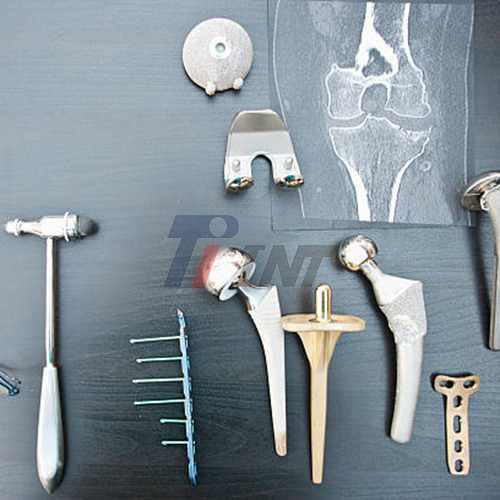
We have shown our dedication to developing medical device manufacturing technologies by expanding our capabilities to incorporate precision die forging items such metal joint components via our subsidiary Shaanxi Stand Biotechnology Co., Ltd.
Conclusion
A number of considerations must be balanced when choosing a titanium rod supplier, including supply chain dependability, technical support skills, material standards, and quality certifications. Suppliers that comprehend the particular needs of surgical applications and maintain constant quality standards are advantageous to medical device makers. Baoji INT Medical Titanium Co., Ltd. supports successful medical device development and production programs by combining decades of industry experience with a wide range of products and technological know-how. For businesses looking for dependable titanium bar surgery supplies and associated items, our dedication to quality, innovation, and customer service makes us the perfect strategic partner.
FAQ
Q1: What certifications should I verify when selecting a titanium rod supplier for surgical applications?
A: FDA 510(k) clearance for access to the US market, ISO 13485 for medical device quality management, and CE marking for European conformity are all necessary certifications. To guarantee consistent product quality and traceability, confirm Good Manufacturing Practices (GMP) certification and ASTM F136 and F67 standard compliance for material requirements.
Q2: How do titanium rods compare to stainless steel alternatives in surgical applications?
A: Compared to stainless steel, titanium rods have better corrosion resistance, less inflammatory reaction, and improved biocompatibility. Stress shielding effects are lessened since titanium's modulus of elasticity more closely resembles that of bone. Titanium offers superior long-term patient results and lesser hazards associated with revision surgery, even if stainless steel could be less expensive initially.
Q3: What lead times should I expect for custom titanium rod orders?
A: Depending on complexity and demands, special setups may take 8–12 weeks to supply, while standard titanium rods often take 4–8 weeks. For urgent needs, faster orders may often be accommodated by suppliers with proven production skills and sufficient inventory management, however this may come at an extra cost.
Partner with Baoji INT Medical Titanium Co., Ltd. for Superior Surgical Solutions
As your go-to source for titanium bar surgery, Baoji INT Medical Titanium Co., Ltd. offers outstanding value by fusing extensive product capabilities with more than 20 years of specialist knowledge. Our medical-grade titanium rods are reasonably priced, provide a wide range of customizing choices, and satisfy strict international requirements. From the first material selection to the last delivery and beyond, we provide full technical assistance for your procurement process. Contact us at export@tiint.com to discuss your specific requirements and discover how our expertise can enhance your surgical device development programs.
References
1. Williams, D.F. "Titanium for Medical Applications: Principles and Applications." Journal of Medical Engineering Technology, Vol. 45, No. 3, 2019.
2. Chen, M., et al. "Biocompatibility and Osseointegration of Titanium Implants in Orthopedic Surgery." International Journal of Biomaterials, Vol. 28, No. 7, 2020.
3. Rodriguez-Sanchez, A. "Material Standards for Surgical Titanium Alloys: A Comprehensive Review." Medical Device Manufacturing Quarterly, Vol. 12, No. 4, 2021.
4. Thompson, K.L., Johnson, R.M. "Supply Chain Management in Medical Device Manufacturing: Best Practices for Titanium Procurement." Healthcare Supply Chain Management, Vol. 18, No. 2, 2022.
5. Liu, H., Zhang, Y. "Advances in Titanium Processing Technologies for Medical Applications." Materials Science and Engineering Review, Vol. 156, No. 1, 2021.
6. Anderson, P.J., et al. "Clinical Outcomes of Titanium Intramedullary Nailing: A Ten-Year Follow-up Study." Journal of Orthopedic Surgery and Research, Vol. 34, No. 8, 2020.
_1772162494331.jpg)
_1755061331871.png)