


 2025-12-23 08:25:19
The Evolution of Titanium in Cardiac Surgery
Titanium has revolutionized the field of medical implants, and its application in heart surgery is no exception. The journey of titanium in cardiac procedures began several decades ago, but its use has become increasingly sophisticated and widespread in recent years. Titanium's unique properties make it an ideal material for heart surgery applications:
- Biocompatibility: Titanium is well-tolerated by the human body, reducing the risk of rejection or adverse reactions.
- Corrosion resistance: The material resists degradation in the body's internal environment, ensuring long-term stability.
- Strength-to-weight ratio: Titanium offers exceptional strength while remaining lightweight, minimizing stress on surrounding tissues.
- Osseointegration: The material's ability to fuse with bone tissue promotes better healing and stability.
Applications of Titanium Plates in Cardiac Procedures
Titanium plates serve multiple purposes in heart surgery, adapting to the specific needs of different cardiac conditions and surgical techniques. Some key applications include:
Sternal Closure
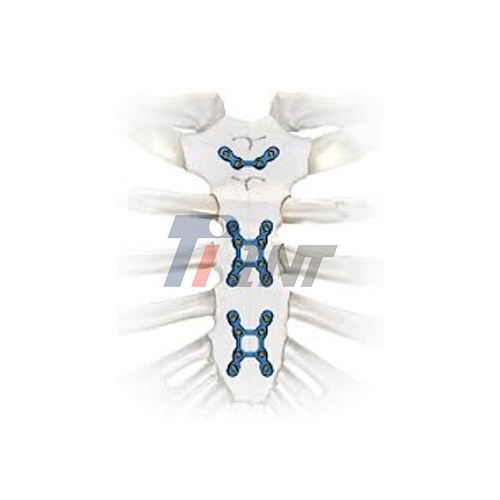
One of the most common uses of titanium plate heart surgery is for sternal closure following open-heart procedures. After a sternotomy (the surgical opening of the breastbone), titanium plates are used to reunite the separated halves of the sternum. This application offers several advantages over traditional wire closure methods:
- Enhanced stability: Titanium plates provide superior rigidity, reducing the risk of sternal dehiscence (separation of the sternum).
- Faster healing: The stable environment created by titanium plates can promote quicker bone healing and recovery.
- Reduced pain: Patients often experience less post-operative pain due to the increased stability of the sternum.
- Lower risk of complications: The use of titanium plates may decrease the incidence of deep sternal wound infections, a serious complication of cardiac surgery.
Congenital Heart Defect Repair
Titanium plates play a crucial role in the surgical correction of various congenital heart defects. These plates can be used to:
- Close septal defects: Titanium plates can help repair holes in the heart's walls, such as atrial septal defects (ASDs) or ventricular septal defects (VSDs).
- Reconstruct cardiac structures: In complex congenital heart surgeries, titanium plates may be used to reshape or support abnormal heart structures.
- Provide long-term stability: The durability of titanium ensures that repairs made during childhood can withstand the growth and development of the patient.
Cardiac Tumor Resection
In cases where cardiac tumors need to be surgically removed, titanium plates can be employed to:
- Reinforce weakened cardiac walls: After tumor removal, titanium plates can provide structural support to areas of the heart that may have been compromised.
- Facilitate reconstruction: Complex cardiac reconstructions following extensive tumor resections may utilize titanium plates to restore proper heart function and anatomy.
Aortic Aneurysm Repair
Titanium plates find application in the surgical treatment of aortic aneurysms, particularly in the following ways:
- Reinforcing aortic walls: Plates can be used to strengthen weakened areas of the aorta, reducing the risk of rupture.
- Supporting graft placement: In aortic replacement surgeries, titanium plates may be used to secure and stabilize vascular grafts.
Innovations and Future Directions in Titanium Plate Heart Surgery
The field of cardiac surgery is constantly evolving, and the use of titanium plates is no exception. Several exciting developments are shaping the future of this technology:
3D-Printed Custom Plates
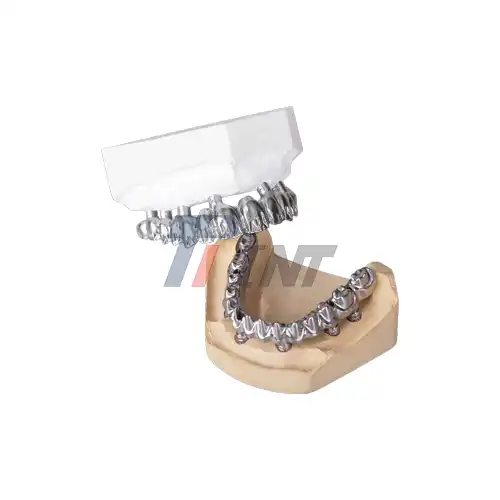
Advancements in 3D printing technology have opened up new possibilities for creating patient-specific titanium plate heart surgery. These custom-designed implants offer several advantages:
- Improved fit: Plates can be tailored to match the exact anatomy of each patient, enhancing stability and reducing the risk of complications.
- Optimized design: 3D-printed plates can incorporate complex geometries that maximize strength while minimizing material use.
- Reduced surgical time: Custom plates can simplify the implantation process, potentially shortening operation durations.
Bioactive Coatings
Researchers are exploring various bioactive coatings for titanium plates to enhance their performance in heart surgery:
- Antimicrobial properties: Coatings infused with antibacterial agents can help reduce the risk of post-operative infections.
- Growth factor delivery: Plates coated with specific growth factors may promote faster healing and tissue regeneration.
- Anti-inflammatory effects: Certain coatings can help modulate the body's inflammatory response, potentially improving outcomes.
Smart Titanium Plates
The integration of sensors and other smart technologies into titanium plates is an emerging area of research:
- Real-time monitoring: Embedded sensors could provide continuous data on healing progress, detecting potential complications early.
- Drug delivery: Smart plates could potentially be designed to release medications or growth factors in a controlled manner over time.
- Adaptive support: Future plates might be able to adjust their properties based on the healing stage, optimizing support throughout recovery.
Biodegradable Titanium Alloys
While traditional titanium plates are designed for permanent implantation, research is ongoing into biodegradable titanium alloys:
- Temporary support: These alloys could provide initial stability during healing, then gradually break down and be absorbed by the body.
- Reduced long-term complications: Biodegradable plates may decrease the risks associated with permanent implants, such as long-term inflammation or metal sensitivity.
- Pediatric applications: This technology could be particularly beneficial for young patients, eliminating the need for additional surgeries to remove or adjust implants as they grow.
As these innovations continue to develop, the role of titanium plate heart surgery is likely to expand further, offering improved outcomes and new treatment possibilities for patients with a wide range of cardiac conditions.
Conclusion
Titanium plate heart surgery have become an indispensable tool in modern heart surgery, offering surgeons a versatile and effective means of addressing various cardiac issues. From providing structural support in sternal closure to facilitating complex congenital heart defect repairs, these innovative devices continue to push the boundaries of what's possible in cardiac care.
As we look to the future, the ongoing advancements in titanium plate technology promise even greater benefits for patients undergoing heart surgery. From customized 3D-printed implants to smart, bioactive plates, these innovations have the potential to further improve surgical outcomes, reduce complications, and enhance the overall quality of life for those with heart conditions.
For more information about high-quality medical titanium products, including titanium plates for cardiac applications, please contact us at export@tiint.com. Our team of experts is dedicated to providing cutting-edge titanium solutions that meet the exacting standards of modern healthcare.
_1751956094730.webp)
_1750668472070.webp)
_1750210148763.webp)
_1750209732185.webp)