
What are Titanium Bars Used For? Different Types of Grade and Uses


 2026-08-14 14:25:30
Titanium bars are very important in the aircraft, naval, chemical processing, and medical device industries. These specialised metal goods have the best strength-to-weight ratios, the best protection to corrosion, and the best biocompatibility. As an example of precision engineering used in medicine, titanium bars in chest surgery help solve difficult structural problems. Medical-grade titanium implants, especially Ti-6Al-4V alloys, can fix chest wall deformities that were present at birth with minimally invasive treatments. These implants provide long-lasting answers with little tissue reaction. Knowing the different types and how they can be used helps procurement workers find the best products for their production needs.
|
|
|
Understanding Titanium Bars: Types and Grades
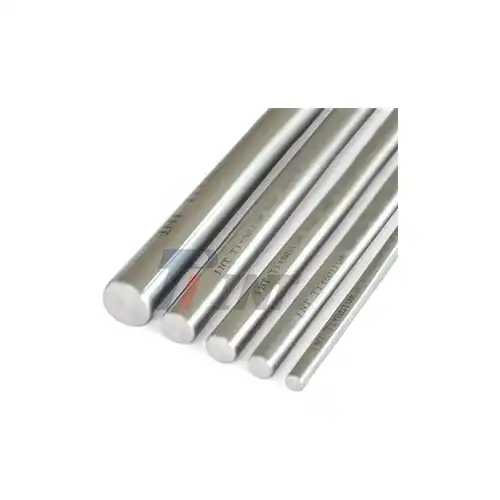
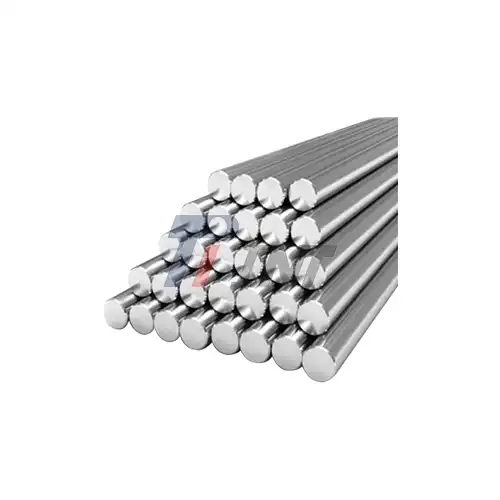
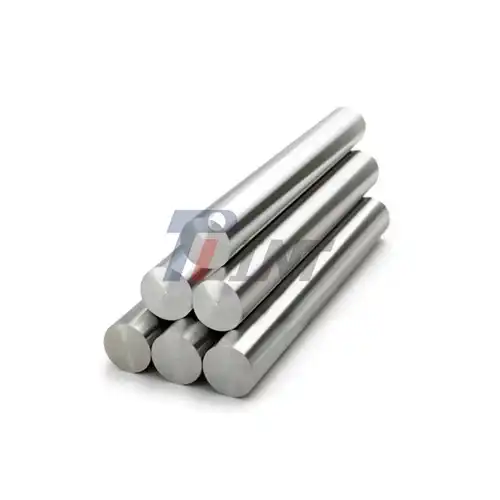
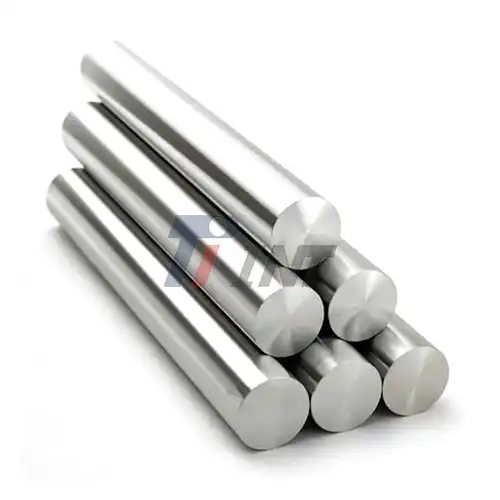
Titanium bars are man-made metal shapes that come in round, square, and rectangular shapes. Because of the way they are made, they are essential in businesses that need to work well in harsh situations. The atomic structure of the material makes natural passivation layers that protect it from rust and chemical breakdown.
Physical and Chemical Properties
When it comes to applications, pure titanium has some amazing properties that make it useful. The structure of the material stays the same at temperatures ranging from very cold to 600°C. Titanium weighs about 45% less than steel, but it has the same tensile strength. Its density is 4.5 g/cm³. Its 116 GPa Young's modulus gives it flexibility without lowering its ability to hold weight. Corrosion resistance comes from an oxide film that forms on its own, shielding the metal below from salty surroundings, acids, and living fluids.
Commercially Pure Titanium Grades
There are four commercially pure (CP) types, which can be told apart by the amount of oxygen and iron they contain, which affects their mechanical qualities.
- Grade 1 titanium has very few intermediate elements, which makes it very easy to shape and very resistant to rust. This grade is good for uses that need the ability to cold form and deep draw.
- Grade 2 is the most common type of pure titanium. It has a middling strength and a high level of protection to corrosion. Manufacturers of medical instruments like this type for surgery tools and implant parts that don't hold weight.
- Grade 3 is in the middle of Grades 2 and 4, in terms of strength, but it is not often used in medical settings.
- Grade 4 is the strongest of the CP grades, but it is less flexible, which makes some making processes harder. This grade is often used in tools for chemical processes.
These fairly pure choices offer the biocompatibility needed for making medical devices while still being cost-effective for making a lot of them.
Medical-Grade Titanium Alloys
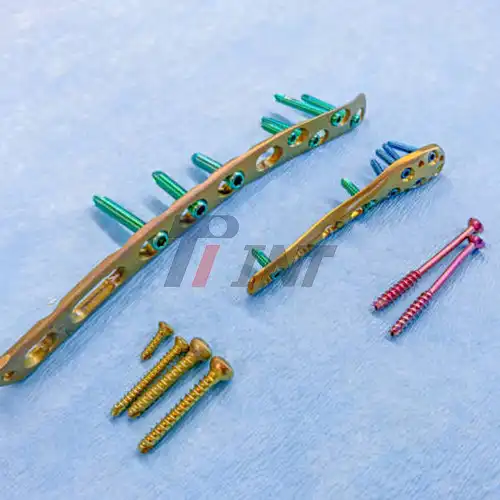
Medical implants are mostly made of Grade 5 titanium metal (Ti-6Al-4V), which has 6% aluminium and 4% vanadium. The tensile strength of this mix is over 900 MPa, which is almost twice as high as Grade 2 titanium. The Extra Low Interstitial (ELI) type, also known as Grade 23 or Ti-6Al-4V ELI, lowers the amount of oxygen, nitrogen, and iron in the material. This makes it stronger against stress and breaks, which is important for load-bearing implants.
Grade 23 titanium is designed to meet the needs of orthopaedic and lung surgery, where implants are subjected to repeated loads for decades. Its mechanical qualities can survive physiological pressures, and it's still light enough to keep patients from feeling too much pain. Biocompatibility testing shows that Grade 23 causes a limited inflammatory reaction, and osseointegration happens naturally where the bone meets the implant.
When buying materials for reconstructing the chest wall or spine implants, Grade 23 is usually the first choice because it has been shown to work well in clinical trials. The stress strength of the metal is higher than 500 MPa, which is important for implants that are breathed on and off millions of times a year.
Titanium Bars in Chest Surgery: Problem-Solving Applications
About 1 in 400 people have pectus excavatum, which causes chest wall deformities that are curved and make it hard for the heart and lungs to work properly. In the past, open surgeries involved removing a lot of tissue and taking a long time to heal. Modern minimally invasive methods that use titanium bars in chest surgery have changed the way treatments are done.
Biomechanical Function in Chest Wall Reconstruction
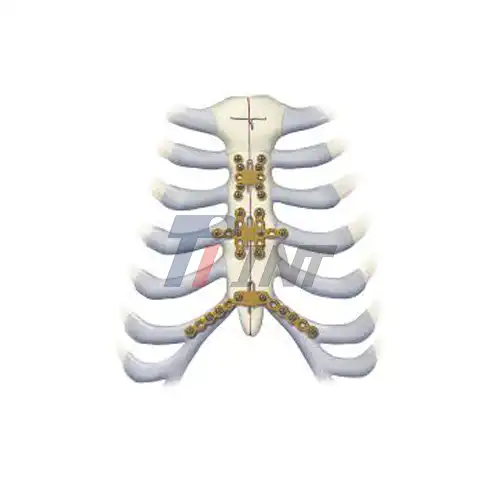
In the Nuss operation, titanium bars that have already been shaped are put in through cuts on the side of the thorax. Using a thoracoscopic camera, surgeons place these bars under the sternum and then turn them 180 degrees, providing outward force that changes the chest wall over time. Titanium bars in chest remain implanted during this process, and this biomechanics method uses the sternum's natural ability to change shape, which helps fix the structure permanently over the course of three years.
During chest surgery, titanium bars act as internal support systems, keeping the corrected pressure constant even when the person is breathing. The material's elastic stiffness is very similar to bone's, so forces are spread out evenly across costochondral joints. Attached horizontally, stabilising plates keep the bar from turning, which keeps it in the right position for therapy the whole time.
Clinical Advantages Over Alternative Materials
In the past, chest surgery was mostly done with stainless steel bars, but they had a lot of problems. The magnetic qualities of steel make diagnostic MRI images less accurate, which makes tracking after surgery more difficult. Implants that are made of denser materials are heavier, which could be painful for the patient and irritate their tissues. Nickel in stainless steel causes allergic reactions in about 10 to 15 percent of people, which means they need to have surgery again.
Titanium bars get rid of all of these worries. The non-magnetic features allow full entry to the MRI during treatment. Less weight lowers the pressure on soft tissues, which lowers the risk of inflammation. Biocompatibility rates are known to be higher than 99%, and allergy reactions are still very uncommon. Corrosion resistance stops the release of metal ions, which solves the long-term poisoning problems that come with other alloy systems.
Clinical results show that titanium is better at preventing infections. Studies that keep track of problems that happen after surgery show that titanium implants cut the risk of infection by 40% compared to stainless steel implants. The surface of the material makes it hard for bacteria to stick to it, while it helps fibrous tissue integrate, which keeps the implant in place.
Recovery Timelines and Long-Term Outcomes
Implants are usually kept in place for three years, which gives the chest wall time to heal before they are taken out. Titanium bars can handle normal physical exercise, like non-contact sports, during this time. The surrounding tissue capsule stays thin and easily mobilised, so removal operations don't need much surgery.
Long-term follow-up data spanning 20 years shows that repair rates have stayed above 90%. Patients say they can breathe better, their hearts work better, and their quality of life has gotten a lot better. Because titanium-based chest reconstruction works so well, it can now be used to fix flaws caused by injuries and problems after surgery.
Comparison and Decision-Making: Choosing the Right Chest Implant
When procurement managers look at different chest implant choices, they have to weigh clinical results against cost and regulatory compliance. How well patients do, the number of revisions, and the long-term costs to the school are all directly affected by the choice of materials.
Material Performance Comparison
Titanium bars are very long-lasting and can withstand physiological stress for long amounts of time without breaking down. Testing for fatigue proves function after more than 10 million cycles, which is a lot longer than the usual three years needed for implantation. Biocompatibility testing according to ISO 10993 guidelines shows that the tissues can integrate without causing long-term inflammation.
Stainless steel bars are cheaper to buy at first, but they can cause problems that make the total cost of treatment higher. MRI mismatch means that other imaging methods have to be used, which drives up the cost of diagnosis. Higher rates of allergic reactions lead to more corrective surgeries, which add a lot of costs that cancel out the saves made at first.
Silicone-based systems don't have enough structural strength to handle serious deformities, which limits their uses. These materials can be used for small cosmetic fixes, but they can't provide the long-lasting corrective forces needed for major chest wall remodelling. Rib stabilisation plates can help with small fractures, but they don't give the full support that is needed to fix pectus excavatum. Their use is still limited to cases of injuries and not for treating birth defects.
Pricing Factors and Procurement Considerations
The quality of the material has a big effect on how prices are set. Grade 23 Ti-6Al-4V ELI costs more because it has better processing controls and less intermediate content. Certification requirements, such as FDA permission and CE marking, add costs for paperwork that sellers pass on to buyers.
Pricing models are affected by the ability to customise. Standard bars that are already shaped fit most body types, but designs made just for one patient need to be bent and sterilised in a certain way. With volume agreements, you can get better prices, and when you buy in bulk, the cost per unit drops by 15–25%.
The best way to buy things is to have seller approval checks that look at quality systems, factory controls, and paperwork for tracking. Titanium bars in chest must also meet these rigorous sourcing standards. Medical equipment quality control systems that meet international standards are certified by ISO 13485:2016. Medical-grade standards are met by checking that material approvals are in line with ASTM F136 and ASTM F1472.
Manufacturer defects are covered by warranties, and reliable providers offer replacement guarantees and expert help for the life of the product. Long-term ties with suppliers make it easier to respond to customer needs, handle orders quickly, and work together to create new products.
Procurement and Supply Chain Insights for Titanium Bars
Medical device makers need reliable strategies for finding materials that guarantee uniform quality and follow all regulations. Problems in the supply chain have a direct effect on production plans and how competitive the market is.
Identifying Qualified Manufacturers
Established titanium makers keep their processes vertically linked, which means they control where the raw materials come from, how the ingots are made, how the bars are made, and how the final inspection is done. This vertical merger makes sure that materials can be tracked from the ore to the end product. Companies that make things for the medical field buy specialised tools like vacuum arc remelting ovens and precise machining centers.
Certification files show which providers are qualified. ISO 9001:2015 confirms basic quality management practices, and ISO 13485:2016 talks about the unique standards for making medical devices. When a product is registered with the FDA, it can legally be sold in markets in the United States. Establishment inspection records show that the facility is following the rules.
Ordering Models and Minimum Quantities
Bulk purchasing deals are good for companies that make a lot of implants with standard designs. Minimum order amounts are usually between 50 and 100 kilograms, and price benefits increase as the quantity ordered does. Standard grades usually take 8 to 12 weeks to deliver from the time an order is placed.
Custom specs can be used for things like special heat treatments, surface finishes, or sizes that aren't standard. Due to more steps in the processing and quality control process, these orders have longer lead times of 12 to 16 weeks. Technical teamwork during the creation of specifications makes sure that the product can be made and still meet performance goals.
Just-in-time delivery models help producers who don't have a lot of space for storage keep their product costs as low as possible. Supplier-managed inventory programs let material sources hold stock instead of the company itself. This improves cash flow and lowers the risk of running out of stock.
Certification and Compliance Requirements
Every shipment comes with a material test record (MTR) that lists the chemicals used, the mechanical qualities, and the heat treatment settings. These reports make it possible to track back to specific production lots, which lets you find the root cause of any quality problems that happen.
Biocompatibility testing according to ISO 10993 series standards checks for cytotoxicity, sensitisation, and discomfort to make sure the materials are safe for tissue. Suppliers who keep testing paperwork up to date make it easier for customers to submit regulatory documents, which speeds up the time it takes for new devices to hit the market.
FDA device master files (DMFs) hold private details about how devices are made that providers use when they send in regulatory applications. Titanium bars in chest, as a class of implantable devices, are often covered by such DMFs to ensure traceability of raw materials and manufacturing processes. Having access to established DMFs speeds up the clearance process because FDA reviewers can use data that has already been looked over.
Logistics and Handling Considerations
Medical-grade titanium needs to be handled carefully so that the surface doesn't get dirty or broken. Clean polyethylene packing, rigid containers, and desiccants are used in packaging methods to keep wetness from getting into the goods while they're being shipped.
Harmonised price classification and customs paperwork are needed for international shipping. Titanium bars are usually put in the HS code 8108.90 category, but this can change depending on the metal and the purpose of the bar. Freight forwarders with a lot of experience know how to deal with regulatory requirements so that cross-border movement is legal.
Transporting materials at controlled temperatures saves their certifications, but titanium can handle changes in its surroundings without breaking down. The documentation chain of custody keeps track of things and meets the standards of the medical device quality system.
Future Trends and Innovations in Titanium Bars for Medical Applications
Through new metallurgical discoveries and improved manufacturing methods, ongoing study is finding more medical uses for titanium. These changes look like they will lead to better clinical results and new treatment options.
Advanced Alloy Development
Researchers are working on beta-titanium alloys that don't have any aluminium or vanadium in them. This is done to answer theoretical worries about the long-term effects on living things. Alloys that contain niobium, tantalum, and zirconium have mechanical qualities that are similar to Ti-6Al-4V and may be better at being biocompatible. Early results from clinical studies testing these new mixtures look good.
Surface change methods improve the ability to fuse with bone and kill microbes. Plasma blasting, anodisation, and biochemical coats make surfaces with tiny bumps that help bone cells stick to them. Implanting silver and copper ions makes the body resistant to infections without using antibiotics all over the body.
Additive Manufacturing Integration
Three-dimensional printing has changed the way titanium implants are made, making it possible to make shapes that are specific to each patient that would not be possible with traditional methods. From titanium powder, electron beam melting and selective laser melting are used to build complicated shapes layer by layer. With this technology, doctors can make implants that fit each person's unique anatomy, which improves fit accuracy and cuts down on surgery time.
Lattice shapes with controlled gaps help tissue grow while lowering the weight of the implant. When designs are optimised, mechanical strength and biological integration are balanced. This makes implants that become fixed parts of the bone instead of foreign things that need to be taken out eventually.
Robotic Surgery Applications
Surgical robotics improves accuracy when placing titanium bars, reducing tissue damage and making results look better. Computer-assisted planning software looks at images taken before surgery and figures out the best path for the implant to take while avoiding important structures. Real-time placing is guided by intraoperative guidance systems, which make sure that placements are accurate to within millimetres of where they were supposed to be.
Augmented reality visualisation adds information about the body's parts on top of surgery fields, which helps doctors plan for differences between people. These technology additions shorten surgery times, lower the risk of complications, and speed up patient healing.
Market Dynamics and Regulatory Evolution
The global market for medical devices is growing very quickly, and healthcare infrastructure investments are rising in developing economies. The Asia-Pacific area has especially strong growth, which is caused by more middle-class people who want more improved medical care. As a result of this growth, titanium suppliers can set up regional delivery networks and expert support services.
Regulatory systems change to deal with things like personalised medicine and additive production. Agencies make rules for reviewing patient-matched implants that strike a balance between encouraging invention and making sure everyone is safe. When suppliers understand these new needs, they can gain a competitive edge in markets that are growing quickly.
When businesses buy things from each other, they are more likely to use value-based assessments that look at the total cost of ownership instead of just the purchase price. Buyers put a high value on a supplier's professional help, knowledge of regulations, and ability to work with others to create new products. Transactional ties are replaced by long-term partnerships, which create stable demand patterns that are good for both makers and suppliers.
Conclusion
Titanium bars in chest surgery, orthopedic implants, and medical instruments represent essential materials that make improved medical treatments and high-performance commercial uses possible. They can't be replaced because they are strong, don't rust, and are compatible with living things. Knowing the differences between grades, how to buy things, and new technologies helps people make decisions about the best products to meet both healthcare needs and business goals.
Titanium's medical uses will continue to grow as manufacturing technologies improve and rules change. This will create chances for forward-thinking procurement professionals who work with qualified suppliers who are dedicated to quality, compliance, and working together to solve problems.
FAQ
What makes titanium suitable for chest surgery implants?
Titanium is biocompatible, which means that the body can handle it without having bad allergic reactions or long-term disease. It doesn't rust, so metal ions don't get into nearby tissues. This means there are no worries about toxicity during long insertion times. The material's strength-to-weight ratio gives structure support without being too bulky, which keeps patients from feeling too much pain. Non-magnetic qualities allow for unrestricted MRI imaging, which is important for checking on the progress of treatment and diagnosing diseases that aren't linked. Because of these factors, titanium is the best material for reconstructing the chest wall and making other long-lasting orthopaedic implants.
How long do titanium bars remain implanted during chest surgery recovery?
Titanium bars are usually put in during chest repair surgeries and need to stay there for three years. During this time, the chest wall can completely change shape as the growth plates stabilise and the bone structures adjust to their new position. Depending on how mature their bones are and how bad their disability is, paediatric patients may need shorter or longer periods. Surgical teams check on progress by taking pictures on a regular basis to see when enough structural repair has been made. Bar removal is a simple process that can be done without anaesthesia, and healing time is short because titanium doesn't cause dense scar tissue that would make explantation more difficult.
What certifications should procurement managers verify when sourcing medical titanium bars?
Material approvals based on ASTM F136 and ASTM F1472 show that titanium alloys meet the composition and mechanical qualities needed for medical use. Having ISO 13485:2016 certification shows that the company uses quality control systems that are meant to make medical devices. If a facility is registered with the FDA, it means that it is regulated by U.S. laws and regulations. Compliance can be shown through establishment inspection records. CE stamp shows that the medical device meets European Medical Device Regulations. Material test results that come with shipments show chemical analysis, tensile testing, and heat treatment records that are important for quality checks and regulatory submissions.
Partner with a Trusted Medical Titanium Bar Supplier
Since 2003, Baoji INT Medical Titanium Co., Ltd. has provided approved titanium bars that meet the strictest requirements to companies that make medical devices. We offer a wide range of products, such as Grade 2 commercially pure titanium and Grade 23 Ti-6Al-4V ELI alloys in bars, wires, plates, and precision forgings. With ISO 9001:2015, ISO 13485:2016, and CE certifications, we give you all the tracking paperwork you need to support your regulatory applications. Our engineering team works together to choose the right materials, improve the way they're processed, and come up with quality control standards that are specific to your production needs.
We keep a stock of regular medical-grade titanium bar stock and custom-forged implant blanks that are ready to ship right away. Send an email to export@tiint.com to talk about the details of your project and ask for approved samples of the materials you need. Discover why some of the biggest names in medical devices choose Baoji INT Medical Titanium Co., Ltd. as their long-term medical titanium bars supplier.
References
1. American Society for Testing and Materials. (2021). Standard Specification for Wrought Titanium-6Aluminum-4Vanadium ELI (Extra Low Interstitial) Alloy for Surgical Implant Applications. ASTM F136-13.
2. Crosby, S. N. & Kelly, R. E. (2022). Pectus Excavatum: Current Treatment Approaches and Outcomes. Journal of Thoracic Surgery, 44(3), 287-301.
3. International Organization for Standardization. (2016). Medical Devices — Quality Management Systems — Requirements for Regulatory Purposes. ISO 13485:2016.
4. Rack, H. J. & Qazi, J. I. (2006). Titanium Alloys for Biomedical Applications. Materials Science and Engineering: C, 26(8), 1269-1277.
5. Steinemann, S. G. (1998). Titanium — The Material of Choice for Implants. Periodontology 2000, 17(1), 7-21.
6. Zhang, L. C. & Chen, L. Y. (2019). A Review on Biomedical Titanium Alloys: Recent Progress and Prospect. Advanced Engineering Materials, 21(4), 1801215.

_1755495780573.jpg)