
Why Choose Gr1 Titanium Welding Wire for Corrosion Resistance


 2026-11-26 09:47:22
Because Gr1 titanium welding wire is made of commercially pure titanium filler metal, it makes an oxide film that is stable and heals itself. This makes the wire resistant to corrosion. It's not hurt by chloride or seawater, and it stays flexible even after being welded. Being low in oxygen and iron makes it the softest grade of metal that isn't alloyed. When you bend and shape weld metal, it won't break.
That is important when a joint needs to last for years in salt water, cleaning chemicals, or the air of the sea. The wire can only work this way if the weld stays clean and well protected. In this guide, I'll talk about the properties, how to weld, rules for choosing, and buying checks that will protect your joints.
|
|
|

Understanding Gr1 Titanium Welding Wire and Corrosion Risks
Why Corrosion-Resistant Welding Materials Matter
When things are acidic, welded joints are often the weakest parts. Since the weld zone is made of a different metal than the base metal, corrosion can begin anywhere in it. If you don't pick the right filler, marine systems, pipes, heat exchangers, and chemical equipment can leak, produce contaminated goods, need extra work, and experience unplanned downtime.
What buyers really care about is the grade of the base metal. Filler doesn't get much attention. That is a bad habit because the filler is a big part of the chemicals that make up the weld when it's done. Make sure the filler doesn't rust as quickly as the metal it's attached to. This is the first step in making a joint that will last.
What Is Gr1 Titanium Welding Wire?
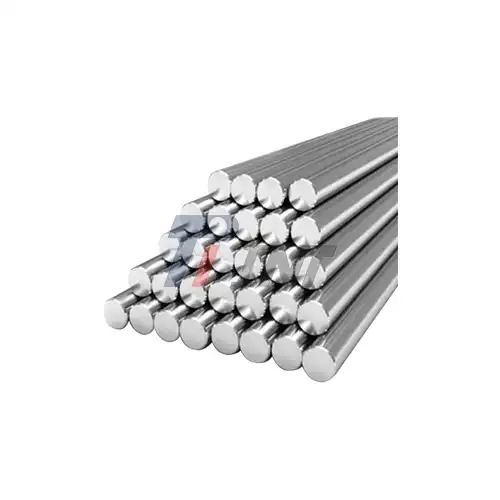
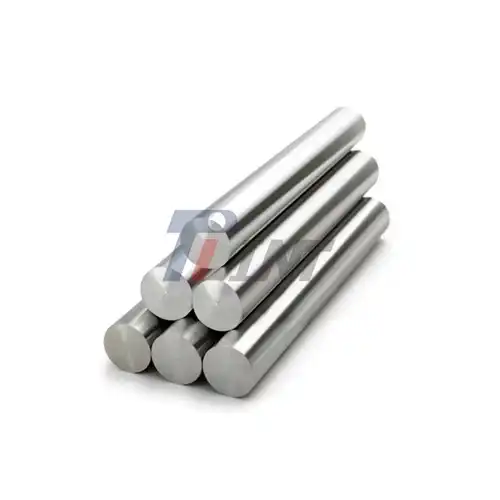
In line with AWS A5.16, Gr1 titanium welding wire is a filler metal made of pure titanium that can be bought in stores. ASTM B863 talks about titanium wire in a general way. One of the types of unalloyed titanium is Grade 1. It has the lowest limits for oxygen, iron, and other elements in the middle. The family member with the least strength is also the most adaptable.
ASTM B348 says that Grade 1 bar needs to have a tensile strength of at least 240 MPa, a yield strength of at least 170 MPa, and an elongation of at least 24%. It's 4.51 g/cm³ dense, and it melts at about 1,668°C. These numbers show the base grade. That's why you should always read the heat analysis and mechanical test reports. They show what the weld joint is made of and how clean and well it was shielded it was.
Why Gr1 Titanium Welding Wire Provides Strong Corrosion Resistance
Titanium quickly changes into titanium dioxide, which is a thin, stable film. The film can be fixed anywhere there is air or water if it gets scratched. This layer sticks to itself and protects Gr1 from seawater, many oxidizing acids, and solutions with chloride that make stainless steel pit. The outcome is still determined by the quality of the weld. Heat, air, and dirt can damage both the top layer and the metal below it while welding.
If the weld is bright silver or light straw, it means the protection is good. If it's blue, gray, or white, it means the protection isn't good. You can only do so much. These grades can rust in cracks if you use hot, concentrated chloride brines on them. Alloyed grades 7 or 12 might fit better. For your service, you should always look at the cracks' shape, flow, temperature, and chemical concentration.
Comparing Gr1 Titanium Welding Wire With Other Filler Options
Gr1 vs. Gr2 Titanium Welding Wire
It doesn't rust much in Gr1 or Gr2. What makes it different is how strong and flexible it is. For Grade 2, the ASTM B348 minimum tensile strength is up to 345 MPa, and the minimum yield strength is up to 275 MPa. Grade 1 is between 240 MPa and 170 MPa. For heavy-duty use, Gr2 is stronger than Gr1, but Gr1 is more bendable and simpler to shape when cold. Try to match the filler to the base metal as much as possible.
When you weld Grade 2 plate together with Gr1 titanium welding wire, the new metal might not be as strong as the metal that was joined. When you draw the stresses, you need to keep this in mind. Before going into production, I think you should make sure that any pairings are correct with your engineer and your qualified procedure.
Gr1 Titanium Welding Wire vs. Stainless Steel Wire
In mild places, stainless steel wire is still a good choice because it is cheap per kilogram and simple to weld. When it comes to volume, titanium is about 40% lighter than stainless steel. This is because titanium has a density of 4.51 g/cm³ and stainless steel has a density of 8 g/cm³. It is thought that Gr1 titanium welding wire will last longer in saltwater and chloride-rich solutions than other grades because its oxide film doesn't rust like stainless grades do. Titanium also needs stricter controls when it is being made.
For example, clean tools should be used and the metal should be covered with inert gas. Most of the time, it costs more at first too. Don't just look at the cheapest wire price when you compare them. You should also think about how much it will cost to fix, replace, stay in good shape, and have it break. Some chemicals or very high temperatures may not react well with either choice. Nickel alloys or other grades of titanium may work better.
Specifications and Size Selection
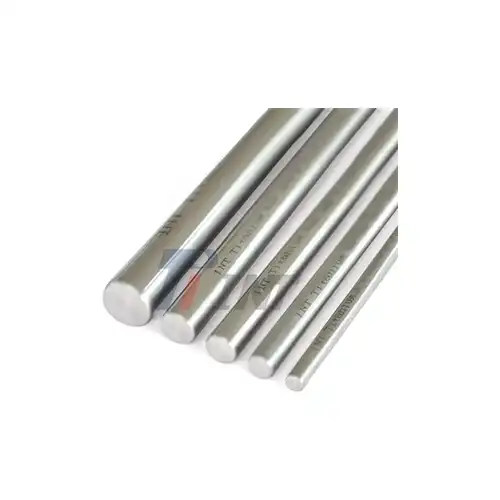
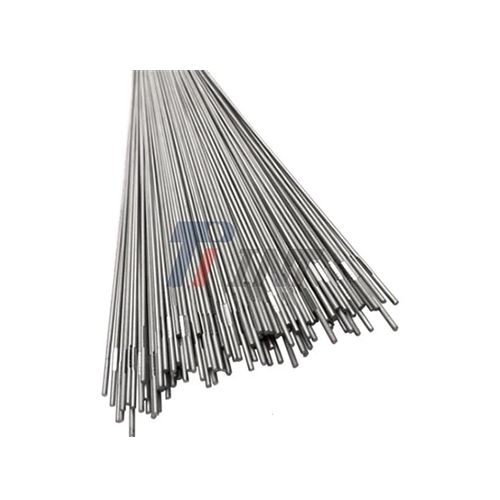
The depth of the base metal, the design of the joint, the welding current, and the rate of deposition should all be taken into account when choosing the wire diameter. Small diameters (often close to 1 mm) are best for precise work and thin sheets because they keep heat from getting in. When you join thin-wall tubing or small assemblies, this option helps protect the base metal. Some TIG rods have diameters as small as 0.3 mm, which are used for things like tubing, heavy sections, and production welding.
Not only that, but also describe the item: MIG wire spooled or TIG wire cut into straight lengths. Add requirements for the size of the tolerances, the packaging, and the cleanliness. The wire shouldn't have any marks, oil, oxide, or residue on it. It should be smooth and shiny. Find out the heat number, get a certificate of conformity, have a chemical analysis done, and find out the results of a mechanical test. Talk to your supplier about the sizes of diameters they have.
Welding Process, Applications, and Risk Control
TIG and MIG Welding Requirements
Most of the time, TIG welding is used for Gr1 because it can precisely control the heat on thin sheets, tubes, and joints that are likely to rust. Pure inert gas must be present for the torch, the filler wire tip, the pool of molten metal, and the cooling weld. For many procedures, you need argon that is at least 99.995% pure, shields that follow behind, and back purging on the root side. For bigger projects and faster deposition rates, MIG welding is a good choice.
But you need to know how to feed the wire, control the arc, cover the shield, and keep your tools clean. Clear the area with a solvent that doesn't leave behind any residue. Get rid of the oxide and water. Before welding, use the right tools and clean your gloves. Write down what the current, voltage, travel speed, arc length, fit-up, and heat input are. Follow a code like AWS D1.9 if your project needs it.
Applications of Gr1 Titanium Welding Wire
The best times to use Gr1 titanium welding wire are when low density, resistance to corrosion, and flexibility are more important than strength. Some of the most common uses are for chemical tanks, reactors, process pipes, heat exchangers, condensers, desalination equipment, and parts for ships and boats that go out to sea. This type of metal can also bend, so it can be used to join thin-walled parts and linings that don't rust.
When cleanliness and traceability are closely watched, companies that make medical equipment and weld commercially pure titanium parts may ask for it. Baoji INT Medical Titanium Co., Ltd. sells welded titanium and titanium alloy pipes and wires to natural gas, petrochemicals, and other industries. Before you start making something, make sure you know the grade, process medium, operating temperature, design code, inspection method, and any other details the customer wants.
Common Problems and Risk-Control Measures
You still need to shield things that are resistant to corrosion. Titanium takes in oxygen, nitrogen, and hydrogen when it gets hot enough to weld. This makes it less flexible and may make it less resistant to corrosion. Alpha case is the name of the oxygen-rich, brittle layer on the surface that is one effect. Most of the time, it's because of fingerprints, oil, moisture, dirty tools, broken packaging, bad back purging, or too much heat input.
H2O can be added to wet wire, which can make it porous. Keep the wire dry and the open packs in a cabinet with low humidity. Before switching between Gr1, Gr2, and alloyed wires, you should look over the base metal and the qualified procedure. If you choose wire based only on price, things can also go wrong because of bad feeding, inconsistent chemistry, and not being able to track it. This can lead to higher rejection rates and higher rework costs.
Buying Guide: Selection, Price, and Quality Checks
How to Select the Right Wire
Start with the parent metal and how it will be used. Write down what kind of titanium it is, how thick it is, the process fluid, how much chloride it is exposed to, the temperature, the pressure, how long it will last, how it is welded, and any codes that apply. Then, look at different suppliers' chemical consistency, diameter tolerance, surface condition, packaging, ability to be tracked, certification, minimum order quantity, current stock level, lead time, prices, and how much they charge. When you compare quotes, you should look at the unit price.
All of the following things have an equal effect on the outcome: technical compliance, inspection systems, experience with exporting, and regular delivery. For big jobs, you should get samples, look at certificates from more than one batch, do test welds, and find out how the supplier deals with stuff that doesn't look good enough. At first, this process takes longer, but it keeps you from being turned down later.
Price, Supply, and Procurement
For each kilogram, the price is based on the price of raw titanium on the market, the wire's diameter, the tolerances, the surface finish, the shape of the product, the order volume, testing, certification, and packaging. It costs more for buyers in the US because of ocean freight, import duties, and insurance. For starters, look at quotes for the same grade and level of writing. Then, add up all the costs of landing. In order to avoid spending less on wire that doesn't make solid welds, you should think about the usable yield, rework, downtime, and rejection rates.
If the amount of demand stays the same every month, you can keep production steady with planned releases, annual supply agreements, or safety stock. Before you send a purchase order, make sure you know how much stock or production there is, how to track batches, how to export, how to support inspections, how to package the goods, how long the lead time is, and how to handle materials that don't meet standards.
Quality Verification Checklist
It is important to check the certificate for Gr1 titanium welding wire against the grade, standard, chemical composition, impurity limits, mechanical data, diameter tolerance, surface finish, heat number, and lot traceability before giving the go-ahead. Next, make sure the items are in sealed, moisture-proof packaging with the correct labels. They should also have a net weight, a good spool condition, a consistent diameter, and a surface that is free of scratches, oil, oxide, and discoloration.
You can see the residue when you wipe it off with a white cloth. A test weld is a good way to check the feeding stability, penetration, look, and defect rate. A silver or light straw bead is what you want. Depending on what you need, you can add dye penetrant, radiographic, ultrasonic, tensile, or corrosion tests. Pay close attention to the amounts of hydrogen, nitrogen, and oxygen because even small amounts can make the material less strong.
When to Choose Gr1 Titanium Welding Wire
If low density, being able to bend, shape, and weld are more critical than having the best strength, select Gr1. If precautions are applied, it may be utilised for thin sections, formed parts, seawater systems, chemical equipment, and rust-prone joints. Choose Gr2 for strength and stainless steel for mildness. Nickel and certain titanium alloys can withstand severe chemicals and high heat. The final option should be based on the entire worth of the project, the documentation, the delivery, the service life, and the likelihood that it will fail.
About Baoji INT Medical Titanium Co., Ltd.
For nearly 30 years, Zhan Wenge has been in the titanium industry. We create and use medical titanium rods, wires, plates, and forged items of various sizes from pure titanium, Ti6Al4V ELI, and titanium alloy. We have ISO 9001:2015 and ISO 13485:2016 medical device quality management certifications. Additionally, they have EU CE safety certification. Some of our customers have been with us for more than 10 years and exclusively purchase titanium supplies from us.
Conclusion
For joints that need to stay flexible and not rust, Gr1 titanium welding wire works best. As a metal oxidizes, seawater, chlorides, and many other chemicals protect it with an oxide film. Because it doesn't have much oxygen or iron in it, it is the softest and easiest to shape and weld of the unalloyed grades. In light use, stainless steel may be cheaper than Gr2, but Gr2 is stronger. Your choice will depend on the parent metal, the loads, and the weather.
Picking up oxygen, nitrogen, or hydrogen is bad for the weld, so you need clean wire, high-purity argon shielding, back purging, and the right steps to do it right. You should compare more than just unit price. You should also look at wire size, documentation, traceability, total landed cost, and the results of a test weld. With all of these checks, joints last longer and welds are rejected less often.
FAQ
Can I weld Grade 2 base metal with Gr1 titanium welding wire?
In a technical sense, yes, but it is better to match ERTi-2 wire to Grade 2 wire. When ERTi-1 is used, the weld might not be as strong as the base metal. This means that the stressed limits may not be met.
What shielding gas does Gr1 welding need?
Argon that is made for welding should be used. It needs to be very pure (99.995%) and have a low dew point. Air or moisture can oxidize and weaken things.
How do I read weld color?
Silver is best, but light straw works just fine most of the time. Blue or purple means there is a lot of oxidation. White or gray flaking means the material is getting weak and needs to be ground out.
How should I store the wire?
It should be kept somewhere dry and cool. Keep opened packs in a dry cabinet to keep them from picking up moisture and hydrogen porosity.
What should I send to request a quote?
Type, size, number, shape, standard, certification requirements, due date, and location of the goods to be sent should all be shared.
Request a Gr1 Titanium Welding Wire Quote From Baoji INT Medical Titanium Co., Ltd.
Want to know where to get Gr1 titanium welding wire? ISO 9001:2015, ISO 13485:2016, and CE have all given Baoji INT Medical Titanium Co., Ltd. their stamp of approval. For more than 30 years, our founder has worked in the titanium business. You can email export@tiint.com with your grade, diameter, quantity, product form, standard, where you want it sent, and when you need it delivered. Our staff will look at what you need and suggest a wire that fits. Visit inttitanium.com to find out more about the item.
References
1. American Welding Society, AWS A5.16/A5.16M: Specification for Titanium and Titanium-Alloy Welding Electrodes and Rods, 2013
2. ASTM International, ASTM B863: Standard Specification for Titanium and Titanium Alloy Wire, 2014
3. ASTM International, ASTM B348: Standard Specification for Titanium and Titanium Alloy Bars and Billets, 2019
4. American Welding Society, AWS D1.9/D1.9M: Structural Welding Code – Titanium, 2015
5. Matthew J. Donachie, Titanium: A Technical Guide, 2nd Edition, ASM International, 2000
6. Christoph Leyens and Manfred Peters, Titanium and Titanium Alloys: Fundamentals and Applications, Wiley-VCH, 2003