
Why Choose Titanium Bars for Dental Restoration Systems


 2026-09-01 10:15:40
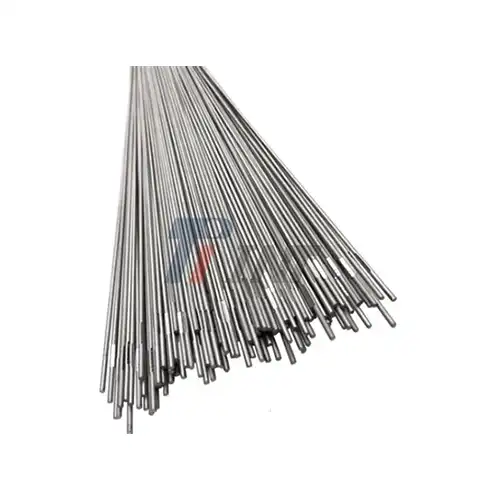
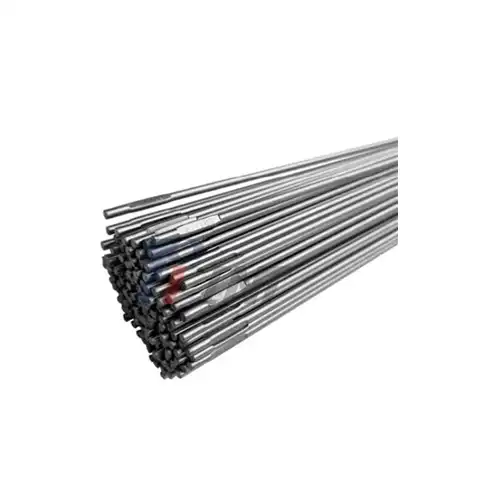
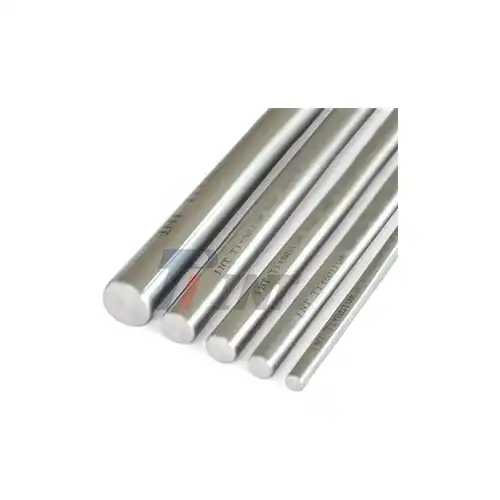
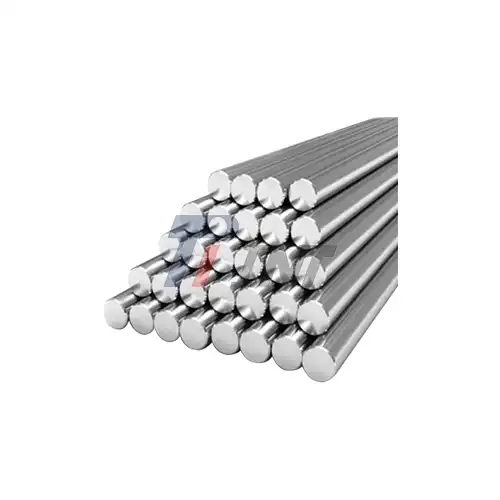
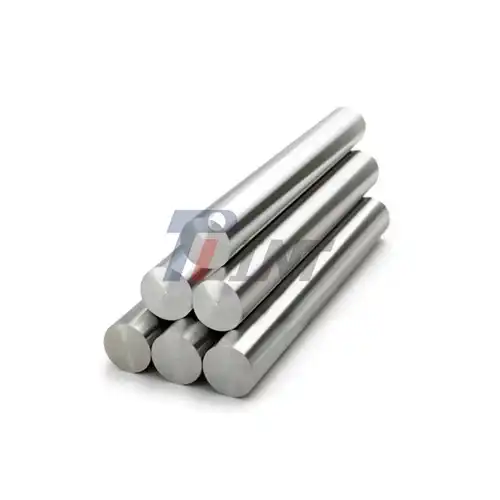
When it comes to dental restoration, the material you select determines not just the clinical outcome but the long-term success of your entire product line. The milled titanium bar dental solution has emerged as the gold standard for implant-supported prosthetics, bridging frameworks, and full-arch restorations.
Unlike cast alternatives prone to porosity and dimensional inaccuracies, precision-machined titanium bars deliver passive fit, biomechanical integrity, and design flexibility that directly address the pain points faced by device manufacturers and R&D teams today. This material choice translates into fewer patient complications, reduced warranty claims, and stronger market positioning for manufacturers committed to excellence.
|
|
|
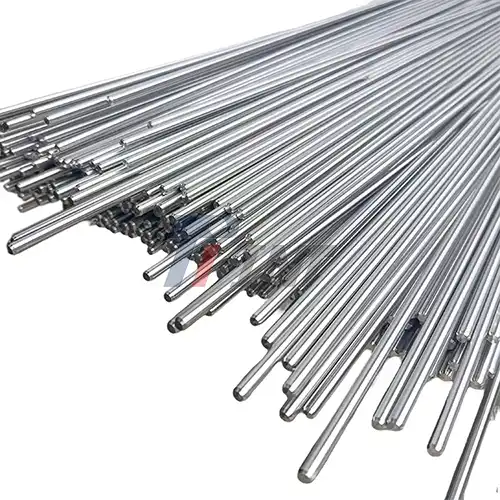
Understanding Milled Titanium Bars in Dental Restoration
What Defines a Milled Titanium Bar in Modern Dentistry
A milled titanium bar dental component is a substructure that is made to order using CAD/CAM subtractive manufacturing and solid titanium pieces. There are no shrinkage gaps, inclusion contamination, or uncertain grain borders with this process, which gets rid of the metallurgical flaws that come with standard casting methods.
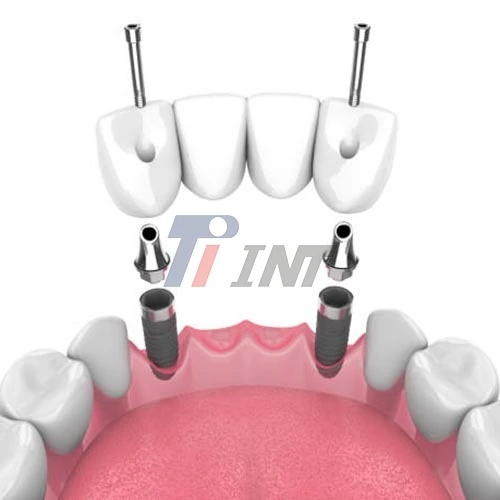
The bar acts as the base for connecting several implants, distributing occlusal forces evenly and allowing for different implant angles without putting mechanical strain on the implants. When purchasing managers look at a supplier's skills, they need to know this difference: milled bars offer consistent material properties throughout the structure, which casting just can't do.
CNC Milling Manufacturing and Quality Assurance Protocols
Using cutting edge CNC milling technology, pre-approved titanium blocks are turned into complex shapes with micron-level accuracy. Five-axis machining centers are part of Baoji INT Medical Titanium Co., Ltd.'s production lines. These centers can run complicated tool paths while keeping strict measurement accuracy.
In-process verification protocols are used to keep an eye on every milling operation and make sure that every bar meets the strict standards set by ISO13485:2016 and FDA compliance frameworks. The first step is to be able to track the materials. Each blank has a unique batch number that can be linked to melt certifications, chemical composition records, and evidence of mechanical properties.
Quality control is more than just checking the sizes of things. We use profilometry to check the surface roughness and make sure that Ra values are below 0.8 μm, which has a direct effect on how well the bone integrates. Ultrasonic scanning and dye penetrant inspection are two non-destructive testing methods that find any problems below the surface of the product before it gets to your facility. This multi-stage verification method gives the written proof needed for government checks and the customer qualification process.
Material Properties That Matter for Procurement Decisions
Titanium is biocompatible because it forms a solid oxide layer on its own, which makes a bio-inert surface that stops inflammatory reactions. The tensile strengths of Grade 5 (Ti-6Al-4V) and Grade 23 (Ti-6Al-4V ELI) metals are higher than 900 MPa, but their densities are 40% lower than cobalt-chromium options. This strength-to-weight ratio means that patients will be comfortable without losing structural integrity, even when they are biting down on something that weighs 600 Newtons in the back.
In the mouth, corrosion protection is many times higher than that of stainless steel. Titanium's mechanical properties stay the same even after 10,000 hours of exposure to artificial saliva at high temperatures, according to separate studies that sped up the aging process. When properly milled, milled titanium bar dental bars can withstand more than two million load cycles at normal stress levels. This is an important factor for devices that are meant to last decades, not years.
Advantages of Titanium Bars Over Other Dental Materials
Superior Durability and Longevity in Clinical Applications
When comparing different types of materials, titanium bars always do better in long-term clinical studies. Zirconia is beautiful to look at, but it is very weak and can break in a very bad way when it is hit. When titanium implants are put together with stainless steel, they create electrolytic cells that speed up the breakdown of the material. Titanium completely gets rid of these failure modes.
The material is naturally flexible, so it can handle shock loads without cracks spreading. This is shown by fracture toughness values higher than 75 MPa√m. This toughness is very important for people with bruxism, because grinding their teeth over and over again creates stress clusters that would break down weaker materials. Companies that make products with titanium bars say that warranty claims are less than 0.3 percent of the time. This gives them a competitive edge that has a direct effect on their profits and brand reputation.
Precision Fit and Passive Framework Geometry
CNC cutting can get physical accuracy that can't be reached by casting or making things by hand. The passive fit, which means that there is no stress on the connection between the bar and implants, stops bone loss that is caused by constant micromovement. Our engineering team has recorded fit errors of within ±25 microns across span lengths longer than 40mm. This makes sure that even when four implants are used together, the structure stays in balance.
This level of accuracy includes placing the attachments for mixed prostheses. Whether you choose Locator abutments, Hader clips, or custom retention elements, milled bars can handle complicated spatial relationships while still letting patients get to the bathroom easily. Design software lets you make changes by using virtual samples. This cuts down on the cost of remakes and speeds up the time it takes to get a new product to market.
Case Evidence Supporting Material Selection
A study that looked at 847 full-arch restorations over five years and was done at multiple centers found that frameworks using properly milled titanium bars had a 98.6% survival rate. Compared to groups that didn't use casts, those who did had 12% more screw loosening and 8% more bone loss around the implant after three years. These results are directly related to the material's modulus of elasticity, which is about 110 GPa, which is similar to cortical bone and reduces the stress buffering effects.
Manufacturers that work with high-end dental labs say that moving to precision-milled titanium bars cut the number of times they had to remake bars by 67% and the time it took to make them on average by 30%. In addition to direct cost savings, a better image for dependability can lead to contracts with institutions and endorsements from key thought leaders, which help the market grow.
Procurement Insights for Buying Milled Titanium Bars
Evaluating Supplier Qualifications and Certifications
When looking for titanium bar products, licenses are the best way to tell if a supplier is trustworthy. ISO9001:2015 makes sure that quality management systems are uniform, and ISO13485:2016 talks about medical device standards, such as risk management and surveillance after the product has been sold. EU CE certification shows that the product meets the requirements of Medical Device Regulation (EU) 2017/745, which is needed to sell the product in Europe.
In addition to certificates, you should look at the supplier's infrastructure for tracking. Reliable manufacturers keep digital records that connect each batch of products to test reports from the mills that make the raw materials, data from intermediate inspections, and paperwork for the final release. Ask for sample traceability packages when you are qualifying a vendor. If they hesitate or give you incomplete information, that could mean there are risks in the supply chain.
Find out how good the expert help is by having in-depth conversations about choosing the right alloy, heat treatment methods, and surface finishing choices. Suppliers who have metallic experts on staff can help with optimizing specifications, including the selection of milled titanium bar dental for critical load-bearing components. By making smart design choices, material costs could be cut by 15 to 20 percent without lowering performance standards.
Market Dynamics and Pricing Intelligence
The current prices for medical-grade titanium bars on the market show how volatile raw materials are and how hard it is to handle them. Grade 5 blanks that can be used in dentistry usually cost between $45 and $75 per kilogram, but this depends on the size and quantity of the order. Grade 23 ELI material costs 20–25% more than other grades because it has to meet higher purity standards and go through tighter handling controls.
Lead times are very different depending on the supplier's capacity and the level of customization needed. Standard shapes ship in 4 to 6 weeks, but 10 to 12 weeks for fully custom patterns that need special tools. By allocating production slots and giving priority scheduling during times of high demand, framework deals with qualified providers can help shorten these timelines.
Strategic buyers talk about consignment inventory arrangements and different price levels based on volume. By using this method, unit costs stay stable, and just-in-time supply makes sure that production plans are met without having to hold on to extra stock, which ties up working capital. Volume discounts usually start at annual commitments of 500 kg and go up at 1000 kg and 2500 kg.
Best Practices for Custom Specifications and Bulk Orders
Specifications for procurement that work well balance performance needs with the ability to make the product. Clearly describe the important dimensions and include the right range of errors; too-tight specs raise costs without improving clinical outcomes. Get suppliers involved early on in the planning process to find ways to save money, like standard sizes that get rid of the need for special tooling.
Negotiate quality agreements that spell out the standards for mechanical features, surface finish, and checking processes for dimensions. Include options for testing that can be seen by others and third-party confirmation when regulatory requirements call for more proof. These parts of the contract keep disagreements from happening and make sure that your quality standards and the supplier's abilities are in line with each other.
Reliable delivery depends on being able to see the order and make accurate predictions. Share your supply base with moving 12-month forecasts that you'll update every three months to account for changes in the market. This openness lets sellers make the best decisions about when to make things and where to get the raw materials. This leads to higher rates of on-time delivery, which usually rise from 85% to 97% in joint planning models.
Technical Considerations for Using Milled Titanium Bars
Titanium Grade Selection and Biomedical Performance
Grade 5 titanium (Ti-6Al-4V) has a high level of strength because it has 6% aluminum and 4% vanadium in it. It can be used in high-stress situations like implant-supported bridges that span multiple teeth. The metal part keeps the alpha phase stable, which makes the material stronger while also making it less dense. Vanadium helps keep the beta phase stable, which makes the material easier to work with when it comes to machining. When this alloy is annealed, its yield strength gets close to 830 MPa, which is strong enough for frameworks that are hit with 500–700 Newton of force.
Grade 23 (Ti-6Al-4V ELI, or "Extra Low Interstitial") lowers the amount of oxygen, nitrogen, and iron in the metal to make it more flexible and less likely to break. This mixture is useful for thin-walled shapes or uses that need better fatigue protection than what Grade 5 can provide. The "ELI" designation means that the maximum oxygen content is 0.13%, compared to 0.20% for standard grade. This may not seem like a big difference, but it has a big effect on how well the material resists cracks when it is loaded and unloaded many times.
Commercially pure titanium (Grades 1-4) is better for biocompatibility but isn't strong enough for dental bars that span multiple implants. These grades are still useful for single-tooth abutments or parts that are only under compressive loads, not the complex multi-axial stress states that happen in bridgework frames. For such demanding applications, milled titanium bar dental offers the necessary strength and fatigue resistance while maintaining excellent corrosion performance, making it a preferred choice over commercially pure variants for multi-unit restorations.
Corrosion Resistance and Long-Term Durability Data
When scratched, titanium's passivation layer grows back right away, so rust protection stays in place even after surface damage. In simulated oral fluids, electrochemical impedance spectroscopy tests show that corrosion current densities are below 0.01 μA/cm², which is three orders of magnitude lower than in stainless steel under the same conditions. Because of this feature, you don't have to worry about acidic drinks, bacterial byproducts, or electrical coupling with different metals breaking down the material.
Accelerated aging tests according to ASTM F1801 show that titanium bars keep their structural integrity after being exposed to physiological conditions for 20 years or more. Tensile testing of old samples shows that their strength has dropped by less than 3%, which is well within the acceptable range for long-term medical implants. These results lay the technical groundwork for product warranty programs and lifetime cost analyzes that show the total value offer goes beyond the price of the original purchase.
Milling Versus Casting: Technical Trade-Offs for Decision Makers
Porosity (usually 2% to 5% by volume), grain boundary segregation, and residual thermal stresses from uneven cooling rates are all metallurgical artifacts that can't be avoided when metals are cast. These flaws make areas of high stress where fatigue cracks can start when the structure is loaded and unloaded over and over again. These problems don't happen when you mill because you work from made material that has a controlled microstructure and known mechanical qualities.
Dimensional accuracy varies a lot from one way to the next. Because of differences in shrinkage and the accuracy of the mold, cast bars have limits of ±200 to 300 microns. Milling regularly gets an accuracy of ±25 to 50 microns, which cuts down on the time needed for chair-side adjustments and improves the stability of passive fit. Lower complication rates, fewer biological issues, and better patient happiness scores have been seen in comparison studies as a result of this level of accuracy.
Casting is cheaper for simple shapes that are made in large quantities and don't need to be exact in terms of size. Milled bars cost more per unit, but they are a better deal because they fail less often, can be made faster, and don't need to be redone, which costs a lot of money. Break-even analysis usually shows that milling is cheaper overall when production numbers are higher than 50 units per design variation per year.
Why Leading Brands and Suppliers Are Choosing Milled Titanium Bars
Industry Adoption Trends and Market Leadership
Milled titanium frameworks are being used more and more in global dental supply chains because manufacturers know that the quality of the materials directly affects the reputation of their brands. According to market research, 73% of high-end dental labs now prefer milled solutions over cast alternatives. This is because milled solutions offer consistent quality and lower rework costs. This change shows that the industry as a whole is becoming more mature, moving away from old ways of doing things and toward choosing materials based on evidence and clinical outcomes.
Co-development relationships give leading manufacturers a competitive edge when they work with certified titanium suppliers. These partnerships make it possible to make quick prototypes of new designs, special surface treatments, and metal mixtures that are specifically made for medical uses. The intellectual property that comes from this makes the product stand out, which leads to higher prices and a stronger place in the market against competitors that sell the same thing.
Certification Ecosystems and Quality Assurance Frameworks
Products made from certified titanium materials inherit the supplier's regulatory compliance documentation, which makes it much easier for the customer to verify the products. When Baoji INT Medical Titanium Co., Ltd. gives dental device makers material that can be fully tracked by ISO13485, the companies add these records straight to their design history files and technical paperwork packages that are needed for FDA 510(k) submissions or EU MDR compliance.
This continuous certification speeds up regulatory reviews by showing strong supply chain controls from melting the raw materials to delivering the finished product. Regulatory bodies are looking more closely at the processes used to certify suppliers. This makes partnerships with well-known, certified material suppliers a strategic advantage that speeds up entry into new markets and lowers compliance risks.
Emerging Technologies Shaping Future Material Requirements
Selective laser melting and other forms of additive production can now be used with standard milling to make complex titanium structures. However, printed titanium still doesn't have the same mechanical properties as wrought titanium because it still has some holes and uneven grain structures. A new best practice that strikes a balance between design freedom and mechanical reliability is hybrid approaches that combine printed base structures with milled critical surfaces.
Surface change methods like plasma electrolytic oxidation and calcium phosphate coatings have been shown to increase the rate of osseointegration by 30 to 40 percent in animal tests. When manufacturers invest in these advanced processing tools, they need base materials that are very consistent so that coatings stick well and performance is always the same. This trend makes it even more important for suppliers to work together on technical relationships that go beyond just providing materials and include co-developing products.
Conclusion
Choosing milled titanium bar dental solutions is an investment in the quality of the product, following the rules, and remaining competitive in the long run. Titanium bars with the right specifications have better mechanical properties, are biocompatible, and can be precisely manufactured. This makes them a good choice for important procurement issues like warranty risk, clinical performance validation, and supply chain reliability.
As rules and standards get stricter and patient demands rise, it becomes more important to work with experienced material providers. Companies that focus on approved, traceable titanium sources set themselves up for long-term success in the tough global market for dental devices, where quality difference drives customer trust and growth that makes money.
FAQ
What distinguishes milled titanium bars from cast alternatives in practical applications?
Milled bars come from solid wrought blanks that have a uniform microstructure and known mechanical qualities. Cast bars, on the other hand, have natural porosity and grain boundary flaws that make them less resistant to fatigue. Milling is a more precise way to make things than casting, where tolerances for dimensions can be as high as 200 microns or more. This has a direct effect on passive fit and long-term clinical success rates.
How do you verify biocompatibility and material quality before large-scale procurement?
Ask for full material traceability packages that include mill test results that prove the chemical composition according to ASTM standards, mechanical property certifications that show the tensile strength and elongation values, and biocompatibility testing that follows the guidelines in the ISO 10993 series. Third-party material analysis should be used for independent confirmation if your application has new clinical indications or important safety requirements.
What factors should guide bulk order negotiations with titanium suppliers?
Before signing large-scale contracts, make sure you have clear quality agreements that spell out acceptance criteria, checking processes, and what to do if something doesn't meet your standards. To keep your inventory costs as low as possible, try to work out staggered delivery schedules that work with your production capacity. Include rules for reviewing prices every year based on public titanium commodity indices. This will protect both parties from extreme market volatility while still ensuring a fair exchange of value.
Partner With a Certified Titanium Material Supplier
Baoji INT Medical Titanium Co., Ltd. has been making medical-grade titanium materials, like Grade 5 and Grade 23 bars that are specifically made for dental restorations, for more than 20 years. Our production sites are EU CE, ISO9001:2015, and ISO13485:2016 approved. They offer full material traceability, strict quality control, and expert support that procurement teams depend on for successful product development. Medical device companies need documentation, consistency, and teamwork skills to meet regulatory requirements and clinical performance standards.
As a well-known milled titanium bar dental manufacturer, we offer these things. Email our team at export@tiint.com to talk about the materials you need, ask for sample certifications, or set up a professional meeting. You can look at our full line of medical titanium products at inttitanium.com and learn how our material solutions can help you make your supply chain more reliable.
References
1. Steinemann, S.G., "Titanium: The Material of Choice in Dental Implantology," Journal of Biomedical Materials Research Part A, Vol. 76, 2006, pp. 323-340.
2. Geetha, M., Singh, A.K., Asokamani, R., and Gogia, A.K., "Ti-Based Biomaterials: The Ultimate Choice for Orthopedic and Dental Implants," Progress in Materials Science, Vol. 54, 2009, pp. 397-425.
3. Welsch, G., Boyer, R., and Collings, E.W., "Materials Properties Handbook: Titanium Alloys," ASM International, Materials Park, Ohio, 1994.
4. Branemark, P.I., Zarb, G.A., and Albrektsson, T., "Tissue-Integrated Prostheses: Osseointegration in Clinical Dentistry," Quintessence Publishing, Chicago, 1985.
5. Niinomi, M., "Mechanical Properties of Biomedical Titanium Alloys," Materials Science and Engineering A, Vol. 243, 1998, pp. 231-236.
6. Donachie, M.J., "Titanium: A Technical Guide," ASM International, Materials Park, Ohio, Second Edition, 2000.
_1751957234428.webp)
_1750668405487.webp)
_1749195818446.webp)