

ASTM F67 vs F136 Titanium Bar: Which Should You Choose?


 2026-08-06 10:32:02
When selecting between ASTM F67 Titanium Bar and ASTM F136 titanium bar for medical device manufacturing, the decision hinges on your specific application requirements. ASTM F67 represents commercially pure (CP) titanium with exceptional biocompatibility and corrosion resistance, ideal for dental implants and lower-stress surgical components. ASTM F136, the Ti-6Al-4V ELI alloy, delivers significantly higher mechanical strength for load-bearing orthopedic implants like hip stems and spinal fixation hardware. Your choice ultimately depends on whether you prioritize ductility and osseointegration speed or require superior tensile strength for high-stress environments.
|
|
|
Understanding ASTM F67 and F136 Titanium Bars
When making medical devices, it's always hard to choose materials that are both biologically safe and good at their job. Both ASTM F67 Titanium Bars and ASTM F136 titanium bars have won their place in the making of surgical implants, but they are used for very different things in the medical field.
What is ASTM F67 Titanium Bar?
ASTM F67 Titanium Bar is a type of pure titanium that is made to be used in medical implants. The standard has four grades, from Grade 1 to Grade 4. The grades are separated by the amount of oxygen in the material, which has a direct effect on its mechanical strength. Grade 1 is the most flexible, with a yield strength of about 170 MPa, and Grade 4 has a yield strength of about 483 MPa. When this commercially pure titanium is exposed to oxygen, it forms a stable layer of titanium dioxide. This layer stops ions from escaping in physiological settings. The material helps with important pain points like stress shielding, which happens when implants are too stiff and stop natural bone loading. It does this by having a modulus of elasticity that is closer to natural bone than stainless steel alternatives.
Defining ASTM F136 Titanium Alloy
The Ti-6Al-4V Extra Low Interstitial (ELI) metal is defined by ASTM F136. It has strict rules about the amount of oxygen, nitrogen, and iron it contains and has about 6% aluminum and 4% vanadium. Because it is so strong for how light it is, this metal was originally used in aircraft but was later adapted for medical use. Usually, it's stronger than 795 MPa, which is almost twice as strong as CP Grade 4 titanium. The ELI name means that there are fewer interstitial elements than in normal Ti-6Al-4V. This makes the material more resistant to fractures and wear in hip and knee replacements, which are subject to heavy cyclic loads.
Chemical Composition Breakdown
The main difference between these materials is their chemical make-up. ASTM F67 is mostly made up of titanium (over 99%), oxygen (0.18% (Grade 1) to 0.40% (Grade 4)), iron (capped at 0.50%), and hydrogen (0.015%) to keep the metal from becoming too weak. The aluminum in ASTM F136 makes the alpha phase stronger, and the vanadium stabilizes the beta phase. This makes a matrix with two phases. The ELI guideline limits the amount of oxygen to 0.13%, which is much lower than the normal Ti-6Al-4V. This makes the material more flexible at very low temperatures and more biocompatible by lowering the amount of reactive elements it contains.
Key Differences Between ASTM F67 and F136 Titanium Bars
When purchasing managers look at these materials, they need to know more about the performance factors that have a direct effect on how well the gadget works and how well it meets regulatory requirements. The differences go beyond just comparing strengths; they also affect how the implants are made and how they behave over time.
Mechanical Property Comparison
The difference in mechanical properties between these grades has a big impact on their suitability for use. ASTM F67 Titanium Bar Grade 4 has a tensile strength of 550 MPa and an elongation of more than 15%. This is strong enough for dental abutments and mandibular repair plates where the ability to shape is more important than the load capacity. ASTM F136 has a tensile strength of more than 860 MPa and a yield strength of about 795 MPa. This is important for femoral stems that have to withstand repeated loading cycles. The ASTM F67 elastic modulus is lower than the F136 elastic modulus, at about 103 GPa compared to 113 GPa. However, both are still much lower than the 200 GPa of stainless steel, which lowers the risk of stress shielding.
Corrosion Resistance in Physiological Environments
Both materials are very good at resisting corrosion in body fluids that are high in salt, but there are some small differences. When ASTM F67 is exposed to oxygen or moisture, it instantly forms a passive oxide layer that protects against pitting and crevice corrosion, even in areas of tissue that are inflamed and have a pH that changes. ASTM F136 also has strong corrosion resistance, but the alloying elements need to be carefully controlled during production. If the inactive layer is broken, vanadium ions could leak out, but this isn't a problem if the material is processed correctly. The titanium dioxide layer on both materials helps the bones adhere directly to each other without fibrous encapsulation, which shortens the time it takes for integration to happen.
Manufacturing and Machinability Considerations
When it comes to production, ASTM F67 grades are easier to work with than F136 grades, especially the softer Grade 1 and Grade 2 types. The CP titanium makes it possible to do complex milling and turning operations with less tool wear, which lowers the cost of making each part. Because it is harder and tends to work-harden more quickly, ASTM F136 needs stronger tools and slower cutting speeds. There are big differences in how heat treatments are done. For example, ASTM F67 only needs stress relief annealing, but F136 needs solution treatment and aging cycles to get the best microstructure. When you buy from suppliers, these differences in handling affect lead times and minimum order numbers.
How to Choose Between ASTM F67 and F136 for Your Project?
The people who make decisions need to make sure that the properties of materials match the needs of specific devices, the legal process, and the facts of business. During the choosing process, more than just basic power requirements are taken into account.
Application-Specific Selection Criteria
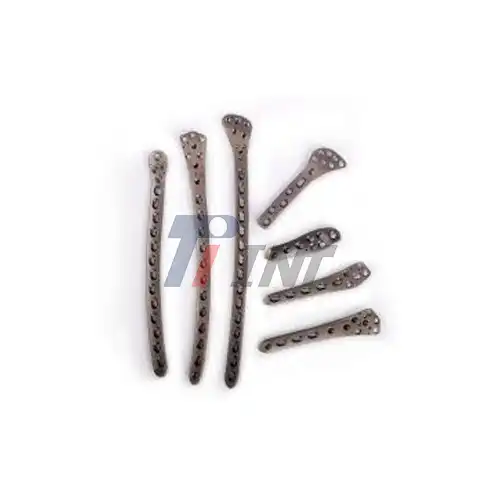
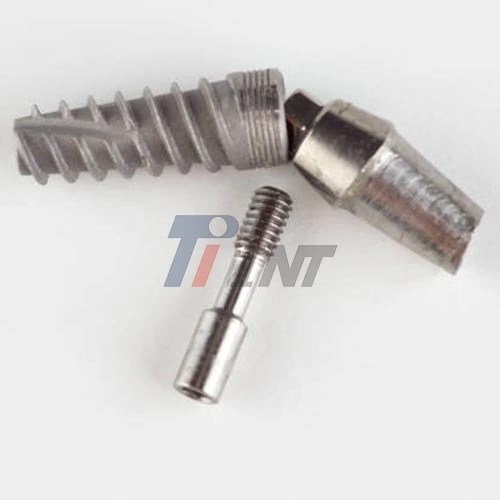
Because it is made of pure titanium, ASTM F67 Titanium Bar Grade 4 is strong enough for dental implant fixtures and bone screws in areas that don't need to hold weight. It also helps the bone integrate more quickly. Grade 2 is very easy to shape, which is great for orthopedic trauma plates because it lets doctors shape implants during surgery. Load-bearing parts like hip stems, tibial components, and spinal pedicle screws need ASTM F136's high fatigue strength so they can last millions of loading cycles without breaking. Both materials work well for devices that need to be compatible with MRIs because neither one is ferromagnetic.
Cost and Supply Chain Factors
Budget concerns go beyond the cost of raw materials. ASTM F67 usually costs 15–25% less per kilogram than F136, but the difference in price gets smaller when you take into account how well it can be machined. Commercially pure titanium is easier to work with, which can lower the overall cost of production even though the ingredient costs are the same. For medical device production schedules, supply chain reliability is very important. Established suppliers, such as Baoji INT Medical Titanium, keep a wide range of grades and specifications in stock, which keeps lead times from changing too much. When figuring out the total cost of ownership, you should look at the material yield rates. Because ASTM F67 is easier to machine, it often produces less scrap when complicated shapes are used.
Certification and Compliance Requirements
Regulatory routes have a big impact on the choice of material. The FDA says that both ASTM F67 and F136 are acceptable for Class II and Class III medical devices as long as they have the right paperwork. ISO 5832-2 talks about pure titanium (the same as F67), and ISO 5832-3 talks about the Ti-6Al-4V metal. Suppliers must show certificates for the materials that show their chemical make-up, mechanical qualities, and records of their heat treatment. During audits, it's important to have records that link finished products to specific lots of materials. Medical Device Regulation (MDR) 2017/745 says that similar paperwork is needed for CE approval for European markets. Teams in charge of buying things should check that sellers keep their ISO 13485 certification for quality control systems in medical devices.
Comparative Analysis: ASTM F67 Titanium Bar vs Other Common Materials
Knowing how commercially pure titanium compares to other materials helps procurement specialists make decisions that meet performance needs and help them stand out from the competition.
ASTM F67 versus Stainless Steel 316L
Stainless steel 316L has traditionally been the most popular material for surgical implants because it is cheaper and easier to work with. 316L has a yield strength of about 190 to 210 MPa when it is annealed, which is less than ASTM F67 Grade 4 but more than Grades 1-3. The biggest problem with stainless steel is that it contains nickel (10–14%), which causes allergic responses in about 10–15 percent of patients, according to clinical studies. ASTM F67 Titanium Bar completely gets rid of allergy concerns and offers density benefits—titanium's 4.51 g/cm³ compared to steel's 8.0 g/cm³ lowers implant mass by nearly 45%, making patients more comfortable in dental and maxillofacial applications.
Comparison with ASTM B348 Grade 5 Titanium
The industry standard for Ti-6Al-4V is ASTM B348 Grade 5. It has a similar make-up to F136 but doesn't have the ELI interstitial controls or medical-specific manufacturing requirements. The mechanical qualities are very similar, with tensile and yield values that are about the same. The difference is in the procedures for quality assurance and the biocompatibility testing. Because of rules about materials that will be in contact with people for a long time, medical device makers can't use B348 instead of F136 in implant applications. Even though the differences between the interstitial elements may not seem important, they do have an effect on how hard it is to break and how fast fatigue cracks spread under normal loading conditions.
Positioning Against ASTM F1295 Wrought Titanium Alloy
As an option to F136 when vanadium is a problem, ASTM F1295 covers wrought Ti-6Al-4V and Ti-6Al-7Nb metals that are made for surgical implants. The version with niobium stops any possible vanadium ion escape while keeping the same mechanical qualities. Vanadium is cheaper than niobium, which makes F136 the better choice from a cost standpoint. Studies of clinical performance show that F136 and F1295 are equally good at osseointegration and biocompatibility. This means that the choice between them is mostly based on area regulatory tastes and surgeon familiarity, not on differences in performance that can be measured.
Procurement Tips for ASTM F67 and F136 Titanium Bars
To get medical-grade titanium that you can trust, you need to pay attention to the skills of your suppliers, their quality systems, and your logistics planning. Strategic approaches to sourcing can help procurement professionals lower risks.
Evaluating Supplier Qualifications
Before starting a relationship with a provider, companies that make medical devices must make sure that the source has the right certifications. When a supplier gets ISO 13485 certification, it means that their quality management system meets the standards for making medical devices. Material test reports should be sent with every shipment to make sure that the grades are met in terms of chemical composition and mechanical properties. Suppliers who are registered with the FDA and have been designated as a European Authorised Representative make regulatory submissions easier. Long-term relationships with manufacturers who have been making medical titanium for 15 to 20 years, like well-known Chinese makers whose quality is recognized around the world, protect against supply disruptions.
Customization and Minimum Order Quantities
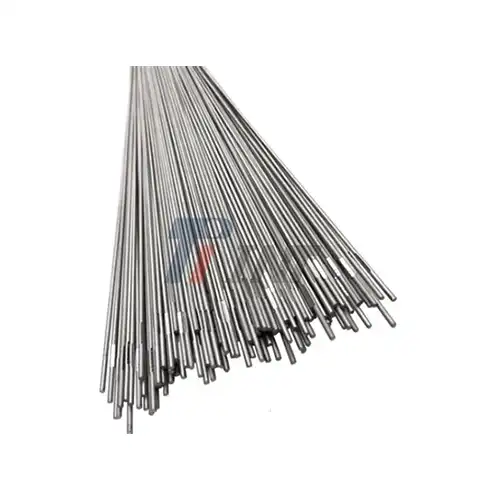
Standard bar diameters are between 6 mm and 300 mm, and lengths can be as long as 4000 mm. Custom measurements can cause wait times to grow and setup fees to be charged. Minimum order numbers (MOQs) vary by supplier and standard. For example, 10mm and 16mm diameter bars are common sizes that need lower MOQs (100–200 kg), while specialized dimensions need 500 kg minimums. Forging near-net-shape parts cuts down on downstream machining, which raises the material yield. When making your purchases, you might want to combine orders for multiple part numbers into a single one to meet MOQ requirements and keep your inventory costs low.
Quality Assurance and Documentation Requirements
Full material tracking starts with heat lot numbers that connect finished bars to specific melt batches. Ultrasonic testing papers prove that the inside is sound, which is very important for uses that can't handle fatigue. Reports from surface inspections show that there are no cracks, seams, or inclusions that are bigger than what is allowed. Measurements of grain size and pictures of microstructure show that the thermomechanical processing was done correctly. Implant makers who want to get FDA 510(k) clearance can speed up the process by using master files that list specific material sources. Before making production promises, make quality agreements that spell out how often to check, what to do if something doesn't meet standards, and when to take appropriate action.
Conclusion
The choice between ASTM F67 Titanium Bar and ASTM F136 titanium comes down to the biomechanical needs and regulatory route of your product. ASTM F67 is great for uses that need biocompatibility, resistance to corrosion, and shapeability, especially in tooth and maxillofacial repair where osseointegration speed is very important. ASTM F136 is used in load-bearing orthopedic uses that need high strength and resistance to wear. Both materials can be used in MRI machines and don't cause nickel allergies like stainless steel does. To do successful procurement, you need to work with certified suppliers who can provide full documentation, consistent quality, and technical support throughout the entire product development lifecycle.
FAQ
Q1: What industries primarily use ASTM F67 and F136 titanium bars?
A: The main customers are companies that make medical devices, like tooth implants, orthopedic trauma fixation devices, spine instrumentation, and parts for joint replacements. ASTM F67 Titanium Bar is used by dental labs to make unique abutments and substitutes that are supported by implants. ODMs that make orthopedic parts cut F136 bars into bone screws, tibial trays, and femoral stems. Aside from healthcare, aerospace companies use similar types (but with different specs) for structural parts that need to be strong for their weight and not rust in harsh conditions.
Q2: Can ASTM F67 and F136 be used interchangeably in medical devices?
A: Material substitution usually needs new regulatory submissions and needs to be carefully looked over. Both grades are biocompatible, but their different material properties mean they can't be used directly in most situations. If you replace F136 with F67 in load-bearing implants, the mechanical failure could happen because F67 is not strong enough. On the other hand, replacing F67 with F136 in dental uses adds cost without improving efficiency. Before the alternative material is used, design verification testing must be done to make sure it meets all functional requirements.
Q3: What are typical delivery timeframes for bulk titanium bar orders?
A: Lead times depend on the need, the quantity, and the supplier's availability. Standard diameter bars in common grades (ASTM F67 Grade 2 or Grade 4) usually ship in 4 to 6 weeks for orders less than 500 kg. It could take 8 to 12 weeks for custom sizes or less usual requirements. Forging schedules and quality checks must be worked around production cycles that last 12 to 16 weeks for large contracts that involve multiple tonnes. When you pay more for expedited production, lead times can be cut by 30 to 40 percent. Setting up blanket purchase orders with planned releases helps producers keep a steady supply without having to buy too much inventory.
Partner with Baoji INT Medical Titanium for Your Titanium Bar Needs
Baoji INT Medical Titanium Co., Ltd. has been making medical-grade titanium since 2003 and has worked with medical device manufacturers around the world for that time. All four types of ASTM F67 Titanium Bars are in our full line of products. We also have ASTM F136 Ti-6Al-4V ELI bars with widths ranging from 6mm to 300mm. As long as we keep our ISO 13485:2016 certification and EU CE compliance, we can give you the high-quality paperwork that regulators need. To help you make the most of your production efficiency, our expert team can help you choose the right materials, make suggestions for processing, and provide custom forging services. Our stable supply chain makes sure that you get what you need on time, whether you need small amounts for R&D testing or large amounts for production with strict delivery dates. Get in touch with our export team at export@tiint.com to talk about your needs with an experienced source who knows how important it is to make medical implants.
References
1. American Society for Testing and Materials. (2013). ASTM F67-13: Standard Specification for Unalloyed Titanium, for Surgical Implant Applications. ASTM International, West Conshohocken, PA.
2. American Society for Testing and Materials. (2013). ASTM F136-13: Standard Specification for Wrought Titanium-6Aluminum-4Vanadium ELI Alloy for Surgical Implant Applications. ASTM International, West Conshohocken, PA.
3. Niinomi, M. (2008). Mechanical biocompatibilities of titanium alloys for biomedical applications. Journal of the Mechanical Behavior of Biomedical Materials, Volume 1, Issue 1, Pages 30-42.
4. International Organization for Standardization. (2016). ISO 5832-2:2018 Implants for surgery — Metallic materials — Part 2: Unalloyed titanium. Geneva, Switzerland.
5. Rack, H.J. and Qazi, J.I. (2006). Titanium alloys for biomedical applications. Materials Science and Engineering: C, Volume 26, Issues 8, Pages 1269-1277.
6. Long, M. and Rack, H.J. (1998). Titanium alloys in total joint replacement—a materials science perspective. Biomaterials, Volume 19, Issues 18, Pages 1621-1639.
_1755061801114.png)