
Best 0.5 mm Titanium Sheet Manufacturers for OEM Projects


 2026-02-03 09:30:46
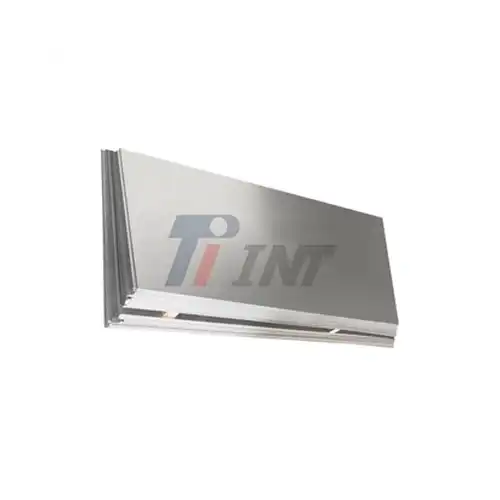
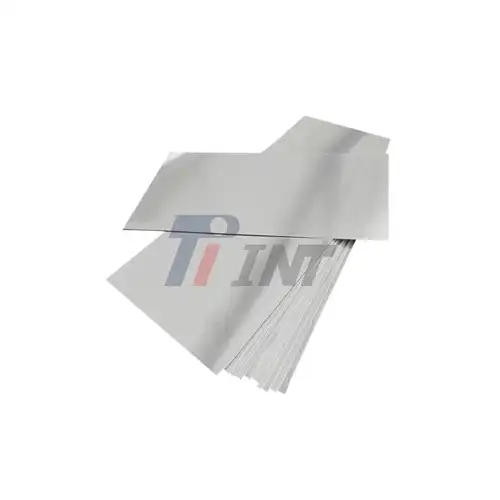
When evaluating the best 0.5 mm titanium sheet manufacturers for OEM projects, procurement managers must consider suppliers who combine technical expertise with proven manufacturing capabilities. These ultra-thin titanium sheets represent a critical component in medical devices, aerospace applications, and precision instrumentation where dimensional accuracy and material consistency directly impact product performance. Selecting manufacturers with ISO certifications, advanced processing equipment, and comprehensive quality control systems ensures optimal results for demanding OEM applications requiring exceptional biocompatibility and corrosion resistance.
|
|
|


Comprehending the Key Properties and Specifications of 0.5 mm Titanium Sheets
Because of their one-of-a-kind properties, titanium sheets with a thickness of 0.5 millimeters are an invaluable material for applications that need materials that are both lightweight and durable. It is possible for procurement groups to make educated judgments that are in line with the needs of their particular project if they have a thorough understanding of these features.
Mechanical Properties and Performance Characteristics
Grade 2 aluminium sheets with a thickness of 0.5 millimeters have a tensile strength that ranges from 345 to 483 megapascals (MPa), providing an outstanding compromise between the ability to be formed and the maintaining of structural integrity. The density of the material, which is 4.51 grams per cubic centimeter, offers considerable weight benefits over alternatives which are made of stainless steel, while still preserving exceptional corrosion resistance in difficult situations. Because of their remarkable fatigue resistance, these thin sheets of titanium are suited for use as components in cyclically pressured environments, such as aeronautical structures and medical implants.
These sheets often have elongation qualities that are more than twenty percent, which enables complicated shaping processes to be carried out without compromising the integrity of the material. It is especially useful for original equipment manufacturer applications that need complicated geometries or small radius bends because of its formability. Through its resilience to temperatures ranging from cryogenic conditions to about 300 degrees Celsius, this material offers operational flexibility across a wide range of industrial applications.
Manufacturing Processes and Quality Standards
In order to guarantee continuous thickness tolerances od ±0.025mm or greater, premium titanium sheets with a thickness of 0.5mm are subjected to regulated rolling operations. Techniques that include cold rolling are able to maintain the microstructure of the material while also meeting the exact dimensional criteria that are necessary for OEM applications. Surface finishes that range from miller finish to refined grades are able to suit a wide variety of end-use requirements. Surface roughness levels are normally kept below 0.8 Ra.
Ultrasonic testing, dimensional confirmation, and substance analysis are all examples of quality control techniques that are used to ensure that the product complies with the ASTM B265 certification standards. These production techniques guarantee that every sheet satisfies the strict standards for applications involving medical devices, aircraft components, and precision instruments, all of which are areas in which the traceability of materials and the consistency of their performance are critically important.
Comparing 0.5 mm Titanium Sheets with Alternative Materials for OEM Use
It is helpful for procurement managers to have an understanding of the many material possibilities in order to determine the best option for their particular OEM applications. The purpose of this comparison is to investigate the strength-to-weight ratios, resistant to corrosion, and economic factors that are associated with various alternative materials.
Material Performance Comparison
Titanium sheets at 0.5mm thickness, such as a 0.5 mm titanium sheet, offer superior strength-to-weight ratios compared to stainless steel alternatives, delivering approximately 40% weight reduction while maintaining comparable mechanical properties. Aluminum sheets, while lighter, provide significantly lower strength characteristics and limited temperature resistance. Nickel alloys offer excellent corrosion resistance but at substantially higher material costs and increased density.
The corrosion resistance of titanium surpasses stainless steel in chloride environments, making it particularly valuable for marine applications and medical devices exposed to bodily fluids. This characteristic eliminates the need for protective coatings, reducing manufacturing complexity and long-term maintenance requirements. The biocompatibility of titanium sheets makes them uniquely suitable for medical device applications where direct tissue contact occurs.
Grade Comparison and Selection Criteria
Grade 2 titanium represents the most commonly specified material for thin sheet applications, offering excellent formability and corrosion resistance at competitive pricing. Grade 5 (Ti-6Al-4V) provides enhanced strength properties but requires more specialized forming techniques and commands premium pricing. The selection between grades depends on specific strength requirements, forming complexity, and budget constraints.
Although grade 1 titanium is preferable in terms of its formability, it often does not possess the strength qualities that are necessary for architectural OEM applications. However, Grade 3 is only useful in thin-film configurations because to its restricted applicability. Grade 3 products have intermediate qualities. When procurement teams have a fundamental understanding of these grade differences, they are able to select materials that maximize performance while also minimizing costs.
How to Choose the Best 0.5 mm Titanium Sheet Manufacturer for Your OEM Needs?
Choosing the appropriate manufacturer calls for a thorough analysis of the technical skills, quality management systems, and the supply chain dependability of the potential candidates. This procedure entails evaluating a number of different aspects that are important to the success of a relationship over the long run.
Essential Certification Requirements
In addition to maintaining the ISO 9001:2015 quality control certification, leading manufacturers also adhere to specific industry requirements for example AS9100 for aerospace uses and ISO 13485 for the production of medical devices. In order to establish compliance with regulatory standards for medical applications, FDA certification and CE marking are required at all times. A certification from NADCAP demonstrates that the individual has advanced skills in specialized processing processes.
These certifications provide assurance that manufacturing processes meet stringent quality requirements and maintain consistent documentation practices. Procurement teams should verify that certifications cover the specific grades and processing methods required for their applications. Regular surveillance audits and certification maintenance demonstrate ongoing commitment to quality excellence.
Production Capacity and Customization Capabilities
To better manage tolerances in dimensions and surface quality qualities, manufacturers that have specialized thin sheet pressing capabilities are able to better regulate the process. The production capacity must to be in accordance with the volume requirements of the project, while also preserving the flexibility for future expansion. The lead times for common grades normally vary from four to eight weeks, however the lead times for bespoke specifications might range anywhere from eight to twelve weeks, depending on the intricacy of the requirements.
Customization services including precision cutting, edge finishing, and packaging options add value for OEM applications. Waterjet cutting capabilities enable complex geometries without heat-affected zones, preserving material properties throughout the component, such as those of a 0.5 mm titanium sheet. Laser cutting provides excellent edge quality for intricate patterns while maintaining tight tolerances essential for precision assemblies.
Supply Chain Logistics and Support Services
Reliable suppliers maintain reserves that allow for reliable delivery dates while also providing a range of minimum order amounts to choose from. The provision of technical support services, which may include advise on the selection of materials, the formulation of suggestions, and aid with application engineering, is a vital contributor to the success of a project. Documentation of quality, such as mill test certificates, sizing reports, and traceability records, guarantees that the product complies with the requirements of the client.
When it comes to worldwide OEM projects, the reduction of costs related to transportation and delivery times is achieved via the use of global shipping capability and regional distribution networks. The provision of contingency assistance for important production needs is made possible via the use of accelerated processing alternatives and emergency supply agreements. The provision of these support services differentiates premium producers from providers of commodity goods.
Optimizing Your OEM Project with High-Quality 0.5 mm Titanium Sheets
In order to successfully deploy thin titanium sheets, it is necessary to have a solid grasp of the best practices for handling of materials, processing, and product assurance. By maximizing return from investments while avoiding typical errors that might jeopardize project results, these insights assist optimize return on investment.
Application Success Stories and Benefits
Manufacturers of medical devices that use titanium sheets with a thickness of 0.5 millimeters have reported considerable increases in the lifetime and biocompatibility of their products when compared to equivalents made of stainless steel. Titanium's radiopacity properties are advantageous for cardiovascular stent applications because they allow for improved imaging during implantation operations. Titanium's exceptional edges retention properties allow dental instrument manufacturers to achieve improved cutting performance and a longer service life for their products.
Aerospace applications demonstrate weight savings exceeding 35% compared to aluminum alternatives while maintaining required strength characteristics. Electronic component housings benefit from titanium's electromagnetic compatibility and corrosion resistance in harsh environments. These success stories illustrate the tangible benefits achievable through proper material selection and implementation.
Best Practices for Material Handling and Processing
Proper storage techniques prevent contamination and surface damage that can compromise material performance, such as that of a 0.5 mm titanium sheet. Clean, dry environments with controlled humidity levels preserve surface integrity during extended storage periods. Handling procedures should minimize contact with carbon steel tools that can cause surface contamination leading to corrosion initiation sites.
The use of sharp instruments for cutting with the right speeds and feeds is one of the suggestions for processing, which is intended to avoid work hardening occurring. This allows for progressive bend radii and regulated strain rates, both of which are beneficial to forming processes since they accommodate the distinctive properties of titanium. Checkpoints for quality control are implemented throughout the processing phase to guarantee that both dimensional precision and surface integrity fulfill the criteria of the specification. These procedures reduce the amount of material that is wasted while maintaining a consistent level of component quality.
Our Commitment to Quality and OEM Excellence
With over twenty years of specialized knowledge, Baoji INT Health Care Titanium Co., Ltd. has established itself as a renowned leader in the fabrication of precision titanium sheets. They provide their services to OEM applications that are particularly demanding. Because we have such a complete grasp of the procedures used to process thin sheets, we are able to provide titanium sheets with a thickness of 0.5 millimeters that are capable of meeting the most demanding quality criteria in the aerospace, industrial, and medical industries.
Advanced Manufacturing Capabilities
Processing ultra-thin titanium sheets is a specialty of our cutting-edge manufacturing facilities, which are equipped with precise rolling equipment that is particularly designed for this purpose. Our company ensures that we adhere to stringent dimensional standards of ±0.02mm, while simultaneously producing surface finishes that remove the need for extra processing. In order to provide full compliance coverage all medical device applications, our quality systems include certifications such as ISO 9001:2015, ISO 13485: 2016, and CE.
Manufacturing settings that are temperature-controlled guarantee that the material qualities will remain constant throughout the manufacturing runs. Custom alloy creation and heat treatment optimizations are both possible thanks to our metallurgical knowledge, which allows us to meet the specific needs of OEMs. The mechanical property examination, chemical analysis, and structural inspection services that are provided by comprehensive testing facilities are completed in a short amount of time.
Comprehensive Product Portfolio and Services
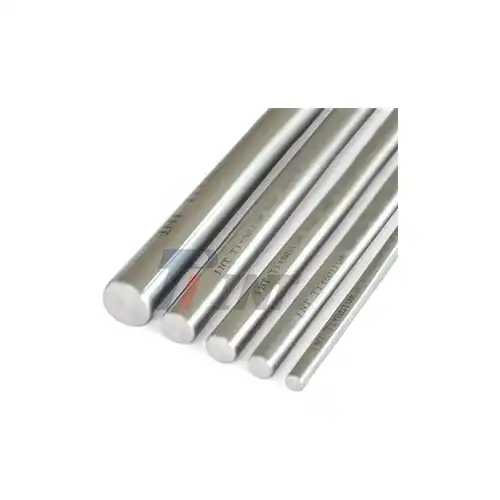
We are able to provide comprehensive solutions for titanium sheet, which include requirements that include Grade 1 to Grade 5 and thicknesses ranging from 0.3 mm to 6.0mm overall. Pure titanium, titanium-6 aluminum-4 titanium ELI, and customized alloys that are developed to meet the needs of certain applications are all included in our company's product catalog. It is possible to get precise components that are ready for assembly via the use of waterjet & laser technologies by custom cutting services.
Technical support services include material selection consultation, forming process optimization, and application engineering assistance. Our experienced team collaborates with OEM partners to develop innovative solutions that maximize performance while optimizing costs. Flexible packaging options and global shipping capabilities ensure seamless integration with customer supply chains. Quality documentation packages provide complete traceability and compliance verification for regulated industries.
Conclusion
Selecting the optimal 0.5 mm titanium sheet manufacturer requires careful evaluation of technical capabilities, quality certifications, and supply chain reliability. The unique properties of thin titanium sheets make them indispensable for applications demanding exceptional strength-to-weight ratios, corrosion resistance, and biocompatibility. Procurement success depends on partnering with manufacturers who combine advanced processing capabilities with comprehensive quality systems and technical support services. Understanding material grades, processing requirements, and application-specific considerations enables informed decision-making that optimizes both performance and costs. The investment in premium titanium sheets delivers long-term value through enhanced product durability, reduced maintenance requirements, and superior performance characteristics across diverse OEM applications.
FAQ
Understanding common concerns helps procurement teams make informed decisions about thin titanium sheet specifications and supplier capabilities. These answers address the most frequently encountered questions from OEM manufacturers.
What thickness tolerances can be achieved with 0.5mm titanium sheets?
Premium manufacturers consistently achieve thickness tolerances of ±0.025mm for 0.5mm titanium sheets through controlled rolling processes and comprehensive quality monitoring. Advanced facilities can deliver tighter tolerances of ±0.02mm for critical applications requiring exceptional dimensional consistency. These tolerances ensure reliable performance in precision assemblies where component stacking and clearances are critical design considerations.
How do different grades affect formability and processing requirements?
Grade 2 titanium offers excellent formability at 0.5mm thickness, accommodating bend radii as tight as 1.5 times material thickness without cracking. Grade 5 (Ti-6Al-4V) requires larger bend radii and more controlled forming processes due to its higher strength characteristics. Processing temperatures may need adjustment for Grade 5 materials to optimize formability while preventing work hardening that can compromise subsequent operations.
What corrosion resistance advantages do titanium sheets provide?
Titanium sheets demonstrate superior corrosion resistance compared to stainless steel in chloride environments, with virtually no measurable corrosion rates in seawater exposure. The passive oxide layer forms instantaneously upon exposure to oxygen, providing self-healing protection against surface damage. This characteristic eliminates the need for protective coatings while ensuring long-term performance in aggressive chemical environments.
Contact Baoji INT Medical Titanium Co., Ltd. for Premium 0.5mm Titanium Sheet Solutions
Baoji INT Medical Titanium Co., Ltd. delivers exceptional value through our specialized expertise in ultra-thin titanium sheet manufacturing. Our comprehensive capabilities encompass material development, precision processing, and technical support services designed to optimize your OEM project outcomes. With over 20 years of industry experience and certifications including ISO 13485 and CE marking, we provide the quality assurance and reliability your critical applications demand. Our 0.5 mm titanium sheet supplier capabilities extend globally, ensuring consistent availability and competitive pricing for high-volume requirements. Contact us at export@tiint.com to discuss your specific requirements and discover how our advanced manufacturing capabilities can enhance your product performance.
References
1. American Society for Testing and Materials. "ASTM B265 Standard Specification for Titanium and Titanium Alloy Strip, Sheet, and Plate." ASTM International Annual Book of Standards, Volume 02.04.
2. Boyer, Rodney R. "Titanium for Aerospace: Rationale and Applications." Advanced Performance Materials, Vol. 2, No. 4, 1995.
3. International Organization for Standardization. "ISO 5832-2 Implants for Surgery - Metallic Materials - Part 2: Unalloyed Titanium." ISO Standards Catalogue, 2018.
4. Lutjering, Gerd and James C. Williams. "Titanium: Engineering Materials and Processes." Springer-Verlag Berlin Heidelberg, Second Edition, 2007.
5. Peters, Manfred, et al. "Titanium Alloys for Aerospace Applications." Advanced Engineering Materials, Vol. 5, No. 6, 2003.
6. Welsch, Gerhard, Rainer Boyer, and E.W. Collings. "Materials Properties Handbook: Titanium Alloys." ASM International Materials Park, Ohio, 1994.
_1752463990252.webp)