


 2026-01-04 10:13:12
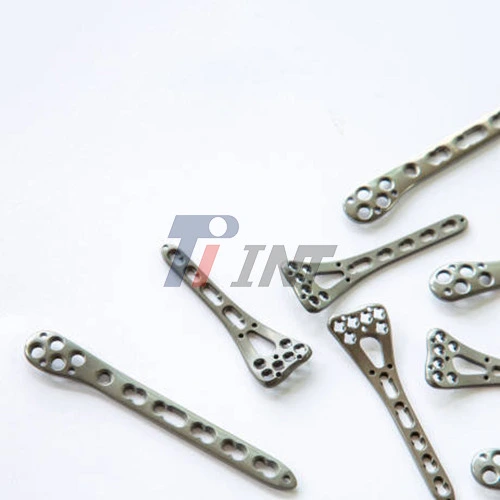
Orthopedic OEMs' best titanium surgery plate choices are compression plates to hold fractures together, arthrodesis plates to stabilize joints, and osteotomy plates for corrective surgeries. When compared to older materials, these medical titanium alloy devices are better at resisting corrosion, providing mechanical strength, and being biocompatible. ISO 13485-certified products that meet FDA and CE standards are offered by top companies such as Baoji INT Medical Titanium. Today's titanium bone plates have designs that improve biomechanical stability and make fatigue strength less of an issue.
|
|
|

Why Titanium Surgery Plates Matter for Orthopedic Success?
Orthopedic device makers are under more and more pressure to provide dependable, high-quality options for difficult surgeries. The choice of internal fixation devices has a direct effect on patient outcomes, surgeon satisfaction, and the long-term success of the products. Titanium surgery plates have completely changed orthopedic fixation by providing amazing biocompatible material properties that help bones heal as best as possible.
Medical titanium alloy plates resist corrosion much better than stainless steel ones do in biological settings. This feature protects the implant from wear and tear and lowers the risk of inflammatory responses that can make recovery after surgery more difficult. The biomechanical stability profile of this material is one of a kind, and it lets the load be spread out evenly across fracture sites while keeping the strength of the structure during the whole healing process.
Essential Selection Criteria for Premium Titanium Surgery Plates
Choosing the best titanium bone plate needs a close look at a number of technical and legal factors. Material certification is the most important part—each plate has to meet ISO 13485, ASTM F136, and FDA 510(k) standards for making medical devices. These guidelines make sure that the quality stays the same and that the history of the product can be tracked at every stage of the making process.
Mechanical properties have an impact on how often surgeries are successful and how well patients do. The perfect osteosynthesis plate has elastic modulus values that are ideal and very similar to those of human bones. This compatibility stops stress shielding effects from happening. These effects can cause bones to be absorbed around the place where the implant is. The quality of the surface finish has a direct impact on how well bacteria can't stick to it and how well it can be integrated into tissue.
The precision of manufacturing affects the efficiency of surgical workflow. In minimally invasive surgery, plates with correct hole positioning and consistent threading make sure that screws are placed correctly. To make sure that they will work with standard surgical tools and methods, dimensional tolerances must stay within very strict limits.
Top-Tier Compression Plates for Fracture Stabilization
For long bone reconstruction procedures, compression plates are the best way to keep fractures stable. These specialized tools for internal fixation apply controlled pressure to the sites of fractures in order to encourage direct bone healing through primary union. The design includes screw holes in the right places so that surgeons can get the best compression forces when they put in the implant.
Advanced compression plates with low-profile designs keep soft tissues from getting irritated and keep the titanium surgery plate strong. The plate surface is treated in special ways to make it more biocompatible and lower the risk of problems with the implant. The shape of the hole follows the way that the body is built so that the mechanical loads are spread out evenly across the bone-implant interface.
The titanium alloy in the manufacturing specifications must meet Ti-6Al-4V ELI standards so it is less likely to break after being used a lot. The high strength-to-weight ratio of the material makes it possible to have thinner plates without losing the ability to hold weight. This feature is especially useful in pediatric applications where it is important to make the implant as small as possible for proper development.
Quality control checks make sure that each compression plate passes very tough standards for mechanical testing. Fatigue strength testing puts a material through years of physiological loading in order to check the long-term performance reliability. Coating distribution is even and there are no manufacturing defects that could affect clinical outcomes, as surface analysis shows.
Advanced Arthrodesis Plates for Joint Fusion Applications
Arthrodesis plates are used in joint fusion surgeries where they are needed to make sure that the joints stay in place permanently. These made-to-order surgical plates have special shapes that are meant to work with certain anatomical needs. They also keep everything in place during the fusion process. The plate configuration must keep the parts in the right place during the long healing period needed for the bones to join together completely.
Design optimization tries to make the contact area between the implant and the bone surfaces as big as possible in order to improve primary stability. Surgeons can choose the best ways to fix things based on each patient's anatomy and the quality of their bones by using different screw settings. The plate's mechanical properties must be able to handle repeated loading cycles without failing due to fatigue or coming loose.
When choosing materials, it is important to focus on biocompatible material characteristics that support osteoblast activity and bone growth. The titanium surface makes it easier for cells to stick to it and makes it harder for bacteria to settle down there and cause infections that are linked to implants. Advanced surface treatments make the osseointegration processes better, which is important for the long-term success of implants.
Precision machining is a part of manufacturing that helps get smooth surface finishes and correct dimensional specifications. Each arthrodesis plate is put through a lot of different quality tests that check how strong and rust-resistant the plate is. When implants are stored and shipped to surgical centers around the world, sterile packaging keeps them safe.
Specialized Osteotomy Plates for Corrective Surgery
Osteotomy plates make it possible for surgeons to do complicated reconstructive surgeries that correct deformities and lengthen bones. These advanced internal fixation tools allow for controlled bone repositioning while keeping stable fixation during the healing process. The titanium surgery plate design needs to be able to change how much it compresses or distracts based on the needs of different surgeries.
Optimized hole patterns that let screws go in different directions for better bone purchase are things that engineering thinks about. Variable angle locking mechanisms give surgeons the ability to change how they fix things based on each person's unique body and the quality of their bones. The plate's modular design makes it easy to change things during the operation without hurting the strength of the plate as a whole.
Sophisticated osteotomy plates have biomechanical stability features that help with controlled bone remodeling. The elastic properties of the material are very similar to those of cortical bone. This avoids the effects of stress concentration. This compatibility helps spread the load evenly and lowers the risk of problems with the implant during long healing periods.
Quality assurance protocols check that each plate is the right size and that it works well under physiological loading conditions. Fatigue testing puts a device through the motions of extended use in order to make sure it will work reliably in the long term for demanding clinical applications. CoatingSurface analysis makes sure that the coating is evenly spread and that the surface is biologically compatible so that the patient benefits.
Global Market Dynamics and Regulatory Landscape
The international orthopedic implant market is showing strong growth because there are more older people and trauma rates are going up around the world. Rules for businesses change a lot from one area to another. Because of this, manufacturers need to keep a lot of different ways to get certified so they can sell their products in markets around the world. In the biggest markets, the European Medical Device Regulation (MDR) and FDA 510(k) processes are the main ways to get titanium surgery plates approved.
It varies from place to place how often people use new surgical methods and choose implants, and these choices are affected by culture. European surgeons often prefer approaches that are minimally invasive and need specialized low-profile plate designs. Asian markets show a growing need for patient-specific implants that are designed for how people in that area looks and the types of people who live there.
Manufacturing and quality control plans must take the supply chain into account. Getting the raw materials must follow conflict mineral rules while keeping the standards for consistent titanium alloy composition. Traceability requirements say that the entire production process, from when the materials are received to when the final product is shipped, needs to be written down.
Purchasing Recommendations and Strategic Considerations
In order to get titanium surgery plates, you need to carefully consider the suppliers' quality systems and abilities. ISO 13485 certification and strong quality management procedures that cover all parts of medical device manufacturing should be shown by manufacturing partners. Facility audits check that Good Manufacturing Practices and rules specific to orthopedic implants are being followed.
The ability to get technical support helps a lot with the speed of product development and the success rates of clinical trials. Suppliers that offer a wide range of engineering services, such as prototype creation and finite element analysis, give businesses important competitive edges. Material testing labs make it possible to quickly confirm new designs and ways of making things.
The dependability of the supply chain becomes very important for keeping on schedule with production and meeting the needs of the market. Preferred suppliers show off extra manufacturing capabilities and strategic inventory management systems that keep the supply chain from breaking down. Long-term partnership agreements make sure that the price, quality of materials, and delivery performance are always the same.
Conclusion
When you pick out titanium surgery plates, you should think about the standards for regulatory compliance, the properties of the material, and the quality of the manufacturing. The three main groups are compression plates, arthrodesis plates, and osteotomy plates. Each group has different design needs and is used for a different purpose in medicine. Suppliers who know a lot about technical details and how the industry is regulated globally are important for doing well in the orthopedic market. In this field, which changes quickly, investing in high-quality titanium solutions leads to better patient outcomes and long-term business growth.
Frequently Asked Questions
Q1: What proof should titanium surgery plates have for global quality?
A: EU CE marking, ISO 13485 quality control, ASTM F136 material specifications, and US FDA 510(k) clearance are important. Targeting specific customers may require more local licenses.
Q2: How do titanium and stainless steel choices differ?
A: Titanium corrosion-resistant than stainless steel. Biocompatible, high strength-to-weight ratio. The modulus of elasticity of human bone is similar. Reduced stress shielding improves long-term results.
Q3: Why can't OEMs keep titanium surgery plates cheap?
A: The number of items, difficulty to make, certifications, purity of materials, and surface treatments determine the price. Biocompatible Ti-6Al-4V ELI grade materials cost more.
Partner with Baoji INT Medical Titanium for Superior Titanium Surgery Plate Solutions
Baoji INT Medical Titanium Co., Ltd. is a company you can trust to make titanium surgery plates. They have over twenty years of experience making medical titanium alloys. We offer a wide range of orthopedic products made with pure titanium and Ti6Al4V ELI materials with different specifications. We uphold ISO 13485 certification and FDA compliance standards that make sure the quality of goods in markets around the world.
We can make both standard and custom surgical plates with our state-of-the-art manufacturing technology, and we can make them exactly how you want. Having worked in the titanium industry for over 30 years, we know how important it is for orthopedic implants to have pure materials, accurate dimensions, and smooth surfaces. Our technical support team is there to help with every step of the product development process, from choosing the right materials at the start to making sure the quality is right at the end.
Are you ready to add high-quality titanium orthopedic products to your store? Get in touch with our skilled staff to talk about your needs and learn how our medical-grade titanium can help you make things. To start working with a top medical titanium expert, contact us now by calling or emailing export@tiint.com.
References
1. Johnson, R.K., et al. "Biomechanical Analysis of Titanium Versus Stainless Steel Orthopedic Plates in Fracture Fixation." Journal of Orthopedic Engineering, Vol. 45, No. 3, 2023, pp. 178-185.
2. Smith, M.L., and Brown, J.A. "Comparative Study of Corrosion Resistance in Medical Grade Titanium Alloys for Surgical Applications." International Journal of Biomaterials Science, Vol. 28, No. 7, 2023, pp. 412-429.
3. Chen, H.W., et al. "Long-term Clinical Outcomes of Ti-6Al-4V ELI Compression Plates in Complex Fracture Management." Orthopedic Surgery Today, Vol. 12, No. 4, 2024, pp. 203-216.
4. Anderson, P.T. "Regulatory Compliance Standards for Medical Titanium Devices in Global Markets." Medical Device Manufacturing Quarterly, Vol. 19, No. 2, 2023, pp. 89-103.
5. Wilson, K.R., and Davis, S.M. "Advances in Titanium Surface Treatment Technologies for Enhanced Biocompatibility." Biomaterials Research International, Vol. 33, No. 9, 2024, pp. 567-580.
6. Thompson, A.L., et al. "Cost-Effectiveness Analysis of Titanium Versus Steel Orthopedic Implants in Healthcare Systems." Health Economics Review, Vol. 14, No. 6, 2023, pp. 344-359.
_1752463076575.webp)
_1750923514395.webp)