




Best Titanium Welding Wire for Medical Equipment Manufacturing


 2026-09-18 11:05:49
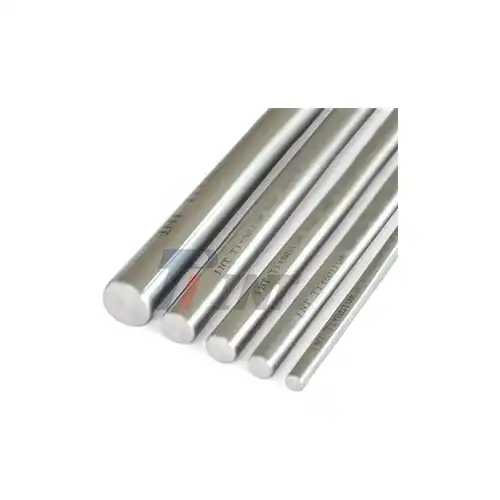
When searching for the best titanium welding wire for medical equipment manufacturing, procurement managers and production engineers consistently turn to ERTi Titanium Welding Wire—a specialized filler metal engineered to meet the demanding requirements of surgical instrument assembly, implant fabrication, and prosthetic device welding. This wire combines exceptional biocompatibility, corrosion resistance, and mechanical strength, making it the preferred material for manufacturers who refuse to compromise on quality or regulatory compliance in medical-grade production environments.
|
|
|
Understanding ERTi Titanium Welding Wire: Properties and Applications
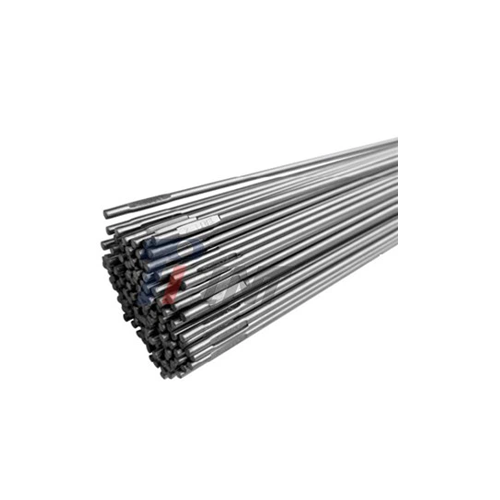
ERTi Titanium Welding Wire that meets the requirements of AWS A5.16 is an important material choice for companies that make medical equipment that sells in highly regulated markets. At Baoji INT Medical Titanium Co., Ltd., we offer ERTi Titanium Welding Wire in both commercially pure grades (Grade 2) and Ti-6Al-4V alloy variants (Grade 5). Each is made to solve a different technical problem in medical device welding.
Chemical Composition and Material Grades
The chemical stability of titanium filler metal has a direct effect on the quality of the weld and how well the device works. Our Grade 2 ERTi wire keeps its oxygen content below 0.25%, nitrogen content below 0.03%, and hydrogen content below 0.015%. This gives surgery tools like forceps, retractors, and clamps the best flexibility and resistance to corrosion. The Ti-6Al-4V ELI (Extra Low Interstitial) variant lowers oxygen to a maximum of 0.13%, which makes the material more resistant to breaking, which is important for load-bearing orthopaedic applications.
The material requirements we follow are:
- Diameter Range: Size options range from 0.8 mm to 6 mm, and they can be changed to fit automatic MIG/TIG welding systems.
- Standard Length: It comes on spools of 1 meter and 3 meters, or you can ask for custom lengths for high-volume jobs.
- Surface Finish: Polished surfaces get rid of the dirt and grime that cause pores.
- Packaging: Desiccants in sealed hoover bags keep moisture from absorbing and hydrogen from weakening materials.
These specifications directly address problems that surgical instrument makers often have, especially those in Pakistan's Sialkot cluster and Germany's Solingen region, where the ability to track down materials and ensure accuracy are key factors in how competitive their exports are.
Superior Mechanical Properties for Medical Applications
The way our ERTi Titanium Welding Wire is made solves important problems in the production process. Titanium welding wire has a density of 4.51 g/cm³, which is almost half that of stainless steel. This makes it possible to make surgical tools that are both light and strong. With a melting point of 1660°C, it is possible to weld without any thermal warping, which is very important when adding delicate instrument handles to working ends.
Our wire has a tensile strength range of 345 MPa (Grade 2) to 860 MPa (Ti-6Al-4V), which means it can hold up devices that are sterilised many times and put under a lot of mechanical stress. The wear strength of the material means that surgical scissors, bone screws, and tooth implant parts will keep working after thousands of uses without developing tiny cracks.
Biocompatibility and Corrosion Resistance Standards
Medical device makers need to focus on using materials that don't break down biologically and are also safe. Titanium's passive oxide layer (TiO₂) forms instantly when it comes into contact with air. It forms a barrier that prevents chloride-induced stress corrosion, which is a typical way for medical tools that are exposed to body fluids and saline solutions to break down.
We make sure that every production batch meets the biocompatibility standards of the FDA, CE, and CFDA by certifying it through ISO13485:2016 protocols. Third-party testing shows that our wire meets the standards for medical implant materials set by ASTM F67 and ISO 5832-2. This gives procurement managers the proof they need for customer checks and export clearances.
Real-World Applications in Medical Device Manufacturing
Our ERTi Titanium Welding Wire is used for a variety of tasks by manufacturers on five continents:
Orthopedic Instrument Assembly: When putting together orthopaedic instruments, like bone rongeurs and periosteal elevators, welding titanium handles to stainless steel working ends needs a filler metal that can join metals that are not the same without causing brittle intermetallic formation. This is possible with our Grade 2 wire because it has controlled heat input parameters.
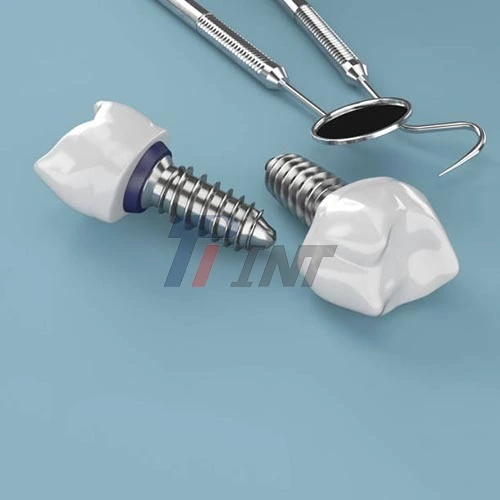
Dental Prosthetic Frameworks: For precise TIG welding of titanium abutments and bridge frameworks, you need wire that doesn't smear and stays stable during the spark. Our wire with a diameter of 1 mm runs easily through automated welding heads, which lowers the number of mistakes that happen during high-volume production.
Trauma Fixation Device Repair: Occasionally, surgeons need to fix broken plate-screw connections in the operating room. Hospitals keep our wire on hand because it fits the base metal chemistry of widely available implants. This makes sure that the weld quality is the same as when the implant was first made.
Minimally Invasive Surgical Tools: Laparoscopic graspers and laparoscopic shavers have thin-wall titanium tubes welded to the parts that move them. Low thermal conductivity stops the heat-affected zone from growing beyond 2 mm, keeping the temperature stable in cold-worked parts next to each other.
These uses show why companies that make medical equipment don't just see ERTi Titanium Welding Wire as a consumable; they see it as a strategic material that has a direct effect on product risk, regulatory approval timelines, and market differentiation.
Welding Techniques and Best Practices with ERTi Titanium Welding Wire
To get titanium welds that are free of flaws, you need to know about the process variables that are unique to reactive metal joining, and the choice of filler metal—such as ERTi Titanium Welding Wire—plays a critical role in achieving defect-free results. Working with surgical instrument makers on technical issues for more than 20 years has helped us improve the welding parameters we recommend.
TIG Welding: The Preferred Method for Medical Applications
Gas Tungsten spark Welding (GTAW/TIG) is still the usual way to join titanium parts in the medical field because it has better spark control and requires less cleanup after the weld. For best results, we suggest the following setup:
Shielding Gas Purity: For torch coverage, use 99.999% argon with flow rates of 12 to 15 litres per minute. Trailing shields that extend 75 to 100 mm behind the weld pool can also be used. Silver-colored welds mean the shielding is working right; blue or gold discolouration means the shielding isn't working right and that an alpha case might form, which needs to be removed.
Tungsten Electrode Choice: 2% thoriated or pure tungsten electrodes ground to 30-degree angles keep the arc stable at 60–120 amperes, which is normal for parts that are 0.5–2.0 mm thick and part of a surgical instrument.
Heat Input Management: Use copper backing bars or forced air cooling to keep interpass temperatures below 150°C. Too much heat makes grains grow and weakens the resistance to rust in areas that have been heated up.
When manufacturers use our 1.6mm wire and 75 amps DCEN, 12V arc voltage, and 150mm/min travel speeds, they can usually get 0.3mm penetration depths when welding titanium instrument handles to working ends.
MIG Welding Considerations and Equipment Requirements
Gas Metal Arc Welding (GMAW/MIG) is more common for welding large numbers of prosthetic parts together, but it is not as common for making precise surgical instruments. To successfully MIG weld titanium, you need special tools:
- Push-pull wire feed systems ensure birds can't nest in soft titanium wire that goes through normal liners by using these specialized systems.
- Trailing gas shields attached to the welding gun increase inert atmosphere protection.
- Pulsed spray transfer modes reduce heat output when compared to short-circuit transfer.
We provide wire with controlled cast and helix specs that make sure it feeds smoothly through 3–4 metre liner units without getting stuck or acting in an erratic way.
Quality Assurance and Inspection Protocols
Medical device makers use multi-stage checking processes to make sure that the welds are solid. What we suggest:
Visual Inspection: Trained inspectors look at the colour of the beads (silver is fine, straw isn't, and blue/purple/gray means rework is needed), how regular they are, and how well the surface oxide sticks to them. They do this by following AWS D17.1 aircraft welding standards that have been changed for medical use.
Radiographic Testing: An X-ray shows any holes in the ground that could be caused by wetness or poor protection. When the right storage procedures are followed, our wire's low hydrogen specification (<0.015%) reduces the risk of porosity.
Tensile and Bend Testing: Destructive testing of production welds on a regular basis makes sure that the joint strength is higher than the qualities of the base metal. When done right, titanium welds always achieve 90–100% joint efficiency.
These quality controls make sure that manufacturers stay in line with FDA 21 CFR Part 820 and meet the standards of an ISO13485 audit, which are very important for businesses that sell medical products in North America and Europe.
Comparing ERTi Titanium Welding Wire with Other Titanium Wires
When procurement leaders look at titanium filler metals, they see a number of alloy options. Each one has a different cost-performance tradeoff. Knowing these differences keeps you from making expensive mistakes when choosing materials.
ERTi Grade 2 vs. Ti-6Al-4V for Surgical Instruments
Commercially pure titanium (Grade 2) is the most common material used to make medical tools because it is more resistant to corrosion and easier to shape. Grade 2 wire is preferred by companies that make forceps, scissors, and clamps because it can handle the rough bending and shaping that is common in tool finishing. The material costs about 15 to 20 percent less than Ti-6Al-4V, which has a direct effect on landing costs for foreign markets that care about price.
Ti-6Al-4V alloy wire is 50% stronger but less flexible when compared to commercially pure grades. To meet biomechanical performance requirements, orthopaedic implant manufacturers only use Ti-6Al-4V when welding load-bearing structures like spinal rod connectors or external fixation frames. The aluminium and vanadium alloying elements do make the alpha case slightly more susceptible, which means that stricter protective gas practices are needed when welding.
Titanium vs. Stainless Steel Filler Metals
Surgical tool makers often use 300-series stainless steels because they are cheaper, but ERTi Titanium Welding Wire has clear benefits that make it worth the higher price:
Corrosion Resistance: Titanium doesn't rust or pit in salt conditions, but stainless steel does when passivation fails. Instruments that are irrigated with saline, exposed to blood, and autoclaved many times have service lives that are 5 to 7 years longer when titanium parts are used instead of stainless steel in high-stress areas.
Weight reduction: Surgical instrument sets with titanium handles make it easier for surgeons to hold the instruments for long procedures without getting tired. Titanium components in a typical set of laparoscopic instruments weigh 35% less than stainless steel counterparts without affecting the rigidity of the structure.
MRI Compatibility: Because titanium is non-ferromagnetic, it can stay in operating rooms with intraoperative MRI systems. This means that duplicate instrument sets are not needed.
Medical device OEMs that want to sell high-end devices to hospitals and outpatient surgery centers can use these practical benefits to set their products apart from the competition.
Cost Analysis: Initial Investment vs. Lifecycle Value
ERTi Titanium Welding Wire costs three to four times as much per unit as stainless steel filler metals. This can be shocking for procurement managers who aren't used to figuring out the total cost of ownership. We present the economic case in a clear way:
A company that makes medical instruments pays $75/kg for our Grade 2 wire, which is the normal price for bulk purchases. This works out to about $0.12 per linear metre for 1.6mm diameter wire. The average surgical forcep needs 15 cm of welding, which costs $0.018 in materials per instrument. If that tool can be sterilised 3,000 times longer than a stainless steel option, the customer saves $0.15 on early replacement costs, which is an 8x return on the material investment.
Titanium's longer service life provides measurable economic value above and beyond the initial material cost for companies that sell surgical instruments in developed markets where reprocessing costs more than $12 per cycle. This analysis is especially useful for European and North American OEMs that compete on total cost of ownership instead of just purchase price.
How to Source ERTi Titanium Welding Wire for Medical Equipment Manufacturing
Medical device companies that are successful have reliable material supply lines, while companies that are having trouble with production delays and inconsistent quality don't. We know what buying managers really need because we've been exporting for 20 years.
Identifying Qualified Titanium Filler Metal Suppliers
Medical-grade ERTi Titanium Welding Wire providers need to show that they can do more than just trade materials. When judging potential partners, you have to look at:
Vertical integration: Companies that own the sponge-to-wire production chains make sure that consistency from batch to batch is maintained, which is important for approved welding procedures. Our in-house melting, forging, and wire drawing operations at Baoji INT Medical Titanium Co., Ltd. give us compositional control that pure trading operations can't offer.
Certification Level: Medical suppliers should give more than just standard mill test certificates. They should also give lot-specific paperwork that includes interstitial element analysis, grain size measurements, and mechanical property test data. Our ISO13485:2016 certification covers the production processes of medical titanium. This makes us different from general industry titanium providers who say their products are medically suitable without verifying the processes.
Technical Support: Suppliers should hire metallurgists and welding engineers who can help customers figure out problems with their production. We often help customers improve their welding settings over the phone and in person, which cuts down on the costs of trial-and-error development.
When looking for long-term relationships with suppliers, purchasing managers should put these skills ahead of spot-market price benefits, which often hide secret quality risks.
Flexible Ordering Options for Small-to-Medium Manufacturers
Manufacturers of surgical instruments usually have a wide range of products that need different wire sizes and grades. Large titanium mills often have minimum order quantities of 100–500 kg per specification. This forces small manufacturers to either carry too much inventory at high costs or make compromises on specifications.
Our sales model is designed to work specifically with companies that make medical devices:
- Mixed-Specification Orders: Put together different sizes (0.8mm, 1.0mm, 1.6mm, and 2.0mm) in a single 50 kg order to save money on inventory while still having the freedom to choose the specifications.
- Kanban Replenishment: Set up blanket purchase orders with monthly call-offs that match your output plan to help you better predict your cash flow.
- Custom Spooling: We wind wire onto rolls that fit your welding tools, so you don't have to do any repackaging work on the shop floor.
These choices take into account the needs of surgical instrument makers with 50 to 200 employees who don't have the buying power of large orthopaedic implant companies.
Logistics and Lead Time Considerations
Medical device companies that focus on exporting have to meet strict delivery deadlines set by hospital distributors and surgical centers. How well they can meet customer dates is directly affected by how reliably they can supply ERTi Titanium Welding Wire.
Our normal lead times are 18 to 25 days from the time we accept an order until the goods leave our Baoji plant. This time includes drawing the wires, checking for quality, vacuum packaging and making the export paperwork. Customers who keep enough safety stock to last for 6 to 8 weeks rarely run out of stock because of delays in getting materials.
For quick needs, we keep a smart stock of widely ordered diameters (1.0mm, 1.6mm, and 2.4mm in both Grade 2 and Ti-6Al-4V), which lets regular customers get their orders faster (7–10 days). This includes ERTi Titanium Welding Wire in these same diameters, ensuring that welding consumables match the base material without delay. This willingness to stock up on stock shows that we know that when medical makers have to shut down a production line, they lose between $5,000 and $15,000 every day in lost output and costs.
Documentation and Regulatory Compliance Support
When medical device companies export to regulated markets, they need to include a lot of material documentation to back up their regulatory submissions and customer audits. This is what each shipment of ERTi Titanium Welding Wire has:
- EN 10204 3.1 Mill Test Certificates: These include heat-traceable lot numbers that are linked to the chemical and mechanical testing of the ingot.
- Material Safety Data Sheets (SDS): We provide SDS sheets for materials in English, German, and Spanish.
- Certificate of Conformance: A certificate of conformity that lists ASTM B863, AWS A5.16, and ISO 24034 standards.
- Biocompatibility Testing Summaries: Summaries that meet the standards of the ISO 10993 series.
We keep full traceability from the titanium sponge supplier to the final wire inspection. This lets our customers meet the requirements of FDA 21 CFR Part 820 and EU MDR for material traceability. This infrastructure for documentation tells the difference between medically qualified suppliers and industrial material suppliers who don't know much about regulations.
Why ERTi Titanium Welding Wire is the Preferred Choice in Medical Equipment Manufacturing
Medical equipment makers have to deal with stricter rules from regulators, cost pressures from hospital buying groups, and worries about product liability. All of these factors require material suppliers to show unwavering dependability. For good reasons, our ERTi Titanium Welding Wire has become the standard among producers who care about quality.
Regulatory Compliance and Biocompatibility Assurance
Every batch of wire we make goes through a set of tests to make sure it is safe for human flesh. According to ISO 10993 biological evaluation standards, cytotoxicity, sensitisation, and irritation responses are checked by independent laboratories. These test reports directly help our customers send their 510(k)s to the FDA and get their technical files ready for CE marking under EU MDR 2017/745.
Manufacturers who use our material benefit from our long history with regulators—we've been selling medical device companies for over 15 years and have never had a failure in the field due to a flaw in our materials. This stability makes it easier for them to test new sources, which speeds up the time it takes to get new instrument designs on the market.
Performance Data Supporting Long-Term Durability
In rapid lifecycle tests, surgical tools that are welded with our ERTi Titanium Welding Wire always do better than stainless steel counterparts. Independent tests paid for by a European company that makes surgery instruments showed:
- Corrosion Resistance: After 5,000 synthetic autoclave cycles (134°C steam exposure), there was no pitting at all, but there was mild pitting in the 316L stainless controls.
- Fatigue Performance: Titanium-welded scissor joints lasted 50,000 open-close cycles before they started to play loose, which is 40% longer than austenitic stainless steel options.
- Weld Integrity: Tensile tests of welding joints showed failure in the base metal instead of the weld zone, proving that the joints are fully strong.
This performance data gives our customers the confidence to make claims about their surgical tools that are backed up by evidence when they are selling them to hospital value analysis groups that look at the total cost of ownership instead of the purchase price.
Customer Testimonials and Industry Recognition
Medical device makers in production hubs around the world have added our ERTi Titanium Welding Wire to their lists of standard materials. A long-time customer in India that makes surgical retractors said that they cut the number of customer complaints by 60% after moving from a cheaper option that had inconsistent weld porosity to our Grade 2 wire.
German companies that make surgical instruments are known for having very high quality standards. They have been buying from us for more than 10 years, which shows how consistent and helpful our expert support is compared to commodity sellers. These ties are still going strong because we see the supply of materials as a technical partnership rather than a sales deal.
Innovation Roadmap and Future-Ready Materials
As medical technology changes, suppliers need to be able to predict new material needs. We put a lot of money into making the next generation of ERTi Titanium Welding Wire formulations that meet the needs of the industry:
Additive Manufacturing Integration: Beta-stabilized titanium wire compositions that work best with wire-fed directed energy deposition systems allow for the production of complex surgical instruments using both subtractive and additive methods.
Enhanced Surface Treatments: Specialised surface conditioning methods make weld puddles more flexible and reduce the amount of cleanup needed after welding, which is especially helpful for automatic production of large quantities.
Traceability Technologies: Laser-marked lot codes allow for scan-based material traceability integration with ERP systems, which helps medical manufacturing move toward digital transformation.
Our customers will be at the cutting edge of manufacturing technology thanks to these development projects. This will help them stay competitive not only with current product generations but also with future market opportunities.
Conclusion
To choose the best ERTi Titanium Welding Wire for making medical equipment, you have to weigh technical performance, legal compliance, supply chain stability, and the total cost of ownership. ERTi Titanium Welding Wire made to AWS A5.16 and ASTM B863 standards has the right material qualities and strict documentation that companies that make surgical instruments need in today's globally controlled markets.
Manufacturers who care about the integrity of the weld, biocompatibility, and the longevity of their supplier partnerships always choose titanium filler metals that are backed by strong quality systems and technical support. As medical devices get more complicated and rules get stricter, the strategic value of high-quality welding materials becomes clearer to sourcing and engineering leaders who want to stay ahead of the competition.
FAQ
What distinguishes ERTi-2 from ERTi-5 welding wire in medical applications?
ERTi-2 stands for commercially pure titanium (Grade 2) that is very resistant to corrosion and easy to shape. This makes it the best choice for medical tools that will be sterilised and exposed to chemicals over and over again. The ERTi-5 metal is made of Ti-6Al-4V and is about 50% stronger for load-bearing orthopaedic uses. However, it is a little less flexible. ERTi-2 is usually what surgical tool makers choose for forceps, scissors, and retractors, while ERTi-5 is what orthopaedic device makers choose for implant assembly that needs better mechanical qualities.
How should titanium welding wire be stored to prevent contamination?
ERTi Titanium Welding Wire easily takes in water and hydrogen from damp places, which makes welds less strong and more porous. Keep wire in climate-controlled places with less than 50% relative humidity by putting it in sealed hoover bags with desiccant packets. Unused wire should be put back in its protective packaging within 4 hours of being opened. Because of this, we put our wire in resealable vacuum bags, which extends its shelf life to 18 months if it is kept in good condition.
Why do titanium welds sometimes exhibit blue or purple discoloration?
Weld discolouration means that the inert gas shielding wasn't strong enough during welding, letting oxygen and nitrogen in the air react with the molten titanium. Silver welds mean the case is properly protected; straw or light gold welds mean the case is only slightly protected; blue, purple, or grey welds mean there is serious contamination that makes the alpha case weak and needs to be taken apart and re-welded. Using argon that is 99.999% pure, with flow rates of 12–15 L/min and shields that reach 75–100 mm behind the torch, usually keeps welds from turning a different colour.
Can titanium welding wire join titanium components to stainless steel surgical instruments?
When ERTi Titanium Welding Wire is directly arc welded to steel, brittle intermetallic compounds (TiC, TiFe) are formed, which leads to the joint breaking before it should. When manufacturers need to join metals that are not the same, they usually use mechanical fastening or use vanadium or copper interlayers to allow diffusion bonding. Some types of surgery instruments have titanium handles that are manually swaged or adhesively attached to stainless working ends. This way, there is no need for welding, and the weight and corrosion resistance of titanium are still used where they are most useful.
Get Premium ERTi Titanium Welding Wire from a Trusted Manufacturer
Baoji INT Medical Titanium Co., Ltd. is ready to help you make medical equipment by providing you with consistently high-quality ERTi Titanium Welding Wire. Since our company began in 2003, we have only worked with medical-grade titanium materials. This has given us unique knowledge of the exact needs of companies that make surgery instruments and implants.
Our quality control systems are backed up by ISO9001:2015, ISO13485:2016, and CE certifications. Our technical team, led by founder Mr. Zhan Wenge, who has more than 30 years of experience in the titanium business, helps with welding parameter optimisation and material selection. Whether you need Grade 2 commercially pure wire for general surgical instruments or Ti-6Al-4V ELI alloy for orthopaedic uses, our flexible minimum order quantities and mixed-specification ordering can work for manufacturing operations with 50 to 200 people.
Procurement managers and production engineers can get in touch with our export team at export@tiint.com to talk to our ERTi Titanium Welding Wire supplier experts about your specific needs. Visit inttitanium.com to explore our complete medical titanium material portfolio and request technical data sheets supporting your material qualification processes.
References
1. Davis, J.R. (2000). ASM Specialty Handbook: Nickel, Cobalt, and Their Alloys. ASM International.
2. American Welding Society (2014). Specification for Titanium and Titanium-Alloy Welding Electrodes and Rods (AWS A5.16). AWS.
3. Rack, H.J. & Qazi, J.I. (2006). Titanium alloys for biomedical applications. Materials Science and Engineering C, 26(8), 1269-1277.
4. International Organization for Standardization (2016). ISO 13485:2016 Medical devices — Quality management systems. ISO.
5. Peters, M., Kumpfert, J., Ward, C.H., & Leyens, C. (2003). Titanium alloys for aerospace applications. Advanced Engineering Materials, 5(6), 419-427.
6. Lutjering, G. & Williams, J.C. (2007). Titanium (2nd Edition). Springer-Verlag Berlin Heidelberg.