





What Is Gr9 Titanium Bar Used for in Industrial Applications?


 2026-09-17 11:39:17
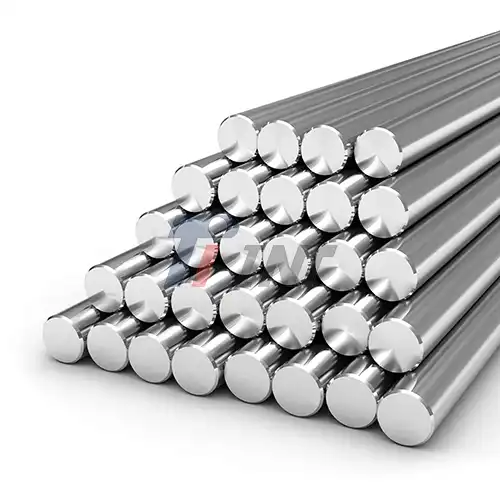
Gr9 titanium bars are a good compromise between commercial titanium and Gr5 alloy. Gr9 titanium bar dia 8mm offers a bending force of 620-690 MPa and a weight of 4.48 g/cm³, resulting in 40% lighter than stainless. For its cold-formability, continuous machinability, and durability, the surgical instrument, aerospace, or chemical processing industries use this grade to decrease scrap and optimize shop floor production cycles.
|
|
|
What Makes Gr9 Titanium Alloy Technically Distinctive
Alloy Composition and Mechanical Profile
Beta Ti-3Al-2.5V. Vanadium provides beta phase elasticity and cold-working responsiveness, while aluminum stabilizes the alpha stage for high-temperature strength. Less alloying that Gr5 makes Gr9 (Ti-6Al-4V) simpler to cold shape small-diameter shaft the elements without breaking. Its 15% elongation on break allows fabricators exceptional elastic recuperation when the component bent under cyclic load and recovers to its original shape.
Standard Compliance and Dimensional Specification
The 8mm Ti-3Al-2.5V bar meets strict ASTM B348, ASTM F136, and ISO 5832-3 specifications. The bar length may be changed to match client-cut specifications, and surface treatments include polished, pickled, or bespoke.
An EN 10204 3.1 Mill Test Certificate details chemical composition, tensile qualities, and heat treatment parameters for each manufacturing batch with traceable heat numbers, and all these documented properties are directly applicable to Gr9 titanium bar dia 8mm, ensuring full traceability from raw material to finished instrument. All items have ISO 9001:2015, ISO 13485:2016, and EU CE safety certificates, which exporters need for supplier audits.
Mechanical Advantages That Matter on the Production Floor
Procurement managers often evaluate why they should specify Gr9 over the more common Gr2 or Gr4 pure titanium grades for structural instrument shafts. The performance gap becomes evident when components are subjected to repeated bending or torsional stress.
Here are the core mechanical strengths that distinguish this alloy in production-intensive environments:
- Gr9 has 2–2.5 times the yield strength of Gr2, enabling thinner walls and narrower diameters without compromising load-bearing capability, lowering material costs per completed item.
- Superior fatigue resistance under cyclic stress: Independent tests show that Ti-3Al-2.5V has fatigue limits far greater than unalloyed titanium, making it the best material for instrument shafts that experience thousands of flex cycles during sterilization and usage.
- Predictable CNC machinability: Gr9 work-hardens less than Gr5, so cutting inserts last longer. Switching from Gr5 to Gr9 for small-diameter shaft manufacturing improves tool life in Swiss-type or multi-axis CNC shops.
These properties combine to provide workshop supervisors with fewer quality deviations and production managers with a more defensible cost model when quoting instrument contracts to international hospital supply chains. Gr9 titanium bar dia 8mm is a key specification that fits seamlessly into this framework, ensuring consistent material performance and dimensional accuracy across production runs.
Industrial Applications Across Key Sectors
Surgical Instrument Manufacturing
Sialkot, Solingen, and other the North American and European medical tool producers employ Gr9 bar stock for shaft components in forceps, scissors, retractors, and needle holders. Elastic recovery lets spring-action components return to neutral, and resistance to corrosion shields the surface from autoclave sterilization. ASTM F136 biocompatibility check approves the material for human-touch tools.
Aerospace and Fluid System Components
In aerospace sub-assemblies, hydraulic tubing and structural brackets made from Ti-3Al-2.5V have been industry standards for decades because the alloy's high strength-to-weight ratio reduces airframe mass without sacrificing structural integrity. The 8mm diameter bar stock feeds CNC lathes producing hydraulic joints, standoffs, and fastener blanks that must perform reliably across wide temperature ranges.
Chemical Processing and Marine Environments
Gr9 titanium outperforms 316L. in chloride- and reactive acid-rich environments. The alloy provides a stable TiO₂ passively coating in saltwater, reducing pitting and crevice corrosion that may degrade stainless components in months. Chemical plant engineers employ Ti-3Al-2.5V rod for pump drive, valve stems, and heat exchanger components to save downtime.
Procurement Considerations: Choosing the Right Supplier
Sourcing Gr9 titanium bar dia 8mm for ongoing production involves more than just comparing unit prices. Instrument manufacturers who place monthly replenishment orders require a supplier capable of maintaining grade and dimensional consistency across every batch.
Key evaluation criteria worth confirming before committing to a long-term supply relationship include:
- Material traceability: Mill Test Certificates should match heat numbers on bars. Quality teams cannot close non-conformance reports or meet customer audits without this.
- Certification currency: Check if ISO 13485:2016 and CE certifications cover the product category and are current. Certificate expiration or exclusion causes third-party audit compliance gaps.
- Flexible MOQ and mixed-grade ordering: Small-to-mid-size instrument shops operate numerous titanium grades. Suppliers that accept mixed-grade orders at appropriate minimum quantities minimize fixed working capital.
- Lead time reliability: Production planners can keep raw material inventories low without line stoppages with a 3–4 week production-to-shipment window.
Gr9 is cheaper than Gr7, which includes palladium for corrosion resistance, but it is stronger than pure grades. On a cost-per-part basis, Gr9 routinely outperforms cheaper options in lifetime value.
Conclusion
Gr9 titanium bar dia 8mm (Ti-3Al-2.5% V) is a popular surgical instrument, aviation component, and corrosion-sensitive process engineering alloy. Its elastic recovery, tooling, and endurance to fatigue make it perfect for shaft and handle components in cyclic mechanical stress. For procurement professionals, global standard compliance, comprehensive material tracking, and flexible order structures show a supplier's capacity to maintain manufacturing continuity beyond a trial shipment.
FAQ
How does Gr9 compare to Gr5 for small-diameter instrument shafts?
Gr5 offers higher tensile strength but generally requires hot forging for forming operations at small diameters. Gr9 can be cold-worked at 8mm without cracking, lowering per-unit manufacturing costs and reducing tooling wear on CNC equipment.
What documentation should accompany each shipment?
A valid EN 10204 3.1 Mill Test Certificate covering the heat number, chemical analysis, mechanical test results, and heat treatment condition. Additionally, ISO 13485:2016 and CE certification documents should be available to support facility audits.
How does corrosion resistance compare to 316L stainless steel?
In chloride environments, Ti-3Al-2.5V significantly outperforms 316L stainless. The alloy's passive oxide layer remains stable in seawater and dilute acid service conditions where stainless steel typically exhibits pitting.
What surface finishes are available for the 8mm bar?
Standard options include polished and pickled finishes. Customized surface treatments are available on request to meet specific Ra requirements for your machining or end-use application.
What is a typical lead time for a bulk order?
Standard production-to-shipment lead time is 3–4 weeks for confirmed orders. Clients with rolling monthly replenishment schedules can coordinate with our team to reserve batch capacity in advance.
Partner with Baoji INT Medical Titanium for Certified Gr9 Bar Supply
Baoji INT Medical Titanium Co., Ltd. has supplied precision titanium bar stock to instrument manufacturers across four continents since 2003. Our Gr9 titanium bar dia 8mm meets ASTM B348, ASTM F136, and ISO 5832-3, with full EN 10204 3.1 traceability on every batch. As a verified supplier, we offer flexible order quantities, rapid documentation turnaround, and direct technical support. Contact our export team at export@tiint.com or visit inttitanium.com to request a sample, obtain a competitive quote, or discuss your specific production requirements.
References
1. ASTM International. The ASTM B348 standard specifies titanium & titanium alloy rods and billets. International ASTM, 2021.
2. ASTM F136: Recommended Specification in Wrought Titanium-6-Aluminum-4Vanadium ELI Alloy as Surgical Implants. International ASTM, 2022.
3. ISO. ISO 5832-3: Wrought Titanium 6-Allium 4-Vanadium Alloy Surgery Implants. ISO, 2021.
4. Matthew J. Donachie, Steel: A Technical Guide. ASM International, 2000, 2nd ed.
5. Rack, HL, and J.I. Qazi., "Titanium Alloys for Medical Applications." Science и Engineering: C 26, no. 8, 2006, 1269–1277.
6. "Ti Based Biomaterials, which the Best Choice for Orthopedic Implants." Progress in Material Science, 54(3), 2009, 397–425.