




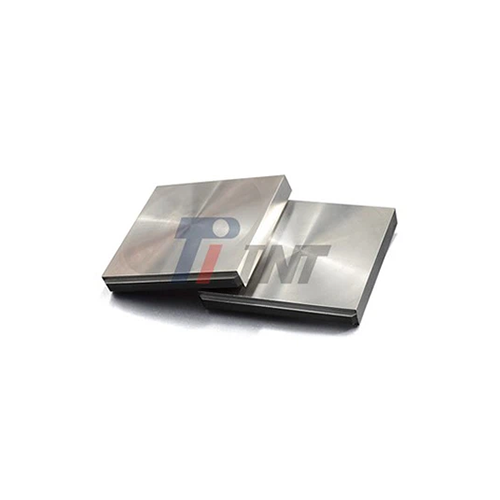
OEM Gr5 Titanium Square Disc for Custom Medical Components


 2026-09-18 11:06:47
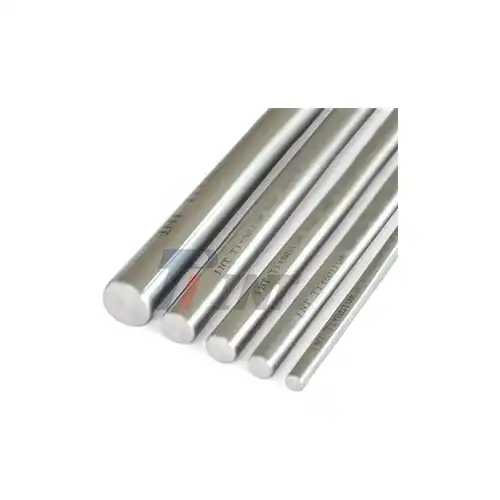
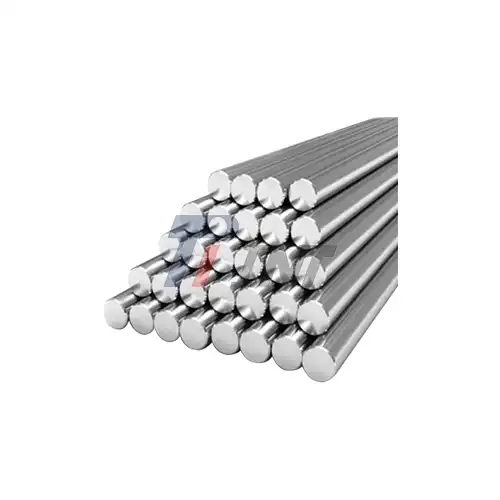
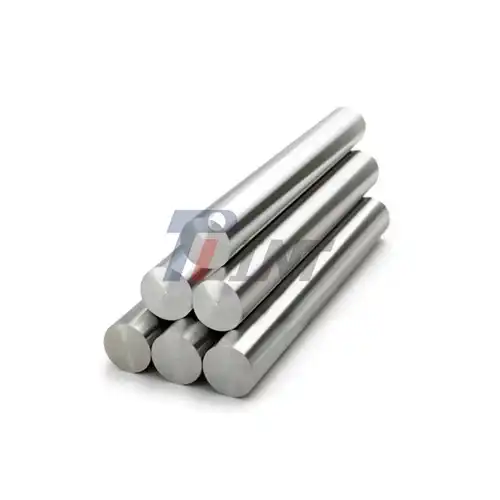
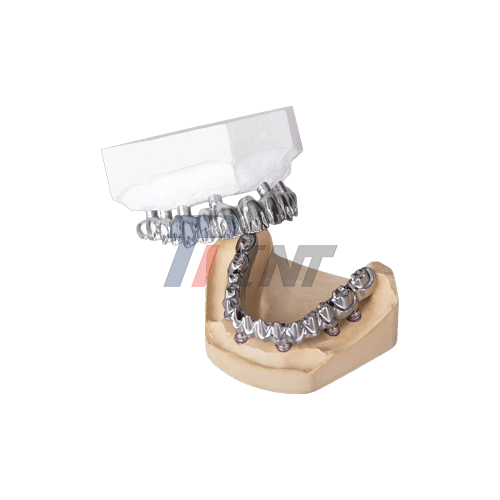
The precision-engineered Gr5 Titanium Square Disc is a dependable raw material for orthopaedic implant producers. This square billet of Ti-6Al-4V alloy provides mechanical strength, corrosion resistance, and biocompatibility for trauma plates, spinal fixation systems, and cranio-maxillofacial implants. Baoji INT Medical Titanium Co., Ltd. produces customisable square discs from 2mm to 50mm thickness, certified under ISO13485:2016 and EU CE standards, allowing your technical teams to create complicated designs with material traceability.
|
|
|
Understanding Gr5 Titanium Square Disc and Its Properties
The most common alpha-beta titanium metal used in medical device production is Ti-6Al-4V, which is also known as Grade 5 titanium. Our Gr5 Titanium Square Disc shape is made of titanium, 6% aluminum, and 4% vanadium. It has a tensile strength of over 895 MPa and a mass of only 4.43 g/cm³. This mixture gives implant makers three very important benefits.
High Tensile Strength Meets Lightweight Design
Medical device engineers always have to deal with the problem of making implants that are both strong enough to hold up under physiological loads and light enough to make life easier for patients. This is taken care of by the Gr5 Titanium Square Disc's great strength-to-weight ratio.
The material doesn't bend when loaded and unloaded over and over again, like in hip stems and vertebral plates. It has an elastic value of 113.8 GPa. This property lets thinner cross-sections be made with CNC machines without affecting the structural integrity. This directly lowers the implant's mass by 20–30% compared to stainless steel alternatives.
Corrosion Resistance for Long-Term Implantation
When implant-grade titanium comes in contact with body fluids, it quickly makes a stable oxide layer (TiO₂). Even when our square discs are in chloride-rich settings inside the body, they keep this passive layer in place. This stops the release of ions that could cause inflammatory reactions.
According to ASTM B117, testing with salt spray by a third party confirms that there is no pitting corrosion after 1,000 hours of exposure. This is an important standard for devices that are meant to last 15 to 20 years. When putting together biocompatibility dossiers for FDA 510(k) submissions, Regulatory Affairs teams use this information with great care.
Biocompatibility Validated Through ISO Standards
Every batch of our Gr5 Titanium Square Disc goes through cytotoxicity testing in accordance with ISO 10993-5. This makes sure that it doesn't affect the growth of osteoblasts. The controlled oxygen level (≤0.20%) stops the formation of alpha case, which is a thin, fragile layer on the surface that shortens the wear life.
Metallographic analysis confirms that the alpha-beta phase is evenly distributed across the disc's thickness. This means that there are no flaws below the surface that could cause cracks to spread during service. These EN 10204 3.1 badges are used by supply chain managers to meet the needs of auditors during the yearly ISO13485 tracking visits.
Comparing Gr5 Titanium Square Discs with Other Materials for Medical Use
When procurement teams look at different types of materials, they often compare Gr5 Titanium Square Discs to Grade 2 commercially pure titanium, 316L surgical stainless steel, and 7075-T6 high-strength aluminum. When you know about these differences in performance, you can avoid expensive redesigns during the clinical evaluation stages.
Grade 5 Versus Grade 2 Titanium
Grade 2 titanium is better at resisting rust, but its yield strength of 275 MPa isn't high enough for load-bearing implants like pedicle screws or tibial plates. Your design teams can cut the thickness of the implant profile by 40% while maintaining the same load capacity thanks to the Gr5 Titanium Square Disc's yield strength, which is triple that of Grade 2. Different grades can't be machined the same way. Grade 2 can be machined like austenitic stainless steel, but Grade 5 needs carbide tools and limited cutting speeds below 50 m/min to keep the work from getting too hard.
Advantages Over Stainless Steel 316L
Stainless steel is still used in many older implant designs because it has been used in the past, but Grade 5 gets rid of three problems that stainless steel has. 316L has a mass of 8.0 g/cm³, which is almost twice that of titanium. This means that patients will be under more inertial loads when they walk.
Nickel (10–14%) in stainless steel can make allergic people more sensitive, but this isn't a problem with titanium alloys. The difference in modulus between steel (200 GPa) and bone (20 GPa) helps to protect against stress. Titanium, on the other hand, has a modulus that is more like cortical bone, which helps bones heal better after surgery.
Cost-Performance Balance Against Aluminum Alloys
Aerospace-grade aluminum alloys, such as 7075-T6, are just as strong as titanium but much lighter and cost a lot less to make. However, aluminum is not good for lasting implants because it can corrode through galvanic corrosion in salty settings and doesn't bond with bone. The Gr5 Titanium Square Disc's 3–4x higher price is justified by its long service life (decades) and lack of need for revision surgery, which is a calculation that fits with value-based procurement strategies.
OEM Manufacturing Process for Gr5 Titanium Square Discs in Medical Components
At Baoji INT Medical Titanium Co., Ltd., our production process for Gr5 Titanium Square Discs integrates 30 years of experience in titanium metallurgy, which we've gained by working with more than 50 foreign implant makers. Each step of the manufacturing process tackles a different problem that was found by Quality Engineers and Regulatory Affairs staff.
Raw Material Sourcing and Ingot Preparation
We only buy titanium sponge from providers that follow ASTM standards. When it arrives, we use X-ray fluorescence (XRF) to check that the elements are mixed correctly and within the limits set by ASTM F136. Vacuum arc remelting (VAR) gets rid of hydrogen inclusions that could lead to delayed cracking, which is a very bad way for materials to fail in orthopedic applications. Triple-melting methods make sure that all 3-ton blocks are the same, which stops compositional differences that could make your machining parameters change from batch to batch.
Hot Forging and Heat Treatment Protocols
Isothermal forging is done on square disc blanks at temperatures between 950°C and 1050°C. This smooths out the grain structure to ASTM grain size 8–10. This microstructure finds the best balance between tensile strength and ductility, which is very important when your CNC operations cause leftover stresses during cutting.
Gr5 Titanium Square Disc blanks are the typical starting material for this process, ensuring consistent response to the thermal and mechanical cycles. After being heated to 730°C for 90 minutes, annealing cycles relieve internal stresses. This makes sure that the dimensions stay stable during the next precision grinding. Solution treatment and aging (STA) can be used if needed to get ultimate tensile strengths of more than 1000 MPa for high-demand uses like modular hip stems.
Non-Destructive Testing and Certification
Ultrasonic testing according to ASTM E127 finds holes below the surface as small as 1.5 mm across by screening the whole disc volume before it is shipped. Our inspection records include information about scan patterns, reference standards, and operator credentials. These data packages make it easier for your Supplier Quality Engineer (SQE) to do checks. The chemical composition certificates include full trace element analysis (Fe, C, N, H, O) using inductively coupled plasma optical emission spectrometry (ICP-OES). This meets the EU Medical Device Regulation 2017/745 standards for tracking.
Procurement Guide for B2B Clients: Sourcing Gr5 Titanium Square Discs
Global orthopedic manufacturers have to go through a 6–9-month validation cycle to find qualified suppliers. Understanding the most important factors for buying Gr5 Titanium Square Discs speeds up this process while lowering the risk of regulatory issues.
Certification and Audit Readiness
Check to see if the potential providers still have their ISO13485:2016 approval for making medical devices. Our documentation suite includes:
- Device Master Records (DMR) for each disc specification
- Validation protocols for heat treatment furnaces per FDA 21 CFR Part 820.75
- Incoming inspection procedures traceable to ASTM test methods
- Calibration records for measurement equipment per ISO/IEC 17025
We allow customer checks through videoconferencing or in-person inspections at our Baoji plant, providing English-speaking technical guides and access to production floor paperwork.
Flexible Order Quantities and Lead Times
Recognizing the tension between prototype development and production scaling, we offer:
- Sample orders: 5–10 pieces based on requirements (2–3 weeks delivery)
- Pilot production: 50 to 200 pieces (shipping in 4 to 6 weeks)
- Serial production: 500 or more pieces (6–8 weeks delivery with choices for vendor-managed stockpiles)
Minimum order quantities start at 50 kg, accommodating new product development timelines where final dimensions remain in flux. Our kanban system works with your MRP schedules to release batches every two to four weeks, balancing cash flow with inventory carrying costs.
Pricing Transparency and Total Cost Analysis
Base pricing for Gr5 Titanium Square Discs cost between $45 and $65 per kilogram, depending on the thickness, tolerance class, and order volume. To find the total landed cost, factor in:
- Shipping: FOB Qingdao port; transit time 18–25 days to Los Angeles or Hamburg
- Customs duty: Titanium mill goods usually enter under HTS code 8108.90, subject to prevailing tariff schedules
- Quality verification: Budget 2 to 4 percent of the order value for third-party testing if internal lab capacity is limited
Our export team (export@tiint.com) sends out proforma invoices detailing Incoterms, packaging requirements, and insurance coverage, eliminating ambiguity during purchase order processing.
Practical Applications and Case Studies of Gr5 Titanium Square Discs in Medical Devices
Real-world applications of Gr5 Titanium Square Discs show how the properties of a material can improve health results and the speed of manufacturing.
Trauma Fixation Plate Fabrication
A European trauma plate manufacturer transitioning to our Gr5 Titanium Square Disc blanks cut down on scrap to 3% by eliminating through-thickness differences. The square geometry optimized material utilization: a 100mm x 100mm x 10mm disc yielded two trauma plates with an 85% buy-to-fly ratio, while rectangular bars needed more face cutting and only produced 60%.
Spinal Interbody Cage Production
A plan for an interbody cage with internal grid structures needs a lot of 5-axis milling. Our customer confirmed that the disc's hardness stayed the same across its thickness (within ±1 HRC), which allowed 16-hour machining cycles to go without stopping to change tools. The stable microstructure also allowed for direct laser writing of UDI codes, with mark contrast staying clear through multiple autoclave sterilization processes.
Cranio-Maxillofacial Mesh Prototyping
Custom cranial implants demand small-batch production (1 to 5 per patient). A German medical device startup uses our 10-piece minimum orders to make prototypes of meshes that are tailored to each patient, receiving material certificates within 3 weeks. Specifying exact thickness (e.g., 3.5 mm for orbital floor reconstruction) eliminates secondary grinding, cutting lead times by 40%.
Conclusion
Choosing the right titanium provider is important if you want your implant program to get governmental approval on time and stay competitive in markets where prices are important. The Gr5 Titanium Square Disc from Baoji INT Medical Titanium Co., Ltd. offers orthopedic device developers certified material performance, consistent manufacturing, and flexible procurement options.
Our ISO13485-compliant processes allow full traceability from the ingot to the finished disc, and our flexible order quantities allow for both small samples for R&D and large-scale serial production. As rules on medical devices get stricter around the world, working with a source that has 30 years of experience in titanium metallurgy and clear documentation processes is necessary to keep your market place.
FAQ
How does the machinability of Gr5 titanium compare to Grade 2 for CNC operations?
Grade 5 titanium presents greater machining challenges than Grade 2 due to higher hardness (32 HRC vs. 20 HRC). Cutting speeds should be slowed down to 40–50% of those used for stainless steel, and flood cooling should be used to prevent work hardening. Carbide tools with titanium-specific coatings (TiAlN or AlCrN) last three to four times longer than uncoated inserts. Even with these things in mind, the better mechanical properties justify the extra money spent on tools for load-bearing implants.
Can you supply material certificates compliant with EU MDR requirements?
All Gr5 Titanium Square Disc shipments include EN 10204 3.1 mill certificates detailing chemical composition, mechanical properties, heat treatment settings, and ultrasonic test results. These papers use specific ASTM and ISO standards to show where the materials come from, which is needed for EU MDR 2017/745 Technical File creation. For seven years, we keep records on each batch to help with post-market surveillance and government checks.
What lead times apply for custom thickness specifications?
Standard widths (5mm, 10mm, 20mm, and 30mm) ship in 3–4 weeks for orders over 100 kg. Non-standard thicknesses, like 7.5mm and 15mm, need more forging and machining setup, which makes the lead time 6 to 8 weeks longer. Samples (5–10 pieces) of any thickness are usually sent within two to three weeks, which allows for quick prototyping during the development stages of implants.
Partner with a Trusted Gr5 Titanium Square Disc Manufacturer
Baoji INT Medical Titanium Co., Ltd. stands ready to support your next-generation implant development with precision-engineered Ti-6Al-4V square discs. Our Gr5 Titanium Square Disc materials are ISO13485:2016 and EU CE approved, meeting ASTM F136 standards and backed by full mill certificates and third-party test results. Whether you require sample quantities for feasibility studies or production volumes with vendor-managed inventory, our team provides responsive technical support and transparent pricing.
Visit inttitanium.com to review our full material specifications and request a quote, or contact our export team directly at export@tiint.com. We accommodate customer audits and collaborate closely with your Regulatory Affairs and Quality Engineering teams to ensure seamless supplier qualification.
References
1. ASTM International. (2021). ASTM F136-13: Standard Specification for Wrought Titanium-6Aluminum-4Vanadium ELI Alloy for Surgical Implant Applications. West Conshohocken, PA: ASTM International.
2. European Commission. (2017). Regulation (EU) 2017/745 on Medical Devices. Official Journal of the European Union.
3. ISO. (2016). ISO 13485:2016 Medical Devices — Quality Management Systems. Geneva: International Organization for Standardization.
4. Journal of Materials Science: Materials in Medicine. (2020). "Corrosion behavior of titanium alloys in simulated body fluid: A review." Volume 31, Article 87.
5. Medical Device & Diagnostic Industry. (2021). "Titanium Alloys in Medical Device Manufacturing: Properties and Applications." MDDI Online.
6. U.S. Food and Drug Administration. (2020). Use of International Standard ISO 10993-1: Guidance for Industry and FDA Staff. Silver Spring, MD: FDA.