
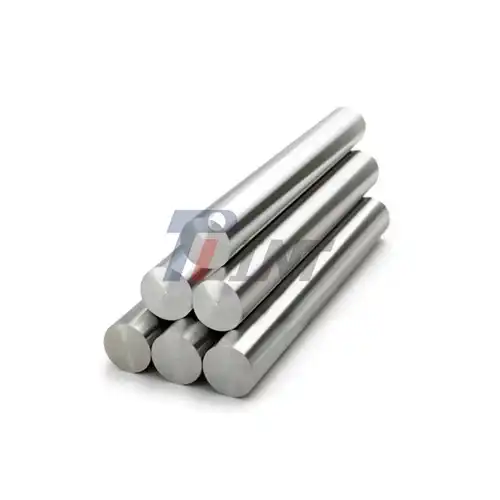
Can Titanium Grade 9 Bar be aged?


 2026-04-29 08:39:14
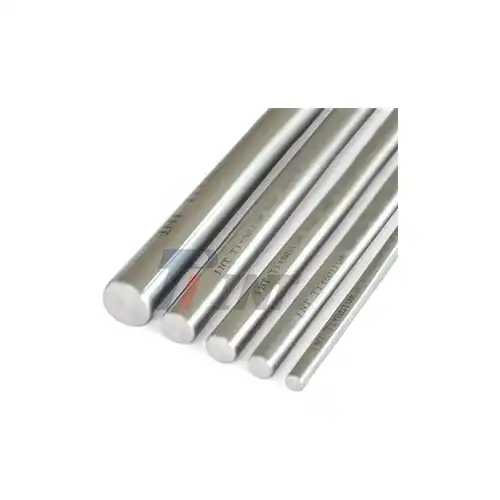
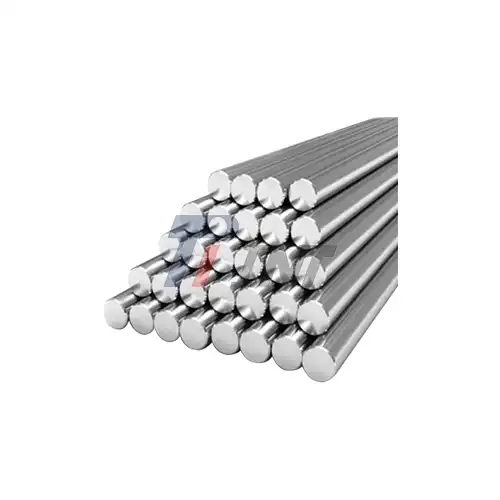
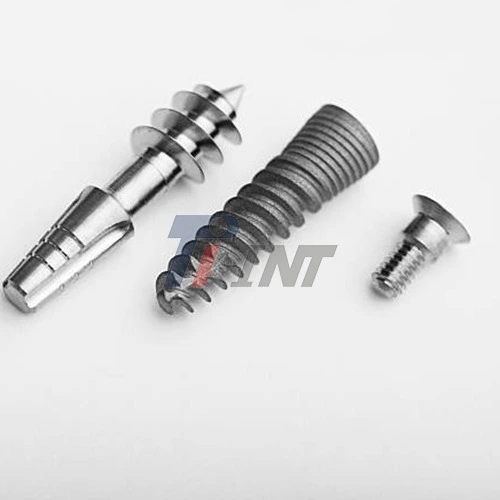
No, Titanium Grade 9 bar can be stored, but it doesn't change much when it does compared to metals with more vanadium. The Gr9 Titanium Bar Dia 8mm is made up of Ti-3Al-2.5V, which has a limited beta phase that limits how strong it can get through precipitation hardening. When aged at temperatures between 480°C and 540°C for 4 to 8 hours, tensile strength can go up by about 10 to 15 percent. But a lot of companies that make medical devices like the annealed or stress-relieved state better because it balances strength with better cold formability, which is very important for making precise parts like surgical tools and dental implant abutments.
|
|
|
Understanding Global B2B Procurement Trends
Buying methods have changed a lot in the medical device production industry over the past ten years. Digital transformation is now the norm when it comes to sourcing tactics. Businesses use advanced analytics tools to keep an eye on source performance, material certifications, and shipping measures in real time.
Digital Transformation in Material Sourcing
Cloud-based systems are being used more and more by procurement teams at top medical device companies to keep track of seller qualifications and compliance paperwork. Purchasing managers can use these tools to check ISO 13485:2016 certifications, look over material test certificates, and check tracking records without having to send and receive time-consuming emails. R&D engineers can quickly get mechanical property data, chemical composition records, and biocompatibility test results for titanium alloy bars used in surgical tools by logging into integrated source portals.
Sustainability and Regulatory Alignment
Sustainability efforts have changed how materials are chosen. Companies that make medical devices now judge sellers based on their environmental management systems, how energy-efficient their factories are, and how they handle responsible sourcing. As companies move toward a circular economy, they need to find partners who can help them track materials from the raw ingot to the finished bar stock. This is to make sure they follow FDA rules and the EU Medical Device Regulation (MDR 2017/745).
Supply Chain Resilience Strategies
Recent global problems have taught buying workers how important it is to have a wide range of suppliers. Medical device businesses now work with several sources of titanium alloy in different parts of the world to lower the risks that come with trade disputes, shipping delays, and the lack of raw materials. When it comes to getting specialized materials like Ti-3Al-2.5V bars, where production capacity is limited among a small group of qualified makers, this method works especially well.
Key Challenges in Industrial and Manufacturing Procurement
Teams that buy medical devices have to deal with problems that aren't found in other producing industries. When strict legal requirements, quality assurance demands, and cost pressures come together, it's hard to make decisions.
Compliance Complexities and Certification Management
To find medical-grade titanium products, you have to sort through a lot of different foreign standards. Materials need to meet the standards set by ASTM F136, ASTM B348, and ISO 5832-3. They also need to meet regional standards, like FDA 21 CFR Part 820 for the US market. Purchasing managers spend a lot of time making sure that sellers keep their certifications up to date, do regular checks, and provide complete documentation packages. Adding new sources makes things more difficult because each one has to go through strict material verification and compliance checks before it can be used in production.
Quality Assurance and Material Consistency
Medical device makers need materials to be very consistent from one production lot to the next. For orthopedic inserts, a titanium bar needs to have consistent mechanical qualities, a known grain structure, and a consistent surface finish. Changes in tensile strength, yield strength, or stretch numbers can make the device less effective and put patients at risk. Strong inbound inspection procedures must be put in place by procurement teams. These should include non-destructive testing, chemical analysis confirmation, and mechanical property validation. In medical settings, these quality control steps are necessary even though they add time and money to the buying process, especially for products like Gr9 Titanium Bar Dia 8mm.
Cost Pressures and Value Engineering
Quality and safety are very important, but buying managers still have to find the best deals on materials. The hard part is finding the right balance between having to pay a lot for approved medical-grade materials and having to stick to a budget and deal with competitive market forces. Some businesses use value engineering to find ways to improve materials, processes, or standards in a way that keeps performance the same while cutting costs. They do this by working closely with their providers. But before it is put into action, any plan to cut costs must go through a full risk assessment and legal assessment.
Best Practices for Efficient B2B Procurement Processes
Medical device businesses that are good at what they do have built complex frameworks for buying things that make operations run more smoothly while still meeting high quality standards. These habits help make supply lines more stable and shorten the time it takes to make a new product.
Strategic Supplier Qualification and Development
Leading companies put a lot of money and time into programs that qualify suppliers. Procurement teams don't just look at price quotes; they look at possible partners in a number of different ways. When choosing a supplier, you should think about their technical skills, quality control systems, production capacity, and financial security. Companies often do surveys on-site to look at how they make things, how they calibrate their tools, and how they train their employees. This thorough qualification process sets the stage for long-term relationships based on shared knowledge and high standards of quality.Medical device companies look for more than just basic material approval when they work with titanium providers. They check to see how well the supplier knows how to use medical devices, how willing they are to offer technical help, and how well they can meet special needs. Suppliers who know a lot about cold working qualities, surface treatment choices, and precision machining are more valuable than those who only sell standard materials.
Performance Monitoring and Continuous Improvement
To do effective buying, success must be evaluated on a regular basis. Companies set key performance indicators (KPIs) that measure things like how often deliveries are made on time, how often quality issues are reported, how accurate paperwork is, and how quickly expert questions are answered. When you do regular business reviews with your providers, you can talk about performance trends, answer concerns, and come up with ways to make things better. With this joint approach, relationships with suppliers go from being transactional to being strategic partnerships that drive innovation and operational success.
Integrated Planning and Demand Forecasting
When medical device companies plan their purchases, they should take into account when their products will be developed and how much demand there will be in the market. Sharing estimated material needs with providers helps with better planning of output, keeping track of inventory, and allocating capacity. This kind of exposure is especially helpful when looking for hard-to-find materials like Gr9 Titanium Bar Dia 8mm, because production runs may need to be planned ahead of time to meet special needs like length requirements or desired surface finishes.
Leveraging Technology to Enhance Procurement Efficiency
New technologies have completely changed how companies that make medical devices get things and keep track of them. Advanced tools give you a view into the supply chain processes that you never had before and let you make decisions based on data.
AI-Driven Analytics and Predictive Insights
Artificial intelligence systems look at past procurement data to find trends, guess when problems might happen, and suggest the best ways to source goods. These systems can find sellers whose performance is going down, warn about materials that might run out, and offer other sources whose skills match those of the supplier. As new data comes in, machine learning systems keep improving their suggestions. This gives buying teams more accurate information over time.
Blockchain for Material Traceability
Complete material tracking is a very important need in the medical device industry that blockchain technology meets. Companies can keep track of titanium bars from the melting and alloying stage all the way through rolling, heat treatment, and final inspection by writing down every step in the supply chain on a permanent notebook. This level of tracking makes following the rules easier, helps find the root cause of quality problems, and gives the paperwork needed for FDA applications and notified body reviews.
IoT Sensors and Quality Monitoring
Internet of Things (IoT) sensors built into industrial settings let important factors be tracked in real time. Suppliers with Internet of Things (IoT) systems can give users real-time information about the state of production, the surroundings during processing, and quality measures for materials that are being used in production. This openness builds trust and lets buying teams deal with possible problems before they affect supply times or the quality of the materials.
Building Trust and Long-term Partnerships with Suppliers
The best medical device companies know that their ties with their suppliers go beyond what's written in contracts. Real partnerships based on trust, openness, and shared gain give you an edge over others that you can't get from transactional relationships alone.
Transparent Communication and Collaborative Problem-Solving
Problems that always come up in complicated supply chains can be quickly solved when there are open lines of contact. Having good relationships with seller technical teams makes it easier to solve problems quickly, like when a production manager finds a problem with a material's properties that they didn't expect or when a buying manager has to change the delivery requirements at the last minute. When suppliers know what their customers want and what they can't do, they can come up with creative ideas that might not be obvious through normal methods.
Joint Development and Innovation Initiatives
Companies that are ahead of the curve work with their providers to develop new products. Titanium suppliers should be brought in early on in the development process for new surgery tools or orthopedic devices so that useful insights can be gained. Suppliers can offer the best grades of materials, heat treatment plans that balance strength and formability, or ways to make things that increase output and lower costs. When people work together, they often come up with new ideas that help both sides and make the partnership stronger.
Ethical Sourcing and Corporate Responsibility
More and more, companies that make medical devices are realizing that it's their job to make sure that their supply lines are responsible. This pledge includes making sure that providers keep working conditions safe, pay workers fairly, and do business in a way that is good for the environment. Companies check suppliers' environmental management systems, look at energy-saving programs, and do social compliance exams. Suppliers that show good corporate responsibility practices are more in line with what their customers want and face less risk to their image. When building partnerships with material suppliers, these concepts must always come first. Working with makers who keep up-to-date standards like ISO 9001:2015 and ISO 13485:2016 shows that they are dedicated to quality management and constant growth. These kinds of certificates show that sellers have strong systems in place for quality control, tracking, and making sure customers are happy, especially when dealing with products like Gr9 Titanium Bar Dia 8mm.
How Baoji INT Medical Titanium Co., Ltd. Supports Your Procurement Needs
Baoji INT Medical Titanium Co., Ltd. has been making medical devices for more than 20 years and has become very good at making and handling medical-grade titanium materials. Our company was started in 2003 by Mr. Zhan Wenge, who has more than 30 years of experience in the titanium business. Since then, it has grown into a leading provider of medical titanium materials.Our wide range of products covers a wide range of medical gadget uses. Pure titanium, Ti-6Al-4V ELI titanium alloy, and other specialized types are made by us in a variety of shapes and sizes, such as bars, wires, plates, and precision-forged parts.
Each product goes through strict quality control to make sure that the mechanical traits, chemical makeup, and surface finish are all the same. We are dedicated to meeting world quality and safety standards, as shown by our ISO 9001:2015, ISO 13485:2016, and EU CE certificates.For medical uses, the Ti-3Al-2.5V mix we make has the best mixture of strength, flexibility, and resistance to corrosion. This thin material has a density of 4.48 g/cm³ and is very strong for its weight. It is very useful for orthopedic devices, oral implants, and surgery tools.
The metal is very good at resisting chloride stress corrosion cracking and keeps its high fatigue strength even when loaded and unloaded many times. These are important qualities for medical equipment that are put under a lot of stress over and over again.We can do more than just normal production when it comes to making. We can make specs like different diameters, lengths, and surface finishes that are specific to the needs of the product. Our technical team works closely with customers to make sure they get materials that exactly meet their needs
The surfaces can be cleaned, pickled, or given other special treatments. Because of this, companies that make medical devices can improve their production methods and make parts that work better.We have grown into precision die forging of metal joint components through our company, Shaanxi Stand Biotechnology Co., Ltd. This shows that we are committed to supporting the whole value chain of medical devices. Because we are vertically integrated, we can offer both raw materials and partially finished parts to our customers. This makes the supply chain more efficient and gives them more control over quality.
Conclusion
The question of whether Titanium Grade 9 bar can be aged shows how complicated it is to choose medical materials. Even though age hardening is scientifically possible, the small increase in strength must be weighed against the fact that normal heat treatment conditions give metals great cold formability and corrosion resistance. Medical device makers do better when they work with experienced providers who know these technical details and can help them choose the right materials, set the right processing settings, and make sure the quality is high. As purchasing strategies move toward digital change, sustainability, and strategic relationships, picking the right titanium supplier becomes more crucial for medical device companies to stay ahead of the competition.
FAQ
Can aging treatment significantly improve Grade 9 titanium properties?
Aging methods for Ti-3Al-2.5V only slightly improve its strength compared to when it was heated, by about 10 to 15 percent. The low amount of beta phase material limits the ability of the precipitate to harden. Most medical equipment uses tempered or stress-relieved conditions to make the metal more malleable while still keeping its strength. Mechanical tests should be used to confirm certain aging factors and make sure that the properties meet design needs without affecting the material's flexibility or toughness.
What heat treatment conditions are recommended for medical applications?
After cold working, medical-grade Grade 9 titanium is often treated with stress release at 480–650°C for 30–120 minutes. This process lowers leftover stresses without changing the mechanical qualities in a big way. Full annealing at 700–800°C gives the best flexibility and a smooth grain. The exact plan for heat treatment relies on the final use, the shape of the part, and the mechanical properties that are needed. Each lot of material from a supplier should come with a heat treatment certificate.
How does Grade 9 compare to Grade 5 for surgical instruments?
When compared to Grade 5 (Ti-6Al-4V), Grade 9 is better at being cold shaped. This means that makers can make complicated instrument shapes by bending, drawing, or forming it without it breaking. While Grade 5 is stronger, Grade 9 has good enough mechanical qualities for most surgical tools and makes the production process easier. Grade 9 is just as resistant to rust and biocompatibility as Grade 5 when it comes to working with body fluids. This means it can be used for both temporary implant devices and reusable surgery tools.
Partner with a Trusted Gr9 Titanium Bar Dia 8mm Manufacturer
We, Baoji INT Medical Titanium Co., Ltd., are ready to help you with your material needs. We have over 20 years of experience making medical-grade titanium. We are the perfect partner for medical device companies that need a trusted source of materials because we have strong quality control systems, a lot of technical knowledge, and a dedication to client success.We know how important it is for medical device production to have consistent materials, full documentation, and quick expert help. Our team offers full support throughout the whole buying process, from choosing the materials at the start to making sure the quality is checked at the end.
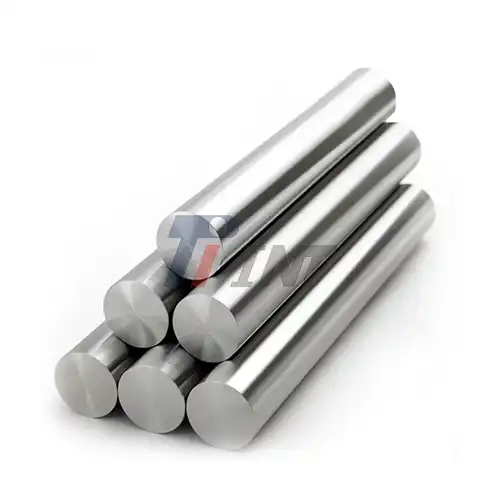
Our Gr9 Titanium Bar Dia 8mm is made to meet the standards set by ASTM B348 and ISO 5832-3, and comes with full certification and tracking paperwork. We can make changes to meet your exact production needs, including width requirements, length requirements, and surface finish choices.As a major provider of Gr9 Titanium Bar Dia 8mm, we keep a lot of stock on hand to support both concept development and large-scale production. Our supply chain system makes sure that you get what you need on time, whether you need sample numbers to test a material or production volumes to keep making things. Email our team at export@tiint.com to talk about your unique needs and find out how our medical titanium materials can help you with your product creation.
References
1. Donachie, Matthew J. "Titanium: A Technical Guide, 2nd Edition." ASM International, 2000.
2. Boyer, R., Welsch, G., and Collings, E.W. "Materials Properties Handbook: Titanium Alloys." ASM International, 1994.
3. Peters, M. and Leyens, C. "Titanium and Titanium Alloys: Fundamentals and Applications." Wiley-VCH, 2003.
4. American Society for Testing and Materials. "ASTM B348-13: Standard Specification for Titanium and Titanium Alloy Bars and Billets." ASTM International, 2013.
5. International Organization for Standardization. "ISO 5832-3:2016 Implants for Surgery—Metallic Materials—Part 3: Wrought Titanium 6-Aluminium 4-Vanadium Alloy." ISO Standards, 2016.
6. Seagle, S.R. and Hall, J.A. "Titanium for Medical Applications: The Metallurgical Perspective." Journal of Materials Engineering and Performance, Volume 11, 2002.
_1753427753918.webp)