


 2026-01-23 16:25:54


The Evolution of Jaw Surgery Titanium Plates
The field of orthognathic surgery has witnessed remarkable advancements in recent years, particularly in the realm of jaw surgery titanium plates. These essential components have undergone significant evolution, transitioning from rudimentary fixation devices to sophisticated, biocompatible implants that facilitate precise surgical outcomes.
Historical Perspective
In the early days of maxillofacial surgery, rigid internal fixation was a novel concept. Surgeons relied on wire fixation and intermaxillary fixation, which often resulted in prolonged recovery times and suboptimal outcomes. The introduction of titanium plates in the 1980s revolutionized the field, offering a more stable and biocompatible alternative to previous methods.
Technological Advancements
Modern jaw surgery titanium plates benefit from cutting-edge manufacturing processes. Computer-aided design (CAD) and computer-aided manufacturing (CAM) technologies have enabled the production of plates with unprecedented precision. These advancements have paved the way for both highly standardized plates and patient-specific custom designs.
Material Innovations
The composition of titanium alloys used in jaw surgery plates has been refined over time. Current plates often utilize Grade 5 titanium (Ti-6Al-4V ELI), known for its exceptional strength-to-weight ratio and biocompatibility. This material choice ensures that the plates can withstand the mechanical stresses of the jaw while minimizing the risk of adverse reactions.
Comparing Customized and Standard Jaw Surgery Titanium Plates
The debate between customized and standard jaw surgery titanium plates is ongoing in the medical community. Each option presents distinct advantages and potential drawbacks that surgeons must carefully consider.
Customized Plates: Precision and Personalization
Customized jaw surgery titanium plates are meticulously designed to match the unique anatomical features of each patient. This bespoke approach offers several benefits:
- Enhanced Fit: Custom plates conform precisely to the patient's jaw contours, potentially reducing the need for intraoperative adjustments.
- Optimized Biomechanics: The tailored design can distribute forces more evenly across the jaw, potentially improving healing and reducing the risk of complications.
- Reduced Surgery Time: With a pre-planned fit, surgeons may spend less time adjusting plates during the procedure.
However, customized plates also come with considerations:
- Higher Costs: The personalized manufacturing process typically incurs additional expenses.
- Longer Lead Times: Custom plates require pre-surgical planning and production, which can delay treatment.
- Limited Flexibility: Once manufactured, these plates offer less room for intraoperative modifications.
Standard Plates: Versatility and Accessibility
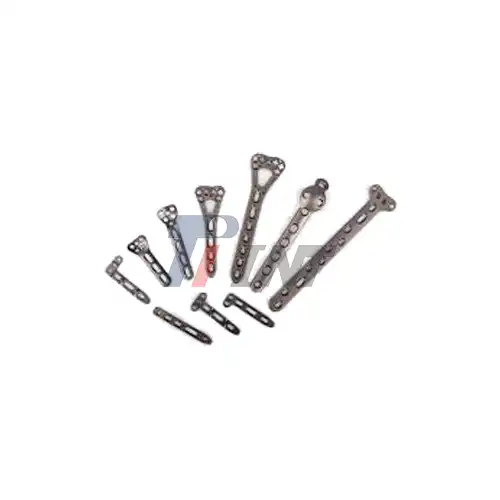
Standard jaw surgery titanium plates are pre-manufactured in a range of sizes and shapes to accommodate various surgical needs. Their advantages include:
- Immediate Availability: Off-the-shelf plates can be used in emergency situations or when time is of the essence.
- Cost-Effectiveness: Mass production typically results in lower costs compared to customized options.
- Adaptability: Experienced surgeons can modify standard plates to fit a wide range of anatomical variations.
Potential drawbacks of standard plates include:
- Intraoperative Adjustments: More time may be required during surgery to bend and shape the plates for an optimal fit.
- Potential for Suboptimal Fit: In complex cases, standard plates may not provide the ideal contour, potentially affecting outcomes.
- Learning Curve: Proper plate selection and modification require significant surgical expertise.
Factors Influencing the Choice Between Customized and Standard Plates
The decision to use customized or standard jaw surgery titanium plates is multifaceted, involving various clinical and practical considerations.
Patient-Specific Factors
The unique characteristics of each patient play a pivotal role in jaw surgery titanium plates selection.
- Anatomical Complexity: Patients with severe deformities or unusual jaw structures may benefit more from customized plates.
- Surgical Urgency: Emergency cases may necessitate the use of readily available standard plates.
- Bone Quality: Patients with compromised bone density might require the precise fit of customized plates to ensure stability.
Surgical Considerations
The nature of the surgical procedure influences plate choice:
- Precision Requirements: Complex orthognathic procedures may demand the accuracy offered by customized plates.
- Surgeon Expertise: Highly experienced surgeons may achieve excellent results with standard plates through skilled modification.
- Operative Time: In cases where minimizing anesthesia duration is crucial, pre-contoured custom plates may be preferable.
Institutional Factors
Hospital and healthcare system considerations also impact the decision:
- Budget Constraints: Facilities with limited resources may opt for more economical standard plates.
- Technology Access: Institutions with advanced 3D printing capabilities may more readily offer customized solutions.
- Inventory Management: Hospitals may prefer standard plates to simplify stock management and reduce waste.
Conclusion
In conclusion, the choice between customized and standard jaw surgery titanium plates is not a one-size-fits-all decision. It requires a careful evaluation of patient needs, surgical goals, and practical constraints. Both options have their place in modern orthognathic surgery, and the optimal choice depends on a nuanced understanding of each case's unique requirements. For more information about our range of jaw surgery titanium plates and other medical titanium products, please contact us at export@tiint.com. Our team of experts is ready to assist you in finding the ideal solution for your surgical needs.
FAQ
Are titanium plates safe for long-term use in jaw surgery?
Yes, titanium plates are considered safe for long-term use due to their excellent biocompatibility and corrosion resistance. Our plates are certified to ISO9001:2015 and ISO13485:2016 standards, ensuring high quality and safety.
Can customized titanium plates improve surgical outcomes?
Customized plates can potentially improve outcomes by providing a more precise fit, which may lead to better stability and faster healing. However, the overall success depends on various factors, including the surgeon's skill and the specific case details.
How long does it take to manufacture customized jaw surgery titanium plates?
The production time for customized plates typically ranges from 1-3 weeks, depending on the complexity of the design and our current production schedule. For more specific information, please contact us directly.
References
1. Azuma, M., et al. (2020). Mandibular reconstruction using custom-made titanium mesh tray and particulate cancellous bone and marrow harvested from bilateral posterior ilia. Journal of Plastic, Reconstructive & Aesthetic Surgery, 73(2), 367-373.
2. Mazzoni, S., et al. (2015). Computer-aided design and computer-aided manufacturing cutting guides and customized titanium plates are useful in upper maxilla waferless repositioning. Journal of Oral and Maxillofacial Surgery, 73(4), 701-707.
3. Steinbacher, D. M. (2015). Three-dimensional analysis and surgical planning in craniomaxillofacial surgery. Journal of Oral and Maxillofacial Surgery, 73(12), S40-S56.
4. Xu, H., et al. (2019). Custom-made titanium mesh for maxillofacial reconstruction. Biomedical Engineering Online, 18(1), 1-11.
5. Zhang, W. B., et al. (2018). The use of customized three-dimensional printed titanium mesh for reconstruction of the frontal bone. Journal of Craniofacial Surgery, 29(3), 718-721.
_1752463324629.webp)
_1751958555199.webp)
_1751620280646.webp)