Dental Titanium Blanks: Uses Benefits and Selection Tips


 2026-09-03 14:44:16
When sourcing materials for dental implants and prosthetics, manufacturers and procurement professionals face a critical decision: selecting substrates that combine biocompatibility, precision, and durability. Dental titanium blanks—particularly those processed into milled titanium bar dental structures—have emerged as the gold standard for full-arch restorations, implant superstructures, and custom frameworks.
These high-purity titanium rods or blocks undergo CAD/CAM subtractive manufacturing, eliminating the porosity and micro-distortions inherent in traditional casting. This technology delivers passive fit, homogeneous metallurgical integrity, and design freedom essential for handling masticatory forces while preventing bone resorption. Understanding these materials' technical specifications, compliance requirements, and supplier capabilities enables informed procurement strategies that prioritize patient safety and production efficiency.
|
|
|
Understanding Dental Titanium Blanks and Milled Titanium Bars
What Defines Medical-Grade Titanium Blanks
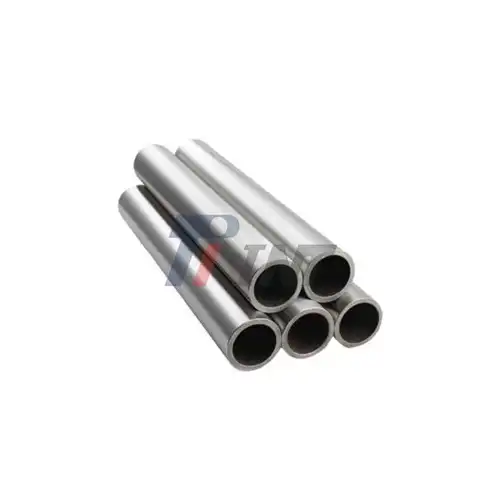
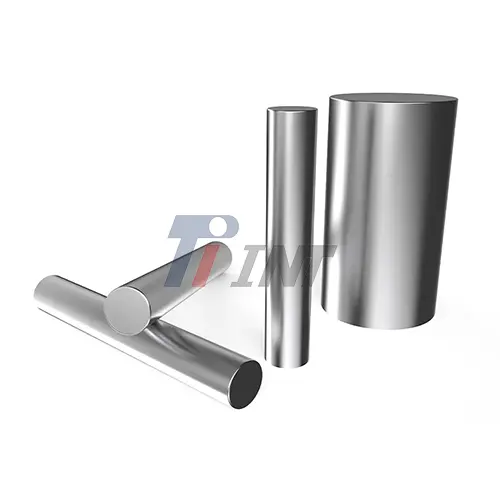
Titanium alloys used to make dental titanium blanks are mostly Grade 5 (Ti-6Al-4V) and Grade 23 (Ti-6Al-4V ELI), which are medical-grade. These materials come in the form of disks, blocks, or cylinder-shaped bars. They have already been tested for biocompatibility and are ready to be machined precisely. Titanium blanks are better than cobalt-chromium or nickel-chromium alloys because they solve three major problems: allergic reactions to base metals, too much weight inside the mouth, and galvanic rust that discolors the gums.
The bio-inert nature of the material helps osseointegration, which is the direct structural link between live bone and implant surfaces, without making the immune system react. Grade 23 has fewer intermediate elements (oxygen, nitrogen, and carbon), which makes it more flexible for complicated shapes. Grade 5 on the other hand has a tensile strength that is higher than 900 MPa. Both types have great corrosion protection in chloride-rich oral settings, so they will last for decades.
The CAD/CAM Milling Process Explained
Digital scanning of a patient's body or master casts is the first step in making a milled titanium bar dental structure. Prosthodontists use CAD tools to create the framework, which includes deciding where to attach things, how big the connectors should be, and how the teeth should emerge. Then, with micron-level accuracy, CNC milling machines take away material from solid titanium blanks to make one-block structures that are free of casting flaws.
This type of subtractive manufacturing is very different from lost-wax casting, which adds porosity and shrinkage distortion (0.6–1.2%). Milled bars keep the grain structure of the part constant throughout, so there are no weak spots that could fail from wear and tear. The process also works with divergent implant angles, which happen a lot when bone structure isn't working well, by setting compensatory shapes that make the fit passive and don't need to be adjusted by hand. Surface finishes have Ra values below 0.8 micrometers, which helps soft tissues adapt and makes cleaning easier.
Benefits and Properties of Titanium Bars in Dentistry
Why Titanium Outperforms Alternative Materials
Titanium is 40% stronger than stainless steel, so prostheses made of it can be lighter without losing their structural stability. This quality is very important for mandibular full-arch repairs, since extra weight speeds up bone loss. Comparative studies show that titanium frames have wear resistance greater than 10^7 cycles at clinically relevant stress levels. Zirconia, on the other hand, fails catastrophically under tension loads because it is a ceramic that is easily broken.
Biocompatibility testing according to ISO 10993 standards shows that titanium causes only a mild inflammatory reaction. Its oxide layer (TiO2) forms on its own after nanoseconds of being exposed to air, making a stable barrier that stops the release of ions. This is different from nickel-bearing metals, which cause 10-15% of people to be sensitive. Over 20 years of observation, corrosion resistance data show that titanium keeps its shape in oral environments where the pH changes from 4.5 to 8.5.
Precision Advantages of Milled Structures
Positional tolerances for milled titanium bars are only ±25 micrometers, while for cast structures they are ±100 micrometers. This accuracy gets rid of the tiny holes between implant platforms and superstructure surfaces that bacteria biofilms would normally live in and cause peri-implantitis. Milled titanium bar dental components, when used in labs, further enhance this precision fit, ensuring that the passive seating eliminates even microscopic gaps. When dental labs use cut components, chairside adjustment times drop by 30%. This means that patients can be seen faster and more cases are accepted.
Predictability is also improved by the uniform chemistry of cut bars. Cast titanium has different mechanical qualities because it has alpha-case layers and beta-phase segregation. Milled bars made from worked stock are the same stiffness across all cross-sections, so they work the same way no matter which way the load is applied. This is very important for zygomatic implant cases because the bars have to be able to withstand forces acting in multiple directions without permanently changing shape.
How to Choose the Right Titanium Bar for Your Dental Needs
Distinguishing Between Titanium Grades
Grade 5 (Ti-6Al-4V) has a tensile strength of about 930 MPa because it has 6% aluminum as an alpha-phase stabilizer and 4% vanadium as a beta-phase stabilizer. This mixture works well for high-stress situations like implant-supported bridges that span arches without teeth. However, some regulatory bodies are worried about vanadium's ability to kill cells at high levels, even though there isn't enough clinical evidence to say for sure.
The oxygen content drops from 0.20% to 0.13% in Grade 23 (Ti-6Al-4V ELI, Extra Low Interstitial), which makes the material 15-20% more flexible. This grade cuts more smoothly, which means less tool wear and a smoother surface. For thin-profile designs that need complicated milling tracks, procurement managers should choose Grade 23. For bulk frames, Grade 5 is still the most cost-effective option. Both grades meet the requirements of ASTM F136 for medical implants.
Certification and Compliance Essentials
Titanium suppliers that make medical-grade titanium must show that they are certified to ISO 13485:2016. This shows that their quality management systems meet the rules for medical devices. There should be paperwork that shows where each batch of material came from and how it was made, along with mill test reports (MTRs) that confirm the chemical make-up and mechanical properties of the material. The material is safe for long-term use if it has FDA 510(k) clearance or EU CE marking under Medical Device Regulation (MDR 2017/745).
Buying managers should check the heat treatment methods used by sellers because bad annealing can leave leftover stresses that cause cracks to form during machining. Manufacturers you can trust give you certificates of conformance (CoCs) that list specific ASTM or ISO standards along with test results for tensile strength, stretch, and grain size that are unique to each lot. During regulatory inspections or investigations into product liability, this paperwork is very important.
Procurement Considerations for Volume Buyers
Volume pricing for titanium blanks usually works like a tiered system, with discounts of 10-15% for orders of 500 kg or more. Lead times vary. Standard-size blanks can be shipped in two to four weeks, but special extrusions need eight to twelve weeks for molding and production. Buyers should talk to key suppliers about consignment inventory deals to make sure they can get just-in-time supplies without locking up their capital.
When compared to titanium, milled titanium bar dental offers the same base material advantages, but zirconia blanks cost 30% less per unit, yet after ten years, they break 3–5% of the time. Cobalt-chromium is just as strong as cobalt-chromium but costs less. However, it needs expensive porcelain veneering to look good. Total cost of ownership research shows that titanium's longer life and lower rate of remakes more than make up for its higher original cost, especially for labs that process more than 200 cases a month.
Top Brands, Suppliers, and How to Source Dental Titanium Bars
Evaluating Supplier Credentials
Reliable titanium material sources set themselves apart by managing the whole process, from making the sponges to the final machining. This makes sure that stability from batch to batch and quick reaction to changes in specifications. Buyers should look at a supplier's skills in a number of areas, such as how transparently they source raw materials, whether they have in-house testing labs that are certified to ISO/IEC 17025 standards, and how they have documented corrective action procedures for material that doesn't meet standards.
Site checks show important differences. Check to see if suppliers keep medical-grade stock separate from commercial stock to avoid cross-contamination with material that isn't certified. Check their change control methods. If manufacturing factors change, medical titanium lots should go through requalification testing. Strong sellers keep customer websites that let them track orders in real time and download certificates and specification sheets. These features make the buying process and regulatory submissions easier.
Customization Capabilities for OEM Partners
Leading providers of materials give more than just basic bar stock. Some of these are pre-machining blanks to almost-net forms, which cuts CNC cycle times by 40 to 60 percent. Some offer laser tagging with lot numbers and unique device identifiers (UDIs), which makes it easier to track your products through the production chain. For new uses, being able to make custom alloys is important. Suppliers with metallurgical research and development departments can change the compositions of alloys to get the best properties, like electrical conductivity for smart implants.
In this business, the depth of a partnership is important. When machining problems happen, suppliers who give specialized expert managers to big accounts can fix them more quickly. They do annual business reviews where they look at how you use their services and suggest ways to make your inventory work better. Joint development deals are the strongest kinds of relationships because they let both parties spend in making tools for your own designs. This lowers the cost of moving suppliers, which keeps your supply chain stable when the market changes.
Future Trends and Innovations in Dental Titanium Bars
Digital Dentistry Integration
New technologies combine the benefits of titanium as a material with improvements in how efficiently work is done. Intraoral scanners can now pick up details as small as 20 microns, which gets rid of the need to manually change the framework for impression flaws. The fully digital process cuts the time it takes to make something from 14 days to 48 hours when milling titanium bars are made from these digital files. Cloud-based design libraries let prosthodontists choose pre-validated bar geometries that work best with certain implant systems. This cuts design time by 70%.
AI programs look at the results of thousands of cases and suggest the best bar cross-sections based on factors like bone density and parafunctional habits that are unique to each patient. Before grinding starts, these systems tell creators where the stress concentrations will be. This lets them add reinforcements where they are needed.
Milled titanium bar dental is increasingly the preferred input for such simulations, as its consistent microstructure improves prediction accuracy. More and more, material suppliers are giving digital twins, which are virtual copies of their titanium blanks that include exact material properties. These can be used in simulation software to do finite element analysis before the actual production.
Sustainability in Titanium Production
Titanium extraction still uses a lot of energy—11 to 13 kWh per kilogram of end product. Closed-loop recycling programs, on the other hand, now reuse grinding chips and rejected parts, which cuts the need for new sponge by 35%. Leading suppliers use renewable energy for smelting, which cuts their carbon footprints in half compared to the rest of the industry. As healthcare systems adopt environmental, social, and governance (ESG) standards, these sustainability qualities have a bigger impact on the purchases they make.
New methods for treating the surface improve bioactivity without taking away from titanium's natural benefits. Plasma electrolytic oxidation makes microporous surface layers that help bones stick together faster. This could cut the time it takes for osseointegration from 12 weeks to 6 weeks. Buyers should keep an eye on these changes because faster healing times make more treatments possible and make patients happier, which are two important ways to stand out in the dental market.
Conclusion
When choosing dental titanium blanks, you have to find a balance between technical requirements, legal compliance, and the dependability of the seller. Milled titanium bar dental offers the highest level of accuracy, biocompatibility, and durability for implant-supported prosthetics. They solve important problems with fit accuracy and material performance.
Professionals in procurement should give more weight to sellers who can show that they are ISO 13485 certified, have a lot of paperwork for tracking, and can customize their products to meet your production needs. Digital workflows and efforts to be more environmentally friendly are changing the industry. To stay ahead of the competition and make sure patients are safe and regulations are followed, it is important to form effective relationships with experienced titanium material manufacturers.
FAQ
What titanium grade works best for dental implant frameworks?
When it comes to dentistry uses, Grade 23 (Ti-6Al-4V ELI) is the best option. It is 15-20% more flexible than Grade 5 because it has less oxygen in it. This makes complex milling operations possible without breaking tools. This grade machines cleaner, making better finishes on the surface that help soft tissues adapt. Although Grade 5 has a slightly higher tensile strength, Grade 23 is better for patient-contacting parts because it is more biocompatible and easier to work with. Both grades meet the requirements of ASTM F136 and show the same level of corrosion resistance in oral environments.
Why choose milling over casting for titanium bars?
Milled structures don't have the flaws that come with casting, like holes, distortions caused by shrinking, and inclusions. Cast titanium has a range of dimensions that vary by 0.6% to 1.2%, but polished bars stay within ±25 micrometers. With this level of accuracy, implants and superstructures fit together passively, which stops screws from coming loose and bone from breaking down. Milled bars also have homogeneous metallurgy, which means they have a regular grain structure and no weak spots. This means they have wear resistance that is expected to be higher than 10^7 cycles under clinical loading conditions.
Which certifications validate supplier quality?
Medical-grade titanium suppliers must have ISO 13485:2016 certification, which shows that their quality management systems meet the rules for medical devices. The material should be in line with either ASTM F136 (recommendation for medical implants) or ISO 5832-3 (standard for implantable materials). When suppliers show proof of FDA 510(k) clearance or EU CE marking under MDR 2017/745, they guaranty that their materials are safe for long-term implant uses. Ask for mill test reports that include verified chemical composition and mechanical property data for each batch and show where the sponge came from and how it was made.
Partner with Baoji INT Medical Titanium for Premium Dental Materials
Baoji INT Medical Titanium Co., Ltd. has been making medical-grade titanium since 2003 and has more than 30 years of experience in the field. We sell certified Grade 5 and Grade 23 titanium bars, rods, and plates that are perfect for milled titanium bar dental uses. They are made with quality systems that are ISO 9001:2015, ISO 13485:2016, and EU CE qualified. Our vertically integrated operations make sure that each batch is the same, that all of the paperwork can be tracked, and that the sizes are just right for your CAD/CAM workflow.
As a reliable provider of medical titanium material, we help research institutions, OEM partners, and companies that make dental devices by giving them technical advice, checking samples, and sticking to plans for deliveries. Send an email to export@tiint.com to talk about your needs and ask for material approvals. You can look at our whole selection of medical titanium products at inttitanium.com. These products are made to be precise, biocompatible, and last a long time.
References
1. Elias, C.N., Lima, J.H.C., Valiev, R., Meyers, M.A. (2008). "Biomedical Applications of Titanium and its Alloys." Journal of the Minerals, Metals and Materials Society, 60(3), 46-49.
2. Brunette, D.M., Tengvall, P., Textor, M., Thomsen, P. (2012). Titanium in Medicine: Material Science, Surface Science, Engineering, Biological Responses and Medical Applications. Berlin: Springer-Verlag.
3. Rack, H.J., Qazi, J.I. (2006). "Titanium Alloys for Biomedical Applications." Materials Science and Engineering C, 26(8), 1269-1277.
4. Niinomi, M., Nakai, M., Hieda, J. (2012). "Development of New Metallic Alloys for Biomedical Applications." Acta Biomaterialia, 8(11), 3888-3903.
5. Kuroda, D., Niinomi, M., Morinaga, M., Kato, Y., Yashiro, T. (1998). "Design and Mechanical Properties of New Beta Type Titanium Alloys for Implant Materials." Materials Science and Engineering A, 243(1-2), 244-249.
6. Chen, Q., Thouas, G.A. (2015). "Metallic Implant Biomaterials: Review of Biomechanical Properties and Biocompatibility Testing." Materials Science and Engineering R: Reports, 87, 1-57.
_1753429726760.webp)
_1752643437358.webp)
_1750923514395.webp)
_1750662435585.webp)