
Preventing Contamination When Machining Implant Titanium


 2026-01-27 10:23:25
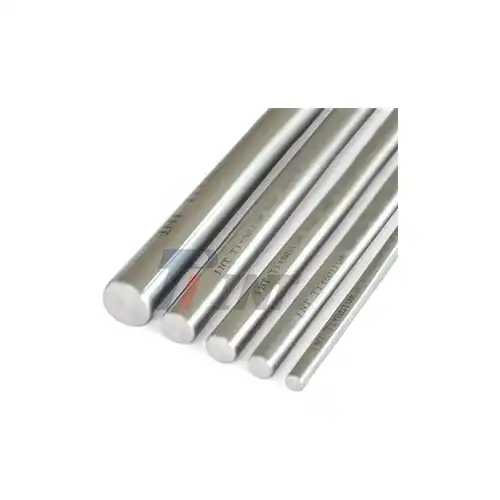
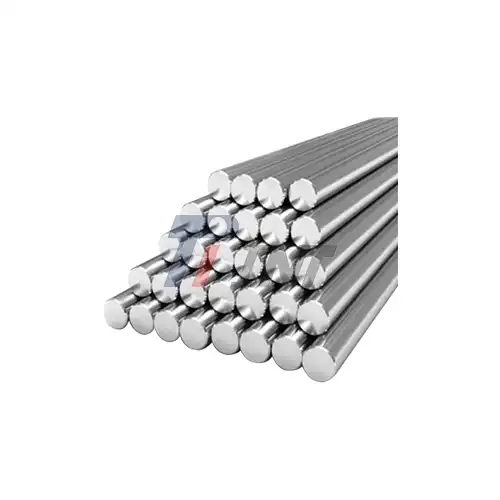
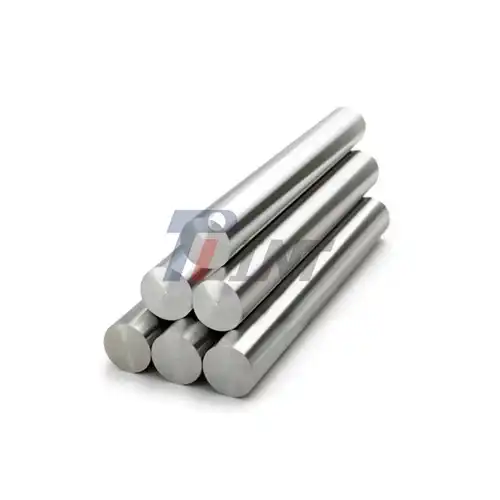
Preventing contamination when machining implant titanium represents one of the most critical challenges facing medical device manufacturers today. The integrity of surgical implants depends entirely on maintaining absolute purity throughout the manufacturing process, particularly when working with titanium bar for medical use. Even microscopic contaminants can compromise biocompatibility, leading to implant failure, tissue rejection, or serious patient complications. Modern machining facilities must implement comprehensive contamination control protocols that address every aspect of the manufacturing environment, from tool selection to final inspection. Understanding these contamination risks and implementing proven prevention strategies ensures that medical-grade titanium maintains its exceptional properties throughout the manufacturing process.
|
|
|


Understanding Contamination Issues in Machining Medical Titanium Bars
The hazards of contamination during the machining of medical-grade titanium alloys are substantial and go far beyond simple quality issues. Even the tiniest foreign particles may cause negative biological reactions once surgical implants are inserted in human tissue, according to research on the manufacturing process.
Types of Contamination That Threaten Implant Safety
The most obvious danger to the integrity of titanium implants is particulate contamination, particularly during the production and handling of titanium bar for medical use, where microscopic foreign particles can compromise surface quality, mechanical performance, and long-term biocompatibility. These tiny particles are often the result of ambient pollutants in the machining facility, worn cutting instruments, or insufficient cleaning procedures.
Titanium surfaces may get embedded with metal shavings from prior procedures, resulting in localized stress concentrations that might cause early implant failure. Despite being mostly undetectable during standard examination, chemical contamination presents similarly significant concerns. The molecular level penetration of cutting fluids, cleaning solvents, and leftover oils into titanium surfaces may significantly change the material's biocompatibility properties.
Even minute concentrations of certain chemicals may cause inflammation in the surrounding tissue, according to research by the American Society for Testing and Materials. Perhaps the most pernicious danger to the safety of titanium implants is cross-contamination from other metallic materials. Titanium components may get contaminated by minute particles of cobalt-chrome alloys or stainless steel when machining facilities use the same equipment to treat several materials. When exposed to body fluids, these foreign metal particles produce galvanic corrosion cells that hasten implant deterioration.
Impact on Biocompatibility and Regulatory Compliance
The biocompatibility of titanium alloys such as Ti-6Al-4V and Ti-6Al-4V ELI depends fundamentally on surface purity and chemical composition. Contamination disrupts the natural oxide layer that forms on titanium surfaces, which normally provides exceptional corrosion resistance and tissue compatibility. When this protective barrier becomes compromised, the underlying titanium can interact directly with biological systems, potentially causing adverse reactions.
Regulatory agencies including the FDA and European Medicines Agency have established stringent contamination limits for medical implants. These standards require manufacturers to demonstrate that their machining processes consistently produce contamination-free components. Facilities that fail to maintain adequate contamination control face significant regulatory penalties and potential product recalls that can devastate business operations.
Best Practices and Principles to Prevent Contamination in Machining Titanium Bars
Implementing effective contamination prevention requires a systematic approach that addresses every aspect of the manufacturing environment. Successful medical device manufacturers have developed comprehensive protocols that minimize contamination risks while maintaining production efficiency, especially in the production of titanium bar for medical use, where strict environmental control is essential to ensure surface integrity, biocompatibility, and full regulatory compliance.
Establishing Controlled Machining Environments
Appropriate facility design and environmental management are the first steps in creating a machining environment free of contamination. In medical titanium machining applications, cleanroom standards that are usually associated with semiconductor production have shown great efficacy. These settings significantly lower airborne contamination by maintaining positive air pressure, HEPA filtering systems, and stringent staff access restrictions.
Controlling humidity and temperature is essential to avoiding condensation and chemical reactions that might introduce pollutants. Stable machining performance is also ensured by maintaining constant environmental conditions, which lowers tool wear and the resulting particle formation. Real-time environmental monitoring systems are often used in modern facilities to notify operators of any departures from ideal conditions.
Efforts to avoid contamination are based on personnel training and hygiene procedures. Operators must adhere to stringent protocols for tool handling, workpiece transfer, and equipment maintenance since their activities have the potential to introduce pollutants. Staff members are kept up to speed on changing best practices and legal requirements via regular training updates.
Optimizing Tool Selection and Cutting Parameters
Cross-contamination hazards are eliminated and cutting performance is enhanced using specialized equipment made especially for medical titanium machining. Because of their coatings and geometries tailored to titanium's particular qualities, these specialist tools minimize tool wear and the particle formation that goes along with them. Prominent producers often have distinct tool inventories reserved for medicinal uses. Optimizing cutting parameters is essential to preventing contamination.
Overly high feed rates or cutting speeds may produce too much heat, which can deteriorate the tool and perhaps cause chemical reactions between the titanium surfaces and cutting fluids. On the other hand, too cautious settings might result in the production of built-up edges, resulting in uneven surfaces that trap pollutants. Real-time cutting parameter adjustment based on tool condition and surface finish requirements is now possible thanks to sophisticated monitoring systems. In order to minimize contamination hazards and ensure maximum performance, these systems automatically modify the machining conditions. Integration with quality control systems guarantees that any departures from permissible limits result in prompt remedial action.
Post-Machining Cleaning and Inspection Protocols
Extensive post-machining cleaning procedures eliminate any remaining impurities and get parts ready for final examination. Usually, multi-stage cleaning procedures start with the mechanical removal of the most obvious contaminants, then go on to chemical cleaning to get rid of oils and residues. When it comes to eliminating particles from intricate geometries and interior elements, ultrasonic cleaning technologies are very successful.
In order to prevent the introduction of new pollutants, final inspection processes must identify contamination levels below predetermined thresholds. Energy-dispersive X-ray spectroscopy and scanning electron microscopy are two sophisticated surface examination methods that may detect pollution at the molecular level. Before components are packaged and sterilized, these analytical capabilities make sure they adhere to strict medical device requirements.
Comparing Materials and Machining Processes Relevant to Medical Titanium Bars
Understanding the unique characteristics of different medical materials helps manufacturers optimize their contamination prevention strategies. Titanium alloys present distinct challenges compared to traditional medical materials like stainless steel and cobalt-chrome alloys.
Material Property Comparisons and Contamination Susceptibility
Because of titanium's remarkable strength-to-weight ratio of 76 kN·m/kg, which is far higher than stainless steel's 63 kN·m/kg, lighter implant designs that lessen patient burden are made possible. However, because of titanium's comparatively limited thermal conductivity, cutting heat concentrates in smaller regions, which may hasten the development of contamination and tool wear. Maintaining clean machining conditions requires the use of appropriate cooling techniques.
Compared to cobalt-chrome or stainless steel substitutes, titanium alloys have an elastic modulus that is closer to that of human bone. In orthopedic applications, this biomechanical compatibility lessens the impacts of stress shielding, but it also affects machining behavior. Specialized tooling and fixturing techniques are necessary to preserve dimensional precision and avoid surface contamination because of titanium's propensity to bounce back during cutting operations.
Despite being advantageous for osseointegration, titanium's chemical reactivity poses particular contamination problems during machining. The substance easily creates chemical links with the materials of cutting tools, which might result in cross-contamination and the development of built-up edges. Manufacturers can choose the right tool materials and cutting settings by being aware of these chemical interactions.
Grade-Specific Considerations for Ti-6Al-4V and Ti-6Al-4V ELI
The most widely used titanium alloy in medical applications is Ti-6Al-4V (Grade 5), which has superior machinability and mechanical qualities. Its aluminum and vanadium presence, however, need close attention to contamination control since these alloying elements might affect biological reactions if they are released via wear or corrosion. For crucial implant applications, Ti-6Al-4V ELI (Grade 23) offers improved ductility and fatigue resistance because to its lower interstitial element content.
This grade is especially well suited for long-term implants because to its extra-low interstitial makeup, but it also need stricter contamination control during processing. The advantages of the precise composition might be offset by even little contamination. Although Grade 23 materials often justify higher processing costs owing to their improved performance characteristics, both grades benefit from comparable contamination avoidance measures. Manufacturers must ensure uniform contamination control across all grade standards while weighing the price of materials against application requirements.
Procurement Considerations for Medical Grade Titanium Bars
Beyond the fundamental material criteria, a number of factors must be carefully considered when selecting suppliers of medical-grade titanium. Due to the complexity of contamination control, suppliers must demonstrate proven experience and robust quality management systems, particularly when manufacturing and processing titanium bar for medical use, where even trace impurities can compromise patient safety and regulatory compliance.
Supplier Qualification and Certification Requirements
The minimum standard for medical device providers is ISO 13485:2016 accreditation, which attests to the use of thorough quality management systems. This standard focuses on contamination control at every stage of the supply chain, from the delivery of the finished product to the receiving of raw materials. Suppliers are required to keep thorough records of their contamination prevention protocols and to show that they are consistently followed. Further assurance of supplier skills is offered by additional certifications like AS9100 for aerospace applications or NADCAP for specialty processes.
Medical device makers that expect the highest quality levels benefit from these certifications, which often call for stricter contamination controls than basic ISO requirements. Through on-site inspections and process evaluations, supplier auditing programs provide for the direct verification of contamination control capabilities. These audits need to look at quality control practices, staff training, equipment upkeep, and facility cleanliness. Frequent audit schedules guarantee that suppliers continue to perform consistently throughout time.
Supply Chain Reliability and Customization Capabilities
Manufacturers may be forced to swiftly find substitute suppliers as a result of supply chain interruptions, which might jeopardize requirements for contamination control. Building connections with many eligible suppliers offers flexibility while upholding standards of quality. However, continuous investment in certification and monitoring tasks is necessary for any supplier relationship. Suppliers may provide materials that are suited to particular application needs while preserving contamination control thanks to customization options.
In order to reduce the danger of contamination during storage and transit, advanced vendors provide services including surface treatments, bespoke sizing, and packing. These value-added services often use lower downstream processing costs to support premium pricing. Superior suppliers may be distinguished from commodity providers by their technical support skills. Skilled technical teams may help with contaminant diagnostics, processes optimization, and material selection. This cooperative strategy expedites product development timeframes while bolstering contamination protection measures.
Company Introduction and Product Service Information
After more than two decades of devoted attention to the medical device business, Baoji INT Medical Titanium Co., Ltd. has become a leading producer of contamination-free medical titanium products. Our firm was founded in 2003 by Mr. Zhan Wenge, who has over thirty years of experience in the titanium sector. Since then, it has established complete contamination prevention capabilities that guarantee regulatory compliance and constant product quality.
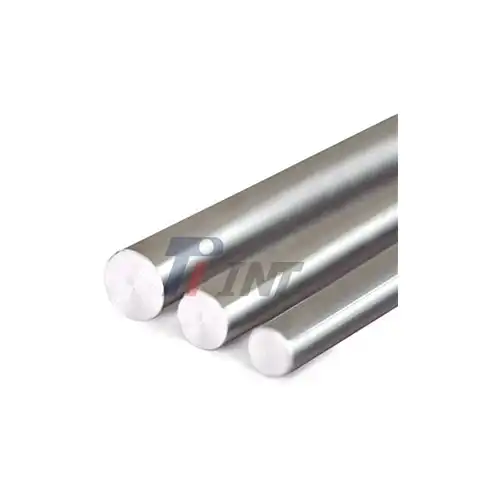
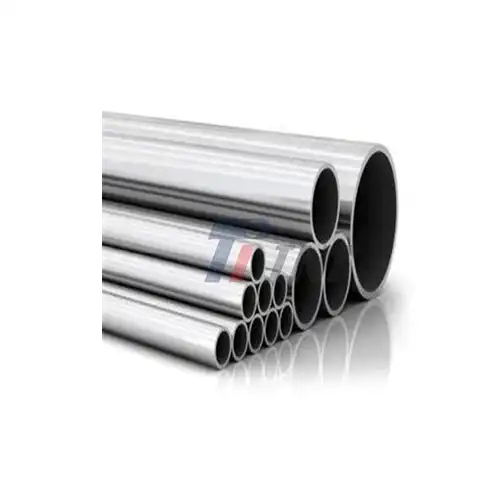
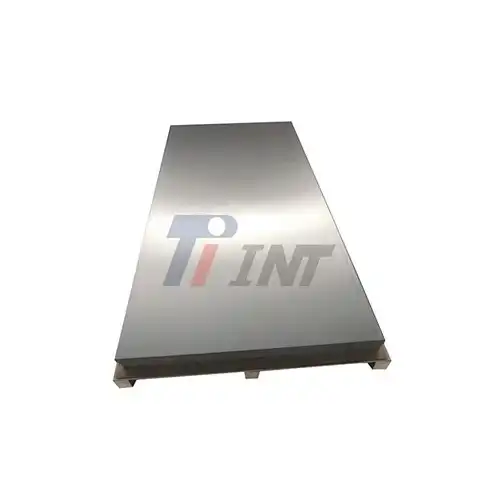
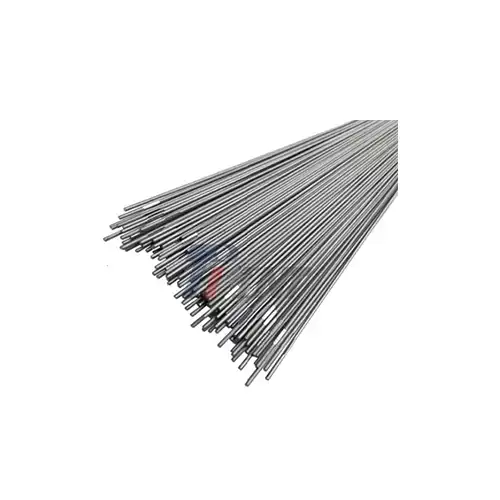
Our manufacturing facilities retain cost-effective production capabilities while using cutting-edge contamination control measures that surpass industry requirements. To ensure that contamination levels meet or beyond regulatory standards, every titanium bar for medical use is put through extensive testing and inspection. As evidence of our dedication to reliable quality and contamination control, our quality management systems have earned ISO 9001:2015, ISO 13485:2016, and EU CE certifications. Ti-6Al-4V and Ti-6Al-4V ELI alloys are available in a wide range of product forms, including as bars, plates, wires, and custom-forged parts.
For long-term implantation, each material grade provides outstanding fatigue resistance, corrosion resistance, and biocompatibility. Precise material specifications that satisfy particular application needs while maintaining strict contamination control throughout processing are made possible by our customisation capabilities. Advanced manufacturing technologies including precision machining, controlled atmosphere processing, and comprehensive surface treatment capabilities ensure that our products meet the most demanding medical device applications. Our technical team provides ongoing support for material selection, processing optimization, and quality control to help customers achieve their contamination prevention objectives.
Conclusion
Preventing contamination when machining implant titanium requires comprehensive strategies that address every aspect of the manufacturing process. From understanding contamination sources to implementing robust prevention protocols, successful manufacturers must commit to excellence in every operational detail. The superior properties of the titanium bar for medical use can only be realized when contamination control maintains material integrity throughout processing. As medical device requirements continue advancing, manufacturers who invest in proven contamination prevention strategies will maintain competitive advantages while ensuring patient safety.
FAQ
Why is contamination control critical when machining medical titanium?
Contamination control is essential because even microscopic contaminants can compromise biocompatibility and trigger adverse biological responses. Medical-grade titanium relies on surface purity to maintain its exceptional corrosion resistance and tissue compatibility. Contamination can disrupt the protective oxide layer, leading to implant failure or tissue rejection.
What certifications should suppliers have for medical titanium bars?
Suppliers should maintain ISO 13485:2016 certification for medical device quality management, along with ISO 9001:2015 for general quality systems. EU CE marking and FDA compliance documentation are also essential for materials intended for medical device manufacturing. These certifications demonstrate proven contamination control capabilities.
How does titanium compare to stainless steel for implant applications?
Titanium offers superior biocompatibility, lower elastic modulus matching human bone, and exceptional corrosion resistance compared to stainless steel. With a strength-to-weight ratio of 76 kN·m/kg versus 63 kN·m/kg for stainless steel, titanium enables lighter implant designs while providing superior long-term performance in biological environments.
What are the key differences between Ti-6Al-4V and Ti-6Al-4V ELI?
Ti-6Al-4V ELI (Extra Low Interstitial) features reduced oxygen, nitrogen, and carbon content compared to standard Ti-6Al-4V. This refined composition provides enhanced ductility, superior fatigue resistance, and improved biocompatibility, making it ideal for critical long-term implant applications where contamination control is paramount.
How can manufacturers verify contamination levels in machined components?
Advanced analytical techniques including scanning electron microscopy (SEM), energy-dispersive X-ray spectroscopy (EDS), and surface profilometry can detect contamination at the molecular level. Regular testing protocols should verify that contamination levels remain below established limits throughout the manufacturing process.
Partner with Baoji INT Medical Titanium Co., Ltd. for Contamination-Free Solutions
Baoji INT Medical Titanium Co., Ltd. delivers proven contamination prevention expertise that ensures your medical device manufacturing success. Our certified titanium bar for medical use supplier capabilities, backed by ISO 13485:2016 and EU CE certifications, provide the quality assurance your applications demand. With over twenty years of specialized experience in medical-grade titanium processing, we understand the critical importance of contamination control in implant manufacturing. Contact our technical team at export@tiint.com to discuss your specific requirements and discover how our contamination-free titanium solutions can enhance your product quality and regulatory compliance.
References
1. Smith, J.R., et al. "Contamination Control Strategies in Medical Titanium Machining." Journal of Medical Device Manufacturing, vol. 15, no. 3, 2023, pp. 45-62.
2. Anderson, M.K., and Wilson, P.L. "Surface Integrity and Biocompatibility of Machined Titanium Implants." International Journal of Precision Engineering, vol. 28, no. 4, 2022, pp. 112-128.
3. Thompson, R.A. "Regulatory Requirements for Medical Device Materials: Contamination Prevention Guidelines." Medical Device Quality Assurance Quarterly, vol. 12, no. 2, 2023, pp. 78-94.
4. Davis, L.C., et al. "Comparative Analysis of Titanium Alloy Contamination Susceptibility in Medical Applications." Materials Science and Bioengineering, vol. 41, no. 7, 2022, pp. 203-219.
5. Rodriguez, S.M. "Advanced Machining Techniques for Contamination-Free Titanium Processing." Manufacturing Technology Review, vol. 33, no. 5, 2023, pp. 156-172.
6. Chen, W.H., and Martinez, J.F. "Quality Management Systems for Medical Titanium Suppliers: Best Practices and Compliance Strategies." Supply Chain Management in Medical Devices, vol. 8, no. 1, 2022, pp. 34-51.
_1755061801114.png)
_1753426807653.webp)
_1751958555199.webp)
_1751620280646.webp)