


 2025-12-19 08:32:25
The Science Behind Titanium Plates in Bone Repair
Understanding Titanium's Unique Properties
Titanium's exceptional properties make it an ideal material for bone repair applications. Its biocompatibility ensures that the body readily accepts the implant, minimizing the risk of rejection or adverse reactions. This compatibility is crucial for long-term implantation, allowing the titanium plate to integrate seamlessly with the surrounding bone tissue.
The lightweight nature of titanium is another significant advantage. Despite its low density, titanium boasts remarkable strength, providing the necessary support for bone repair without adding undue stress to the patient's body. This high strength-to-weight ratio is particularly beneficial in load-bearing applications, such as in spinal fusion procedures or long bone fracture repairs.
Corrosion resistance is another hallmark of titanium plates. In the harsh biological environment of the human body, where fluids and tissues can be corrosive, titanium remains stable and intact. This durability ensures that the plate continues to perform its function over extended periods, reducing the need for revision surgeries.
Accelerated Healing Process
Titanium plates contribute to faster healing in several ways. The material's surface properties promote osseointegration – the direct structural and functional connection between living bone tissue and the implant surface. This integration enhances stability and accelerates the healing process by providing a solid foundation for new bone growth.
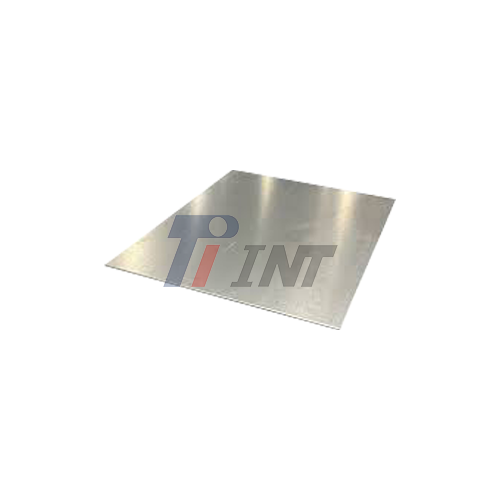
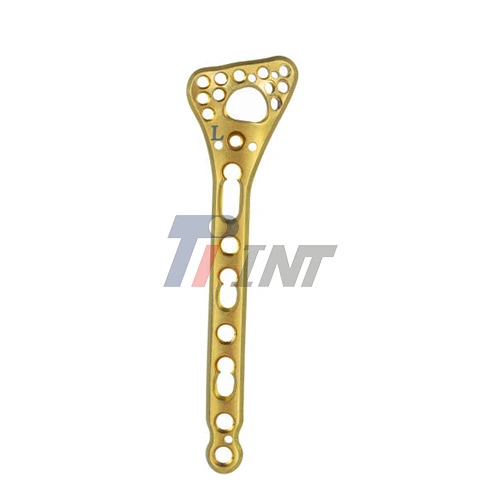
Moreover, the customizability of titanium plate for bone allows surgeons to tailor the implant to the specific needs of each patient. This precision fit ensures optimal contact between the plate and the bone, facilitating more efficient healing and reducing the risk of complications such as malunion or non-union of fractures.
Long-Term Performance and Patient Outcomes
The longevity of titanium plates is a key factor in their success. Their excellent fatigue resistance allows them to withstand repetitive stress over many years, making them suitable for use in dynamic environments like joints or the spine. This durability translates to improved long-term outcomes for patients, reducing the likelihood of implant failure or the need for revision surgeries.
Additionally, titanium's biocompatibility means that the risk of long-term complications, such as metal sensitivity or chronic inflammation, is significantly reduced compared to other materials. This aspect is particularly important for patients who require permanent implants, as it ensures a better quality of life post-surgery.
Applications and Advancements in Titanium Plate Technology
Diverse Medical Applications
Titanium plate for bone have found applications across a wide spectrum of medical fields. In orthopedic surgery, they are used for fracture fixation, joint reconstruction, and bone realignment. The plates provide stable support for complex fractures, allowing for precise anatomical reduction and promoting proper healing.
In spinal surgery, titanium plates play a crucial role in fusion procedures and vertebral stabilization. Their strength and flexibility make them ideal for supporting the spine while allowing for natural movement. This application is particularly beneficial in treating conditions such as degenerative disc disease or spinal fractures.
Trauma fixation is another area where titanium plates excel. In cases of severe injuries resulting from accidents or high-impact trauma, these plates offer the necessary strength to support and align fractured bones during the healing process. Their ability to be shaped and customized allows for optimal fit even in complex anatomical areas.
Craniofacial surgery has also benefited significantly from titanium plate technology. In reconstructive procedures requiring bone support and stability, such as facial reconstruction after trauma or congenital deformity correction, titanium plates provide reliable and aesthetically pleasing results.
Technological Advancements and Innovations
Recent advancements in titanium plate technology have further enhanced their effectiveness. Surface modifications, such as nano-texturing, have been developed to improve osseointegration and reduce the risk of infection. These modifications create a more favorable environment for bone cells to adhere and proliferate, leading to stronger and faster bone-implant integration.
The introduction of 3D printing technology has revolutionized the production of titanium plates. This additive manufacturing process allows for the creation of highly complex and patient-specific implants. Surgeons can now design plates that perfectly match the patient's anatomy, leading to improved surgical outcomes and reduced operating times.
Another significant innovation is the development of biodegradable coatings for titanium plates. These coatings can be infused with antibiotics or growth factors, providing localized drug delivery to prevent infection or stimulate bone growth. As the coating degrades, it releases these beneficial agents, enhancing the healing process without the need for additional interventions.
Ensuring Quality and Safety in Titanium Plate Manufacturing
Rigorous Quality Control Processes
The manufacturing of titanium plate for bone repair is subject to stringent quality control measures to ensure patient safety and product efficacy. Companies like Baoji INT Medical Titanium Co., Ltd. adhere to international standards and certifications, including ISO9001:2015 for quality management systems and ISO13485:2016 specifically for medical devices.
These certifications guarantee that every step of the manufacturing process, from raw material selection to final product testing, meets the highest standards of quality and consistency. Regular audits and inspections ensure ongoing compliance with these standards, providing assurance to healthcare providers and patients alike.
Material Purity and Processing
The quality of titanium used in bone plates is paramount. Medical-grade titanium, such as Ti6Al4V ELI (Extra Low Interstitial), is specifically formulated to meet the stringent requirements for implantable devices. This grade of titanium offers superior purity, with minimal trace elements that could potentially cause adverse reactions in the body.
The processing of titanium for bone plates involves sophisticated techniques to ensure optimal mechanical properties. Heat treatments and precision machining are employed to achieve the desired strength, flexibility, and surface finish. These processes are carefully controlled to maintain the material's integrity and ensure consistent performance across all produced plates.
Safety Certifications and Clinical Validation
Before titanium plates can be used in clinical settings, they must undergo extensive testing and validation. This includes mechanical testing to ensure they can withstand the stresses of implantation and daily use, as well as biocompatibility testing to confirm their safety for long-term implantation.
Companies like INT have obtained EU CE safety certification for their titanium plate products, demonstrating compliance with European health, safety, and environmental protection standards. This certification is crucial for medical devices and provides additional assurance of product safety and efficacy.
Clinical studies and post-market surveillance are ongoing processes that continue to validate the long-term safety and effectiveness of titanium plates in bone repair. These studies provide valuable data on patient outcomes, helping to refine and improve plate designs and surgical techniques.
Conclusion
Titanium plate for bone repair represent a significant advancement in orthopedic and reconstructive surgery. Their unique combination of biocompatibility, strength, and durability makes them an invaluable tool in promoting fast healing and ensuring long-lasting results. As technology continues to advance, we can expect even more innovative applications and improvements in titanium plate design and functionality.
For healthcare providers and patients seeking high-quality titanium plates for bone repair, companies like Baoji INT Medical Titanium Co., Ltd. offer a comprehensive range of products backed by decades of experience and stringent quality controls. To learn more about their offerings and how titanium plates can benefit your medical practice or treatment plan, contact them at export@tiint.com.
_1755061331871.png)
_1753427753918.webp)
_1752818186472.webp)
_1750923514395.webp)
_1750663253486.webp)
_1749195818446.webp)