







Titanium Rod Medical Guide: Choosing the Right Grade and Standard


 2026-09-17 10:34:05
If you manufacture surgical instruments and source titanium bar stock regularly, understanding how to select the correct grade of titanium rod medical material is not optional — it directly shapes your machining yield, your compliance paperwork, and ultimately your margins. This guide breaks down the grades, standards, and procurement realities that matter most to instrument makers working with pure titanium (Gr1–Gr4) and titanium alloy stock, so you can make faster, more confident sourcing decisions.
|
|
|
Understanding Titanium Rods in Medical Use
Why Titanium Outperforms Conventional Bar Stock
Everything that happens after the raw material in your CNC shop that turns instrument shafts, handles, or working ends is based on it. There are good reasons why pure titanium grades (Gr1–Gr4) and Ti-6Al-4V (Grade 5) are used to make surgical instruments. Titanium has a density of 4.43 g/cm³, which is about 56% less than 316L stainless steel. Grade 5 titanium has a tensile strength of 860 MPa and a yield strength of 795 MPa. This mix gives instrument designers real freedom without sacrificing the strength of the structure.
Titanium's surface also has a layer of TiO₂ oxide that grows on its own and fixes itself. It is much better than most steel grades at protecting itself from saline solutions, cleaning chemicals, and biological fluids. For companies that make instruments and sell them in controlled markets, this corrosion resistance means fewer complaints from customers and easier customer checks.
Grades at a Glance
Not every job calls for the same metal. For those who make instruments, these are how the usual grades fit in:
- Grade 1 (CP Ti, Gr1): Most flexible, least strong. Ideal for parts that need to be shaped deeply or bent without breaking. This makes it useful for thin-walled cannulas or flexible guide elements where shapeability is more important than load-bearing capacity.
- Grade 2 (CP Ti, Gr2): One of the most useful types of pure titanium. Moderate strength (~345 MPa UTS) with good resistance to rust and ease of machining. Often used for instrument cases, handles, and shaft stock that needs to be able to be welded.
- Grade 4 (CP Ti, Gr4): The strongest 100% pure grade that can be bought (about 550 MPa UTS). Picked when designers need strength close to that of an alloy without adding alloying elements. This is common in working ends of instruments and precision-machined tips where hardness and wear resistance are important.
- Grade 5 (Ti-6Al-4V): The titanium metal that is most often used. It can handle high-stress instrument applications and works well with CNC turning, milling, and polishing thanks to its tensile strength of 860 MPa and elongation of 10%. Non-ferromagnetic, works with MRIs perfectly.
Choosing the Right Grade and Standard for Medical Implants
Navigating ASTM, ISO, and Documentation Requirements
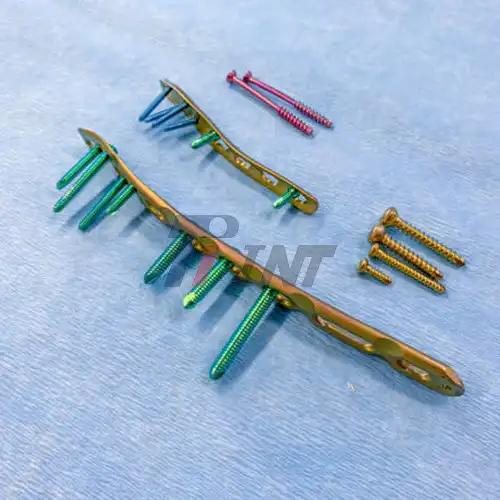
When purchasing bar stock for controlled markets, procurement managers need to find materials that meet traceable, widely recognized standards. ASTM F67 (CP titanium grades) and ASTM F136 / ISO 5832-3 (Ti-6Al-4V ELI for implant-grade alloy) are the main sources of information. Titanium rod medical applications often rely on these same specifications, as they ensure biocompatibility and mechanical integrity for surgical implants. ASTM B348 is often used to govern common titanium bar stock for tool uses that don't need to meet full implant-grade requirements.
What really matters is the paperwork that goes with it. An EN 10204 3.1 Material Test Report (MTR) must confirm the chemical make-up, mechanical properties, heat treatment state (annealed), and the ability to be traced back to the original ingot melt. Without this, quality checks for your customers will be held up, and export clearance will take longer. When comparing sources, make sure that the MTR lists a particular heat/lot number. For CE-marked instrument makers, batch-level traceability is a must.
Titanium's elastic stiffness of about 110 GPa is much closer to that of cortical bone than stainless steel's ~200 GPa, which is why it is still the most common raw material used to make load-sensitive instruments. This is not a marketing claim; it is a biomechanical benefit that has been published in implant literature that has been reviewed by experts.
Procurement Considerations for Medical Grade Titanium Rods
What Actually Determines Supplier Value
There's more to finding a trustworthy titanium rod medical supplier than just comparing prices per kilogram. Manufacturers of instruments that need to make a lot of different grades and diameters need a partner that can handle a wide range of orders without setting unrealistic minimum amounts. Here are the main things that buying managers with a lot of knowledge look at when choosing titanium bar stock suppliers:
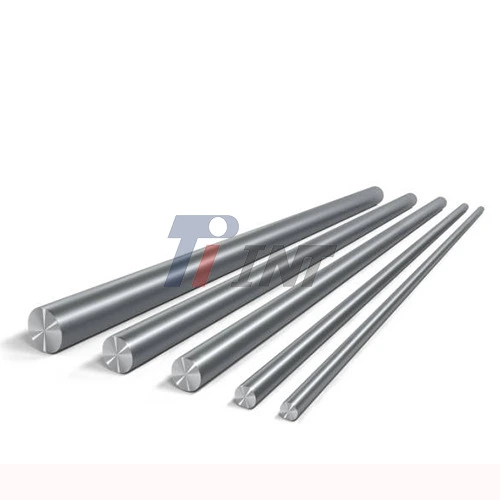
- Grade and size coverage: It works with grades 1, 2, 4, and 5 and comes in widths ranging from 3 mm to 100 mm. Lengths can be customized up to 6 meters. You should be able to take orders with different specifications without being forced to commit to only one grade in bulk.
- Surface finish options: Surface finish choices: ends that are polished, sanded, or machined change the time it takes for the next CNC step to be set up and the final Ra values. First, make sure you know what finishes are available.
- Lead time reliability: Dependable lead time: Most orders for standard production should ship in 3–4 weeks. It's possible for repeat sales from sellers who keep stock to clear faster. Variable delivery is a profit risk that you should take into account along with the unit price.
- Documentation turnaround: Turnaround time for paperwork: MTRs and material documents that meet CE standards must ship with the goods, not days later. Late paperwork directly affects your ability to meet your customers' shipping obligations.
- Certifications held by the supplier: The seller should have at least ISO 9001:2015 and ISO 13485:2016 certifications. Customers in the EU and US expect your material products to have CE certification, which is an extra level of quality control.
These criteria collectively determine whether a supplier is a trusted business partner or a risky spot-buy. Instrument makers who don't make a lot of money can't afford the hidden costs of bad quality or certificates that come late, especially when sourcing titanium rod medical grades, where strict traceability and certification delays can directly impact production schedules and regulatory compliance.
Comparative Analysis: Titanium Rods vs Alternative Materials
Stainless steel (316L) is still commonly used in lower-cost instrument parts, but it has a higher density (about 8.0 g/cm³ vs. 4.43 g/cm³ for titanium) and is much less resistant to corrosion in chloride-rich autoclave settings after multiple sterilization cycles. Cobalt-chrome alloys are harder, but they are also much harder to machine and polish to the Ra levels that buyers of high-end instruments need. PEEK and carbon fiber composites are becoming more popular in some types of implants, but they aren't easy to machine and don't have the precise dimensions needed for large-scale CNC instrument production.
Titanium is the best material for medical tool bar stock because it is strong, light, resistant to corrosion, and easy to clean. The extra cost of materials compared to 316L is real, but it is balanced out by longer instrument service life, fewer guarantee returns, and easier compliance paperwork in export markets with rules.
Best Practices for Using Titanium Rods in Surgical Applications
Machining, Handling, and Quality Control
Titanium and stainless steel are not machined the same way. Because it doesn't transfer heat as well, heat builds up at the cutting edge. Sharp tools, enough coolant flow, and slow feed rates keep the work from stiffening and the edge from building up. Standard carbide tools work well with Gr2 and Gr4. Coated inserts and slower cutting speeds help Grade 5.
When machining titanium rod medical for implantable devices, these parameters become even more critical, as surface integrity directly affects biocompatibility and fatigue life. To get a surgical finish on titanium, you have to use progressively finer grits. Skipping steps leaves tiny scratches that act as places where wear starts when the metal is loaded and unloaded over and over again.
Storage is more important than many procurement teams think. Titanium bar stock should be kept away from iron-contaminated areas. Even short contact with carbon steel racks can leave behind particles that damage the passive oxide layer and lower the quality of the surface after polishing. Separated titanium storage racks and handling tools are simple safety measures that protect the quality of the material all the way through to the finished instrument.
Conclusion
Picking the correct titanium bar stock grade is a business and technical choice that impacts each step of the instrument-making process. Gr1 and Gr2 are used for uses that need to be flexible first. Gr4 is strong because it is made of pure titanium, and Grade 5 can handle high-stress machined parts with uniform mechanical behavior.
No matter the grade, makers who sell to regulated markets must have traceable paperwork, reliable shipping, and approved supplier qualifications, particularly when procuring titanium rod medical grades that require full implant-grade certification and batch-level traceability. When you get the right material from the right partner, you can stick to your production schedule and pass customer audits.
FAQ
What is the difference between Grade 2 and Grade 4 for instrument shaft stock?
Grade 2 is the best choice for instrument bodies and grips because it is easier to machine and weld and has a middling strength (~345 MPa UTS). Grade 4 has a higher strength (about 550 MPa UTS) and doesn't have any alloying elements. This makes it good for working ends and tips where resistance to wear is important. Both are pure titanium that can be bought and meet ASTM F67 standards.
Does surface finish affect fatigue life in instrument bar stock?
Yes. Surface roughness has a direct effect on how well it resists fatigue. Polished bar stock (Ra < 0.4 μm) gets rid of grinding marks around the edges that cause stress to build up and cracks to start when the bar is loaded and unloaded over and over again. If you ask your supplier for a polished finish, it cuts down on the steps needed for later finishing and lowers the risk of fatigue in thin instrument parts.
What documentation must accompany a shipment for CE-market customers?
The standard is an EN 10204 3.1 MTR, which certifies the chemical makeup, mechanical qualities, softened heat treatment conditions, and the ability to trace a lot back to the original melt. The ISO 13485:2016 source certification and the CE material certification help with customer checks and getting goods exported to the US and Europe.
Is Grade 5 titanium rod MRI-compatible?
It is possible for devices made from Ti-6Al-4V (Grade 5) to work in MRI settings because it is not magnetic. This is a known benefit over cobalt-chrome and some stainless alloys in medical settings after surgery.
Partner With Baoji INT Medical Titanium Co., Ltd. for Reliable Titanium Bar Stock
Since 2003, Baoji INT Medical Titanium Co., Ltd. has sold approved titanium to companies that make surgery instruments. We have titanium rods in grades 1, 2, 4, and 5 that range in width from 3 mm to 100 mm in stock. You can order any amount, and we ship EN 10204 3.1 MTRs with every order. Our products are certified by ISO 9001:2015, ISO 13485:2016, and CE. Being a reliable titanium rod medical manufacturer, we can handle mixed-grade, small-batch orders with normal lead times of 3–4 weeks. Get in touch with our team at export@tiint.com or inttitanium.com to talk about your needs, ask for samples, or get a reasonable price.
References
1. ASTM International. ASTM F67: Standard Specification for Unalloyed Titanium for Surgical Implant Applications. ASTM International, 2023.
2. ASTM International. ASTM F136: Standard Specification for Wrought Titanium-6Aluminum-4Vanadium ELI Alloy for Surgical Implant Applications. ASTM International, 2023.
3. ISO. ISO 5832-3: Implants for Surgery — Metallic Materials — Part 3: Wrought Titanium 6-Aluminium 4-Vanadium Alloy. International Organization for Standardization, 2021.
4. Geetha, M., Singh, A. K., Asokamani, R., & Gogia, A. K. "Ti Based Biomaterials, the Ultimate Choice for Orthopaedic Implants." Progress in Materials Science, 2009.
5. Niinomi, M. "Mechanical Biocompatibilities of Titanium Alloys for Biomedical Applications." Journal of the Mechanical Behavior of Biomedical Materials, 2008.
6. Rack, H. J., & Qazi, J. I. "Titanium Alloys for Biomedical Applications." Materials Science and Engineering: C, 2006.