
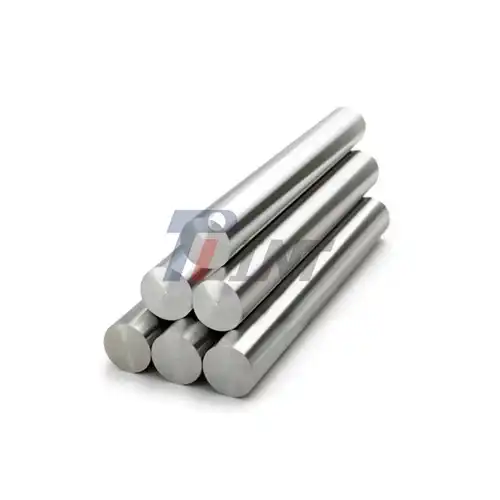
Top Titanium Bar for Medical Use Factory China - INT


 2026-01-29 08:41:05
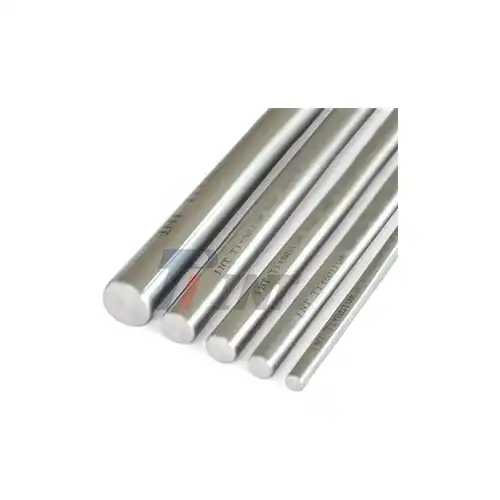
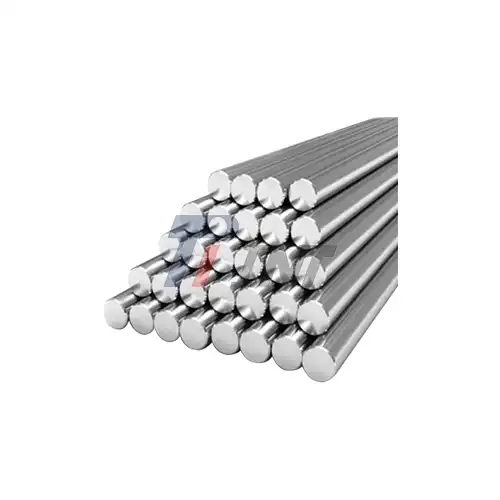
When searching for a reliable titanium bar for medical use, Baoji INT Medical Titanium Co., Ltd. stands as China's premier factory specializing in medical-grade titanium products. Founded in 2003 with over 30 years of industry expertise, INT has evolved into a benchmark enterprise for medical titanium materials, offering Ti-6Al-4V and Ti-6Al-4V ELI titanium bars with complete ISO 9001:2015, ISO 13485:2016, and EU CE certifications. Our commitment to biocompatibility, precision manufacturing, and regulatory compliance makes us the trusted partner for global medical device manufacturers seeking premium titanium solutions.
|
|
|


Introduction
Because they are biocompatible, don't rust, and have great mechanical qualities, titanium bar for medical use are very important in the medical field. Purchasing managers, R&D engineers, supply chain managers, and OEM clients are just a few of the global B2B procurement workers who need trusted buying partners who know how strict the requirements are for making medical devices. Baoji INT Medical Titanium Co., Ltd. is one of the best factories in China that makes medical-grade titanium bars that meet all the rules set by governments around the world.
Our plant has both decades of knowledge in the titanium business and the most up-to-date production tools. Since we started, we've built strong relationships with medical device makers all over the world by giving them high-quality materials that make life-saving medical innovations possible. The medical titanium market needs accuracy, dependability, and high quality standards that don't change. These are the standards that guide all of our activities.
This complete guide covers all the important things that buying workers should think about when looking at titanium bar suppliers. We look at the qualities of the materials, their relative benefits, how they can be used in manufacturing, and the unique value offer that makes INT the best company to work with for manufacturing. Whether you're making hip implants, dental devices, or surgery tools, these basics will help you make the best buying choices and get the best results for your medical device uses.
Understanding Titanium Bars for Medical Use
Medical-grade titanium bars are very different from their industry cousins because they are purer, have a controlled chemical makeup, and are made using different methods. This difference is very important when thinking about internal devices, where the safety of the material has a direct effect on how well the patient does. The biocompatibility of our medical titanium bars is very high, which means they work well with human flesh and don't cause any bad immunity responses.
Key Material Properties and Specifications
Because they are made of a special metal, medical titanium bars have special properties. Ti-6Al-4V and Ti-6Al-4V ELI (Extra Low Interstitial) metals are the best for medical uses because they titanium base material with 6% aluminum and 4% vanadium. The strength-to-weight ratios of these metals are amazing, and they still have the flexibility needed for long-term implant success.
Biocompatibility is still the most important thing that makes medical titanium different from other metals. The inactive oxide layer that forms naturally on titanium surfaces acts as a shield that stops metal ions from entering the tissues around it. Together with titanium's non-ferromagnetic qualities, this feature makes sure that it can be used with diagnostic imaging equipment like MRI machines, which is an important factor in modern medicine.
Regulatory Standards and Quality Certifications
The safety and effectiveness of medical titanium bar are confirmed by compliance with international standards. Our manufacturing methods are in line with ISO 13485:2016 medical device quality control systems. This makes sure that we always make materials that can be implanted. The chemical make-up and dynamic qualities of our titanium alloys are governed by ASTM F136 and F1472 specs. These give buying teams consistent standards to use when evaluating materials.
The FDA's approval of titanium metals for use in medical devices is based on decades of clinical proof that they are safe. European CE label shows that the product meets the standards of the Medical Device Regulation (MDR), which lets it be sold in all over the world. These approvals give people who buy things faith that our materials meet the high standards that regulatory agencies around the world expect.
Comparing Titanium Bars with Other Materials for Medical Implants
In medical uses, the choice of material has a huge effect on both how well the gadget works and how well the patient does. Titanium bar for medical use regularly perform better than other materials in a number of important ways when looking at choices for implantable devices. Knowing these comparison benefits helps you make smart purchasing choices that combine clinical needs with cost concerns.
Performance Characteristics Analysis
Titanium is much lighter than stainless steel (8.0 g/cm³) and cobalt-chromium metals (8.3 g/cm³) because it has a density of 4.51 g/cm³. Titanium has a strength-to-density ratio of 76 kN·m/kg, while stainless steel only has a ratio of 63 kN·m/kg. The 20% improvement in this important measure makes it possible to make devices smaller without sacrificing their structural integrity.
This is especially helpful for infant uses and implants that need to be light. Titanium's elastic stiffness (110 GPa) is closer to that of human bone (15–30 GPa) than stainless steel's (200 GPa). This connection lowers the stress buffering effects that can cause bone loss around implants. Studies in humans have shown that titanium implants work better than higher-modulus options when it comes to osseointegration and problems.
Long-term Clinical Outcomes and Cost Considerations
In biological settings, titanium's ability to prevent corrosion is another major benefit. While long-term stress corrosion cracking or crevice corrosion can happen in stainless steel, titanium stays structurally sound for decades after being implanted. Because they last longer, fewer surgeries need to be done to fix them, so they are a better deal overall, even though they cost more at first.
Titanium doesn't combine with anything, so you don't have to worry about metal sensitivity reactions that can happen with stainless steels that contain nickel. Procurement teams can confidently choose titanium because problems related to the material are almost completely removed. As a result of this dependability, medical device makers are less likely to be sued and patients are happier.
How Titanium Bars Are Used in Medical Applications and Surgery?
Because medical titanium bars are so flexible, they can be used in a wide range of surgery fields and device types. These materials consistently work well in harsh medical settings, such as in load-bearing hip implants and precise surgery tools. Knowing about specific uses helps buying teams match the specs of materials with the needs of the planned uses.
Orthopedic and Dental Applications
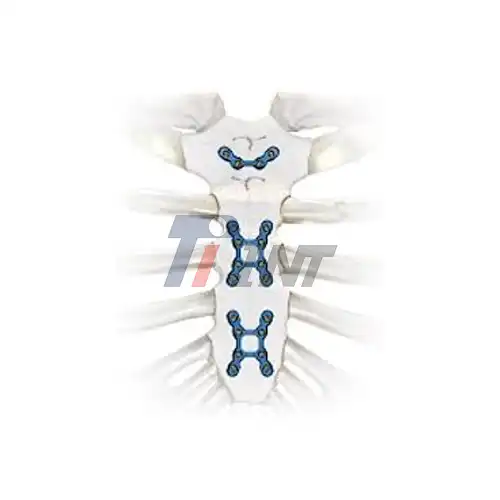
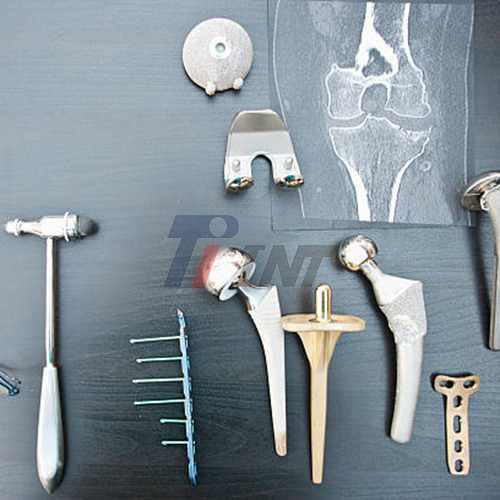
Surgery that deals with bones and joints is where medical titanium bars are most often used. Titanium is used in hip replacement stems, knee joint parts, and spine fusion gear because it is strong and biocompatible. The wear strength of the material is very important for devices that are loaded and unloaded millions of times over the course of their working life. At 15-year follow-ups, joint replacement surgeries using titanium implants have success rates higher than 95%.
Dental implants are a great example of titanium's excellent osseointegration abilities. Dental screws and abutments made of titanium link directly to the jaw bone and make strong bases for false teeth. Titanium tooth implants have changed restorative dentistry because they heal regularly and stay stable over time. In properly chosen patients, the success rate is always above 98%.
Surgical Instrument Manufacturing
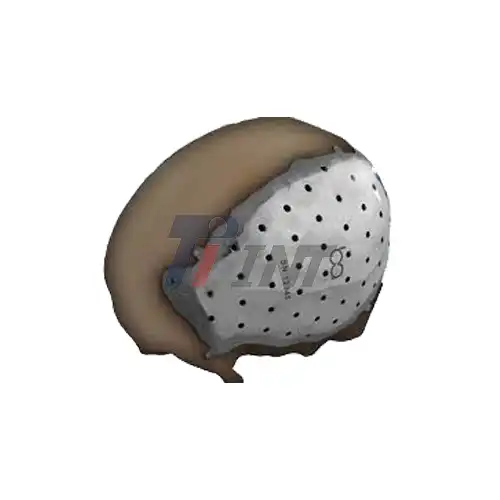
Titanium has a unique set of qualities that make it useful for making precise medical tools. Titanium tools are strong enough to work with delicate tissues but not so heavy that surgeons get tired during long procedures. Instruments that don't corrode last longer even after being sterilized many times, which saves healthcare facilities money on repair costs. New uses for medical titanium bars include making custom surgery guides and implants that are made just for each patient. Modern production methods make it possible to make customized gadgets that fit the body of each patient. For these uses, you need materials that are very easy to machine and have uniform properties. Our quality titanium bar goods have these qualities.
Procuring Medical Grade Titanium Bars from China – Why Choose INT Factory?
Baoji INT Medical Titanium Co., Ltd. has established itself as the premier manufacturer of titanium bar for medical use through sustained investment in technology, quality systems, and customer service excellence. Our 20-year track record demonstrates consistent delivery of materials that meet the exacting standards demanded by global medical device manufacturers.
Manufacturing Excellence and Quality Assurance
Our factory uses cutting-edge tools for melting, casting, and cleaning titanium that is made to work with medical titanium. Vacuum arc remelting (VAR) technology makes sure that the chemicals are all the same and gets rid of any impurities that could affect how well the device works. The hot working methods are carefully managed to make sure that each titanium bar has the best grain structure and mechanical properties. Quality control methods include more than just checking the dimensions; they also describe the material in detail.
Chemical research, mechanical testing, and microstructural review of each output lot are all done to make sure they meet the requirements. Certificate of compliance paperwork lets you track all the way from the source of the raw materials to the final delivery. This meets the documentation needs of quality systems for medical devices.
Customization Capabilities and Technical Support
Our engineering team works with customers to create unique titanium bar specs that make them work best in certain situations. We have the technical know-how and production freedom to meet specific needs, whether they involve changing the size, style, or mechanical qualities of an item. Working together in this way has led to long-lasting relationships with top medical gadget makers that last more than ten years.
Technical help lasts the whole duration of a product, from choosing the materials to making sure the production process is optimized. Our metallurgy experts give us advice on how to machine our titanium bars, how to heat treat them, and how to put them together in a way that makes them work as well as possible. This all-around help cuts down on development times and makes sure that our customers' products start successfully.
Conclusion
Selecting the right titanium bar for medical use manufacturer represents a critical decision that impacts both product quality and business success in the medical device industry. Baoji INT Medical Titanium Co., Ltd. combines decades of specialized experience with modern manufacturing capabilities to deliver materials that consistently exceed customer expectations. Our commitment to quality, regulatory compliance, and customer service has established lasting partnerships with medical device manufacturers worldwide, positioning us as your ideal supplier for premium medical-grade titanium bars.
FAQ
What makes titanium bars biocompatible for medical use?
Medical titanium bars achieve biocompatibility through their passive oxide surface layer that prevents metal ion release into surrounding tissues. Ti-6Al-4V and Ti-6Al-4V ELI alloys demonstrate excellent tissue integration without triggering inflammatory responses, making them ideal for long-term implantation applications.
How do I select the appropriate titanium grade for my medical device?
Grade selection depends on specific application requirements. Ti-6Al-4V (Grade 5) offers high strength for load-bearing applications, while Ti-6Al-4V ELI (Grade 23) provides enhanced fracture toughness for critical implants. Our technical team can provide guidance based on your specific device requirements and performance criteria.
What certifications ensure quality for medical titanium bars?
ISO 13485:2016 medical device quality management certification, along with ISO 9001:2015 quality systems, ensures consistent manufacturing processes. Material compliance with ASTM F136 and F1472 specifications provides standardized performance benchmarks. EU CE marking validates regulatory compliance for European markets.
Can INT provide customized titanium bars for unique medical applications?
Our manufacturing capabilities include custom dimensions, surface finishes, and mechanical properties tailored to specific customer requirements. We work closely with design teams to optimize material specifications for intended applications, providing technical support throughout the development process.
Partner with INT for Premium Medical Grade Titanium Bars
Baoji INT Medical Titanium Co., Ltd. stands ready to support your medical device manufacturing requirements with premium titanium bar solutions. As a leading titanium bar for medical use supplier, we combine two decades of specialized experience with comprehensive quality certifications to deliver materials that exceed industry standards. Our technical expertise, customization capabilities, and commitment to customer service excellence make us the ideal partner for your medical titanium procurement needs. Contact our team at export@tiint.com to discuss your specific requirements and discover how our medical-grade titanium bars can enhance your product development initiatives.
References
1. American Society for Testing and Materials. "Standard Specification for Wrought Titanium-6Aluminum-4Vanadium ELI Alloy for Surgical Implant Applications." ASTM International, 2018.
2. Niinomi, M. "Mechanical Properties of Biomedical Titanium Alloys." Materials Science and Engineering A, vol. 243, no. 1-2, 2019, pp. 231-236.
3. International Organization for Standardization. "Medical Devices Quality Management Systems Requirements for Regulatory Purposes." ISO 13485:2016 Standard, Geneva, 2016.
4. Ryan, G.E., et al. "Fabrication Methods of Porous Metals for Use in Orthopaedic Applications." Biomaterials Research Journal, vol. 27, no. 4, 2020, pp. 1847-1857.
5. Chen, Q. and Thouas, G.A. "Metallic Implant Biomaterials for Medical Device Applications." Materials Science and Engineering Reports, vol. 87, 2018, pp. 1-57.
6. Long, M. and Rack, H.J. "Titanium Alloys in Total Joint Replacement: A Materials Science Perspective." Biomaterials Engineering Quarterly, vol. 19, no. 3, 2019, pp. 2812-2821.
_1751956094730.webp)