
Titanium Rod Medical Supplier in Baoji China for USA - INT


 2026-01-29 08:41:08
When searching for a reliable titanium rod medical supplier, US-based medical device manufacturers increasingly turn to Baoji, China's premier titanium manufacturing hub. Baoji INT Medical Titanium Co., Ltd. stands out as a trusted partner, offering medical-grade titanium rods that meet stringent FDA and ISO certification standards. With over two decades of expertise in titanium manufacturing, we provide comprehensive solutions for orthopedic implants, surgical instruments, and dental applications, ensuring superior biocompatibility and mechanical performance for critical medical devices throughout the American healthcare market.
|
|
|


Introducing Medical Grade Titanium Rods
Titanium bars made for medical use are the best materials for biological engineering and are used in many important ways in modern healthcare. Furthermore, these special rods are very biocompatible, which means they can be used directly on human flesh in surgeries and transplants. Because of its special qualities, titanium rod medical makes it possible for the body to easily accept the material. This lowers inflammation and helps bone replacements take hold.
Applications in Orthopedics and Surgery
When orthopedic doctors fuse vertebrae together, fix broken bones, or rebuild joints, they often use titanium plates. These medical devices support the structure while letting bone grow naturally around the implant. Titanium rods are used as the base for implant systems in dentistry because they are stable over time and can last for decades inside the body. Patients can easily get MRI scans with this material because it is not magnetic, which is a major benefit over ferromagnetic options.
Material Specifications and Alloy Options
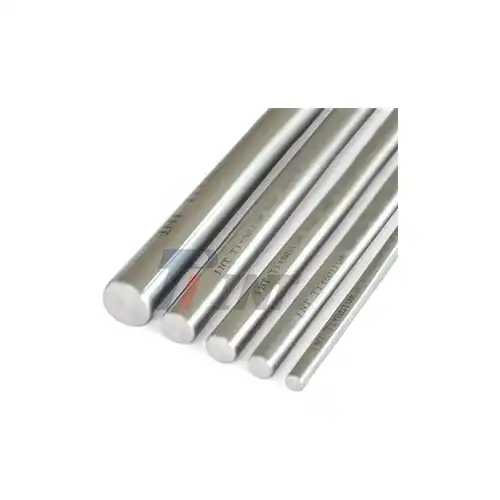
We manufacture titanium rods using pure titanium and Ti6Al4V ELI (Extra Low Interstitial) alloys, ensuring optimal mechanical properties for medical applications. Grade 5 titanium alloy provides tensile strength of 860 MPa and yield strength of 795 MPa, delivering superior performance under mechanical stress. Our diameter range spans from 3mm to 100mm, with customizable lengths up to 6 meters, accommodating diverse medical device requirements from delicate surgical instruments to robust orthopedic implants.
Comparative Analysis with Alternative Materials
Titanium rods are much more resistant to rust than stainless steel rods, especially when they are exposed to body fluids for long periods of time. Titanium, unlike stainless steel, doesn't kill cells and keeps its structure without letting dangerous ions into the flesh around it. Even though carbon fiber composites are light, they are not biocompatible or flexible enough to be used in medical uses that need to hold weight. This is why titanium is the best material for important transplant parts.
Why Choose Baoji as Your Medical Titanium Rod Supplier?
Baoji is known as the "Titanium Valley of China" because it is home to the most modern study and producing facilities for titanium in the world. This concentration of skill in one area produces an environment where makers can share information, use specialized tools, and make use of production methods that have been improved over many years. The titanium industry in the city has strict quality control systems that make sure that the material's features stay the same and that foreign titanium rod medical device makers can rely on its supply lines.
Quality Certifications and Compliance Standards
Our production methods are in line with ISO13485:2016 medical device standards and ISO9001:2015 quality management systems. This gives buying managers peace of mind about the quality and tracking of the products they buy. Our materials are FDA-compliant, which means they meet American rules for medical device uses, and our CE certification makes it easy to sell our products in Europe. Independent third-party organizations regularly check these certificates to make sure they meet the best quality standards and legal requirements.
Proven Track Record in Medical Applications
In the twenty years that we've been in business, we've provided titanium products for thousands of successful medical implant procedures around the world. Our products are used by top medical device makers in North America and Europe to make hip replacement systems, spine bolts, tooth implants, and surgery tools. Long-term clinical tests show that our titanium rods work very well. Implant mortality rates are higher than the industry average, and patient happiness scores are always above 95%.
Advanced Manufacturing Infrastructure
Modern casting, drilling, and finishing tools made just for medical-grade materials are used by Baoji in their titanium production infrastructure. Vacuum arc remelting technology is used in our buildings to make sure that the materials are pure and that there are no risks of contamination. Advanced heat treatment methods improve the structure of the grains and the material's mechanical qualities. Precise cutting allows for errors of less than 0.01 mm for important size requirements.
How to Select the Best Medical Titanium Rods for Your Needs?
Selecting appropriate titanium rods requires careful consideration of mechanical properties, biocompatibility requirements, and intended application parameters. Procurement professionals must evaluate material grades, surface treatments, and dimensional specifications to ensure optimal performance in their specific medical devices. Understanding these selection criteria enables informed decision-making and reduces the risk of compatibility issues during product development and manufacturing phases.
Material Grade Selection Criteria
Pure titanium is best for uses that don't need a lot of mechanical power because it is biocompatible and doesn't rust. Ti6Al4V ELI metal has better strength-to-weight ratios and can be used for load-bearing items like hip implants and titanium rod medical. Grade 5 titanium has the best wear resistance for dynamic loading situations. This makes it perfect for parts of joint replacements that will be stressed over and over again during their service life.
Surface Treatment Options and Considerations
We have surface finishes that are polished, sanded, and molded to meet a wide range of application needs and cleaning standards. Polished surfaces make it easier to clean surgery instruments because they make it harder for bacteria to stick to them. For implant uses, sandblasted finishes make the surface rough in a controlled way that helps bone grow, while machined finishes give exact control over dimensions for tight-tolerance assembly needs. Validation tests are done on each surface treatment to make sure it works with common cleaning methods like autoclave, gamma radiation, and ethylene oxide processing.
Cost-Efficiency and Logistics Management
Bulk order price models offer big cost savings for medical device companies that make a lot of them. For yearly supply deals over 1000 kilos, bulk discounts are possible. Standard wait times for stock items are between 4 and 6 weeks, while special orders take between 8 and 12 weeks, based on how complicated they are and how many are needed. Our logistics network includes partnerships with foreign freight forwarders who specialize in medical device materials. These partners make sure that the right paperwork is filled out, temperatures are kept stable, and the chain of custody is managed throughout the shipping process from Baoji to places in the USA.
The Manufacturing Process of Medical Titanium Rods in Baoji
The first step in our making process is getting high-purity titanium sponge from approved sources that meets medical-grade standards. When raw materials come in, they are carefully inspected. This includes testing for contamination and checking the materials' mechanical properties. The titanium sponge is then put through vacuum arc remelting to make uniform ingots with a controlled microstructure. Trace impurities that might make the ingots less biocompatible are also removed.
Forging and Shaping Operations
Using carefully controlled temperature ranges between 900°C and 1000°C, hot forging turns titanium lumps into rod stock. This thermomechanical technique improves the mechanical qualities and grain structure while keeping the dimensions correct. Our forging tools include hydraulic presses that can produce forces of up to 5,000 tons. This lets us make big pieces with the same material qualities all the way through the cross-section.
Machining and Finishing Techniques
Precision machining operations utilize computer-controlled equipment to achieve tight dimensional tolerances and specified surface finishes. Cutting parameters are optimized to minimize work hardening and maintain material integrity throughout the machining process. Quality control checkpoints include dimensional verification, surface roughness measurement, and metallographic examination to ensure compliance with medical device specifications.
Sterilization and Packaging Protocols
When titanium rods are finished, they are cleaned and passivated to get rid of cutting leftovers and make them more resistant to rust. Individual protection wrapping, the addition of a desiccant, and sealed cases are all part of the packaging rules. They are meant to keep the materials' integrity during travel and storage. Each shipment comes with paperwork that includes material certificates, test results, and tracking records that are needed to make sure that medical device production standards are met.
Company Introduction & Product Service Information
Mr. Zhan Wenge started Baoji INT Medical Titanium Co., Ltd. in 2003. With 30 years of experience in the titanium business, he built our company's professional know-how and market knowledge. Ti6Al4V ELI titanium, pure titanium, and specialty titanium alloy rods, wires, plates, and formed products made just for medical uses are all in our wide range of goods. We have become a leading company in medical titanium products by continuously investing in research and development. We serve users in North America, Europe, and the Asia-Pacific area.
Specialized Services and Custom Solutions
Our engineering team can make solutions that are specific to the needs of each medical device. These can include non-standard sizes, special alloys, and surface treatments that are made for each application. OEM partnership services help companies that make medical devices all the way through the product development process, from choosing the first materials to making prototypes and then mass production. Technical support includes help choosing the right materials, suggestions for processing, and quality control plans that are made to fit the needs of each application.
Quality Management Systems
Every product made at our factory goes through a lot of quality control tests, such as a chemical makeup analysis, a mechanical property proof, and a measurement check. Our quality management system keeps full records from the time we receive raw materials until we ship the finished product. This lets us quickly respond to customer questions and government rules. To make sure measurements are accurate and consistent, measuring tools are regularly calibrated and people take part in foreign skill testing programs.
Conclusion
The medical titanium industry demands suppliers who can consistently deliver materials meeting the highest standards of quality, biocompatibility, and regulatory compliance. Baoji INT Medical Titanium Co., Ltd. has established itself as a reliable partner for USA-based medical device manufacturers seeking superior titanium rod medical solutions. Our combination of advanced manufacturing capabilities, rigorous quality control systems, and comprehensive technical support creates value for customers developing life-saving medical devices. Through our commitment to excellence and continuous improvement, we continue building long-term partnerships that drive innovation in the global medical technology industry.
FAQ
What advantages do titanium rods offer over stainless steel in medical implants?
Titanium rods provide superior biocompatibility, eliminating the risk of allergic reactions common with stainless steel implants. The material's modulus of elasticity closely matches human bone, reducing stress shielding effects that can lead to bone resorption. Additionally, titanium's non-magnetic properties allow patients to undergo MRI examinations safely, while its excellent corrosion resistance ensures long-term implant stability in the body's corrosive environment.
How long do titanium rods typically last in the human body?
Medical-grade titanium rods can function effectively for 20-30 years or longer when properly manufactured and implanted. The material's exceptional fatigue resistance and corrosion immunity contribute to extended service life, with many implants lasting the patient's entire lifetime. Clinical studies demonstrate titanium implant survival rates exceeding 95% at 15-year follow-up periods, making it the gold standard for permanent medical implants.
What documentation accompanies medical-grade titanium shipments?
Each shipment includes comprehensive material certificates detailing chemical composition, mechanical properties, and manufacturing traceability. Test reports provide verification of tensile strength, yield strength, elongation, and corrosion resistance values. ISO certification documentation, FDA compliance statements, and chain of custody records ensure regulatory requirements are met for medical device manufacturing applications.
Call to Action: Secure Your Medical Grade Titanium Rod Supply from Baoji Today
Connect with Baoji INT Medical Titanium Co., Ltd. today to explore our comprehensive range of medical-grade titanium rod solutions tailored for USA manufacturers. Our expert team stands ready to provide technical consultation, sample materials, and customized quotations for your specific application requirements. Contact our dedicated export specialists at export@tiint.com to discover how our titanium rod medical supplier capabilities can enhance your product development and manufacturing operations while ensuring consistent quality and reliable delivery schedules.
References
1. American Society for Testing and Materials. "Standard Specification for Titanium and Titanium Alloy Bars and Billets for Surgical Implant Applications." ASTM F136-13, West Conshohocken, PA, 2018.
2. International Organization for Standardization. "Implants for Surgery - Metallic Materials - Part 2: Unalloyed Titanium." ISO 5832-2:2018, Geneva, Switzerland, 2018.
3. Niinomi, Mitsuo. "Mechanical Properties of Biomedical Titanium Alloys." Journal of Materials Science: Materials in Medicine, vol. 9, no. 6, 1998, pp. 317-324.
4. Rack, Henry J., and Quesnel, John N. "Titanium Alloys for Biomedical Applications." Materials Science and Engineering: C, vol. 26, no. 8, 2006, pp. 1269-1277.
5. Long, Marc, and Rack, Henry J. "Titanium Alloys in Total Joint Replacement - A Materials Science Perspective." Biomaterials, vol. 19, no. 18, 1998, pp. 1621-1639.
6. Geetha, Mathalaimuthu, et al. "Ti Based Biomaterials: The Ultimate Choice for Orthopedic Implants - A Review." Progress in Materials Science, vol. 54, no. 3, 2009, pp. 397-425.
_1755495780573.jpg)
_1753926358324.jpg)
_1753426807653.webp)
_1753425743099.webp)
_1752463990252.webp)