




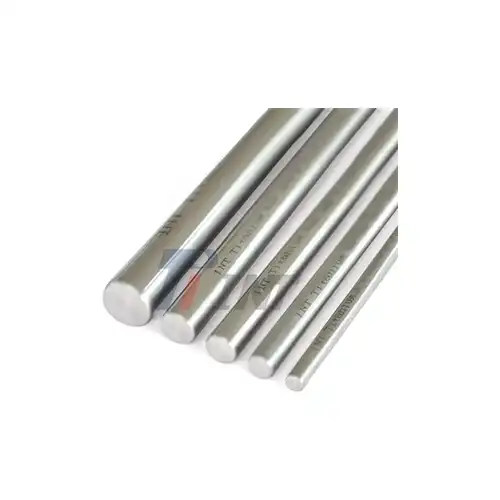
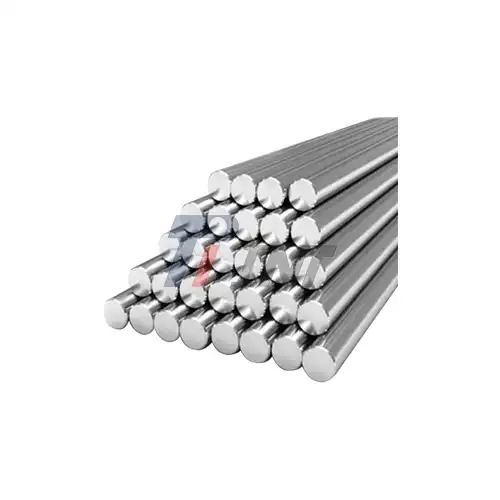
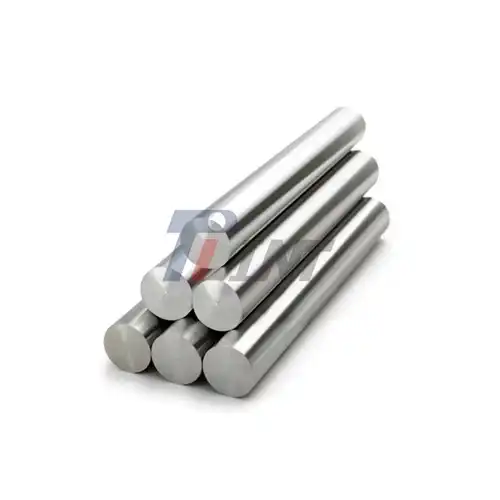
What Is Gr 4 Pure Titanium Medical Bar? Uses and Benefits in Implants


 2026-10-21 14:55:49
If you manufacture surgical instruments or medical implants, the material you start with determines everything downstream — from machinability to regulatory compliance. Gr 4 pure titanium medical bar sits at the top of the commercially pure (CP) titanium tier, offering the highest strength among unalloyed titanium grades while remaining completely free of potentially toxic alloying elements. For procurement professionals sourcing raw titanium bar stock for instrument shafts, handles, and surgical accessories, understanding this material at a technical level is not optional — it is essential.
|
|
|
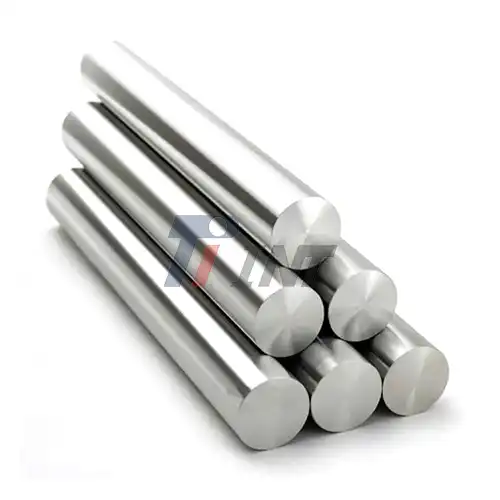
Understanding Gr 4 Pure Titanium Medical Bar
As per ASTM F67, there are four grades of CP titanium. Grade 4 has the most intermediate elements, especially oxygen (up to 0.40%) and iron (up to 0.50%). As solid-solution strengtheners in the alpha-phase crystal structure, these elements raise the tensile yield strength to around 480–550 MPa without adding any bioactive alloying agents.
Chemical Composition and Mechanical Properties
What makes Grade 4 different from lower grades is the higher amount of oxygen in it. Grades 1 and 2 are softer and more flexible than Grade 4. Grade 4 gives up some of its flexibility in exchange for big strength gains. Its elastic modulus (about 103 GPa) stays much closer to that of cortical bone than stainless steel's (about 200 GPa), which lowers the mechanical mismatch that causes stress shielding around implants. Tensile strength is between 550 and 680 MPa, depending on how it is processed. This is about the same as some austenitic stainless steels, but it doesn't contain any nickel.
Manufacturing Standards and Certification Compliance
Astm F67 and ISO 5832-2 are followed to the letter when making every good Gr 4 medical bar. Not only do these standards set limits for chemical makeup, but they also set limits for microstructure, surface condition, and measurement tolerances. Each batch comes with a mill test report that includes a heat number that can be tracked.
This gives instrument makers the proof they need during plant checks by customers and export clearances. Every bar that comes into our facility goes through vacuum annealing to keep the hydrogen content below the 0.015% mark. This is because titanium hydride precipitation above this level weakens the bar and could cause it to break under cyclic load.
Medical Applications and Benefits of Gr 4 Titanium Bars
Grade 4 is the best CP titanium for situations where structural soundness is important but alloyed grades are either too specific or can't be used because they don't meet biocompatibility standards. Gr 4 pure titanium medical bar is a typical example.
Where Grade 4 Is Used in Implant Manufacturing
A lot of different parts that are used in instruments are made from Grade 4 CP titanium bar stock. Here are the main areas of use that are worth mentioning:
- Surgical instrument shafts and handles: The higher yield strength resists permanent deformation when instruments are torqued or leveraged during procedures, extending service life.
- Bone fixation accessories: Smaller diameter bars are precision-machined into cortical screws and fixation pins where load-bearing capacity is required without the cost premium of Ti-6Al-4V.
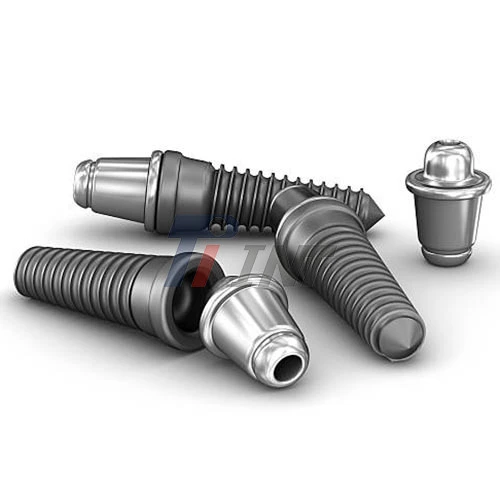
- Dental implant bodies: Grade 4 delivers sufficient strength for the threaded implant fixture while maintaining the osseointegration performance that CP titanium is clinically documented to provide.
- Cardiovascular device components: Its non-ferromagnetic nature makes Grade 4 bar an accepted raw material for MRI-compatible device components.
These uses show a material that fills the performance gap between the softer Grade 2 and the alloyed Grade 5. This makes it very useful for makers who need the same stock material to be both easy to machine and reliable in its structure.
Key Performance Benefits for Manufacturers
CP titanium is biocompatible because it has a layer of self-regenerating TiO₂ oxide that forms on the surface as soon as it comes in contact with oxygen. In in-vitro simulations, this passive film has been shown to be much more resistant to corrosion than stainless steel when it comes to chloride-rich physiological fluids.
Studies that have been following the performance of Gr 4 pure titanium medical bar implants for more than 10 years have reliably found that they don't release many ions and there is no sign of metallosis in the tissue around them. This means that instrument makers will have fewer rejections during regulatory audits, and OEM clients will have more faith in regulated markets.
Gr 4 Titanium Medical Bar vs. Other Medical Grade Materials
If you want to choose the right type of titanium bar stock, you need to compare what each material actually does in your production setting.
Grade 2 CP titanium has a yield strength of about 275 MPa, which is great for uses that need cold forming or color-coding through anodization, but not so good for situations where the instrument needs to hold a lot of mechanical load. In Grade 4, the yield strength is almost doubled, but the alloy-free biocompatibility profile that makes CP titanium widely accepted across regulatory systems is still there.
Ti-6Al-4V ELI (Grade 23) has a yield strength of more than 800 MPa and is the most common material used for load-bearing orthopedic implant stems. But the aluminum and vanadium content makes biocompatibility more closely looked at in some markets, and the material is harder to machine, which increases cycle times and tool wear costs for making a lot of instruments.
The price per kilogram of stainless steel 316L is still affordable, but its density (about 7.9 g/cm³) is about 1.7 times that of titanium (about 4.51 g/cm³), and it corrodes much less easily in body fluids that are high in salt. Stainless steel is not a direct replacement for manufacturers who want to make products that work with MRIs or that are light.
Grade 4 is in a perfect spot: it doesn't contain any alloys, can be machined on normal CNC equipment, is strong enough for most surgical tool uses, and doesn't cost as much or be as hard to work with as titanium alloys.
Procurement Guide for Gr 4 Pure Titanium Medical Bars
Finding CP titanium bar for making medical devices has more factors than just buying metals in bulk. Here are the things that expert buying managers put first:
Documentation for the materials: Each shipment should have a mill certificate that can be linked to a particular heat number and shows that the material meets the chemical and mechanical standards of ASTM F67. Downstream customers in regulated markets, like the EU MDR and the U.S. FDA, can't fill out their own material qualification records without this.
Tolerances for dimensions: For production that uses a CNC a lot, Gr 4 pure titanium medical bar that are ground to an ISO tolerance of h8 or h9 cut down on setup time and scrap. Make sure that your seller confirms not only the stated width but also the tolerance class in writing.
Lead time and MOQ flexibility: Instrument makers often make a lot of different diameter SKUs at the same time. Overstocking sizes that don't move quickly can hurt your cash flow. Find a supplier that can handle mixed-specification orders with standard lead times of 3–4 weeks.
Sample qualification: Before agreeing to volume, always ask for a cut sample. Run it through your real CNC and polishing tasks. Grade 4 CP titanium cuts neatly at low speeds with the right coolant. Checking this against your specific tooling setup will keep you from being surprised on a large scale.
Sample qualification: Always request a cut sample before committing to volume. Run it through your actual CNC and polishing operations. Grade 4 CP titanium machines cleanly at moderate cutting speeds with appropriate coolant; confirming this against your specific tooling setup prevents surprises at scale.
Why Choose Our Gr 4 Pure Titanium Medical Bars?
Since 2003, Baoji INT Medical Titanium Co., Ltd. has been making medical-grade titanium bar stock. INT was started by Mr. Zhan Wenge, who has worked directly in the titanium business for more than 30 years. It has become a leading source for instrument makers in Pakistan, Germany, India, Italy, and the US.
We make sure that every bar we sell has EU CE, ISO 13485:2016, and ISO 9001:2015 certification. Every order comes with a mill test certificate and a tracked heat number. This is not an extra cost that you have to pay for. We can make Gr 1, Gr 2, and Gr 4 CP titanium bars in both standard and custom diameters. We also accept small-batch and mixed-specification orders to meet the wide range of SKU needs that surgical tool companies have. From the time an order is confirmed, the standard wait time is 3–4 weeks.
Conclusion
Grade 4 CP titanium bar stock has a clear and important role to play in making surgical instruments. It is stronger than lower CP types, better at being biocompatible than stainless steel, and easier to machine than titanium alloys. This makes it a practical choice for makers who need to balance cost, performance, and regulatory compliance. The material is more than just a line item on a purchase order when you buy Gr 4 pure titanium medical bar from a seller with verified certificates and paperwork that can be tracked. It becomes an asset throughout your entire production and compliance chain.
FAQ
Is Grade 4 CP titanium the same as Ti-6Al-4V for implant use?
No. Grade 4 titanium is commercially pure and has not been alloyed; it does not contain any aluminum or vanadium. Grade 5 Ti-6Al-4V is a metal that has about three times the bending strength. When alloy-free biocompatibility is needed, Grade 4 is best. For high-load structural implants, Ti-6Al-4V is best.
What certifications should accompany a Grade 4 medical titanium bar?
The package should have a mill certificate that says it meets ASTM F67 or ISO 5832-2 standards and has a heat/lot number that can be tracked. Suppliers with ISO 13485:2016 certification add an extra level of quality management to supply chains for medical devices.
Can Grade 4 titanium bar be anodized for instrument identification?
Yes. Anodizing Type II or Type III titanium is easy, and the oxide layer color coding that is made without harmful dyes lasts a long time. This is often put on the handles of surgical instruments to show what size they are in sterile trays.
What is a typical lead time for mixed-diameter orders?
Standard mixed-specification orders at Baoji INT Medical Titanium Co., Ltd. are sent out in 3–4 weeks. Once the material and paperwork needs are clear, repeat sales from approved customers usually go through faster.
Request a Sample or Quotation — Baoji INT Medical Titanium Co., Ltd.
Instrument makers all over the world buy approved Gr 4 pure titanium medical bars from Baoji INT Medical Titanium Co., Ltd. We answer all questions within one business day, and we provide mill-certified materials with full paperwork ready for your records. You can email us at export@tiint.com or go to inttitanium.com to ask about specifications or get a sample for testing during cutting.
References
1. ASTM International. ASTM F67: Standard Specification for Unalloyed Titanium, for Surgical Implant Applications. ASTM International, 2023.
2. ISO. ISO 5832-2: Implants for Surgery — Metallic Materials — Part 2: Unalloyed Titanium. International Organization for Standardization, 2018.
3. Niinomi, M. "Mechanical biocompatibilities of titanium alloys for biomedical applications." Journal of the Mechanical Behavior of Biomedical Materials, 2008.
4. Elias, C.N., et al. "Biomedical applications of titanium and its alloys." JOM: Journal of the Minerals, Metals and Materials Society, 2008.
5. Rack, H.J., and Qazi, J.I. "Titanium alloys for biomedical applications." Materials Science and Engineering: C, 2006.
6. Long, M., and Rack, H.J. "Titanium alloys in total joint replacement — a materials science perspective." Biomaterials, 1998.