
Why Implant Titanium Bar Quality Matters in Dental Implant Production


 2026-11-10 14:24:35
Why does implant titanium bar quality matter so much in dental implant production? The bar stock sets the limit for everything built from it. A bar with the wrong grade, uneven chemistry, or missing records can cause scrap at the machine, poor prosthetic fit, and trouble during audits or regulatory review. A consistent implant titanium bar gives your team stable machining behavior, predictable mechanical performance, and a clear paper trail from melt to shipment. In this article, I explain what to check, which standards apply, and how to judge a supplier before you place an order.
|
|
|


What Is an Implant Titanium Bar?
Definition and Common Forms
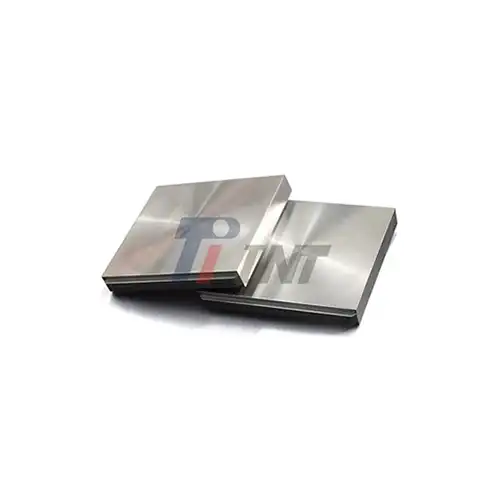
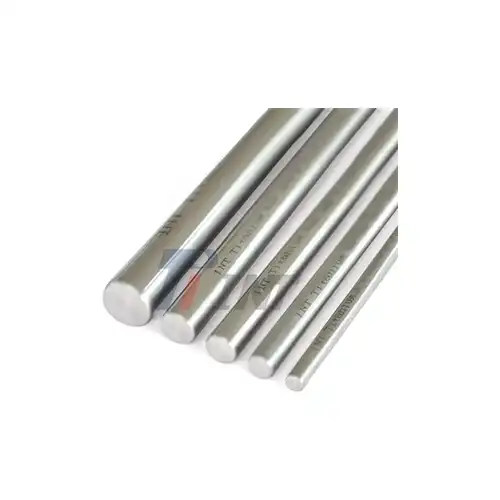
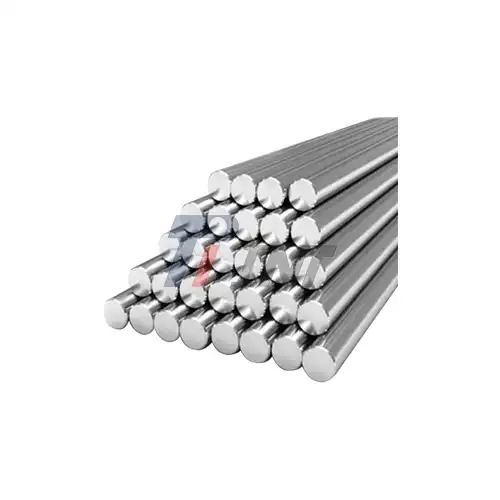
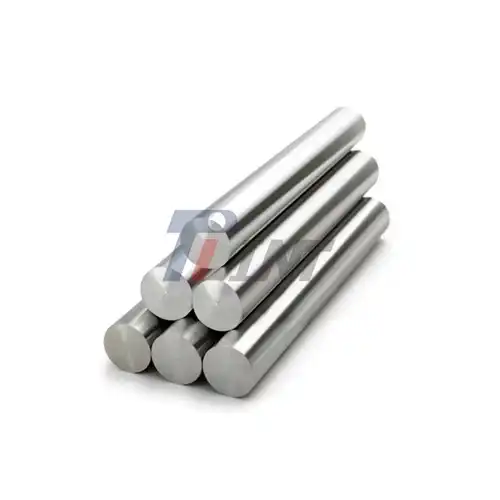
You can machine a piece of medical-grade titanium into dental implant parts and prosthetic substructures. This is called an implant titanium bar. It usually comes in the form of a round bar that is different sizes around the edges. It is cut into square or rectangular pieces in some patterns. It is then cut, turned, milled, drilled, or threaded to make the final part. Any piece made from the bar is chemically and structurally the same as the bar itself. It is also straight. We sell made-to-order implant titanium bars, rods, wires, plates, and other forms. All we're interested in are the raw materials that your factory uses to make finished goods.
Grade 2, Grade 4, and Ti-6Al-4V ELI
Titanium alloy and pure titanium for business use are used for various tasks. The grades that aren't alloyed are covered by ASTM F67. These grades don't rust easily and are simple to bend. Grade 4 is often used to make dental implant bodies because it is the strongest grade that isn't alloyed. This is information about Ti-6Al-4V ELI. About 4.43 g/cm³ of it is packed together, and its ELI value is 860 MPa. ELI stands for "extra low interstitials." The material is less likely to break because oxygen, nitrogen, carbon, and iron are limited in a stricter way. Your habit shouldn't affect your grade; it should be based on your design loads, fatigue targets, and regulatory file.
Specifications to Define Before Ordering
When there is a clear buy plan, most disagreements don't happen again. It would be helpful to list the grade and governing standard, the diameter and tolerance, the length, the straightness, the surface condition, and the heat treatment condition. Include the kind of certificate that is needed, like an EN 10204 3.1 inspection certificate, and any rules about how big a lot can be and how it should be packed. Describe the microstructure your design needs and the test method you will use to find it. In-depth specs also help the supplier give a correct price and make sure the order matches what they already make. When requests aren't clear, they often lead to more than one email, which makes the sampling process take longer.
Why Titanium Bar Quality Matters in Dental Implant Production?
Biocompatibility and Corrosion Resistance
On its surface, titanium forms a thin, stable oxide layer. The metal won't rust in the mouth because of this layer, and the tissue will act in a way that dental implants need. For example, Elias and his colleagues' work in JOM shows that this oxide film and the metal's mechanical properties are linked to how titanium works in the body. If the chemistry isn't clean or meets the requirements, those benefits may be lost. Things become stronger and more flexible when they have a lot of oxygen or iron in them, for instance. Before we talk about price, I look at the chemistry report first.
Mechanical Strength and Fatigue Under Chewing Loads
Restorations for teeth are chewed on for years, so how they act when they're worn down is just as important as how strong they are when they're new. ASTM F136 says that Ti-6Al-4V ELI has a tensile strength of at least 860 MPa. This metal has a hardness of about 110 GPa, which is not as high as stainless steel or cobalt-chrome. Niinomi wrote an article in 2008 for the Journal of the Mechanical Behavior of Biomedical Materials that talks about why low-modulus titanium alloys are good for implant titanium bar. When there are flaws, inclusions, or uneven heat treatment inside the metal, this margin is lost. Bars that pass the tensile test but have flaws that can't be seen are still dangerous.
Dimensional Accuracy and Batch Consistency
The speeds, feeds, and paths of the tools in CNC shops are set up so that they work best with a certain type of material. If the chemistry, hardness, or grain size changes from one lot to the next, it can change how the tools wear and make the end sizes not match up. That then leads to throwing things away, thinking again, and starting over. You can also lose material and hear chattering if the bars aren't straight or are oval. You can tell your programmers to keep values fixed and passive fit within a certain range if you use consistent lots. I tell people who want to buy from a source to look at test results from more than one lot, not just one sample certificate.
Key Quality Standards for Implant Titanium Bar Procurement
ASTM and ISO Material Standards
Four documents appear most often. It is covered by ASTM F67 for surgical implants made of pure titanium. ASTM F136 is for forged Ti-6Al-4V ELI, ISO 5832-2 is for pure titanium, and ISO 5832-3 is for forged Ti-6Al-4V. There are limits on chemicals, minimums for mechanics, and test requirements in each standard. Many companies use these standards to describe things in paperwork they send to the government, so the bar has to match the version your file is named after. This is the exact edition that should be used for the results report. Make sure that the revision year is correct on both the drawing and the purchase order.
Certificates and Traceability Records
A mill or inspection document connects each bar to its melt. Under EN 10204 type 3.1, an approved agent of the maker who is not part of the production area makes sure that the goods given match the order and reports the test findings. On the certificate, you should write down the heat number, grade, standard, chemical make-up, mechanical results, and dimensions. Then, compare the heat number to the packed list and any bar marks or signs. Don't forget to keep these papers with your good papers. Clear traceability makes it easy to find a nonconformance quickly if it shows up later.
Quality Systems and Incoming Inspection
An ISO 13485:2016 certificate that is still valid is a good sign for a medical device business that wants to pass quality control checks. It's still not the same as checks, though. Go to its site and look at the date, scope, and page count. Then, when each lot gets there, make sure the heat number is correct, measure the diameter and length, and look at how the surface is doing. For chemical, mechanical, and metallographic tests, send examples of new sources to a lab outside of your company. The EU CE, ISO 9001:2015, and ISO 13485:2016 have all approved the things we sell at INT. Kindly let us know if you need any help with our paperwork.
Implant Titanium Bar Manufacturing Process and Its Impact on Quality
From Ingot to Finished Bar
Most of the time, an implant titanium bar starts out as an ingot. Manufacturers heat titanium sponge that has metal added to it. They usually do this with vacuum arc remelting, which keeps air out of the material. The ingot is rolled and hot forged before it is made into a bar. It is then annealed to set the microstructure and mechanical properties. Following that are the steps of cutting, conditioning the surface, and straightening. Each step changes the depth of the grains, their strength, and how clean the surface is. If you heat titanium and air at high temperatures, an alpha case layer can form that is very fragile, so you need to keep an eye on the heat treatment. Find out from each provider what the grade is, how it was heated, and how it was made.
How Bar Quality Shows Up on the CNC Machine
First, your machinists try to feel how good the metal is. Titanium makes it hard for heat to pass through, so at the cutting edge, heat builds up. For tools to last a long time, they need to have stable strength and microstructure. When you have a steady bar, you can choose the same speeds, feeds, and water. When you turn or thread something, gaps or laps in the surface can appear. Also, the force stops working after hours of cutting. When turning with a long reach, a straight bar makes the sounds less strong. After that, the parts are cleaned, dulled, and given a surface treatment. This is where flaws that were hidden might become obvious. During the incoming check, these issues can be found. This saves machine time and keeps your product safe.
Titanium Compared With Stainless Steel and Cobalt-Chrome
Based on the whole job, the material is picked. Ti-6Al-4V has a density of about 4.43 g/cm³, while 316L stainless steel is 8 g/cm³ dense and cobalt-chrome metals are 8 to 9 g/cm³ dense. It is less stiff than both of them because it has a low elastic modulus (near 110 GPa), which is good for bone. Cobalt-chrome is very stiff and hard, and some parts of prostheses can be made from it. Titanium doesn't rust because it has an oxide layer on it. Grades that aren't alloyed are more flexible, but Ti-6Al-4V ELI makes them stronger. I think you should choose based on the load, the risk of fatigue, and the rules.
How to Select a Dependable Implant Titanium Bar Supplier
Supplier Evaluation Criteria
First work on some papers, and then make sure you know what you're doing. You should ask for the standard sheet, example certificates, quality system certificates, and a list of the diameters that are offered. Make sure the supplier can give you the grades you need, such as Ti6Al4V ELI and pure titanium. You might need small lots of different sizes when you start a new project. Take a look at the wait time, the minimum order number, and the policy on samples. Also, test how you talk to people. A good provider gives clear answers to technical questions and makes sure that changes are made in line with the requirements. Grab a sample and have someone else test it before you place a bigger order.
A Practical Pre-Approval Checklist
I make short lists.
- First, make sure you know the diameter range, grade, and standard.
- Second, check the heat certificates and numbers.
- Third, look at the samples' chemistry, how well they can hold stress, and how they are structured.
- Fourth, look at the surface, the labels, and the packaging.
- Fifth, run a small test order through your CNC machine and write down the yield.
- Sixth, talk about how the seller will let you know if the goods, methods, or suppliers change.
People often mess up when they choose a source based only on the license, don't do a forecast, or don't mind big differences. Your line could stop if you lose a bar, so make sure you have extras ready.
Total Cost and the Value of a Quality-Focused Supplier
Some costs, like scrap, rework, lots that are turned down, faster freight, and projects that are late, can be hidden by a low price per kilogram. You can lower these costs by getting chemistry, measurements, and records that are always the same from a supplier that values quality. In 2003, Mr. Zhan Wenge opened Baoji INT Medical Titanium Co., Ltd. He's been in the metal business for over 30 years. As a medical titanium company, we work with pure titanium, Ti6Al4V ELI, and rods, wires, plates, and shaped items made from titanium alloy that meet different standards. Because we only sell titanium, your team has to do all the cutting and finishing.
Conclusion
Implant titanium bar quality affects every step of the process of making a dental implant, from how well the prosthesis fits to whether it is ready for an audit. The right grade must be used to make sure the design load and regulation file are met. Under ASTM F67, this could be pure titanium. Under ASTM F136 and ISO 5832-3, it could be Ti-6Al-4V ELI. Chemistry, strength, and surface condition all have an impact on biocompatibility, fatigue performance, and CNC stability. It is easier to track down items with heat numbers and EN 10204 3.1 certificates. It is inspected during the production process and before it is thrown away to find any secret differences. Titanium is not as thick or flexible as cobalt-chrome or stainless steel, but the job still determines which one to use. To pick a provider, it's best to read all the paperwork, have a third party test samples, do test runs, and keep an eye on the total cost.
FAQ
Which titanium grade is best for dental implant production?
Some styles don't work with some grades. Titanium that isn't alloyed according to ASTM F67 doesn't rust and is easy to shape. Grade 4 is especially good for this. Ti-6Al-4V ELI is stronger according to ASTM F136. You should choose one based on the weight, the need to get tired, and the rules and laws.
Which paperwork should I ask a company that sells implant titanium bars for?
There should be an EN 10204 3.1 certificate with the heat number, chemical and mechanical data, inspection records, and the standard sheet. Compare the bar's labels to the heat number written on the paper.
Can I order samples before a larger purchase?
Yes. Please let us know the grade, thickness, length, and standard of the thing you want. We will then let you know if it is available and how to set up a sample. A third party should test the chemistry, tensile properties, and microstructure of a new source before you approve it.
How do I compare suppliers?
Check that the certificate is still valid, that the lots are all the same, that the wait time is reasonable, that the minimum order number is clear, that the price is fair, and that the technical support is quick.
Request a Quote for Implant Titanium Bar
Want to buy implant titanium bars from an implant titanium bar supplier that knows what medical-grade needs are? Pure titanium and Ti6Al4V ELI are used to make rods, wires, plates, and other shaped items that Baoji INT Medical Titanium Co., Ltd. sells. They have ISO 9001:2015, ISO 13485:2016, and CE marks on them. Send an email to export@tiint.com with the grade, size, standard, quantity, and date of delivery you need. We'll get back to you with a quote that fits your needs.
References
1. ASTM International, Standard Specification for Wrought Titanium-6Aluminum-4Vanadium ELI (Extra Low Interstitial) Alloy for Surgical Implant Applications (ASTM F136), 2013
2. ASTM International, Standard Specification for Unalloyed Titanium, for Surgical Implant Applications (ASTM F67), 2013
3. International Organization for Standardization, ISO 5832-3: Implants for Surgery – Metallic Materials – Part 3: Wrought Titanium 6-Aluminium 4-Vanadium Alloy, 2021
4. International Organization for Standardization, ISO 13485: Medical Devices – Quality Management Systems – Requirements for Regulatory Purposes, 2016
5. JOM, Biomedical Applications of Titanium and Its Alloys (Elias, Lima, Valiev, Meyers), 2008
6. Journal of the Mechanical Behavior of Biomedical Materials, Mechanical Biocompatibilities of Titanium Alloys for Biomedical Applications (Niinomi), 2008