
Why Titanium Is Used in Orthopedic Medical Devices


 2026-11-10 14:24:39
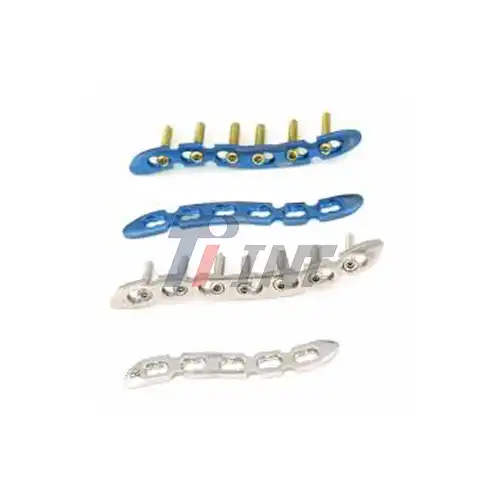
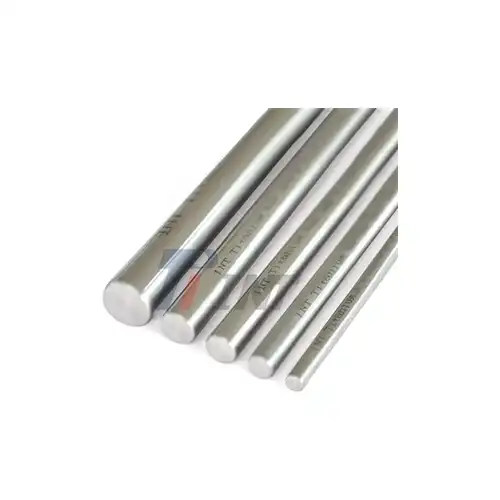
Titanium is used in orthopedic medical devices because it is biocompatible, resists corrosion in body fluids, and is about 40 percent less dense than 316L stainless steel. Its elastic modulus also sits closer to bone than steel or cobalt-chromium, which helps reduce stress shielding. A Gr1 medical titanium bar, made from commercially pure titanium under ASTM F67, adds high ductility and easy forming for fixation pins, plates, and precision parts. Gr1 has moderate strength, so engineers match the grade to the load. I wrote this guide to help buyers understand the material and choose bar stock with confidence.
|
|
|


Why Titanium Works Inside the Body?
Biocompatibility and the Oxide Layer
When titanium comes in touch with water or air, a thin film of titanium dioxide forms very quickly. It's only a few nanometers thick, and if it gets scratched, it can be fixed. Stopping rusting and the flow of metal ions inside the body means that tissue doesn't respond as much to the surface. Per-Ingvar Brånemark saw bone grow in a rabbit around a titanium tube in 1952. This made it very clear how titanium is linked to bone. He gave the process the name "osseointegration." It was this discovery that made titanium useful for dental implants and fixing bones in the body. It's also not used in widely pure grades like Grade 1, which some designers like for long-term contact with tissues.
Low Density and Bone-Like Stiffness
Steel 316L is about 8.0 g/cm³ dense, while titanium is 4.51 g/cm³ dense. That makes a part lighter in the same space. It's even worse to be stiff. Titanium that is sold in stores has an elastic modulus of about 105 GPa. The stretchiness of stainless steel is around 200 GPa, and the stretchiness of cobalt-chromium is higher. It's between 10 and 30 GPa inside the cortical bone. When an implant is stiff, it can hold more weight than the bone next to it. The bone can get weaker if it doesn't get enough stress. The term for this is "stress buffering." When you use titanium, the effect is still there, but the gap is not as big as when you use steel.
Imaging, Fatigue, and Fabrication
Titanium isn't ferromagnetic, so MRI and CT scans don't pick it up as much as steel do. Surgeons can see that their patients are getting better. You can load titanium over and over again as long as the shape, surface, and quality of the metal are all good. If there are holes or other flaws on the outside or inside of the raw bar, they can cause wear cracks. The fact that titanium is simple to machine, polish, and anodize means that makers can keep errors low and use color to mark sizes for the operating room. The bar must meet certain requirements in order for all of these features to work. That is why I am now going to talk about specs.
Gr1 Medical Titanium Bar: Properties and Applications
What Defines a Medical Titanium Bar
A Gr1 medical titanium bar is a solid piece of titanium that is used to make parts that will stay in place or be used during surgery. The phrase "medical grade" doesn't mean anything by itself. People who want to buy something should write down the standard, grade, chemistry, mechanical limits, surface state, and the ability to trace back to a certain heat lot. In the United States, ASTM F67 covers titanium that hasn't been alloyed, and around the world, ISO 5832-2 covers the same material. ASTM B348 is a standard for wider bars that are used in business and on airplanes. It doesn't, however, show that the implant is right by itself. There isn't much that can go wrong with an order that says "F67 Grade 1" and "required test reports."
Grade 1 Chemistry and Mechanical Values
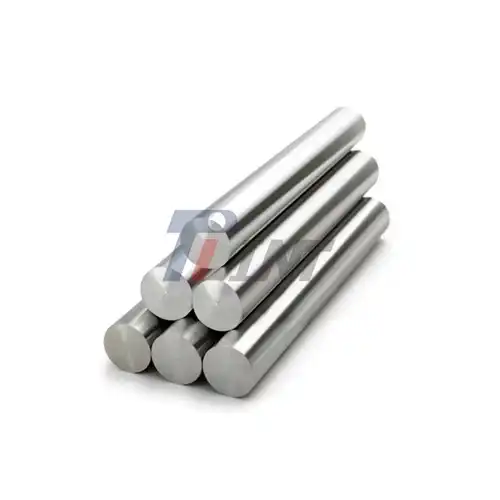
The most flexible and soft grade that you can buy in stores is ASTM F67 Grade 1. Only 0.18% of oxygen, 0.20% of iron, 0.08% of carbon, 0.03% of nitrogen, and 0.015 % hydrogen can be present. It must have a yield strength of 170 MPa, a tensile strength of 240 MPa, and an extension of 24% at the very least. It's easy to shape the grade since it doesn't have much air in it. It doesn't break when bent or cold made. Our Gr1 medical titanium bar is made from this kind of pure titanium. You tell us what lengths and widths you want, and we send it vacuum-annealed.
Where Grade 1 Fits and Where It Does Not
Grade 1 is best for parts that don't need to be very strong at their peak but do need to be shaped, last a long time, and handle tissue. It is often used for medical tools, tooth parts, samples, small exact pieces, pins, shafts, fixation parts, and bone plates. For work on the teeth, bones, spine, and injuries, we sell bars. For high static loads or cycle stress, engineers often switch to Grade 2, which has a minimum yield of 275 MPa, or to Ti-6Al-4V ELI under ASTM F136, which has a minimum yield of 795 MPa. Planned costs and tests of gadgets decide what to do in the end.
Comparing Materials and Finish Options
Grade 1 Versus Grade 2 and Ti-6Al-4V ELI
Grade 2 makes things stronger while keeping the pure titanium's ability to not rust. It is used in many fixation plans. Grade 1 doesn't have almost four times as much yield strength as Ti-6Al-4V ELI. There is aluminum and vanadium in it, which makes it harder to shape. However, it works well for parts that are heavily loaded, like stems and spine rods. Grade 1 should be used when the part needs to be bent deeply, shaped cold, or move around a lot. Let's start with the load case. Then, pick the grade that gives you a safe margin but still lets you shape it the way you need to. They stay the same when made in that order when it comes to design and machining.
Titanium Versus Stainless Steel and Cobalt-Chromium
Stainless steel is still used for tools and quick fixes, and it costs less per kilogram. Cobalt-chromium is often used in bearing surfaces because it doesn't wear down quickly. Titanium is not as dense or stiff, and it doesn't rust very easily. Also, it doesn't have nickel in it, which is good for people who are allergic to metals. Titanium doesn't wear down quickly when it slides, so it's not usually used by itself as a bearing surface. Price isn't the only thing you should compare. You should also look at things like density, fatigue, stiffness, corrosion, ion release, machinability, and lifecycle cost.
Surface Finish and Supply Condition
The state of the surface affects how it is machined, how clean it is, and how the bone reacts to it. You can machine, smooth, or sandblast our Gr1 medical titanium bar, and after hot rolling and forging, we send them to you annealed. Things that are smooth are easier to clean and don't show flaws as much. Anodizing is often used to make parts stand out, and etched or blasted textures are often used to help bones stick together. You should list the roughness, flaws that are okay, checking method, and packaging in the buy specification. It is also important to keep pollution under control because iron pickup or oxide scale makes more trash when it is machined. There are no arguments when the note is clear and the drawing is looked at.
Choosing Medical Titanium Bar and Avoiding Costly Errors
Start With the Device Requirements
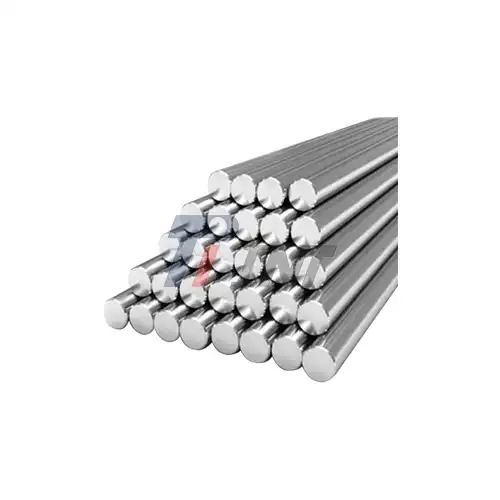
First, describe the final device by its regulation path, length of body touch, risk level, and static and cyclic loads. Then write down the grade (ASTM F67 Grade 1 or the grade you chose), the form, the width, the tolerances, the surface, the state, the packing, and the grade. Before a US buyer sends something to the FDA, they should make sure they have all the necessary paperwork and tests ready in case the source of the raw material changes and needs more testing or paperwork. To avoid waste when cutting, make sure the diameter fits the part. We can cut to any length you need, and our range goes up to 100 mm.
Documents and Traceability to Request
Ask for a mill test certificate that includes a proof of suitability, records of the material's size, and results of the heat number, chemistry, and mechanical tests. If you lose track of the heat lots after they've been cut and repacked, you could lose a lot because of a broken link. This is why many buyers send samples to a third-party lab to be checked for chemistry, tensile strength, and metallography before they approve them. It takes about two to four weeks for this to happen. Include that step in your plan. Our products have been certified by ISO 9001:2015, ISO 13485:2016, and the EU CE, and we can answer any questions you have about a package right away.
Common Procurement Mistakes
A lot of mistakes are made over and over again. People buy "medical grade" implants without understanding what that means, believe that ASTM B348 shows that the implant is good, or choose the best unit price without checking the landing cost. There are people who don't see flaws on the outside, broken packaging, or lost batch tracking. After that, every mistake costs money because of the scrap, repair, late registration, or lots that are turned down. What makes CNC tools last longer can also change from batch to batch in terms of chemistry. Before getting a quote, make sure you know the exact level, grade, format, test requirements, and reason for the paper. After that, look at each seller's prices and track record of quality.
Evaluating a Titanium Bar Supplier
Technical and Quality Checks
A good supplier should have experience with ASTM F67 Grade 1 and know how to deal with tight tolerances, clear surfaces, small diameters, and custom sizes. Check that you don't hurt it as you look over the steps of processing, chemistry analysis, mechanical testing, and checking. As part of our production process, we do 100% ultrasonic inspection, vacuum annealing, hot rolling, and forging before sending the goods out. Ultrasound testing is a way to find holes in an object that you can't see with your own eyes. Stress cracks can happen because of these holes. Find out how each service provider handles contamination and making things right.
Commercial Terms to Compare
Ask in writing about the minimum order quantity (MOQ), stock level, wait time, sample policy, Incoterms, payment terms, and how the goods will be packed for export. It is important to test a new product in small amounts. For peace of mind, many buyers set up a dual-source plan with one mill in the United States and one mill in another country. To keep information secret, make sure you ask about special sizes, packing, and deals for OEM and white-label projects. You can order sizes, shapes, surface treatment, and packaging Gr1 medical titanium bar from us as an OEM or ODM. There is a list of free OEM samples on our website as well. Quotes that are easy to understand and technical answers that are given quickly in English let things go through faster.
About Baoji INT Medical Titanium Co., Ltd.
In 2003, Mr. Zhan Wenge opened Baoji INT Medical Titanium Co., Ltd. He's been in the titanium business for over 30 years. Pure titanium, Ti6Al4V ELI, rods, wires, plates, and forged materials made of titanium alloy are some of the medical titanium materials we make and use. ISO 9001:2015, ISO 13485:2016, and the EU CE have all approved each item. We work hard to make sure our customers get their orders on time and well. Some of them have been with us for more than ten years.
Conclusion
Titanium works well for orthopedic devices because its oxide film doesn't rust, tissue response is mild, and it's usually better for implant design than steel because it's not too dense and not too stiff. Gr1 medical titanium bar, which is described by ASTM F67 and ISO 5832-2, is very bendy and simple to shape. Most designs that need to hold more weight need Grade 2 or Ti-6Al-4V ELI because it has a minimum yield strength of 170 MPa. So, the process, the shape, and the load decide what kind of material to use. Condition of the surface, inspection, and paperwork for heat lots all have an effect on machine trash and regulatory files, just like grade does. With clear specs, you can also avoid most buying mistakes. Unit price doesn't tell you everything you need to know about a supplier. Quality records, being able to track things, and delivery terms do.
FAQ
Is Grade 1 titanium suitable for orthopedic implants?
It works for fixation parts that are bendy, shaped, or lightly loaded, as long as the design calculations back up the margin. Grade 2 or Ti-6Al-4V ELI can't handle all loads.
How does ASTM F67 differ from ASTM B348?
The rules for medical implants made of pure titanium are set out in ASTM F67. ASTM B348 is a general bar standard, but it doesn't show that an implant fits by itself.
Is Grade 1 titanium stronger than stainless steel?
Not very often, no. Titanium is not very strong at grade 1. You should look at the different grades and conditions because it has low density, doesn't rust, and can be shaped.
What sizes can you supply?
We can make lengths and diameters up to 100 mm to order. Please send us a drawing and tell us how many items you need. We will then let you know what we can make.
Request a Quote for Gr1 Medical Titanium Bar
You can get Gr1 medical titanium bars from Baoji INT Medical Titanium Co., Ltd., which is ISO 13485:2016 approved and has been in the titanium business for more than 30 years. Your drawing, diameter, length, quantity, and any other files you need should be sent to export@tiint.com. We are going to talk about what you need and then look at models and OEM options.
References
1. ASTM International, Standard Specification for Unalloyed Titanium for Surgical Implant Applications (UNS R50250, R50400, R50550, R50700), ASTM F67, 2013
2. International Organization for Standardization, Implants for Surgery – Metallic Materials – Part 2: Unalloyed Titanium, ISO 5832-2, 2018
3. Niinomi, M., "Mechanical Biocompatibilities of Titanium Alloys for Biomedical Applications," Journal of the Mechanical Behavior of Biomedical Materials, 2008
4. Geetha, M. et al., "Ti-Based Biomaterials, the Ultimate Choice for Orthopaedic Implants – A Review," Progress in Materials Science, 2009
5. Long, M. and Rack, H.J., "Titanium Alloys in Total Joint Replacement – A Materials Science Perspective," Biomaterials, 1998
6. Brunette, D.M. et al., Titanium in Medicine, Springer, 2001