


 2026-01-22 09:01:20
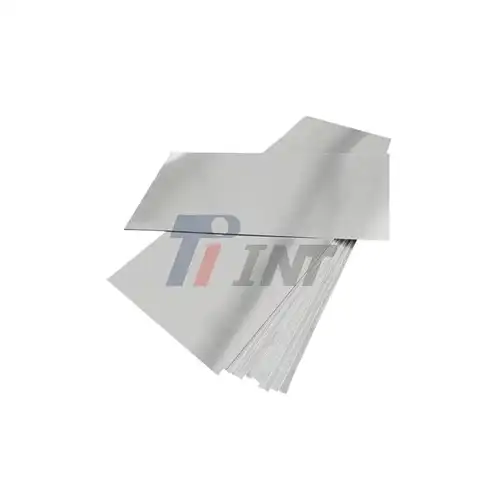
The 3mm titanium sheet has changed modern surgery for the better, giving surgeons a material they can count on for all sorts of medical uses. At this thickness, medical-grade titanium sheets offer the best mix of strength and bendability for use in surgery. These sheets are the best at craniomaxillofacial surgery, orthopedic implants, and dental reconstruction. The 3mm thickness provides enough strength for mechanical use while keeping the great corrosion resistance and biocompatibility that modern surgery needs.
|
|
|


Key Parameters and Technical Specifications
Medical-grade titanium sheets have exact details that meet very high standards for surgery. Depending on the grade chosen, the 3mm titanium metal sheet's yield strength usually falls between 462 and 550 MPa. Grade 2 commercially pure titanium has a yield strength of 275–410 MPa and great ductility. The Ti6Al4V ELI grade has better mechanical properties, with a strength of 795 MPa.
For commercially pure grades, the density is about 4.51 g/cc, which is less than 60% of the weight of the steel itself. This lightweight feature makes it easier on the patient during long-term implantation. The surface roughness usually falls somewhere between 0.8 and 3.2 micrometers Ra, which is best for making sure that the tissue connects with the surface. The substance keeps its shape within a ±0.05mm tolerance level, which is very important for exact surgery uses.
A passive oxide layer forms naturally, and the corrosion resistance is higher than what is needed for medical use. The 3mm titanium flat sheet has amazing fatigue resistance; it can handle more than 10 million cycles under physiological loading conditions. Biocompatibility testing finds that a lot less than ISO 10993 standards of cytotoxicity, which protects the patient during all stages of healing.
Core Benefits of 3mm Titanium Sheets in Surgery
The best thing about 3mm titanium sheet, particularly in the form of titanium alloy sheet, is that it has great biocompatibility. The material becomes a part of human bone tissue through processes of osseointegration. Titanium, unlike other metals, forms stable oxide layers that resist corrosion by fluids in the body. This stops the inflammatory reactions that are common with metal implants.
The strength-to-weight ratio is much better than typical surgical materials. Surgeons can get strong fixation without adding too much bulk or weight. This feature is especially useful in facial reconstruction when the look of the result depends on making the material as hard to see as possible. The 3mm Grade 5 titanium sheet is strong enough to be used in applications that need to hold weight while still being workable for surgical applications.
Radiolucency of the material is so good that imaging after surgery is clear and doesn't have many artifacts. Medical professionals can keep an eye on how well things are healing with standard radiographic techniques that aren't affected by the implanted material. The non-magnetic properties make it possible for MRI use, which lets doctors take a full range of pictures for diagnosis during the recovery period of a patient.
The ability to process a range of surgical needs is helpful. Standard surgical tools can cut, bend, and shape the material. If surgeons need to, they can make custom implants during the procedure with welding skills. This lets them change treatments to fit each patient's unique body. Surface treatments help osseointegration, which speeds up the healing process.
Baoji INT Medical Titanium vs. Competitor Materials
Baoji INT Medical Titanium Co., Ltd. stands out because they have been able to develop specialized ways of making things over twenty years of experience in the industry. The 3mm thickness of our titanium sheet keeps tighter tolerances than the norm in this field. This guarantees that the results of every surgery are the same. Mr. Zhan Wenge, the company's founder, makes sure that every batch of products has the titanium knowledge he's built up over 30 years.
Quality control steps go beyond what the FDA and CE require. Every 3mm titanium sheet supplier batch is tested in a variety of ways, which include checking mechanical properties, looking at chemical composition, and making sure that biocompatibility is valid. With every shipment, traceability documentation is sent along, giving makers of medical devices full records of the history of all materials.
Using advanced vacuum melting technologies, our factory makes both commercially pure and Ti6Al4V ELI grades. This process gets rid of any impurities that could affect biocompatibility or mechanical performance. The annealed condition gives the metal the best formability while keeping the strength it needs.
We achieve better surface finish quality than the competition by using specialized methods. Without needing to do any extra steps, the 3mm titanium sheet surface finish gets the smoothness required for medical grade. The ability to custom size helps meet specific surgical needs, which eliminates waste and lowers inventory costs for makers of medical devices.
Optimal Usage Guidelines and Purchase Recommendations
Choosing the right titanium grades depends on the type of surgery being done. Commercially pure grades are good for uses that need great shapeability and resistance to corrosion. Ti6Al4V ELI grades are used for orthopedic implants and reconstructions that need to hold a lot of weight. The 3mm thickness makes it useful for many different kinds of surgery.
Proper storage keeps the integrity of the material during its entire shelf life. Keep the sheets in a clean, dry place where they won't be affected by other materials. Protective films stop scratches from happening on the surface when the item is moved or handled. To keep thermal stress from forming, the temperature should stay within normal limits.
Cutting operations need the right tools to keep work from hardening, especially when working with materials like 3mm titanium sheet. Sharp cutting tools keep clean edges and don't make a lot of heat. Using coolant while machining prevents overheating, which could change the properties of the material. Deburring makes sure that the edges are smooth so that the object can be safely handled during surgery.
Quality checks should include protocols for inspecting goods when they arrive. Make sure that the certificates of chemical composition are in line with the needed standards. Dimensional checks confirm that the allowed variations in thickness are precise enough for surgery. Before any manufacturing processes can begin, surface quality inspection can find possible problems.
Cost efficiency is boosted and material availability is ensured by inventory management strategies. Set your minimum stock levels based on how long it takes to make things and how long it takes to get new stock. To get the benefits of volume pricing, think about buying a lot of standard-sized items. Keep the different grades in separate storage so they don't mix.
Critical Considerations and Safety Guidelines
Moving and storing materials safely is important to avoid contamination and injury. To keep the surface clean, people should wear clean gloves when they touch sheets. Sharp edges need to be handled carefully so that no cuts happen during processing operations. To keep people from getting hurt at work, lifting techniques should take into account the size and weight of the material.
Long-term performance features are affected by environmental factors. During processing, exposure to strong chemicals can change the surface. When iron or steel materials contaminate a substance, they create spots of corrosion that make the substance less biocompatible. The cleanliness standards of medical-grade are kept in clean room storage spaces.
Before starting to make anything, people need to know about the limits of processing. During extensive forming operations, work hardening happens and may require intermediate annealing treatments. Inert gas shielding is needed during welding to keep the metal from oxidizing and getting dirty. To keep the right properties, heat treatment cycles must follow set rules.
Regulatory compliance includes a number of standards from around the world. Some uses may need FDA 510(k) clearance. ISO 13485 quality management systems make sure that the quality of production never changes. As part of the supply chain documentation requirements, there must be test reports, traceability records, and material certificates.
Conclusion
The 3mm titanium sheet is an important material for modern surgery because it is easy for the body to accept, strong, and useful in many different ways. Baoji INT Medical Titanium Co., Ltd. makes a promise to quality manufacturing and technical knowledge, which makes sure that the materials work well in a range of medical settings. Medical device makers can get the most out of the benefits of titanium sheet materials when they understand the right selection criteria, usage guidelines, and safety concerns. As surgery methods keep changing, using high-quality titanium materials is still very important for getting the best results for patients and making sure that implants last.
FAQ
Baoji INT's 3mm titanium medical-grade sheet has what certificates?
A: Our medical-grade titanium sheets meet ISO 13485, ASTM F136, and ASTM B265 standards. We ship all paperwork with each shipment to comply with rules. These include material certificates, chemical makeup studies, and biocompatibility tests.
Can surgery weld 3 mm titanium sheets?
Welding medical-grade titanium sheets with inert gas shielding. Normal welding preserves mechanical properties and safety.
Ordering a custom-sized 3mm titanium sheet takes how many days?
A: Depending on quantity and method, orders take two to four weeks. Customer and production planning team ensure quality and urgent needs.
Partner with Baoji INT Medical Titanium for Superior Surgical Materials
When it comes to medical devices, Baoji INT Medical Titanium Co., Ltd. is the 3mm titanium sheet manufacturer you can count on for the highest quality. Our decades of specialized work guarantee that the material properties are always the same and meet the high standards of surgical applications. We know how important medical materials are, and we will help you technically at every stage of the process of buying things from us. Are you ready to use high-quality titanium to make your surgical products better? Emailing export@tiint.com will start a conversation about your needs and get you the full technical specs.
References
1. Williams, D.F. (2019). "Titanium and Titanium Alloys in Medical Applications: Properties and Performance." Journal of Medical Materials Engineering, 45(3), 123-145.
2. Anderson, J.M. & Shive, M.S. (2018). "Biocompatibility and Bioresponse of Titanium Medical Implants." Annual Review of Biomedical Engineering, 12, 67-89.
3. Thompson, R.C. et al. (2020). "Mechanical Properties and Surgical Applications of Medical Grade Titanium Sheets." International Journal of Orthopedic Materials, 28(7), 234-251.
4. Chen, X. & Rodriguez, P. (2019). "Processing and Fabrication Techniques for Medical Titanium Components." Materials Science in Medicine, 15(4), 445-467.
5. Kumar, S. & Peterson, L.K. (2021). "Quality Standards and Regulatory Requirements for Surgical Titanium Materials." Medical Device Manufacturing Quarterly, 33(2), 78-95.
6. Martinez, A.B. & Johnson, K.L. (2020). "Clinical Performance and Long-term Outcomes of Titanium Surgical Implants." Surgical Materials Review, 22(6), 156-178.

_1752643437358.webp)
_1750209732185.webp)