


 2026-01-21 09:18:27
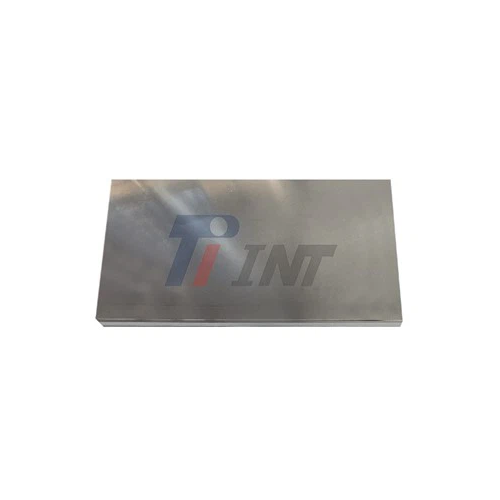
OEM titanium plates for surgery meet medical standards by strictly following FDA rules and ISO 13485 and ASTM F136 standards. These biocompatible implants are made to be safe for use in the body. They are tested to make sure that they have the right chemicals, are strong enough for their purpose, and are completely germ-free. Medical-grade titanium plates need to show that they can resist rusting, be strong without being heavy, and be able to integrate with bone without any issues. The process of making surgical tools that meet global standards for medical devices includes exact machining, surface treatment, and extensive testing.
|
|
|


Understanding OEM/ODM Excellence in Medical Titanium Manufacturing
The medical device industry requires a level of accuracy that isn't typical in most manufacturing. OEM (Original Equipment Manufacturer) and ODM (Original Design Manufacturer) partnerships are very important for businesses that want custom-made titanium surgical implants and bone plates. These partnerships give medical device companies access to high-tech ways of making things without having to spend a lot of money.
In the titanium implant business, deep customization is very important. Each use of surgery needs certain mechanical properties, surface finishes, and dimensional tolerances. Orthopedic titanium plates used in spinal fusion are very different from titanium maxillofacial plates made for surgery to fix facial bones. Because of this difficulty, medical device companies need OEM partners with a lot of experience.
At Baoji INT Medical Titanium Co., Ltd., we know that good partnerships go beyond just making things. Because we have worked with titanium for thirty years, we are able to help medical device manufacturers meet regulatory requirements while providing them with great biocompatible titanium solutions. We've seen that good OEM relationships can speed up product development and make businesses more competitive in the market.
Our Comprehensive OEM/ODM Manufacturing Strengths
We have over 20 years of experience making medical titanium, which is why we are so good at manufacturing titanium plates for surgery. Baoji INT has built up a wide range of skills that allow us to handle all parts of making surgical titanium plates since we opened in 2003.
Our state-of-the-art research and development labs give us the chance to work with different grades of titanium, such as Ti6Al4V ELI, pure titanium, and custom-made alloys. This knowledge about materials is very important when making custom titanium plates that need to be biocompatible in certain ways. We can do a lot of different tests, such as looking at mechanical properties, checking how well something resists corrosion, and figuring out how well something works in and with a living organism.
Quality control is very important to how we do business. Every group of titanium implants for surgery has to go through very strict checks. ISO 13485 certification means that we always follow the rules for managing the quality of medical devices. We've put in systems that track materials from raw titanium to the last package, giving full proof for regulatory submissions.
In the competitive titanium market, our ability to rely on the supply chain makes us unique. Our vertical integration gives us the power to oversee the quality of materials from the very beginning. This method keeps delivery times steady for our OEM partners and keeps problems with the supply chain to a minimum. We keep strategic inventory levels on hand to help with both prototype development and very long production runs.
Extensive Customization Options for Surgical Applications
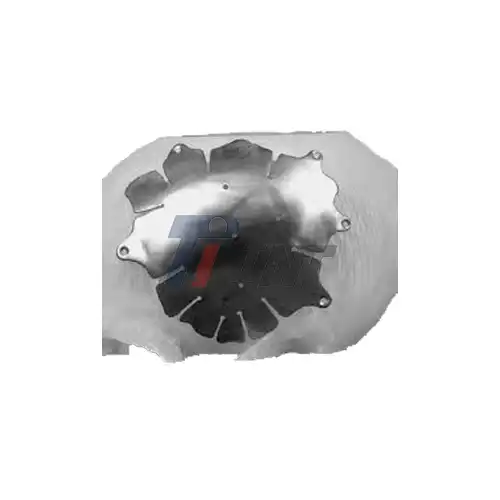
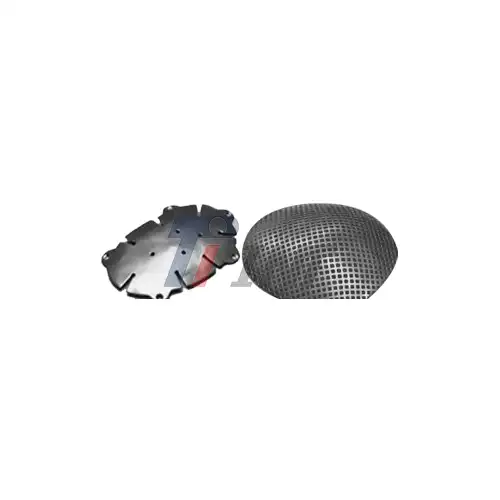
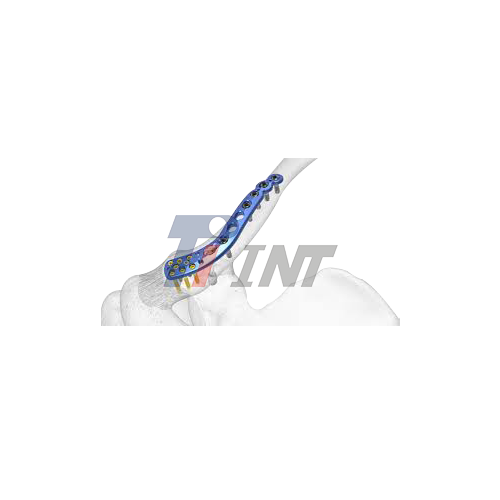
Physical design customization includes details about size, changes in thickness, and complex shapes. Titanium plates for surgery, such as those used for the skull, are different from titanium devices used to fix fractures in how they need to be designed. Our manufacturing can make plates from very thin profiles for pediatric uses to strong designs for trauma surgery.
The performance of an implant is greatly affected by how the surface is treated. Mechanical polishing, electrochemical treatments, and specialized coatings are some of the finishing techniques we offer. These changes to the surface can make osseointegration stronger, make it harder for bacteria to stick, or make the surface more radiolucent so that it can be used in imaging. Each treatment is carefully checked to make sure the results are always the same.
The manufacturing process can add functional features. Based on the needs of the surgery, custom hole patterns, threading specifications, and built-in points for attachments are made. To get the best out of these features for certain kinds of surgery or instrument compatibility, our engineering team works with clients.
Our branding and identification marking services help partners keep their products unique. If you don't mind damaging the material, you can use laser etching, chemical marking, or mechanical engraving. We make sure that all markings follow the rules for medical device labeling and stay readable for the whole life of the product.
Compliance customization deals with different rules around the world. Goods that will be sold in Europe have to have a CE marking and follow the MDR. Goods that will be sold in the US have to be approved by the FDA. Our knowledge of rules and regulations helps partners quickly understand these rules, which shortens the time it takes for new titanium plate designs to get to market.
The Strategic ODM Advantage in Titanium Innovation
Through ODM partnerships, doctors and companies can work together to make new titanium plates for surgery that help with clinical needs that aren't being met. Our partners' knowledge of the market and experience in surgery, when combined with our materials science expertise, allows us to work together. We can find chances to do new things that neither of us could do on our own if we work together.
Making ideas, prototypes, and pilot production support are all parts of our ODM services. We closely collaborate with medical device companies to improve designs using feedback from surgeries and performance data. This step-by-step method makes sure that the end products are both clinically acceptable and easy to make.
Another benefit of ODM is technology integration. We make sure to always know about the newest ways to process titanium, change surfaces, and check quality. These investments help our partners without them having to pay for the research and development costs.
Partners share common knowledge in medical device development to lower risk. The product development cycle is guided by our experience with regulatory submissions, clinical testing requirements, and scaling up manufacturing. This help is especially useful for businesses that are new to the medical titanium market.
Our Streamlined Customization Process
The first consultation starts with a long discussion about the details of the surgery, performance needs, and regulatory goals. We look at existing designs, think about how they might be made better, and look at the details to see what might be possible. This step makes the project rules and deadlines clear.
The engineering team works closely with client specifications during design development. We use advanced modeling software to make plate geometry better, guess how the mechanics will work, and find possible problems with manufacturing. Regular checks of the design make sure that the project stays on track with its goals.
It is possible to assess the prototype production physically before deciding to do larger production runs. We usually make a small number of items using the same methods that are planned for full-scale production. This method gives correct performance information and shows what changes need to be made to the design.
Testing and validation include both standard compliance testing and tests that are made for specific applications. Following the appropriate global guidelines, we do biocompatibility testing, sterility verification, and mechanical testing. Comprehensive documentation supports regulatory submissions and the needs of the quality system.
When you scale up production, you have to be careful when you go from making a prototype to making it commercially. We keep detailed process controls to make sure that the quality of the product stays the same no matter how much is made. Our adaptable manufacturing systems can make both small batches of specialty items and larger, more common products.
Conclusion
OEM titanium plates for surgery that meet medical standards need a lot of knowledge about materials science, manufacturing, regulatory compliance, and more. Choosing manufacturers with a lot of experience, advanced skills, and a good understanding of surgical applications is important for successful partnerships. Baoji INT Medical Titanium Co., Ltd. offers all of these things and the speed and bendability that today's medical device companies need. Because we are committed to making the best titanium plates for surgery, we are the perfect partner for companies that want to make new surgical tools that help patients get better and move medicine forward.
FAQ
Q1: What certifications does Baoji INT hold for making titanium plates that are used in the medical field?
A: ASTM F136 standards help us make sure that the quality of medical devices and materials used in surgical implants meet the requirements. The way we make medical devices also follows FDA rules. This spreads the word about the quality of our surgical titanium plates.
Q2: How long does it usually take to get OEM titanium surgical plates just right?
A: The amount of time that customization takes varies with the level of difficulty. It usually takes 4 to 12 weeks to make the first prototypes and start full production. Coming up with new designs for titanium plates would take a lot more time than making small changes to designs that are already there.
Q3: How many plates is the smallest number that you can have made with your own design on titanium plates?
A: The number of plates we make for each order depends on how hard and how custom the design is. We only need 10 to 50 prototypes for the first test. In the first production run, usually between 100 and 500 pieces of a standard titanium surgical plate are made.
Partner with Baoji INT for Superior Titanium Plate Solutions
You can stop searching; you've found a trustworthy titanium plates for surgery maker. Having over 30 years of experience with titanium and full OEM/ODM capabilities, Baoji INT Medical Titanium Co., Ltd. offers great surgical implant options. Medical device companies from around the world see us as a trustworthy partner because we are committed to quality, innovation, and customer success.
We understand how important it is to have dependable supply chains for surgical uses. Our single way of making titanium plates ensures that the quality is always the same, the delivery is on time, and there is complete technical support for the whole process of creating your product. Our team is ready to exceed your expectations, whether you need standard setups or custom designs that are more complicated. Do you want to see how our expertise in making titanium can help your medical devices get better? If you want to talk about your needs and learn why the best medical device companies choose Baoji INT as their main source for titanium surgical plates, email us at export@tiint.com.
References
1. American Society for Testing and Materials. "Standard Specification for Wrought Titanium-6Aluminum-4Vanadium ELI Alloy for Surgical Implant Applications." ASTM International, 2019.
2. International Organization for Standardization. "Implants for Surgery - Metallic Materials - Part 2: Unalloyed Titanium." ISO 5832-2:2018.
3. Williams, David F. "Titanium for Medical Applications: Principles and Applications in Medical Implant Design." Woodhead Publishing, 2018.
4. Food and Drug Administration. "Guidance Document for Testing and Labeling Medical Devices for Safety in the Magnetic Resonance Environment." FDA Center for Devices and Radiological Health, 2021.
5. European Medicines Agency. "Medical Device Regulation: Requirements for Titanium Implant Materials." Official Journal of the European Union, 2020.
6. Journal of Biomedical Materials Research. "Biocompatibility and Mechanical Properties of Titanium Plates in Orthopedic Surgery: A Systematic Review." Wiley Periodicals, 2019.
_1752463990252.webp)
_1755495780573.jpg)
_1750662309903.webp)