


 2026-01-22 09:01:23
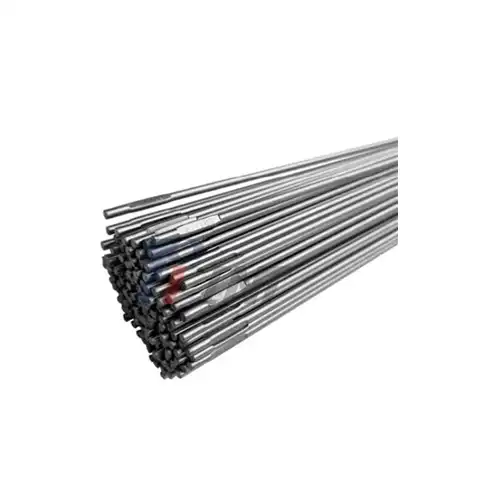
When buying medical titanium rods for spine implants and devices, orthopedic surgeons must know which suppliers are ISO 13485-certified. Suppliers with ISO 13485 certificates guarantee medical device quality. It guarantees high-quality, compliant, and documented goods. Although cheaper, uncertified suppliers lack medical-grade quality controls. The decision impacts product safety, government approval, and business health.
|
|
|


Understanding ISO 13485 Certification and Its Impact on Medical Grade Titanium
ISO 13485 tells you exactly how to make sure that medical devices are made with high quality. This standard controls every step of production, from getting the materials to delivering the finished product.
Certified producers keep detailed records of the properties of materials used in production. For titanium rods used in medicine, this means that the standards ASTM F67 and ASTM F136 tell us we need to keep an eye on the way they work mechanically, how they're made up chemically, and how their grain structure looks.
As part of the certification, people from outside the company have to come in and check the work regularly to make sure it always meets global standards. This method makes it a lot less likely that materials that aren't up to par will be used in surgery.
ISO 13485 quality control includes the following steps:
- The ability to trace the history of a material from titanium in its raw form to finished rods
- Watching statistical process control
- Approved ways to clean and kill germs
- All-inclusive paperwork for batches
- Regularly checking the settings on and taking care of equipment
The FDA oversees medical devices, and suppliers certified in ISO 13485 will give you compliance paperwork that speeds up the approval process when you need materials for those devices.
Quality Assurance Differences: Certified vs. Non-Certified Suppliers
Through measurable performance indicators, the difference in quality assurance between certified and non-certified suppliers can be seen. Certified suppliers usually have less than 100 parts per million that are defective, but non-certified sources might have much higher rates. Testing rules are another very important difference. ISO 13485 certified facilities do a lot of material testing, which includes testing for medical titanium rods.
Testing of mechanical properties shows very big differences. The yield strength of certified Ti6Al4V ELI titanium alloy rods is always between 795 and 875 MPa, and there isn't much difference between batches. Non-certified materials often have a wider range of properties that might not be good enough for strict surgical implant needs.
Biocompatibility verification is done by certified facilities that follow the ISO 10993 testing guidelines. This includes testing for cytotoxicity, sensitization, and irritation, which are all important for the success of implant osseointegration.
The quality of documentation varies a lot between different types of suppliers. Authorized vendors give full material certificates that include
- Findings from chemical composition analysis
- Test data for mechanical properties
- Records that prove heat treatment
- Measurements of surface finish
- Reports of dimensional inspection
If you need consistent material properties for spinal surgery hardware, certified suppliers with better quality control systems that minimize a lot-to-lot differences offer better help.
Regulatory Compliance and Documentation Standards
The rules for getting orthopedic implants and trauma rods approved require a lot of paperwork. FDA 510(k) submissions require detailed information about the materials used, which certified suppliers have on hand. Medical device makers must deal with even more problems when they comply with the European MDR. The rules for CE marking require technical files that have a lot of information in them and that include proof of certification from the supplier, especially for products like medical titanium rods.
Certified suppliers keep validated document control systems that make sure the accuracy and accessibility of information. This includes revision control, distribution tracking, and archive management, which are all necessary for regulatory audits. ISO 14971 risk management documentation requires material-related hazards to be identified and controlled by suppliers. Certified facilities deal with risks in a planned way, including:
- Changes in the chemical makeup
- Defects in the microstructure
- Impurities on the surface
- Non-conformance of dimensions
- Changes in the parameters of processing
Non-certified suppliers often don't have a lot of risk documentation on hand, which could make it harder for device manufacturers to follow the rules. If you need materials for Class III medical devices that need PMA approval, then ISO 13485-certified vendors can help you meet the rules, which greatly lowers the risk of taking too long to get approval.
Cost Analysis: Initial Investment vs. Long-Term Value
When you compare the prices of certified and non-certified suppliers, you can see that there are more factors to consider than just the price of the goods. Even though uncertified sources might sell units that are 15% to 25% cheaper, the total cost of ownership usually shows that certified suppliers are better.
Costs that you don't expect when using uncertified materials include
- More requirements for incoming inspection
- Longer periods of time to qualify materials
- The risk of having more batches rejected is higher.
- Holds in the regulatory submission process
- Possible costs of recalling a product
In medical settings, the costs of failing to ensure quality can be very high. It only takes one batch of titanium rod with the wrong strength properties to cause production delays that cost tens of thousands of dollars. Certified vendors usually have better business terms, such as longer payment due dates, discounts for buying in bulk, and help with technical issues related to products like medical titanium rods. These value-added benefits often make up for the higher prices at first.
The stability of the supply chain is another economic factor. Certified suppliers show more business continuity because they have already set up ways to make things high quality and build relationships with customers. If you need to plan your budget around reliable material costs, certified suppliers will give you clearer price lists and fewer surprise costs that are related to quality.
Supply Chain Reliability and Technical Support
Certified suppliers are set apart by supply chain performance metrics that show how reliably they can make deliveries. ISO 13485 certified facilities usually deliver more than 95% of their orders on time, while non-certified sources have inconsistent performance. When certified suppliers use inventory management systems, they can see production schedules and material availability in real time. This openness helps makers of medical devices plan better for demand.
The level of technical support can vary a lot between different types of suppliers. Certified suppliers keep qualified engineering teams on hand to deal with
- Finding the best materials for certain applications
- Making custom alloys for special needs
- Suggestions for processing parameters
- Failure analysis and corrective action help
- Rules compliance help
Non-certified suppliers often don't have the technical depth needed to help with complex medical applications that need special knowledge of how bone healing support works and how to prevent implants, such as medical titanium rods, from corroding.
When it comes to making new products, it's mostly certified suppliers who know about the rules and timelines for medical devices that can help. If you need to continue to work with a technical partner to make devices for minimally invasive surgery, certified suppliers will give you the important engineering help you need on top of just giving you materials.
Risk Management and Business Continuity
A business risk assessment shows that there are big differences between working with certified and non-certified suppliers. Regulatory compliance risks are the most important thing for medical device makers to think about. During regulatory inspections, it is very important that the audit trail is not changed. Certified suppliers keep records that are correct and can stand up to inspection by the FDA, ISO, and other regulatory groups. When it comes to product liability, certified suppliers with good insurance and quality system documentation that supports defense strategies are more likely to be chosen.
Business continuity planning varies a lot depending on the type of supplier. Most certified facilities:
- Extra production capacity
- Alternate material sources that are good enough
- Steps for dealing with emergencies
- Keeping an eye on financial stability
- Planning for succession for important people
Intellectual property protection gets more focus at certified suppliers because they use established ways to keep secrets and manage data safely. If you need to be sure that you can always get important spinal deformity correction tools, certified suppliers will give you better business continuity protection that is necessary for patient care without interruption.
Conclusion
The choice between ISO 13485 certified and non-certified Chinese titanium suppliers ultimately depends on your risk tolerance and regulatory requirements for products like medical titanium rods. Certified suppliers offer superior quality assurance, comprehensive documentation, and regulatory compliance support that justify premium pricing for critical medical applications. Non-certified options may suit non-regulated applications where cost optimization takes precedence over extensive quality systems. Medical device manufacturers requiring FDA approval or CE marking should prioritize certified suppliers to ensure successful regulatory outcomes and long-term business success.
Baoji INT Medical Titanium Co., Ltd. Advantages:
- ISO 13485 certified quality management system ensuring consistent product quality and regulatory compliance
- 30+ years of titanium industry expertise through founder Mr. Zhan Wenge's leadership and technical knowledge
- Comprehensive product portfolio including pure titanium, Ti6Al4V ELI, rods, wires, plates, and forged components
- Advanced manufacturing capabilities with precision die forging technology for complex geometries
- Complete material traceability from raw titanium to finished medical titanium rods
- ASTM F67 and F136 compliance for biomedical applications with verified biocompatibility
- Statistical process control monitoring ensuring batch-to-batch consistency
- Validated cleaning and sterilization procedures meeting medical device standards
- Comprehensive technical documentation supporting FDA 510(k) and CE marking submissions
- Mechanical property optimization achieving yield strength values of 795-875 MPa for Ti6Al4V ELI
- Surface finish control meeting surgical implant requirements for osseointegration
- Chemical composition verification ensuring ASTM specification compliance
- Heat treatment validation providing consistent microstructural properties
- Dimensional inspection capabilities maintaining tight tolerances for medical applications
- Risk management documentation under ISO 14971 addressing material-related hazards
- On-time delivery rates exceeding 95% supporting production schedule reliability
- Technical support team providing material selection guidance and application engineering
- Custom alloy development capabilities for specialized medical device requirements
- Failure analysis and corrective action support for quality improvement
- Regulatory compliance guidance for FDA and CE marking requirements
- Product liability insurance coverage protecting customer interests
- Business continuity planning ensuring uninterrupted supply chain performance
- Intellectual property protection through confidentiality protocols
- Competitive pricing with transparent cost structures and volume discounts
- Global shipping capabilities with proper export documentation
- Multilingual customer support facilitating international business relationships
- Investment in Shaanxi Stand Biotechnology Co., Ltd. for precision die forging advancement
- Continuous improvement culture driving innovation in medical titanium applications
- Environmental compliance meeting international standards for sustainable manufacturing
- Long-term partnerships with medical device manufacturers worldwide
Baoji INT Medical Titanium Co., Ltd.: Your Trusted Medical Titanium Rods Manufacturer
With over 30 years of experience in the titanium industry and full ISO 13485 certification, Baoji INT Medical Titanium Co., Ltd. provides the best surgical implants and internal fixation devices made of medical-grade titanium. We have a lot of different products, including pure titanium and Ti6Al4V ELI titanium alloy rods that are made to help bones fuse together and stay stable after fractures. We make sure that your medical device manufacturing needs are met without any risks in the supply chain and with consistent quality. This is because we have proven experience in orthopedic implant applications and full regulatory documentation support. To talk about your exact needs, please email us at export@tiint.com.
References
1. International Organization for Standardization. "Medical devices - Quality management systems - Requirements for regulatory purposes." ISO 13485:2016, Geneva, Switzerland.
2. American Society for Testing and Materials. "Standard Specification for Unalloyed Titanium for Surgical Implant Applications." ASTM F67-13, West Conshohocken, PA.
3. Food and Drug Administration. "Quality System Regulation for Medical Devices: A Guide for Manufacturers." FDA Center for Devices and Radiological Health, Rockville, MD, 2019.
4. European Commission. "Medical Device Regulation (MDR) 2017/745: Implementation Guidelines for Manufacturers." Brussels, Belgium, 2021.
5. American Society for Testing and Materials. "Standard Specification for Wrought Titanium-6Aluminum-4Vanadium ELI Alloy for Surgical Implant Applications." ASTM F136-13, West Conshohocken, PA.
6. International Organization for Standardization. "Medical devices - Application of risk management to medical devices." ISO 14971:2019, Geneva, Switzerland.
_1751956094730.webp)
_1750668472070.webp)
_1750664314563.webp)
_1750662309903.webp)