


 2026-01-05 09:09:09

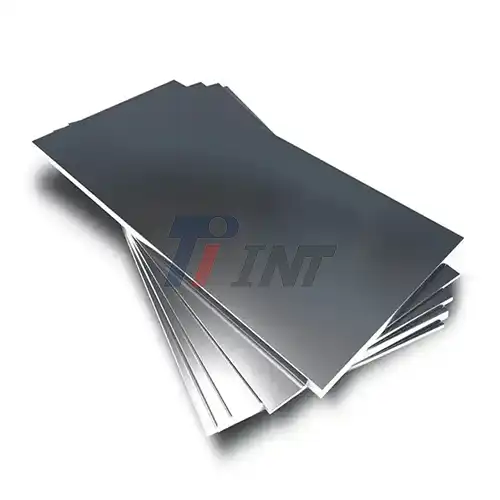
The Remarkable Properties of 5mm Titanium Plates
Unparalleled Biocompatibility
The 5mm titanium plate demonstrates exceptional biocompatibility, which is fundamental to its success in medical and surgical applications. Its non-toxic, hypoallergenic, and inert properties allow seamless integration with human tissues and bones without triggering adverse biological reactions. Titanium’s surface naturally forms a stable oxide layer that promotes cell attachment and bone growth, ensuring secure fixation and long-term implant stability. By minimizing the risks of inflammation, rejection, and infection, the titanium plate supports faster recovery, improved healing outcomes, and long-lasting compatibility within the patient's body after surgical implantation.
Impressive Strength-to-Weight Ratio
Renowned for its outstanding mechanical performance, the 5mm titanium plate combines high tensile strength with an exceptionally low weight, achieving an impressive strength-to-weight ratio. This unique balance allows surgeons to use implants that are both strong and lightweight, minimizing the physical burden on surrounding tissues. Its structural integrity provides firm support for fractured or weakened bones, promoting proper alignment and stability during healing. Additionally, the plate’s resistance to fatigue and deformation under stress ensures long-term durability, enhancing patient comfort and enabling faster rehabilitation without compromising safety or performance.
Superior Corrosion Resistance
The 5mm titanium plate offers remarkable corrosion resistance, a property that is vital for implants continuously exposed to complex biological environments. Its naturally forming oxide film acts as a protective barrier against oxidation, degradation, and chemical reactions with body fluids. This resistance is maintained even during repeated sterilization cycles and exposure to saline or acidic conditions. As a result, the titanium plate retains its structural integrity, aesthetic appearance, and functionality for many years. This exceptional stability not only extends the implant’s service life but also ensures patient safety and overall treatment reliability.
Applications and Benefits in Medical Practice
Orthopedic Implants
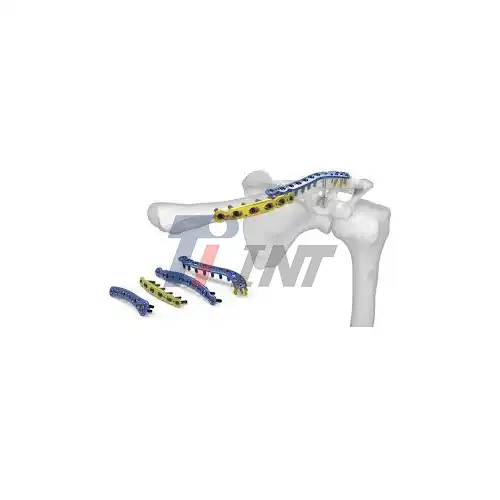
In orthopedic surgery, the 5mm titanium plate serves as an essential component in bone fixation, fracture repair, and reconstructive procedures. Its exceptional tensile strength provides firm stabilization for fractured or weakened bones, allowing them to heal properly and efficiently. The lightweight design minimizes mechanical stress on muscles and surrounding tissues, improving patient comfort. Additionally, its biocompatibility reduces the likelihood of inflammation or rejection, enabling faster postoperative recovery and long-term structural support for patients.
Dental Prosthetics
The 5mm titanium plate is widely utilized in modern dental prosthetics, including implant anchorage, jaw reconstruction, and maxillofacial repair. Its superior biocompatibility promotes effective osseointegration, ensuring that the implant fuses securely with the surrounding bone structure. This integration provides a strong and stable foundation for dental restorations such as crowns and bridges. Moreover, titanium’s corrosion resistance guarantees the durability of dental solutions, helping maintain oral health and aesthetics over extended periods of use.
Neurosurgical Procedures
In neurosurgery, the 5mm titanium plate plays a vital role in cranial fixation, spinal fusion, and skull reconstruction. Its high strength and inert composition ensure reliable protection and stabilization of delicate neural structures during recovery. Because titanium is non-magnetic, it remains completely compatible with MRI and CT imaging, enabling accurate postoperative assessments without distortion. This compatibility allows neurosurgeons to monitor healing progress and detect complications early, contributing to improved patient safety and surgical outcomes.
Manufacturing Excellence and Quality Assurance
Advanced Production Techniques
Leading 5mm titanium plate manufacturers utilize advanced production technologies to maintain superior quality and precision. Processes such as precision forging, CNC machining, and heat treatment are carefully applied to achieve optimal mechanical properties and flawless surface finishes. Each stage of production is monitored under strict quality assurance protocols, including ultrasonic and X-ray inspections, to detect any imperfections. These meticulous techniques ensure that every titanium plate meets the demanding standards required for medical applications, delivering exceptional strength, reliability, and long-term performance in clinical use.
Adherence to International Standards
Reputable manufacturers of 5mm titanium plates operate in compliance with globally recognized standards to ensure consistent product quality and patient safety. Certifications such as ISO 9001:2015 and ISO 13485:2016 demonstrate robust quality management systems and adherence to medical device manufacturing regulations. Furthermore, many products carry CE certification under the European Union’s Medical Device Regulation, confirming conformity with health, safety, and environmental protection requirements. This strict adherence to international benchmarks reinforces trust among healthcare professionals and ensures reliable performance across diverse surgical applications.
Customization Capabilities
To meet the specific demands of surgeons and patients, many 5mm titanium plate manufacturers provide advanced customization options. Through 3D modeling, computer-aided design, and precision engineering, manufacturers can produce plates tailored to unique anatomical structures or specialized surgical techniques. This personalized approach enhances fit, comfort, and functionality, reducing surgery time and improving recovery outcomes. Customization also extends to variations in thickness, curvature, and surface finish, allowing medical professionals to choose configurations best suited to individual clinical needs and complex reconstructive procedures.
Conclusion
The 5mm titanium plate represents a pinnacle of medical engineering, offering a combination of biocompatibility, strength, and durability that is unmatched by other materials. As medical technology continues to advance, these plates will undoubtedly play an increasingly vital role in improving patient outcomes and expanding the possibilities of surgical interventions.
For those seeking high-quality 5mm titanium plates or looking to explore customized solutions, Baoji INT Medical Titanium Co., Ltd. stands as a trusted industry leader. With a commitment to innovation and quality, they offer a comprehensive range of titanium products for various medical applications. To learn more about their offerings or to discuss your specific needs, contact them at export@tiint.com.
FAQs
What makes 5mm titanium plates ideal for medical use?
5mm titanium plates are ideal for medical use due to their excellent biocompatibility, high strength-to-weight ratio, and superior corrosion resistance. These properties ensure long-term stability and minimal risk of rejection when implanted in the human body.
Are 5mm titanium plates safe for long-term implantation?
Yes, 5mm titanium plates are safe for long-term implantation. Their non-toxic nature and resistance to degradation in the body make them suitable for extended use without causing adverse reactions.
Can 5mm titanium plates be customized for specific medical procedures?
Absolutely. Many manufacturers offer customization services to tailor 5mm titanium plates to specific surgical needs or patient requirements, enhancing their versatility in various medical applications.
References
1. Niinomi, M. (2019). Metals for Biomedical Devices. Woodhead Publishing.
2. Brunette, D. M., Tengvall, P., Textor, M., & Thomsen, P. (2012). Titanium in Medicine: Material Science, Surface Science, Engineering, Biological Responses and Medical Applications. Springer Science & Business Media.
3. International Organization for Standardization. (2016). ISO 13485:2016 Medical devices — Quality management systems — Requirements for regulatory purposes.
4. European Commission. (2017). Regulation (EU) 2017/745 of the European Parliament and of the Council on medical devices.
5. American Society for Testing and Materials. (2019). ASTM F67-13(2019) Standard Specification for Unalloyed Titanium, for Surgical Implant Applications.
_1753926673602.jpg)
_1753429726760.webp)
_1752819172472.webp)
_1752463076575.webp)
_1752462620877.webp)