


Are there any FDA-approved GR4 medical titanium plates with 1mm thickness?


 2026-05-07 08:57:14
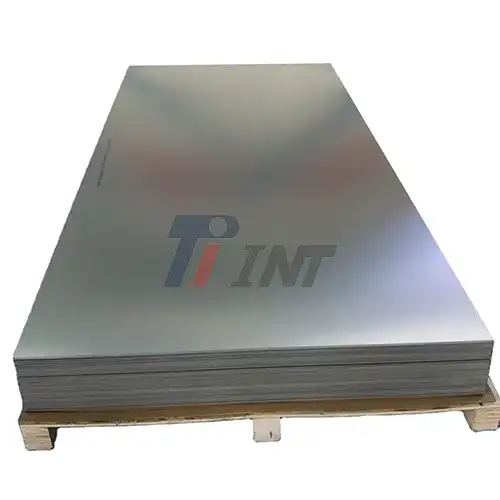
When looking for materials for important medical uses, procurement managers and research and development experts often check to see if there are any FDA-approved choices for Gr4 Medical Titanium Plate Thk 1mm. Yes, there are Grade 4 commercially pure titanium plates that are 1 mm thick. These plates are generally known to meet ASTM F67 and ISO 5832-2 standards, which are used by the FDA for medical implant materials. Because these plates are very biocompatible and have strong mechanical performance, they can be used in orthopedic, oral, and trauma fixing devices that need to be strong and safe.
|
|
|
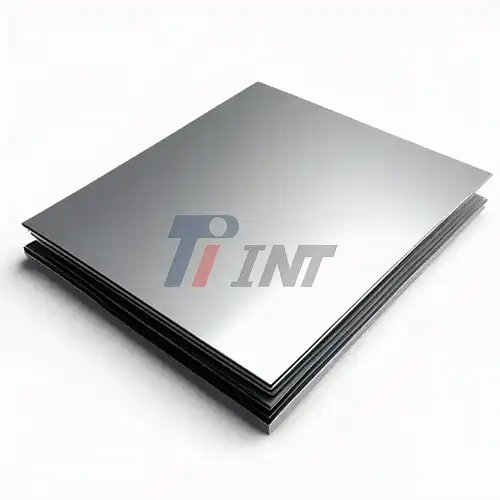
Understanding GR4 Medical Titanium Plates: Properties and Advantages
When it comes to economically pure titanium, Grade 4 titanium is the strongest. Unlike titanium alloys like Ti-6Al-4V, Grade 4 has better mechanical properties because it has a controlled oxygen content of about 0.4%, which acts as an interstitial strengthening agent without adding alloying elements like aluminum or vanadium that may cause biocompatibility concerns in vulnerable patient groups.
Chemical Composition and Medical Grade Standards
ASTM F67 standards are closely followed by the material. These standards guide the use of unalloyed titanium in surgical implants. This standard makes sure that the amounts of oxygen, nitrogen, carbon, hydrogen, and iron stay within very narrow ranges so that the performance is always the same. The elevated oxygen content in Grade 4 titanium provides tensile strength reaching 550 MPa minimum, significantly exceeding Grade 2's 345 MPa. This makes it very useful when load-bearing ability is important but metal elements need to be used as little as possible.
Mechanical Performance at 1mm Thickness
These plates are the perfect thickness of 1 mm, which makes them both hard and easy to shape. Having a yield strength of at least 483 MPa means that the material won't break under physiological loads, and having an extension of 15% or more means that it can be bent and shaped during surgery. The low modulus of elasticity (about 105 GPa) is similar to that of human bone compared to stainless steel. This means that there are fewer stress buffering effects that can make it harder for implants to stay in place over time.
Core Advantages for Medical Device Manufacturing
When manufacturers choose Gr4 Medical Titanium Plate Thk 1mm, they get a number of clear benefits. The most important thing is biocompatibility. The material doesn't do anything when it comes into contact with human tissue. Instead, it forms a solid layer of titanium dioxide that doesn't rust in salty settings and doesn't let metallic ions out. The general weight of the implant is lessened by making it lighter, which makes the patient more comfortable and lowers the trauma of surgery. Resistance to corrosion means that something will last for decades, even in the harsh molecular environment of live tissue. These features make Grade 4 titanium plates reliable for cranio-maxillofacial reconstruction, internal support systems for broken upper limbs, and custom oral prosthetics where complex contouring meets tough fatigue requirements.
FDA Approval and Regulatory Compliance of GR4 Medical Titanium Plates
Professionals in buying who are in charge of making sure their supply lines meet legal and safety standards need to know how regulations work. The FDA does not "approve" raw materials like titanium plates on an individual basis. Instead, it accepts guidelines set by groups like ASTM International and ISO. Medical device makers have to show that their finished goods, which may include Grade 4 titanium, follow all FDA rules, which are usually found in 21 CFR Part 820 (Quality System Regulation) and the right premarket notification or clearance routes.
Regulatory Pathway for Implant Materials
When grade 4 titanium plates are made according to ASTM F67, they instantly meet FDA standards for materials that are meant to be used in implants. The standard lays out strict procedures for chemistry analysis, mechanical testing, and microstructure inspection. The FDA looks at the whole device application when a company uses compliant Grade 4 titanium in a Class II or Class III implant. They do this by looking at the material's track record and how well it meets established standards. This process makes the rules clearer and speeds up the approval process compared to new materials that haven't been tested yet.
ISO and ASTM Certifications
In addition to ASTM F67, ISO 5832-2 is the worldwide standard that is the same as it and makes sure that all markets around the world have the same material needs. Reliable sellers make sure that their goods meet both American and European safety standards. This is called "dual compliance." Teams in charge of buying things should make sure that sellers are certified with both ISO 9001:2015 for quality management systems and ISO 13485:2016 for medical device quality management. These approvals show that the production processes, paperwork for tracking, final review routines, and where the raw materials come from are all carefully managed.
Verifying Supplier Credentials and Documentation
When looking at different sources, make sure to ask for full material certificates that show the history of each heat lot, the chemicals used, the results of mechanical tests, and records of ultrasound inspections. Look for sellers who can give you full material data sheets that say they meet ASTM F67 standards and Certificate of Conformance papers that can be linked to specific production batches. Performing source checks, either in person or through a third-party service, provides an extra level of security by ensuring that production facilities have the right cleanroom conditions, properly adjusted testing equipment, and trained staff. This level of operational stability is shown by Baoji INT Medical Titanium Co., Ltd., which has been in business since 2003 and has more than 20 years of experience in its field. All of its products have been certified by ISO 9001:2015, ISO 13485:2016, and EU CE.
Comparing GR4 with Other Titanium Grades and Thicknesses for Medical Applications
Choosing the right titanium grade and thickness means finding a balance between the material's functional needs, its biocompatibility, its working abilities, and its cost. Each clinical application presents unique requirements that influence material choice.
GR4 Versus GR5 Titanium Alloy
Grade 5 titanium (Ti-6Al-4V ELI) has a higher tensile strength (about 860 MPa) and better wear resistance, which is why it is the best choice for high-stress uses like hip and knee joint stems. However, worries about the release of aluminum and vanadium ions in some patient groups have led device makers to look into options that aren't made of alloys. This is where Grade 4 titanium comes in. It has the proven bio-inertness of commercially pure titanium and the near-alloy strength (550 MPa tensile). Grade 4 is good for mild load-bearing uses like cranio-maxillofacial plates, fracture fixation hardware, and dental implant abutments because it has good mechanical performance without adding alloying element risks.
Thickness Considerations: 1mm Versus Alternatives
The choice of 1 mm thickness is based on specific design needs. Thinner plates, like 0.8mm versions, lower the implant profile and make it easier to feel under soft tissue. This makes them good for delicate face repair where looks are important. But smaller parts lose their ability to resist bending, and they might need extra features in the design, like mesh patterns, to keep the structure strong. On the other hand, 2mm plates are more stiff for load-bearing situations, but they are bigger and heavier. In real life, the 1mm standard is a good compromise. It gives you enough material to withstand physiological loads while your bone heals, but it's also flexible enough to be shaped during surgery. Because they can be used in so many ways, Gr4 Medical Titanium Plate Thk 1mm plates are very useful for orthopedic injuries, spine fusion stability, and maxillofacial repair.
Titanium Plates Versus Stainless Steel Alternatives
Stainless steel implants (usually 316L) are less expensive and have better tensile strength, but they have a lot of problems when they are used for a long time. The measure of elasticity of stainless steel is about 200 GPa, which creates a lot of stress buffering that could cause bone to break down around the implant. Corrosion resistance is good enough, but it's not as good as titanium's in salty environments, which can cause ions to leak out and hypersensitivity reactions in patients who are already sensitive. Titanium has been shown to be compatible with MRIs, which gets rid of image flaws that make it harder to evaluate after surgery. Titanium implants last longer and don't rust or break down as easily as other materials. This means that fewer revisions are needed and patients do better, which balances out the higher initial cost of the materials and gives healthcare systems better long-term economic value.
Procurement Guide: How to Source FDA-Approved GR4 Medical Titanium Plates 1mm Thick
To get medical-grade titanium around the world's supply chain, you need to carefully choose your vendors, make sure the quality of the titanium is high, and communicate clearly about technical standards and safety needs.
Identifying Verified Suppliers and OEM Partners
Doing a lot of study on suppliers is the first step to successful buying. To meet makers in person and look at samples, go to trade shows for your business like MD&M West, MEDICA, or the American Academy of Orthopaedic Surgeons Annual Meeting. Use business-to-business (B2B) sites that focus on medical device parts to find sellers with certified credentials and a history of doing good work. Focus on makers that can do both making the materials and providing OEM services, able to handle the whole process from processing raw titanium to precision cutting and finishing the surface. This combination makes the supply chain simpler and more consistent in quality control.
Evaluating Minimum Order Quantities and Customization
Startups that make medical devices and specialty makers often need smaller production runs for research and development (R&D) or for niche product lines. Make sure that potential sellers have fair minimum order amounts that don't come with steep price penalties. Talk about the options for customization in an open way. For example, can the seller provide plates that are already cut to certain sizes? Can they do extra work on it, like CNC grinding, laser cutting, or electropolishing? Can surface processes like anodizing or passivation be added? When suppliers have their own technical teams and flexible production systems, they can make standard goods fit specific surgical needs, which saves money on extra processing and speeds up time-to-market.
Assessing Lead Times and Logistics
Standard wait times for medical-grade titanium plates are between four and eight weeks, but this can change based on the number of orders and how complicated the customization is. Find out if the wait times given include paperwork for material approval, testing by a third party, and packaging that can be used in a cleanroom. Find out how the seller ships. For example, do they know how to handle foreign shipping, customs paperwork, and following the rules for bringing medical supplies into the country? Reliable sellers keep extras of popular specifications on hand, which lets them fill urgent orders faster. Set up clear lines of contact and ask for regular updates on production to avoid delays that come up out of the blue and throw off your manufacturing plans, especially when dealing with Gr4 Medical Titanium Plate Thk 1mm.
Warranty, After-Sales Support, and Technical Assistance
Check to see if the supplier is committed to a long-term relationship in addition to delivering the goods. Full guarantees that cover material flaws protect your finances and show that the maker trusts the quality of the product. Having access to mechanical engineers and application experts is very helpful when dealing with problems during processing, finding the best forming parameters, or dealing with strange material behavior during device assembly. In a market where prices are low for many products, suppliers who put money into technical help for their customers stand out. This turns transactional relationships into partnerships that support innovation and ongoing growth.
Future Trends and Innovations in Medical Titanium Plates
As manufacturing technology improves, regulatory standards get stricter, and clinical uses grow, the medical titanium business continues to change quickly.
Additive Manufacturing and 3D Printing
With selective laser melting and electron beam melting, among other additive manufacturing techniques, it is possible to make devices that are custom made for each patient and have complex shapes that would not be possible with traditional forging and machining. Most 3D-printed titanium items use Grade 5 alloy powder right now, but study into commercially pure titanium powders, like Grade 4, shows promise for uses that need biocompatibility without any alloys. These technologies make it possible to add porous structures that help bone grow, personalized anatomical shaping based on CT scans done before surgery, and topology-optimized designs that lower implant mass while keeping mechanical performance.
Advanced Surface Treatments
Surface change technologies improve the ability of titanium implants to fuse with bone and kill bacteria. Micro-arc oxidation and other methods make surfaces rougher, which helps bones fuse together faster. Adding silver or zinc ions makes the bone resistant to infection. The initial cell adhesion is better with hydrophilic surface treatments, which is very important during the sensitive early mending phase. As these technologies get better and are approved by regulators, procurement professionals can expect providers to offer value-added surface processing as a normal choice. This will improve clinical results without having to remake the device.
Evolving Regulatory Landscape
Global regulatory bodies are still improving how they keep an eye on medical devices. The FDA's new focus on cybersecurity for connected devices and supply chain transparency affects all parts of the gadget, even the raw materials. The European Medical Device Regulation (MDR) makes it more important to keep records and be able to track down medical devices. To make it through these changes easily and keep market access open in multiple jurisdictions, procurement teams need to work with suppliers who intentionally invest in quality system upgrades, digital traceability platforms, and regulatory intelligence tools.
Conclusion
To find high-quality, legal Grade 4 medical titanium plates that are 1 mm thick, you need to pay close attention to the material requirements, the skills of the suppliers, and the rules and regulations. The unique mix of sturdiness, biocompatibility, and corrosion protection makes this material essential for making medical devices today. When procurement professionals build relationships with qualified, experienced providers, they set their companies up for success in global markets that are very competitive. They also make sure that patient safety stays a top priority throughout the lifecycle of the product.
FAQ
What surgical applications benefit most from 1mm thick Grade 4 titanium plates?
Cranio-maxillofacial reconstruction techniques, especially orbital floor repair and mandibular fracture fixation, often use 1mm plates because they provide enough skeletal support while keeping soft tissues from getting irritated. Gr4 Medical Titanium Plate Thk 1mm is strong and has a low profile, which makes it good for fixing fractures in the upper limbs, like radius and ulna breaks.
How can I verify authentic FDA compliance documentation from suppliers?
Ask for material certificates that show they meet specific ASTM F67 requirements. These certificates should include heat lot numbers that can be linked to chemical makeup and mechanical test results. Legitimate sellers give inspection results from third-party testing labs that have been approved by the government. Get in touch with the supplier's quality department and ask to see proof of their ISO 13485:2016 certification. This shows that they have a method for managing quality for medical device materials.
What typical lead times should I expect for customized orders?
Shipments with standard specs take four to six weeks to arrive. Lead times can go up to six to ten weeks if the specs are customized, the surface is treated, or more machining processes need to be done. Setting up blanket purchase deals with set delivery dates helps sellers use their production capacity more efficiently and gives buyers who buy a lot of goods more confidence in their deliveries.
Partner with a Trusted GR4 Medical Titanium Plate Thk 1mm Supplier
Baoji INT Medical Titanium Co., Ltd. can help you create and make medical devices by providing Grade 4 titanium plates that are approved and made to strict ASTM F67 standards. Our ISO 9001:2015, ISO 13485:2016, and EU CE standards show that we have been experts in medical titanium processing for more than twenty years. We offer full customization services, reasonable prices for both prototypes and mass production, and dedicated expert support to help you with problems like choosing the right material and processing it. Connect with our team at export@tiint.com to discuss your specifications and receive detailed quotations from a reliable Gr4 Medical Titanium Plate Thk 1mm manufacturer committed to quality and partnership.
References
1. American Society for Testing and Materials. (2013). Standard Specification for Unalloyed Titanium for Surgical Implant Applications (ASTM F67-13). West Conshohocken, PA: ASTM International.
2. International Organization for Standardization. (2018). Implants for Surgery—Metallic Materials—Part 2: Unalloyed Titanium (ISO 5832-2:2018). Geneva: ISO.
3. Steinemann, S.G. (1998). "Titanium—The Material of Choice?" Periodontology 2000, 17(1), 7-21.
4. Niinomi, M. (2008). "Mechanical Biocompatibilities of Titanium Alloys for Biomedical Applications." Journal of the Mechanical Behavior of Biomedical Materials, 1(1), 30-42.
5. U.S. Food and Drug Administration. (2020). Guidance for Industry and FDA Staff: Class II Special Controls Guidance Document: Root-Form Endosseous Dental Implants and Endosseous Dental Abutments. Silver Spring, MD: FDA.
6. Rack, H.J., & Qazi, J.I. (2006). "Titanium Alloys for Biomedical Applications." Materials Science and Engineering: C, 26(8), 1269-1277.
_1752462435099.webp)
_1750667964882.webp)
_1750662961697.webp)