Best Gr2 Titanium Wire Suppliers for Medical Device Makers - INT


 2026-09-08 09:57:26
When medical device contract manufacturers search for reliable commercially pure titanium wire, the choice of supplier directly impacts production yield, regulatory compliance, and long-term partnership stability. At Baoji INT Medical Titanium Co., Ltd., we deliver Gr2 Titanium Wire that addresses the critical pain points faced by OEMs across Europe, the United States, and Japan—ranging from dimensional tolerance control to batch traceability documentation. With over two decades of specialized experience in medical-grade titanium materials since our founding in 2003, we understand exactly what procurement managers and quality engineers require to maintain seamless production schedules and satisfy stringent client specifications.
|
|
|
Understanding Gr2 Titanium Wire and Its Medical Applications
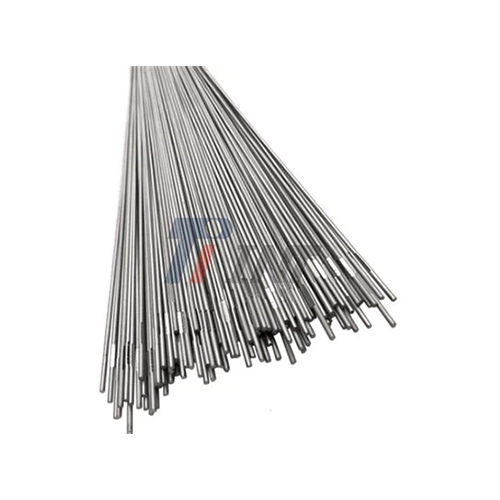
Commercially pure titanium wire in Grade 2 grade is the main material used to make parts for medical devices. This alpha-phase titanium filament meets the standards of ASTM B863 and UNS R50400. It has the perfect balance of moderate tensile strength (at least 345 MPa) and superior ductility that is better than higher-alloy alternatives. According to a study published in the Journal of Materials Science: Materials in Medicine (2019), Grade 2 titanium is very biocompatible because it forms a stable layer of titanium dioxide on its surface on its own. This layer keeps tissues from reacting badly to the titanium over time.
Engineers who make medical devices always choose this grade of material because it solves three basic problems that come up when making devices. With a mass of only 4.51 g/cm³, the wire is very light, which makes the device lighter without affecting its structural stability. Its amazing ability to resist corrosion in physiological environments makes sure that devices last a long time, and the material's great cold-forming properties make it possible to make complex shapes without having to go through extra annealing steps that slow down production.
Primary Medical Applications
Because commercially pure titanium wire is so flexible, it can be used in a wide range of surgical specialities. When orthopaedic devices are made, this material is what bone fixation wires, K-wires for trauma surgery, and cerclage cables used to stabilise fractures are built on. Fine-diameter versions are used by companies that make cardiovascular devices for guidewire cores and stent framework parts that need to be strong in all directions and not corrode. Biocompatibility certification is needed for abutment screws and orthodontic wire forms that are made by companies that make dental implants.
The material's ability to withstand multiple sterilisation cycles is appreciated by companies that make surgical instruments. Instead of pitting rust after being in an autoclave for a long time like stainless steel options, Grade 2 titanium keeps its surface integrity through thousands of sterilisation procedures. The International Journal of Advanced Manufacturing Technology reported that titanium wire parts don't change much in size even after being sterilised 5,000 times with steam. This proves that they can be used to make reusable medical tools.
When medical device contract makers work with brand clients, knowing these application-specific needs helps them make more accurate material specifications during the RFQ stage. The material has been used in devices that have been FDA-approved and CE-marked before, which makes it easier to make regulatory documents.
How to Choose the Best Gr2 Titanium Wire Supplier: Key Criteria for Medical Device Makers
Medical device OEM procurement managers are under more and more pressure to find a mix between cutting costs and maintaining the highest quality standards. When working with clients who use ISO 13485 quality management systems, it's especially important to look at more than just unit price when choosing the right titanium material supplier.
Certification and Compliance Infrastructure
Medical-grade material providers must keep their ISO 13485:2016 certification up to date. This shows that their quality management system meets the standards for process evaluation and tracking of medical device parts. Our company, Baoji INT Medical Titanium Co., Ltd., is certified under both ISO 13485:2016 and ISO 9001:2015. This means that every batch of products we make goes through documented inspection protocols that meet both medical device regulations and general industry quality standards. Our EU CE safety certification gives us even more confidence in our ability to access the European market.
Quality engineers care more about real compliance skills than certification badges. Suppliers should make it easy to track down a specific heat lot by including mill test records that show the chemical make-up and mechanical properties of each production run. We keep digital systems that connect each coil or straight length to its original vacuum arc remelting (VAR) furnace run. This makes the whole supply chain clear when device manufacturers have to deal with regulatory audits or customer complaints that need a root cause investigation.
Dimensional Precision and Surface Quality
When medical device OEMs do precision etching, laser cutting, or CNC machining, the production yield rates are directly affected by how consistent the materials are that come in. Gr2 Titanium Wire is a common choice in such applications, and holding wire diameter limits to h7 or h8 precision grades (±0.010 to 0.018mm for most medical sizes) keeps tools from breaking during cutting and makes sure that forming operations can be done again and again. Surface finish requirements become just as important; wire surfaces with scratches, die marks or discolouration from oxidation need extra steps during pre-processing that raise the cost of production.
Ultrasonic testing and inspection procedures are used in Baoji INT Medical Titanium Co., Ltd.'s manufacturing processes to find internal flaws before the material is shipped. This eliminates the risk of wire breaks happening in the middle of production, which leads to batch rejects. Our controlled atmosphere annealing processes keep surfaces bright and free of oxides, which means that medical tool makers don't have to polish them as much afterward.
Customization Capabilities and Minimum Order Flexibility
When making new product lines or meeting the specific size needs of clients, medical device contract manufacturers often have to deal with tough procurement situations. Respondent sellers are different from commodity vendors because they can get custom-cut lengths, non-standard diameters between 0.5mm and 6mm, or specific temper conditions (annealed, half-hard, spring temper) without having to meet huge minimum order numbers.
We know that smaller quantities are needed for prototype development projects and test batches compared to full production runs. Our production infrastructure can handle special orders as small as 50 kg, which lets device makers test the performance of materials before signing large-volume contracts. This adaptability comes in handy when helping European customers who need samples for the first article inspection (FAI) approval process.
Comparison of Top Gr2 Titanium Wire Grades and Their Impact on Supplier Selection
Knowing the differences between material grades helps buying teams make smart choices that meet the needs of the product and the limits of the manufacturing process. While Grade 2 titanium wire is mostly used in medical devices, its properties are very different from those of other materials, which is why careful manufacturers choose this grade.
Grade 2 Versus Grade 5 Titanium Alloy
Because aluminium and vanadium are added to grade 5 titanium (Ti-6Al-4V), its tensile strength is much higher, hitting a minimum of 900 MPa. But this strength edge comes with costs that are important for making medical devices. The alloy is less flexible than widely pure grades, which makes cold-forming operations more difficult and often requires intermediate annealing processes that add time to the production process. According to a study published in Materials Science and Engineering, when Grade 5 wire is rolled into a spring, it needs 40% more forming force than Grade 2 material with the same diameter.
Biocompatibility issues also play a role in choosing materials. While Grade 5 titanium is widely used in orthopaedic implants, the vanadium content raises concerns for some cardiovascular uses where ion release issues mean alloying elements should be avoided. These worries are taken away by Grade 2's commercially pure composition, which gives procurement managers an easy way to justify their choices in the regulatory pathway.
Titanium Wire Compared to Stainless Steel Alternatives
Due to its lower cost and large supplier base, 316L stainless steel wire has long been used by medical device makers for surgical instruments and some implant applications. Titanium wire has strong performance benefits that make its high cost worth it for important uses. The material is 45% less dense than stainless steel, which makes it possible to significantly reduce the weight of devices. This is especially important for handheld surgical tools that are used for long procedures where operator tiredness could put patients at risk.
Resistance to corrosion is another important factor. Comparative tests published in the Corrosion Science Journal (2018) show that Grade 2 titanium stays stable in saline solutions with pH levels ranging from 2.5 to 12.5, while 316L stainless steel starts to pit and rust below pH 4.0. Titanium's superior inertness means that medical gadgets that are subject to different physiological environments or chemical sterilants can last longer.
Gr2 Titanium Wire directly addresses these concerns: procurement managers who want to save money should look at the total cost of ownership instead of just the price of raw materials. Titanium wire has a longer fatigue life, especially when loaded and unloaded many times.
This means that guarantee repair costs for reusable surgical tools are lower. It's also important to think about how well the material welds. Grade 2 titanium wire is used as the filler metal (ERTi-2 classification per AWS A5.16) for TIG welding, which allows for one-piece construction without the risks of galvanic corrosion between different metals.
Leading Global Suppliers of Gr2 Titanium Wire for Medical Device Manufacturing
Specialised manufacturers have put money into quality systems and production methods that are especially made to meet the needs of the medical device business. These companies are part of the global medical titanium supply chain. Choosing suppliers with experience in the medical market lowers the risks of buying things that can't be tracked or don't have good documentation practices.
Regional Manufacturing Considerations
Chinese companies have become major players in the production of medical-grade titanium by offering reasonable prices and improving their quality control systems. Baoji INT Medical Titanium Co., Ltd. is located in Baoji, which is known as China's titanium industry hub. This gives us access to supply chains that are vertically linked, from making sponges to drawing finished wires. Because of its location, this company can better control quality and cut down on lead times compared to distributors who get materials through many middlemen.
We opened our production facility in 2003 under the direction of Mr. Zhan Wenge, who has thirty years of experience in the titanium industry and guides our technical skills. This put us in a good situation to serve international medical device OEMs during a time of major growth in the sector. We've built relationships with medical device makers over more than ten years, and some of those partnerships have been going strong for more than ten years. This shows that we are dedicated to quality control and on-time delivery.
European and American companies that make medical devices are sometimes worried about getting important materials from other countries. To ease your worries, we include a lot of paperwork with every shipment. These include mill test reports written in English, material safety data sheets, and proof that the product meets ASTM B863 standards. Our export team follows communication rules that are similar to how businesses work in the West. This makes sure that procurement managers get answers to technical questions and updates on the status of their orders quickly.
Evaluating Supplier Technical Capabilities
Aside from where the providers are located, procurement teams should also look at their production technology infrastructure. To make modern medical wire, you need computer-controlled drawing tools that can keep the diameters of coils within very small differences along their full lengths. Our production lines have laser diameter measurement systems that keep an eye on the drawing process and automatically mark material that doesn't meet specifications before it is wound on a coil.
The ability to heat treat materials has a big effect on their consistency. We use vacuum annealing ovens with exact temperature profiling to make sure that all of the parts in a production batch have the same mechanical properties. This processing in a controlled atmosphere keeps the surface from oxidising, which could change the results of biocompatibility tests or make it necessary for device makers to prepare the surface in more detail.
Protocols for testing and inspection set qualified medical suppliers apart from general industry material suppliers. On samples from every production heat, we test for tensile strength, measure elongation, and check the chemical composition. Ultrasonic testing finds flaws below the surface that could cause wire to break during customer making operations. These investments in quality control make sure that companies that make medical devices get materials that work consistently in their processes.
Ensuring Quality and Compliance: Best Practices When Procuring Gr2 Titanium Wire
Medical device OEMs with sophisticated procurement teams use organised seller qualification and ongoing tracking programs to keep the supply chain running smoothly and in line with regulations. When getting materials for Class II and Class III medical devices that are regulated by the FDA or a notified body, these best practices become even more important.
Material Qualification and First Article Inspection
When looking for new titanium wire providers, the process should start with thorough material qualification testing that makes sure the wire meets internal standards and important ASTM standards. Ask for a sample of the material along with full mill test documentation, such as a heat lot chemical analysis that shows the level of titanium purity and trace element content that is within the limits set by ASTM B863 Grade 2. Gr2 Titanium Wire must be specifically evaluated in these tests, as its unique properties directly affect performance. Certificates of mechanical tests should show that the tensile strength, yield strength, and elongation numbers meet the minimum standards and have enough safety margins.
Use your quality laboratory or a third-party testing service to do independent verification tests on the samples you've received. We suggest that at least three pieces from each sample lot be measured using calibrated micrometres or optical comparators, that the surface finish be looked at under a microscope, and that confirmed tensile tests be done on all of them. This duplicate testing makes sure that suppliers are reporting correctly and sets standards for basic performance.
Send sample materials to your production processes so that they can test their ability to shape or machine them in real industrial circumstances. Most of the time, these realistic tests show things about the material that aren't shown in normal mechanical property tests. Even if the wire passes the tensile requirements, it may still have too much springback when it is being formed or create strange tool wear patterns when it is being machined. These are problems that should be found during approval rather than when the product goes into production.
Establishing Traceability Documentation Requirements
Companies that make medical devices that follow the 21 CFR Part 820 (US) or ISO 13485 (international) quality systems must keep records that connect finished devices to lots of raw materials. Make sure that sellers include all the necessary tracking information with each shipment by clearly stating what paperwork is needed in the buy order. At the very least, you should ask for material certificates that list heat lot numbers, chemical makeup analysis results, mechanical test data, and proof that the material meets the required ASTM grades.
We give our customers complete documentation packages that include certificates of conformance, English-language mill test reports that can be linked to VAR furnace heat numbers, and records of dimensional inspections. This paperwork meets the needs of the medical device quality system for checking arriving materials and makes it easy to handle customer complaints or regulatory enquiries that need to look into a specific material lot.
Set up protocols for incoming inspections that check for important qualities before letting material go into production. Full re-testing of the supplier's mechanical qualities might not be possible for regular orders, but checking the dimensions and looking for surface flaws is a quick way to figure out how good the shipment is. Maintain inspection records that connect received lot numbers to specific production batches. This will allow targeted material separation if quality problems arise while the device is being made.
Managing Supply Chain Risks and Continuity
Schedules for making medical devices can handle only minor delays caused by lack of materials or changes in quality. Set up methods to track seller success, such as the percentage of on-time deliveries, the percentage of quality acceptances, and the number of times technical questions are answered. These metrics make it possible to find suppliers whose performance is getting worse before they run out of important supplies.
Think about smart inventory placement for materials that are needed for high-volume production. While the idea behind lean production is to keep as little inventory as possible, the long lead times that come with buying titanium wire from other countries—usually 8 to 12 weeks from placing an order to receiving it—make it necessary to keep safety stock gaps. Using consignment inventory or supplier-managed inventory programs can change the costs of carrying goods while still making sure they are available.
Create backup sourcing plans with qualified sources for important products in case the main ones fail. The money needed to qualify medical-grade titanium providers makes it hard to switch sources quickly when there are problems with one. This is why proactive multi-source plans are so important for keeping production going.
Conclusion
To find the best medical-grade commercially pure titanium wire supplier, you need to find a balance between their technical skills, how mature their quality system is, and how responsive they are to your partnership. Gr2 Titanium Wire is often the preferred specification for such medical applications, so its production consistency and traceability must be central to your supplier evaluation. When medical device contract manufacturers work with strict brand clients in regulated markets, choices about which suppliers to work with have a direct effect on how efficiently they make products and how competitive they will be in the long run.
The material is essential for making modern medical devices because it is biocompatible, resistant to corrosion, and has good mechanical properties. However, because it has specific production needs, there aren't many suppliers who can really meet those needs. When purchasing managers take the time to carefully evaluate suppliers by looking at things like their certifications, production facilities, ability to accommodate customisations, and paperwork methods, they build a supply chain that is strong and resistant to changes in quality and delivery problems.
We at Baoji INT Medical Titanium Co., Ltd. have been specialising in medical titanium materials for 20 years. We have a lot of quality certifications and have worked with many customers for more than ten years. This makes us a reliable source for OEMs who need consistent, traceable, high-performance materials for important medical applications.
FAQ
What makes Grade 2 titanium wire suitable for medical device applications?
Grade 2 titanium wire is very biocompatible because it forms a stable layer of titanium dioxide on its surface on its own, which stops tissue reactions that could be harmful during implantation. The substance keeps this passive film even in physiological settings, so body fluids, sterilisation chemicals, and multiple autoclave processes don't break it down.
Because it has a middling strength (345 MPa minimum tension) and a high ductility, it can be cold-formed into complex device shapes without having to go through an intermediate annealing step. The material is very light and doesn't conduct magnetic fields, so it's perfect for MRI-compatible tools and devices where reducing weight makes surgery more comfortable.
How does Grade 2 compare to Grade 5 titanium alloy for medical wire applications?
Grade 2 (Ti-6Al-4V) alloy is better at being cold shaped and being biocompatible than Grade 5 (Ti-6Al-4V) alloy, but Grade 5 is stronger. The commercially pure Grade 2 makeup gets rid of the vanadium content, which eases worries about ion release for some cardiovascular uses. Grade 2 needs less forming force when coiling springs and bending wire, which makes the manufacturing process easier. For uses where mild strength is enough, like surgical tool parts, K-wires, and some orthopaedic fixation devices, Grade 2 is the best choice because it is easy to process and is biocompatible without any doubt.
What certifications should medical device manufacturers require from titanium wire suppliers?
Medical titanium providers that are qualified must keep their ISO 13485:2016 certification, which shows that they follow the rules for medical devices quality systems. Getting certified in ISO 9001:2015 is another way to make sure that you can handle quality effectively in general.
For products to be sold in Europe, the CE marking certification shows that they follow the relevant rules. The material should meet the requirements of ASTM B863, and full mill test results should be provided that show its chemical make-up and mechanical qualities. Suppliers should provide heat lot traceability that connects each production batch to VAR furnace run documents. This will allow regulators to see the whole supply chain clearly during checks.
Partner with a Certified Gr2 Titanium Wire Supplier You Can Trust
Medical device contract makers need material partners who know how to meet the strict requirements for accuracy, paperwork, and stability that come with working with regulated markets. Baoji INT Medical Titanium Co., Ltd. has specialised manufacturing infrastructure and all the necessary quality certifications, such as ISO 13485:2016, ISO 9001:2015, and EU CE, to provide commercially pure titanium wire that meets the high standards needed to make orthopaedics, surgical instruments, and implantable devices.
Our customisation options let you choose from diameters from 0.5mm to 6mm with h7/h8 accuracy, and our flexible minimum orders can be used for both prototype development and full production needs. Each shipment comes with full mill test documentation that can be used to track back to the specific heat lot. This meets the needs of your medical device quality system and makes the process of checking incoming materials easier.
Contact our export team at export@tiint.com or look at our full product line at inttitanium.com to talk about your unique material needs and get detailed technical specs. We'd love the chance to help you make successful medical devices by providing you with reliable, certified titanium materials and more than twenty years of experience in this field.
References
1. Journal of Materials Science: Materials in Medicine (2019). "Biocompatibility and surface characteristics of commercially pure titanium grades in physiological environments."
2. International Journal of Advanced Manufacturing Technology (2021). "Dimensional stability of titanium surgical instruments under repeated sterilization cycles."
3. Materials Science and Engineering: A (2020). "Comparative forming characteristics of Grade 2 and Grade 5 titanium wire for medical device applications."
4. Corrosion Science Journal (2018). "Electrochemical behavior of titanium and stainless steel alloys in simulated biological environments."
5. ASTM International (2022). "ASTM B863 - Standard Specification for Titanium and Titanium Alloy Wire."
6. AWS (American Welding Society) (2020). "A5.16/A5.16M Specification for Titanium and Titanium-Alloy Welding Electrodes and Rods."
_1753927576158.png)
_1752462620877.webp)
_1751958555199.webp)