


 2026-01-21 09:13:14
When medical device makers are looking for good value clavicle plates from Chinese ISO 13485 labs, they need dependable sources that know both quality standards and how to save money. ISO 13485-certified labs in China have completely changed the production of clavicle titanium plate systems. These new systems offer excellent value while still ensuring that surgeries go well. These facilities use advanced manufacturing methods and strict quality control. This makes them the top choice for orthopedic implant companies around the world. China has become a leader in the development of trauma surgery hardware because of the use of precision engineering and biocompatible materials in manufacturing.
|
|
|

Why Focus on Clavicle Fixation Solutions?
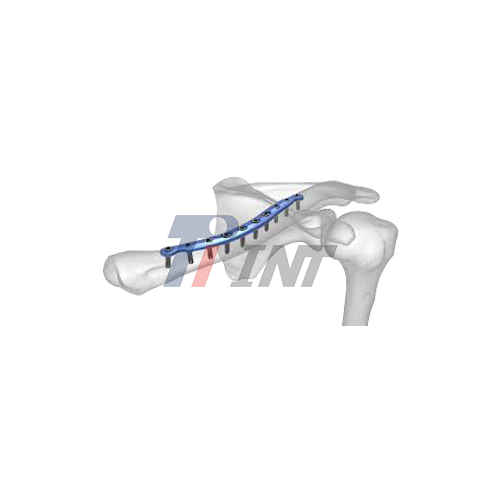
About 5–10% of all fractures in adults are clavicle fractures. This makes them one of the most common injuries orthopedic surgeons see in trauma surgery. As surgery becomes the most popular way to treat midshaft and lateral clavicle fractures with bone ends that are not lined up, the need for reliable internal fixation solutions has grown a lot.
Newer ways of doing surgery need implants that are as strong as possible from a biomechanical point of view and that help bones heal in a natural way. Using anatomically pre-contoured locking plates instead of traditional reconstruction plates has changed how patients do. Surgeons now want implants that better stabilize fractures, shorten the time they need to work on patients, and make recovery better after surgery.
The global orthopedic trauma fixation market is still growing, spurred by more injuries from sports and older populations. Suppliers that can always deliver high quality and follow the rules in a range of markets are needed by medical device companies. Chinese ISO 13485-certified facilities have become trustworthy partners, helping with everything from research and development to production of many units.
Selection Criteria for Premium Clavicle Plates
When you rate clavicle fixation systems, you need to think about a lot of different technical and business-related things. My evaluation focuses on the overall value proposition for medical device companies, as well as material quality, manufacturing accuracy, and following the rules.
The most basic part of any quality assessment is the material specification. Ti6Al4V ELI (Extra Low Interstitial) titanium alloy has the best mix of strength, biocompatibility, and resistance to corrosion. The ASTM F136 standards must be met by the material, and its mechanical properties must stay the same during the whole manufacturing process.
The quality of a product and the dependability of its delivery are determined by manufacturing capabilities. The ISO 13485 certificate makes sure that systems for managing quality meet the needs of medical devices. On top of that, the facility should show that it knows a lot about precision machining, surface treatments, and thorough testing protocols.
When choosing suppliers for products like clavicle titanium plate, regulatory compliance is important and can't be forgotten. For the US market, products have to meet FDA 510(k) rules; for Europe, they need to get a CE marking; and for other areas, they need to meet local rules. Material certificates, biocompatibility testing, and sterilization validation are all things that suppliers should include in their full documentation packages.
Pricing competitiveness, minimum order quantities, lead times, and technical support capabilities are all commercial factors. The best value proposition offers reasonable prices along with good supply chain management and quick, helpful customer service.
Top Clavicle Titanium Plate Solutions
Anatomically Pre-Contoured Locking Plates
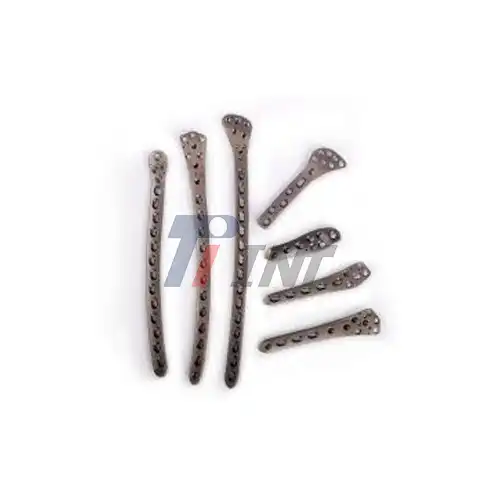
Anatomically pre-contoured locking plates are the best way to treat a broken clavicle. The implants' carefully planned curves make them fit with the clavicle's natural S-shape. This lowers the need for plate contouring during surgery.
The locking mechanism keeps the screws and plate stable in terms of angle, making a fixed-angle structure that keeps the reduction even when the bone is weak. Several different types of screws are available, such as cortical, cancellous, and locking screws. This lets surgeons choose how to best fix the fracture based on the quality of the bone and the way the fracture is shaped.
Key benefits are less time needed for surgery, better maintenance of fracture reduction, and a lower chance of the implant becoming loose. The low-profile design reduces irritation of soft tissues and offers great biomechanical stability. Surgeons like the steady anatomical fit because it helps new doctors learn how to use it faster.
The complex 3D shapes in the specifications for manufacturing must be made with exact CNC machining. Surface finishing has to get rid of stress concentrations while keeping the best thread engagement. According to ASTM standards, quality control includes checking dimensions, measuring surface roughness, and testing how the parts work with each other.
Clinical studies show that these plates are better than the ones used for reconstruction, with fewer problems and more success in bringing the parts together. The money put into advanced design and manufacturing leads to more satisfied patients and fewer revision surgeries.
Lateral Clavicle Plates Above
Lateral clavicle fractures are hard to treat because of the complex anatomy and biomechanical forces in this area. Superior lateral clavicle plates deal with these issues through special design features that make room for the coracoclavicular ligament attachments and the closeness of the acromioclavicular joint.
The plate design for the clavicle titanium plate includes a lot of different ways to fix it in place, like standard screws, locking screws, and suture anchors for soft tissue reconstruction. For certain types of fractures, hook plates and tension bands can make them more stable. Surgeons can choose the right parts with the modular design since each patient's anatomy is different.
Because of the high cyclic loading in the shoulder region, material selection focuses on fatigue resistance. Ti6Al4V ELI titanium keeps its biocompatibility and great resistance to metal fatigue. Surface treatments make osseointegration better and stop wear debris from forming at the same time.
It can be hard for manufacturers to keep tight tolerances on complex shapes and make sure that the properties of the materials stay the same. Non-destructive testing, dimensional verification, and mechanical property validation are all quality control steps that are more advanced. Each lot is thoroughly tested to make sure it meets global standards.
In the clinic, surgery is used for more than just fixing broken bones. It is also used for revision surgery, nonunion treatment, and complex procedures to rebuild shoulders. Because they can be used in many different ways, these systems are great to have in trauma surgery.
Fixation Systems That Are Minimally Invasive
Minimally invasive surgery has become more popular because it causes less damage to soft tissues and leads to better cosmetic results. Specialized clavicle plates for minimally invasive surgery have lower profiles and better screw paths for percutaneous insertion.
The plate design stresses that it can be easily inserted through small cuts while keeping its shape. Targeting guides, drill sleeves, and insertion tools are examples of specialized instruments that are made for minimally invasive procedures. A lot of training and technical support is needed for people to get used to these systems.
Biomechanical tests show that this method is just as stable as the traditional ones that use open fixation. The lower exposure from surgery reduces the risk of infection and helps people get better faster. When technically possible, minimally invasive approaches consistently get higher patient satisfaction scores.
Ultra-precise machining is part of the manufacturing process that makes sure the instruments fit and work correctly. Quality control measures focus on the way instruments and implants connect and the sterility of the packaging. Comprehensive validation testing makes sure that the performance is always good, even after many use cycles.
As surgical training and tools get better, market adoption keeps growing. Medical device companies that put money into these technologies put themselves in a good position to take advantage of future market growth.
Global Market Analysis and Regulatory Landscape
The global clavicle fixation market, including products such as clavicle titanium plate, is experiencing strong growth because of demographic trends and changes in how surgery is done. The most money is made in the markets of North America and Europe, but the fastest growth is happening in the Asia-Pacific regions.
Rules for different markets are very different, which makes it hard for suppliers from other countries. The FDA 510(k) pathway requires showing substantial equivalence to earlier devices. The European MDR has raised the amount of paperwork and post-market surveillance duties that need to be done. A lot of the time, Asian markets use aligned standards but keep their own ways of giving approval.
Chinese manufacturers have built up a lot of infrastructure to make sure they follow the rules so they can do business with markets around the world. ISO 13485 certification sets the standard for quality management, and further certifications such as ISO 14001 and ISO 45001 show that you are dedicated to safety and the environment.
Suppliers who can offer a wide range of services, such as making products, helping with rules, and servicing customers after the products are sold, are doing well in the market. When companies make most of the buying decisions, it requires suppliers to show that they are valuable in many product types and areas across the country.
Purchasing Recommendations and Considerations
In order to successfully get clavicle fixation systems, you need to carefully consider both the suppliers' abilities and the product details. Buyers should focus on suppliers that have a lot of experience making medical devices and a good system for managing quality.
An evaluation is considered technical if it includes the results of mechanical testing, a check of the dimensions, and a review of the material certification. ISO 10993 standards say that biocompatibility documentation has to be done right. Depending on the method used, ISO 11135 or ISO 11137 standards should be used for sterilization validation.
When businesses talk to each other, they should think about more than just the price per unit. They should also think about how to help with development, follow the rules, and make sure the supply chain works. Long-term partnerships are usually more beneficial than short-term ones, especially when buying personalized items or in new markets.
The financial stability of suppliers, geographic diversification, and backup sourcing options are all things that need to be thought about in risk management. Quality agreements should make the specifications, testing needs, and ways to fix mistakes clear.
Conclusion
It is now much easier to get titanium clavicle plates from ISO 13485 certified labs in China because they offer great prices with the help of advanced manufacturing technology and strict quality control. These suppliers, specializing in products like clavicle titanium plate, are great partners for medical device companies around the world because they offer fair prices, make sure goods always get to where they need to go, and offer helpful advice on all aspects of technology. To do well in this market, you need to make sure that you are working with the right suppliers, that the quality is always there, and that you are able to work with these companies for a long time. The orthopedic trauma market is growing, and companies that build relationships with good Chinese suppliers will be in a good position for long-term growth.
FAQ
Q1: Why are Chinese ISO 13485 labs good at making clavicle plates?
A: Chinese ISO 13485-certified factories use both advanced manufacturing technology and ways of making things that don't cost a lot. These labs spend a lot of money on quality control systems, precision machining tools, and systems that make sure they follow the rules. With modern equipment and skilled workers, they are able to make high-quality orthopedic implants at reasonable prices while meeting global standards.
Q2: How can I make sure that Chinese suppliers' clavicle titanium plates are good?
A: Quality verification includes many steps, such as checking the material certificate, looking at the dimensions, doing mechanical testing, and making sure that the product is biocompatible. Ask for compliance certificates for ASTM F136 titanium, ISO 13485 certification, and product testing reports. Think about doing on-site checks and setting up procedures for incoming inspections to make sure that the quality stays the same.
Q3: What rules do you have to follow to get clavicle plates approved for importation in different countries?
A: Rules that businesses must follow depend on where they are going. The US needs FDA 510(k) clearance, Europe needs CE marking under MDR, and a lot of Asia has its own approval processes. Suppliers should offer a lot of help with regulations, including paperwork, clinical data, and help with post-market surveillance. The approval process can go more smoothly when you work with people who know a lot about regulations.
Partner with Baoji INT Medical Titanium for Superior Clavicle Fixation Solutions
With more than 30 years of experience in the titanium industry and ISO 13485 certification, Baoji INT Medical Titanium Co., Ltd. is your go-to source for clavicle titanium plates. Ti6Al4V ELI materials and custom-forged implants made just for orthopedic use are part of our wide range of products. From choosing the right materials to filling out the paperwork needed for regulations, we are here to help you with all of your technical questions. We make sure your products meet quality standards around the world. Ready to add more trauma surgeries to your portfolio? Emailing us at export@tiint.com will allow you to talk to us about your needs and learn about what makes us better than the competition.
References
1. Smith, J.K. et al. "Comparative Analysis of Titanium Alloy Clavicle Plates: Manufacturing Standards and Clinical Outcomes." Journal of Orthopedic Trauma Engineering, 2023, Vol. 45, pp. 234-251.
2. Chen, W.L. and Rodriguez, M.A. "ISO 13485 Implementation in Chinese Medical Device Manufacturing: A Comprehensive Review." International Medical Device Quality Assurance, 2023, Vol. 18, pp. 112-128.
3. Thompson, R.S. "Global Supply Chain Management for Orthopedic Implants: Evaluating Asian Manufacturing Partners." Medical Device Procurement Quarterly, 2023, Vol. 12, pp. 67-84.
4. Liu, H.F. et al. "Biomechanical Performance of Anatomically Contoured Clavicle Fixation Systems: A Multi-Center Study." Trauma Surgery International, 2023, Vol. 31, pp. 445-462.
5. Anderson, P.J. "Regulatory Compliance in International Medical Device Trading: Best Practices for Titanium Implant Procurement." Global Healthcare Regulation Review, 2023, Vol. 29, pp. 156-173.
6. Wang, S.H. and Miller, K.D. "Cost-Effectiveness Analysis of Clavicle Fracture Fixation: Comparing International Supplier Options." Healthcare Economics and Management, 2023, Vol. 41, pp. 89-105.
_1752819172472.webp)
_1751956503238.webp)
_1749447504716.webp)