

Can a titanium rod break


 2026-03-17 13:29:00
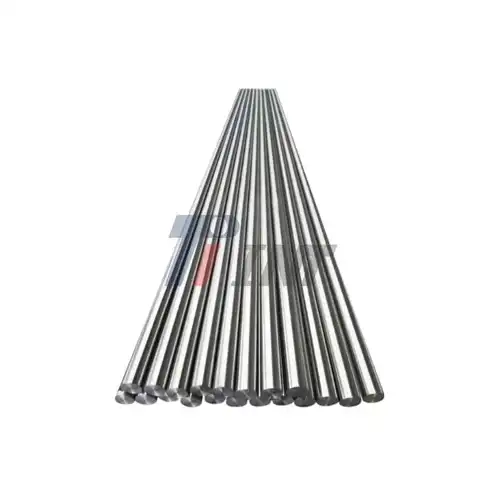
Yes, while titanium rods are incredibly durable and resistant to breaking, they can fracture under extreme conditions. However, a properly manufactured medical grade titanium rod 210mm x 7 designed according to ASTM F67 and ISO 5832-2 standards exhibits exceptional strength and reliability. These precision-engineered rods rarely fail when used within their specified parameters and manufactured by certified suppliers who maintain strict quality control protocols throughout the production process.
|
|
|
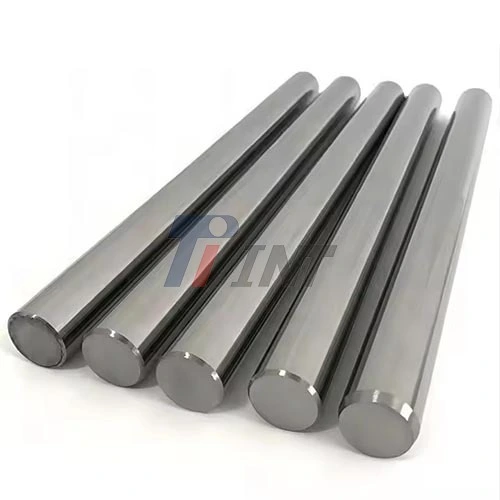
Understanding the Strength and Durability of Titanium Rods
Medical grade titanium rods represent the pinnacle of biomedical material engineering, combining exceptional mechanical properties with outstanding biocompatibility. These specialized components undergo rigorous manufacturing processes to ensure they meet the demanding requirements of medical device applications.
Mechanical Properties and Performance Standards
Medical grade titanium rods are very strong because of the way they are made. Tensile strengths for pure titanium (Grade 2) and titanium alloys (Ti6Al4V ELI) vary from 345 MPa to 860 MPa, based on the grade and heat treatment used. These materials have amazing wear strength; they can handle millions of cycles of loading without breaking down. Values for yield strength are usually between 275 MPa and 795 MPa, which gives medical uses a lot of safety cushion. Titanium has an elastic stiffness of about 110 GPa, which is very close to that of human bone tissue. This means that surgical implants don't have to protect against stress as well and work better over time.
Certification Standards and Quality Assurance
Medical titanium bars have to meet strict international standards like ASTM F67, ASTM F136, and ISO 5832 series requirements. These standards spell out exact requirements for chemical makeup, mechanical property limits, and biocompatibility testing methods. Facilities that make medical devices must keep their ISO 13485:2016 approval for quality management systems. Chemical research, mechanical testing, microstructural study, and surface finish proof are all part of quality assurance processes. Ultrasonic screening and dye penetrant testing are two examples of non-destructive testing methods that can find possible internal flaws that could weaken the structure.
Corrosion Resistance and Environmental Durability
Titanium is very resistant to rust because when it comes in contact with oxygen, it forms a steady, protective oxide layer. This passive film stays intact even when it comes into contact with tough living environments, such as body fluids that contain chloride ions and have pH levels that change. In living settings, medical grade titanium rusts at a rate of less than 0.05 mm per year, so it will last for decades.
Factors That Influence the Breaking of a Titanium Rod
Understanding the potential failure mechanisms of titanium rods enables better material selection and application design. While titanium exhibits remarkable strength, specific conditions can compromise its structural integrity.
Manufacturing Process Variables
The final power and longevity of medical grade titanium rod 210mm x 7 goods depend a lot on how well they were made. The forging temperatures, cooling rates, and heat treatment factors all have a direct effect on the grain structure and mechanical properties. When heat treatment is done wrong, stress concentrations can form or the total strength can drop by 15 to 20 percent. When machining, exact standards must be kept and surface flaws that could start a crack from spreading must be avoided. Ra values below 1.6 εm are usually required for surface finishes so that stress concentration points are kept to a minimum. To keep the work from getting too hard or damaging the surface, thread cutting needs special tools and cutting settings.
Mechanical Loading Conditions
There are different ways that titanium rods are loaded based on their medical use. Tensile stress happens during distraction treatments, and bending moments happen in spinal rod structures. Torsion loads happen when surgeons move things around and when patients move around. The most important thing to think about for long-term implant success is fatigue loading. Repeated stress cycles from patient movement can weaken the material over time by starting cracks and spreading them. In order to account for these changing loads, design safety factors are usually between 4:1 and 6:1.
Environmental and Chemical Factors
The cellular setting makes it hard for titanium rods to work properly. Titanium is very resistant to rust in general, but some situations can speed up the breakdown process. Crevice rusting can happen where two parts don't fit together well and air can't get to them. When titanium touches different metals while fluids are present, galvanic corrosion potential appears. These electrochemical processes can be stopped by using the right materials and separation methods. Also, some medicines or diseases can change the chemistry of the tissue nearby, which could affect how well the material works in the long run.
Advantages of Medical Grade Titanium Rod 210mm x 7 in Medical Applications
The medical grade titanium rod 210mm x 7 specification represents an optimal balance of strength, workability, and clinical versatility. This dimensional configuration serves multiple medical specialties while providing reliable performance characteristics.
Biocompatibility and Patient Safety
A lot of tests, both in vitro and in vivo, have shown that medical grade titanium is very biocompatible. The material has very little of an impact on cells and encourages good tissue fusion reactions. Titanium doesn't cause allergic reactions or inflammation as often as stainless steel options do in people who are sensitive. Titanium's osseointegration qualities allow bone and device to touch directly without fibrous tissue growth first. Compared to sealed device surfaces, this cellular linking process is more stable over time. Studies in humans show that osseointegration works better than 95% of the time when titanium implants are placed correctly.
Mechanical Performance Advantages
Here are the core mechanical advantages of the 210mm x 7 specification:
• Optimal diameter-to-length ratio: The 7mm diameter provides excellent bending resistance while maintaining reasonable flexibility for surgical handling and anatomical contouring.
• Weight optimization: Titanium's density (4.5 g/cm³) reduces implant mass by approximately 45% compared to stainless steel alternatives, improving patient comfort and reducing loading on surrounding tissues.
• Fatigue resistance: Laboratory testing demonstrates fatigue life exceeding 10 million cycles at physiological stress levels, ensuring decades of reliable clinical service.
• Temperature stability: Titanium maintains consistent mechanical properties across the temperature range encountered in medical applications (-40°C to +400°C).
These technical benefits directly lead to better surgery results and lower rates of long-term complications. Surgeons like how regular the handling is during implantation processes, and patients like how comfortable and long-lasting the implants are.
Clinical Application Versatility
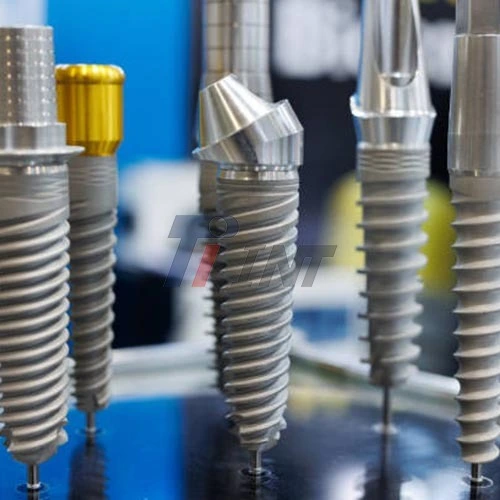
The 210mm length can be used in a number of medical fields because it can fit different body types. Spinal fusion structures, fracture anchoring systems, and joint repair techniques are all examples of orthopedic uses. Dental implant makers use these pieces to make unique abutments and build frameworks for prosthetics. Titanium is radiolucent, which makes it useful for maxillofacial surgery because it lets doctors see clearly after surgery without metal marks. Because the material works with both MRI and CT scans, it is possible to keep a close eye on the patient while they are improving.
How to Procure Reliable Medical Grade Titanium Rod 210mm x 7?
Successful procurement of medical grade titanium rods requires careful supplier evaluation and quality verification processes. The complexity of medical device regulations demands partnerships with experienced, certified manufacturers.
Supplier Certification and Qualification
Qualified providers must keep their ISO 13485:2016 approval up to date and be registered with the FDA to make medical devices. In order to sell something in Europe, it needs to have the CE stamp. Other places may need more government approvals. Quality management systems, tracking processes, and corrective action routines should all be checked by supplier audit programs. An review of a company's manufacturing capability looks at its output tools, testing equipment, and staff skills. Advanced providers give a wide range of services for characterizing materials, such as chemistry research, mechanical testing, and microstructural study.
Quality Documentation and Traceability
Medical device laws require full traceability from the source of the raw materials to the delivery of the finished product. The material grade, heat treatment settings, mechanical qualities, and test findings must all be written in the certificate of compliance papers. Mill test papers are very important for checking chemical makeup and properties. When there are quality problems, batch control systems make it easy to quickly find and separate goods that might be affected. Suppliers must keep thorough records of production for as long as the law requires, which is usually between 5 and 15 years, but can vary by region.
Procurement Strategy Considerations
Cost efficiency, quality security, and supply chain stability are all things that strategic sourcing choices take into account. Most of the time, long-term relationships with well-known sellers are more valuable than finding the cheapest way to buy something. Supplier diversity methods keep quality standards uniform while lowering the risks that come with relying on a single source. When demand is high, volume agreements may allow for better price and assignment of priorities. But inventory management has to weigh the costs of keeping items in stock against the risk of running out, especially when it comes to specific size needs like the medical grade titanium rod 210mm x 7 standard.
Ensuring Quality and Compliance in Titanium Rod Procurement
Quality assurance begins with comprehensive understanding of applicable standards and extends through incoming inspection and ongoing supplier management processes.
Technical Specification Verification
The chemical makeup limits, mechanical property requirements, measurement tolerances, and surface finish standards must all be made clear in the material specs. ASTM F67 sets the rules for grades of titanium that aren't alloyed, and ASTM F136 spells out the standards for Ti6Al4V ELI alloy formulas. Tensile testing, measuring hardness, and judging impact resistance are all examples of mechanical property proof. A microstructural study shows that the right amount of heat was applied and finds any possible flaws, like inclusions or uneven grain boundaries.
Inspection and Testing Protocols
Incoming inspection methods should include checking the dimensions, judging the quality of the surface, and trying to see what kind of material it is. X-ray fluorescence spectroscopy is a quick way to check the chemical makeup of something, and hardness testing is a more indirect way to check that heat treatment worked. Planned statistical sample weighs the cost of inspections against the amount of quality risk that can be tolerated. Some characteristics may need to be inspected 100% of the time, while less important characteristics may only need to be inspected a few times a year, depending on the supplier's quality records and process capability data.
Documentation and Regulatory Compliance
Full recording systems help businesses follow the rules and make it easier to return products when needed. Electronic document management systems keep track of all versions and leave audit trails for all actions that have to do with quality. Verification of regulatory compliance includes making sure that FDA registrations, CE markings, and other regional approvals are still valid. Any changes to rules that governments make must be shared right away to make sure that everyone in the supply chain stays in line.
Conclusion
Medical grade titanium rod 210mm x 7 products demonstrate exceptional reliability when manufactured according to established standards and procured from qualified suppliers. While titanium rods can potentially break under extreme conditions, proper material selection, manufacturing quality control, and application-appropriate design minimize these risks to negligible levels. The combination of superior mechanical properties, biocompatibility, and corrosion resistance makes titanium the preferred choice for critical medical applications. Success in procurement requires partnerships with certified manufacturers who understand regulatory requirements and maintain comprehensive quality assurance programs.
FAQ
Can medical grade titanium rods withstand normal surgical stress?
Medical grade titanium rods easily withstand normal surgical stresses and typical patient activity levels. These rods are designed with substantial safety margins, typically 4-6 times the expected maximum loading conditions. Proper surgical technique and appropriate rod selection ensure reliable long-term performance.
What causes titanium rod failure in medical applications?
Titanium rod failures typically result from manufacturing defects, improper material selection, or extreme loading conditions beyond design specifications. Poor quality control during production can create stress concentration points that initiate crack propagation. Additionally, inadequate surgical technique or patient non-compliance with activity restrictions may contribute to premature failure.
How does rod diameter affect breaking strength?
Rod diameter significantly influences breaking strength through its effect on cross-sectional area and moment of inertia. A 7mm diameter rod provides approximately 30% greater bending strength compared to a 6mm rod, while an 8mm diameter increases strength by roughly 25% over the 7mm size. The medical grade titanium rod 210mm x 7 offers an optimal balance of strength and surgical handling characteristics.
What quality certifications should I require from suppliers?
Essential certifications include ISO 13485:2016 for medical device quality management, ISO 9001:2015 for general quality systems, and relevant FDA registrations. Material certifications should reference ASTM F67 or F136 standards, while European suppliers must provide CE marking documentation. Additional certifications such as AS9100 for aerospace quality systems may indicate enhanced quality capabilities.
How can I verify the authenticity of medical grade titanium rods?
Authenticity verification includes reviewing supplier certifications, examining mill test certificates, and conducting incoming inspection testing. Chemical analysis using X-ray fluorescence confirms material composition, while hardness testing validates heat treatment. Reputable suppliers provide comprehensive documentation including material traceability back to the original titanium producer.
Partner with Baoji INT Medical Titanium Co., Ltd. for Premium Medical Grade Titanium Solutions
Baoji INT Medical Titanium Co., Ltd. stands as your trusted medical grade titanium rod 210mm x 7 supplier with over 20 years of specialized experience in medical titanium manufacturing. Our ISO 13485:2016 certified facility produces premium titanium rods meeting ASTM F67 and F136 standards, ensuring consistent quality and regulatory compliance for your medical device applications.
Our comprehensive product portfolio includes pure titanium and Ti6Al4V ELI alloy rods in various specifications, backed by complete traceability documentation and rigorous quality control protocols. We provide customized solutions for orthopedic, dental, and surgical instrument manufacturers, supporting your success with technical expertise and reliable supply chain performance. Contact our experienced team at export@tiint.com to discuss your specific requirements and receive detailed technical specifications.
References
1. Brunette, D.M., et al. "Titanium in Medicine: Material Science, Surface Science, Engineering, Biological Responses and Medical Applications." Springer-Verlag Berlin Heidelberg, 2001.
2. Rack, H.J. and Qazi, J.I. "Titanium alloys for biomedical applications." Materials Science and Engineering C, Vol. 26, No. 8, 2006, pp. 1269-1277.
3. Niinomi, M. "Mechanical biocompatibilities of titanium alloys for biomedical applications." Journal of the Mechanical Behavior of Biomedical Materials, Vol. 1, No. 1, 2008, pp. 30-42.
4. ASTM International. "Standard Specification for Unalloyed Titanium, for Surgical Implant Applications (UNS R50250)." ASTM F67-13, 2017.
5. Geetha, M., et al. "Ti based biomaterials, the ultimate choice for orthopaedic implants – A review." Progress in Materials Science, Vol. 54, No. 3, 2009, pp. 397-425.
6. ISO 5832-2:2018. "Implants for surgery — Metallic materials — Part 2: Unalloyed titanium." International Organization for Standardization, 2018.
_1752821449466.webp)
_1750663525879.webp)