
Can you laser cut titanium sheet?


 2026-04-09 08:42:09
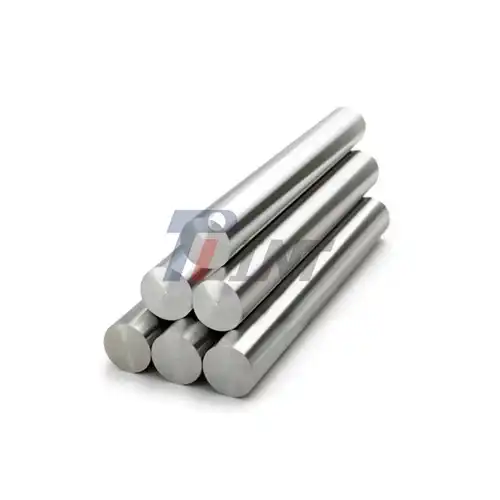
Yes, you absolutely can laser cut titanium sheet, including the aerospace-grade Titanium Sheet AMS 4911. Modern laser cutting technology has advanced significantly to handle titanium's unique properties effectively. Titanium Sheet AMS 4911, which represents the Ti-6Al-4V Grade 5 alloy in aerospace applications, responds well to laser cutting when proper parameters are applied. The process requires specialized equipment with adequate power density, appropriate assist gases like argon or nitrogen, and precise control of cutting speeds to manage titanium's high reflectivity and thermal conductivity.
|
|
|
Comprehending Titanium Sheet AMS 4911: Properties and Specifications
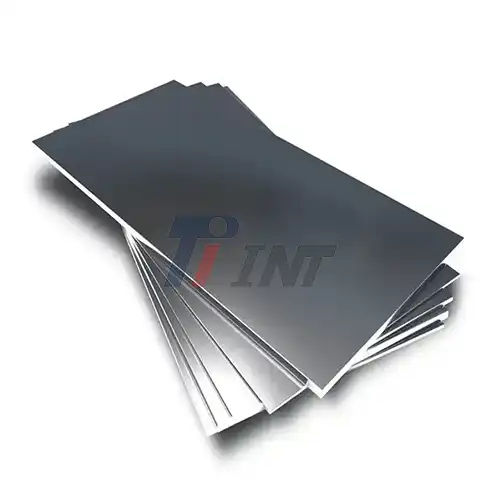
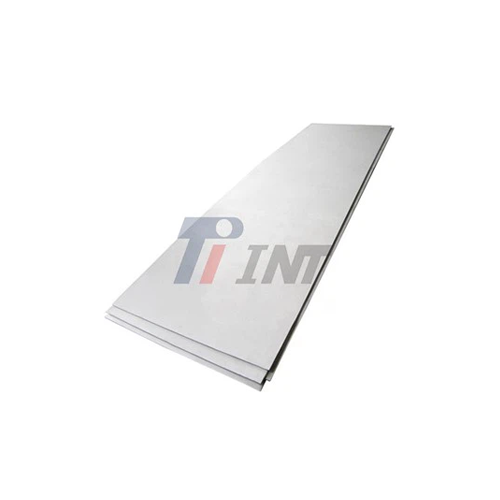
Titanium Sheet AMS 4911 is the most effective method for organizations that manufacture airplanes to get titanium metal of grade 5 Ti-6Al-4V. This remarkable chemical is responsible for producing more than half of all the titanium that is used in the world. This is the reason why it is referred to as the "driver" of the aviation industry. This particular design, in contrast to the majority of commercial grades, is subjected to stringent handling standards in order to guarantee that the microstructure is regular and that it has excellent fatigue resistance.
Chemical Composition and Mechanical Properties
It is the precise management of the material's chemistry that is responsible for the tremendous performance of the material. Aluminum makes up between 5.50 and 6.75% of the alloy, while vanadium makes up between 3.50 and 4.50% of the alloy. In order to prevent it from becoming weak, it also has very low quantities of impurities, such as nitrogen that is below 0.05%, carbon that is below 0.08%, and hydrogen that is below 0.015 percent. As a result of these stringent standards, the material is guaranteed to always possess the exact properties that are required for significant applications.
The metal is able to stretch no more than 10% when it is in the annealed condition, which also provides it with a minimum tensile strength of 134 ksi (924 MPa) and a minimum yield strength of 126 ksi (869 MPa). In terms of mechanics, the annealed state offers the metal these properties. The material has an elastic stiffness of about 16.5 x 10^6 pounds per square inch (114 gigapascals), which provides it with the strength-to-weight ratio that makes it indispensable for inclusion in airplanes.
Physical Characteristics and Thermal Properties
The material has a density of 4.43 g/cm3, which means that it weighs around sixty percent as much as steel. As a result, it is lightweight without sacrificing any of its strength. Phase transition occurs at a temperature of 1825 degrees Fahrenheit (996 degrees Celsius), which is the beta transus temperature. The temperature remains steady during operation up to 750 degrees Fahrenheit (399 degrees Celsius). The settings for laser cutting and the management of heat-affected zones are directly impacted by these thermal qualities, which have a direct impact on the settings.
The microstructure standard requires that the primary alpha phase be lengthened and the alpha phase to be equiaxed, and the beta matrix to be altered. Because of this, the fatigue qualities are maintained at the same level, which is essential for applications in the aviation industry. A further benefit of this meticulously maintained microstructure is that it makes the material extremely simple to shape once it has been heated. This enables the material to be used for the formation of complex forms via the processes of superplastic forming and diffusion bonding.
Can You Laser Cut Titanium Sheets? Technical Considerations and Best Practices
Laser cutting of Titanium Sheet AMS 4911 requires understanding both the unique challenges and advantages associated with this material. The process is not only feasible but increasingly favored for precision fabrication applications demanding tight tolerances and high-quality edge finishes.
Optimal Cutting Parameters and Equipment Requirements
In order for laser cutting to function properly, it is essential to acquire the appropriate instruments and settings. When it comes to thicknesses up to 12 millimeters, fiber lasers with power ratings ranging from 3 to 6 kilowatts often perform the best. Due to the fact that titanium is very reflective, it requires wavelengths that are around 1.06 micrometers. Fiber lasers are an effective method for obtaining wavelengths of this kind. Generally speaking, cutting rates range anywhere from one to four meters per minute; however, this is contingent upon the breadth of the edge that you like as well as the quality of the edge.
When it comes to the accuracy of the cut, the kind of assist gas that you employ is of utmost significance. Nitrogen may speed up the cutting process, but it leaves a slightly tinted surface behind. Argon, on the other hand, produces clean cuts with very little tendency to rust. It is not recommended to utilize oxygen in the vicinity of titanium because of its reactive nature. Oxygen may cause an excessive amount of heat to accumulate, which can cause the characteristics of the metal to get damaged in the region that is heated.
Managing Heat-Affected Zones and Cut Quality
Titanium has a poor thermal conductivity of around 7 W/mK, which results in a restricted warmth that has to be carefully maintained by careful management. The heat-affected zone is typically located between 0.1 and 0.3 millimeters from the edge of the cut, however this distance might vary depending on the processing conditions. By carefully optimizing the parameters, it is feasible to keep this zone as small as possible while still satisfying the quality criteria that are required for aviation applications.
It is necessary for airplane parts to adhere to edge quality requirements, which stipulate that the surface sharpness must be maintained under control and that very little dross should accumulate. In order to achieve Ra values that are lower than 6.3 micrometers, it is necessary to optimize power, speed, and gas pressure in a manner that brings them into equilibrium. Innovative control systems that are able to react to changing circumstances monitor the cutting conditions in real time and adjust the settings accordingly in order to maintain the same level of quality regardless of the material being used.
Comparing AMS 4911 Titanium Sheet with Other Materials for Laser Cutting
The product's functionality and the efficiency with which it is manufactured are both significantly impacted by the selection of the appropriate materials. When those who work in purchasing are aware of how various materials respond to laser cutting, they are better able to make intelligent decisions that are tailored to the requirements of the application.
AMS 4911 versus Alternative Titanium Grades
AMS 4911's annealed state is better for making operations than AMS 4912, which is the same Ti-6Al-4V metal but can be processed in different ways. It also has better laser cutting properties. Cutting reaction is less likely to change because the microstructure is controlled. This means that the quality of the edge is more stable across production runs.
The commercial pure (CP) grades of titanium are easy to machine, but they aren't strong enough for structural aircraft uses. Grade 2 CP titanium is weaker, so it cuts more easily. However, it can't match the performance range needed for demanding uses, which is where Titanium Sheet AMS 4911 shines.
Performance Comparison with Alternative Materials
Due to the fact that it is simple to cut using a laser, 316L stainless steel is often used in medical settings. However, this material is not biocompatible and does not resist corrosion as effectively as titanium does. Stainless steel is not suited for use in airplanes due to the fact that it is heavier and has poorer fatigue qualities than titanium. Despite the fact that stainless steel can be cut two to three times quicker than titanium, it is.
In order to prevent the layers from splitting apart when cutting carbon fiber composites, you will need to use specialized laser equipment. Cutting carbon fiber composites is significantly different from cutting other materials. Titanium metals are superior than carbon fiber for the construction of essential structural components since carbon fiber is unable to withstand damage or be repaired. Carbon fiber has a high stiffness-to-weight ratio. Additionally, metals are superior for a variety of applications due to the fact that they are simpler to deal with and do not create any harm to the environment when they are chopped.
Procurement Considerations for AMS 4911 Titanium Sheet in B2B Context
If you want to be successful in purchasing aerospace-grade titanium, you need to be aware of what the seller is capable of doing, what certifications they need, and how to manage logistics in a manner that maintains a high level of quality and material monitoring throughout the supply chain.
Supplier Qualification and Certification Requirements
Not only must qualified suppliers demonstrate that they adhere to AS9100 aircraft quality control systems, but they must also demonstrate that they have ISO 9001 certification. It is necessary for materials to have a chemical study, evidence of their mechanical qualities, and evidence of their grain size in order for them to fulfill the requirements for certification. Traceability requirements include the whole of the process, beginning with the procurement of raw materials and ending with the delivery of the final product. The completion of this ensures that all of the necessary documentation for aircraft usage is in order.
For the purpose of choosing a supplier, it is important to take into consideration their capacity for manufacturing, wait times, and professional assistance. Suppliers that have been in business for a considerable amount of time often retain things in store that are standard sizes and are also able to do unique handling. Lead times for standard items range from four to eight weeks, while lead times for bespoke sizes might range anywhere from eight to twelve weeks, depending on the workload of the supplier and the particulars of the order.
Value-Added Services and Supply Chain Integration
Leading providers do more than just give materials. They also offer services like precision cutting, surface treatment, and quality testing. These value-added services make the supply chain simpler and more reliable at the same time. For difficult applications, technical support features like helping with material choice and processing suggestions are very useful.
Pricing for materials such as Titanium Sheet AMS 4911 is typically based on minimum order quantities, with long-term agreements often securing volume discounts. A more complete understanding of procurement economics comes from evaluating total cost of ownership, which includes shipping, inventory carrying, and quality assurance expenses. Strategic collaboration with qualified suppliers frequently results in preferential pricing and priority allocation during periods of high demand.
Why Choose AMS 4911 Titanium Sheet for Your Laser Cutting Projects?
Because aerospace-grade titanium has a unique set of properties, it is the best choice for uses where efficiency cannot be sacrificed. Knowing these benefits helps make the decision to buy high-quality materials and specialty processing tools make sense.
Superior Performance Characteristics
The great strength-to-weight ratio gets rid of the usual trade-off between better structure performance and extra weight. Long-term dependability in high-cycle uses is ensured by fatigue resistance topping 100 million cycles at the right stress levels. Resistance to corrosion in aircraft fluids, hydraulics, and the environment leads to operating durability that greatly extends the life cycles of parts.
Because it is biocompatible, this material can be used in medical devices. Its non-magnetic qualities keep it from interfering with electrical systems that are sensitive. The higher price is worth it because these many benefits make the product work better and last longer in tough situations.
Future Trends and Technology Integration
Cutting titanium materials is getting easier as laser technology keeps getting better. Cutting quality and processing speed will get even better with the help of adaptive control systems, real-time tracking, and the use of artificial intelligence. As the manufacturing industry moves toward integrating additive manufacturing, mixed processing methods that use both laser cutting and 3D printing are becoming more viable.
Sustainability factors are becoming more important when choosing materials, and titanium's ability to be recycled fits with environmental goals. The material lasts longer, so it doesn't need to be replaced as often. This helps with lifetime sustainability measures that are important to environmentally conscious businesses.
Conclusion
Laser cutting Titanium Sheet AMS 4911 is a mature and reliable production method that can provide the accuracy and quality needed for high-performance and aerospace uses. As laser technology improves, the material's unique properties make it a more appealing choice for makers who want to improve speed while still keeping high quality standards. To be successful, you need to know about the technical issues, choose reliable sources, and set up the right processing settings. However, the investment is worth it because the product works better and lasts longer.
FAQ
Q1: What thickness ranges work best for laser cutting titanium sheets?
A: Titanium pieces with a thickness of 0.5 mm to 25 mm can be cut with a laser. The best balance of cutting speed and edge quality is found in sheets that are between 1 and 6 mm thick. For most uses, it is still possible to cut thicker pieces, but it takes more powerful lasers and more time.
Q2: How do you prevent distortion during titanium laser cutting?
A: Distortion can be avoided with the right fixtures, cutting patterns, and heat input. Using the right clamps without overstretching the material, using lead-in/lead-out techniques, and keeping the cutting speeds constant can help reduce the buildup of thermal stress that leads to warping.
Q3: What certifications should I look for when sourcing AMS 4911 material?
A: Look for providers that have AS9100 aerospace approval, material test certificates that show they meet AMS 4911 requirements, and full paperwork that shows how the goods were made. Each shipment should have a chemical study, a mechanical property verification, and a grain size record.
Q4: Can laser cutting affect the metallurgical properties of titanium?
A: When laser cutting is done right, it leaves behind very few heat-affected areas that have almost no effect on the bulk qualities of the material. The narrow HAZ usually only goes out 0.1 to 0.3 mm from the cut edge, and it can be taken off during the next step of the process if needed for important uses.
Q5: What are the cost considerations for titanium sheet laser cutting?
A: Because of the unique needs, the initial costs of the tools are higher, but the costs of running it are still about the same as other precision cutting methods. Material costs make up the biggest part of costs, so efficient building and reducing waste are very important for making the business work.
Partner with Baoji INT Medical Titanium Co., Ltd. for Your Titanium Sheet Requirements
Baoji INT Medical Titanium Co., Ltd. has been working in the titanium business for more than 30 years and can help you make medical and military devices. As a Titanium Sheet AMS 4911 supplier, we keep all the necessary certifications up to date, such as ISO 9001:2015, ISO 13485:2016, and CE safety certification. This makes sure that the quality of our materials meets the strictest requirements. We have a huge selection of bars, wires, plates, and custom-forged products made from different types of titanium. We can process these materials quickly and accurately, and we have strict quality control systems in place. Email our technical team at export@tiint.com to talk about your particular needs and find out how our track record of on-time delivery and technical support can help your manufacturing processes.
References
1. Boyer, R.R. "An Overview on the Use of Titanium in the Aerospace Industry." Materials Science and Engineering: A, Volume 213, 1996.
2. Peters, M., Hemptenmacher, J., Kumpfert, J., and Leyens, C. "Structure and Properties of Titanium and Titanium Alloys." Titanium and Titanium Alloys: Fundamentals and Applications, 2003.
3. Lutjering, G. and Williams, J.C. "Titanium Engineering Materials and Processes." Springer-Verlag Berlin Heidelberg, Second Edition, 2007.
4. Donachie, Matthew J. "Titanium: A Technical Guide." ASM International Materials Park, Ohio, Second Edition, 2000.
5. Leyens, C. and Peters, M. "Titanium and Titanium Alloys: Fundamentals and Applications." Wiley-VCH Verlag GmbH & Co., 2003.
6. American Society for Testing and Materials. "ASTM B265 Standard Specification for Titanium and Titanium Alloy Strip, Sheet, and Plate." ASTM International, 2020.
_1753859685128.webp)
_1750668405487.webp)