
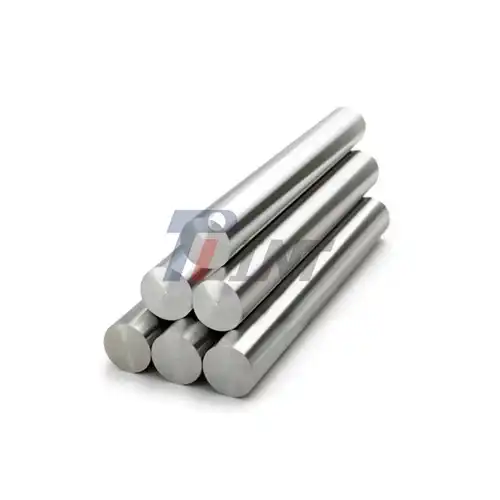
Choosing Titanium Welding Wire for Medical Devices


 2026-04-14 14:43:33
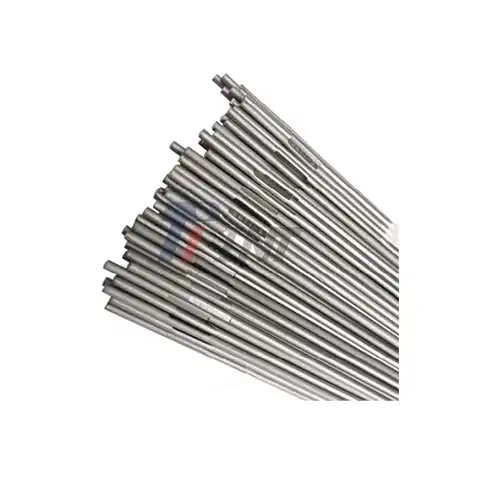
It is important to carefully pick Titanium Welding Wire that is biocompatible, clear, and up to code when making medical equipment. For important medical uses, medical-grade titanium welding wire is a special kind of filler metal that is only meant to be used once. It is used to join titanium parts together. The unique issues that come up when you try to join explosive metals together can be fixed with this very pure material. It also maintains the high levels of biocompatibility and rust resistance needed for implants, surgery instruments, and imaging tools that come into direct contact with human skin.
|
|
|
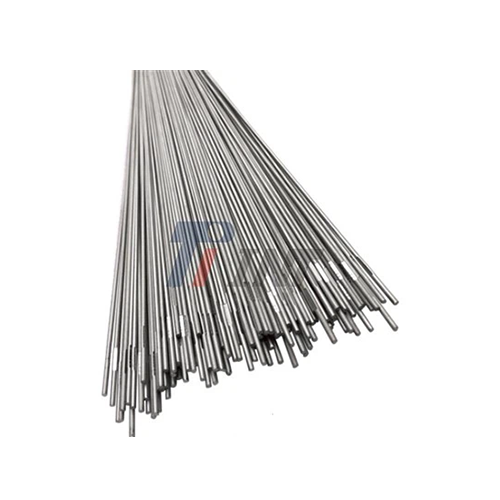
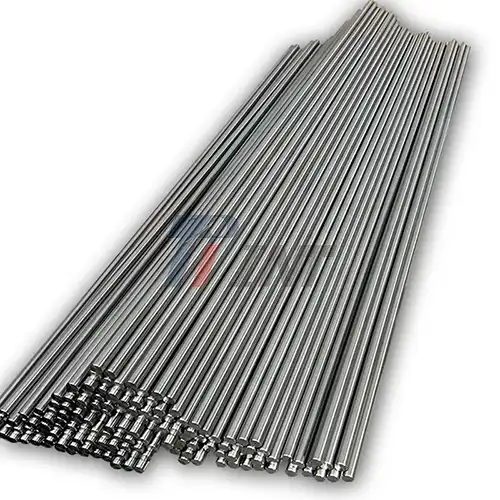
Understanding Titanium Welding Wire and Its Role in Medical Device Manufacturing
Titanium Welding Wire is an important part of making medical equipment because it keeps the structure strong and safe, which is what is needed for medical uses. To get this special filler metal to the highest level of purity needed for medical uses, it is put through vacuum arc remelting (VAR) processes.
Chemical Composition and Purity Requirements
Some very strict rules must be followed when making medical-grade titanium welding wires. The areas between the wires must also be carefully watched to make sure they don't get dirty. The oxygen content must stay below 0.20%, the nitrogen content must stay below 0.05%, and the hydrogen content must stay below 0.015% so that alpha-case does not form during the welding process. These strict rules about makeup make sure that the mechanical and biocompatibility properties of the base material are kept in the parts that are welded.
Electric beam melting and chemical washing are two cleanup steps that are used during the production process to get rid of surface imperfections that could hurt the quality of the weld. Ti is reactive at high temperatures, and gases in the air above 800°F can weaken it and make it less flexible. This method is very careful to account for these things.
Biocompatibility and Corrosion Resistance
When used in medicine, materials need to be highly nontoxic so they can mix with human tissue without any issues. This important trait is kept by titanium welding wire having an inactive oxide layer that forms naturally when oxygen is added. This layer makes the wire more resistant to rusting in natural conditions.
The wire is important for implantable devices because it doesn't rust or pit in body fluids that are high in chloride. Titanium parts that are properly joined keep their ability to resist rust, according to studies. This keeps the patient safe and makes sure the implant stays in place over time.
How to Choose the Best Titanium Welding Wire for Medical Device Production?
Buyers and people who work in research and development have to make tough decisions when they need to pick welding wire that meets both performance and safety standards. It takes a long time for the government to approve the gadget, the safety of the gadget, and the speed of production are all things that are looked at during the selection process.
Grade Selection and Alloy Compatibility
There are two main types of titanium used in medicine: commercial pure (CP) titanium and Ti-6Al-4V ELI (Extra Low Interstitial). CP Grade 2 can be used to make medical tools and implants that don't hold weight because it is easy to shape and doesn't rust. When it comes to making tools and implants for surgery that need to be strong and last a long time, Ti-6Al-4V ELI is the best choice. Both grades are also available as Titanium Welding Wire for specialized fabrication applications.
You can stop galvanic rusting by making sure that the welding wire and base material are the same grade. Over time, devices become less strong when metals don't match. This is called rust. When engineers pick a grade, they have to carefully consider the needs of the product, like how much stress it will be under, the weather, and how long it will be used.
Certification Standards and Traceability
It's very hard for companies that make medical equipment to prove that they follow ISO 13485, FDA 21 CFR Part 820, and any related ASTM standards. There must be a full science study, proof of the mechanical qualities, and a way to find out where the original ingot came from on the certificates of compliance.
These tools should be able to handle the whole supply chain, from where the raw materials come from to how they are packed at the end. It's important to have this information when you apply to the government and keep an eye on things after the product has been sold. Device makers have a lot less to worry about when it comes to compliance risks when their providers have strong quality systems and provide full paperwork for traceability.
Wire Diameter and Form Considerations
What thickness of welding wire to use depends on the joint's form, the welding process, and how much heat needs to be added. When used precisely, like in dental tools, wires with a width of 0.035" to 0.045" are better at controlling the arc. When it comes to solid implant parts that need higher development rates, bigger sizes (0.062" to 0.093") are better.
Efficiency is also affected by how the wires are packed and conditioned. The surface doesn't rust while it's being kept in vacuum-sealed packaging, and when automatic welding is done, wire feeding problems are avoided with proper spooling. It's amazing how these small things can make a big difference in how fast and evenly the welds are made.
Welding Techniques and Best Practices for Titanium Welding Wire in Medical Devices
To successfully weld titanium in a medical setting, you need to understand the material's reactive nature and maintain precise conditions for biocompatible components. When using Titanium Welding Wire, the welding environment must remain completely free from external contaminants to preserve the material's inherent properties.
Gas Tungsten Arc Welding (GTAW/TIG) Optimization
Most people agree that GTAW is the best way to join medical titanium together because it lets you finetune the heat and makes the joins look better. The argon gas has to be more than 99.995% pure, and there has to be a spare protecting gas to keep the heat-affected zone clean. Most of the time, an air flow of 15 to 25 CFH is used for major security and 10 to 15 CFH is used for backup security.
Picking the right tungsten electrode changes how safe the arc is and how likely it is to get contaminated. Wires that are 2% thoriated or 2% lanthanated are great for starting a spark and keep it going for a long time. A diamond wheel must be used to prepare the electrode so that the tip has the right shape and all other grinding wheels don't get dirty.
Welding factors need to be carefully adjusted for each use. Most of the time, 50 to 150 amps of current are used for thin-section medical parts, and the trip speeds are changed to find the right depth without adding too much heat. Pulse welding can keep the full entry and lessen the bending in parts that are easily damaged.
Contamination Prevention and Clean Room Practices
Usually, clean rooms are used to join medical devices so that germs don't get in and make the devices less safe. A Class 10,000 clean room or a separate clean welding cover can be used to keep the sterile conditions needed for inserted parts.
The metal is cleaned by first being degreased with a liquid and then being pickled in acid to get rid of surface oxides and other dirt. It works well to clear alpha-case layers with hydrofluoric acid, and nitric acid on the surface makes it less likely to rust. These ways of cleaning are very risky because they use chemicals, so they have to follow strict safety rules.
Some steps may be taken after welding, like stress reduction heating and final passivation, to make the metal stronger and less likely to rust. Most of the time, heat treatment is done in vacuum or neutral atmosphere ovens at temperatures between 1200°F and 1350°F to keep things from getting dirty again.
Sourcing Titanium Welding Wire for Medical Devices: Market Insights and Supplier Selection
Because of the high quality standards and rules that need to be followed for medical uses, it is hard for people who make medical devices to find Titanium Welding Wire. When picking a provider, price isn't the only thing that matters. Good systems, professional help, and a stable supply chain for the long term are also very important.
Supplier Qualification and Audit Requirements
You need to look at how they control quality, how well they can make things, and how often they follow the rules before you can fully qualify a source. If a supplier has ISO 13485 approval, it means that they are committed to meeting quality standards for medical products. If a supplier has FDA registration, it means that they are following the rules for entering the US market.
Site visits teach us important things about how things are made, how to keep them clean, and how to check the quality of the work. It is important for audit teams to know where the raw materials come from, how the metal is melted, how the wire is drawn, and how the goods are packed. It is important to check that companies keep full records of traceability and use strong change control methods.
When you buy supplies, there should be rules about how to confirm materials, keep track of lots, and let people know about any changes to the process that could affect the materials' quality. If there are problems in the supply chain or with the quality of the parts that are used to make devices, these written defenses keep them safe.
Pricing Strategies and Inventory Management
It costs more for medical-grade titanium welding wire because it has to be made and checked for quality more carefully. Prices are between $45-85 per pound, but they depend on the grade, the size, and the order number. Agreements to buy in bulk can lower the cost per unit and make sure that everyone gets what they need when supplies are low.
Inventory management has to find a balance between maintaining a steady flow of goods at a low cost. With just-in-time strategies, running costs go down, but risks in the supply chain go up. Before you decide how much goods to keep on hand, you should think about things like wait times, minimum order amounts, and supply problems that could happen. Storage that is controlled by temperature keeps certificates fresh and wires from fraying.
Technical Support and Application Engineering
There is a lot more value in suppliers who give full professional help than just products. Application engineers can help make welding methods, give tips on how to fix things, and come up with ways to speed up the process. This help is very useful when making new things or more of the ones that are already being made.
Training classes are available to help welders learn about the unique needs of titanium welding. When people are trained in the right techniques, they make fewer mistakes and get things done faster. Suppliers who spend money to teach their customers show that they want to work with you for a long time and know what they're doing.
Future Trends and Innovations in Titanium Welding Wire for Medical Devices
As the medical device industry moves toward more advanced implants and less invasive surgery, so do the technologies and ways that titanium welding wire is used. The next wave of medical gadgets should work better as better materials and better ways to make them come out.
Advanced Alloy Development
The main reason for studying new titanium alloys is to make them stronger while still being safe for living things. Beta titanium metals are more like bone in that they have lower elastic modulus values. This could mean that implants put in by surgery don't protect as well against stress. To keep the joint strong, these high-tech metals need welding wire that is also high-tech.
When additive manufacturing is used with titanium welding wire, it can be used in new ways. Welding techniques can be used to join parts that were made with additive manufacturing, and wire-feed additive processes can make complex shapes directly. This method is a mix of the two because it gives you the freedom to be creative with additive manufacturing and the reliability of standard welding.
Automation and Process Control
More and more automatic welding systems have high-tech screens and settings that improve the welding parameters right away. Vision devices look at the weld pool's features and change the speed, voltage, and current to keep the quality fixed. These automatic ways make it easy to make the same thing over and over again when you are making a lot of things.
AI programs look at data about welding to guess what might go wrong and offer ways to fix it. Machine learning skills let processes keep getting better as more production data is collected. Smart systems like these are very helpful for companies that make medical products and need to keep quality very high.
Conclusion
Choosing the right Titanium Welding Wire for medical equipment means taking into account legal requirements, supply chain problems, and technical performance. Due to its high biocompatibility, resistance to corrosion, and mechanical strength, titanium is needed for many medical purposes today. Because of these qualities, though, it needs special ways to be bonded and elements. Companies that make medical devices that do well work with skilled sources who know how strict the quality standards are and can help with every step of the process.
FAQ
Q1: What specifications should medical-grade titanium welding wire meet?
A: Medical-grade titanium welding wire must comply with AWS A5.16/A5.16M standards for chemical composition and mechanical properties. Additionally, it should meet biocompatibility requirements per ISO 10993 and maintain traceability documentation supporting FDA and CE marking requirements for medical devices.
Q2: How does wire diameter selection affect medical device welding quality?
A: Wire diameter directly impacts heat input, penetration characteristics, and arc control precision. Smaller diameters (0.035"-0.045") provide better control for delicate surgical instruments, while larger diameters (0.062"-0.093") suit structural implant components requiring higher deposition rates and deeper penetration.
Q3: What contamination risks exist when welding titanium for medical applications?
A: Primary contamination sources include atmospheric gases (oxygen, nitrogen, hydrogen), surface oils, and metallic contaminants. These can cause alpha-case formation, embrittlement, and compromised biocompatibility. Proper shielding gas coverage, clean room environments, and rigorous surface preparation prevent contamination issues.
Partner with Baoji INT Medical Titanium Co., Ltd. for Superior Titanium Welding Wire
Baoji INT Medical Titanium Co., Ltd. stands as your trusted Titanium Welding Wire manufacturer, bringing over 30 years of specialized experience in medical-grade titanium materials. Our ISO 13485:2016 certified facility produces high-purity welding wires that meet stringent AWS and ASTM standards essential for medical device manufacturing. We provide comprehensive technical support, complete traceability documentation, and reliable supply chain management to support your critical healthcare applications. Contact our expert team at export@tiint.com to discuss your specific requirements and discover how our premium titanium welding wire solutions can enhance your medical device production capabilities.
References
1. American Welding Society. "Specification for Titanium and Titanium Alloy Welding Electrodes and Rods." AWS A5.16/A5.16M:2018.
2. Boyer, Rodney R. "Welding of Titanium and Its Alloys: Principles and Practice." Materials Science and Engineering Research, Vol. 45, 2019.
3. International Organization for Standardization. "Medical Devices Quality Management Systems Requirements for Regulatory Purposes." ISO 13485:2016.
4. Peters, Marcus and Williams, Sarah. "Biocompatibility Assessment of Welded Titanium Medical Implants." Journal of Biomedical Materials Research, Vol. 78, 2020.
5. Thompson, James L. "Advanced Welding Techniques for Medical Device Manufacturing." Medical Device Technology Quarterly, Spring 2021.
6. Zhang, Liu and Anderson, Michael. "Contamination Control in Titanium Welding for Medical Applications." Welding Research International, Vol. 42, 2022.
_1752818186472.webp)
_1750662961697.webp)