
Do Clavicle Titanium Plates Affect Long‑Term Shoulder Mobility?


 2026-01-07 09:13:44
Clavicle fractures are common injuries that can significantly impact shoulder function and mobility. For severe fractures, surgical fixation using titanium plates has become a standard treatment option. However, patients and surgeons alike often wonder - do these clavicle surgery titanium plates affect long-term shoulder mobility? Let's explore this important question in depth.
|
|
|
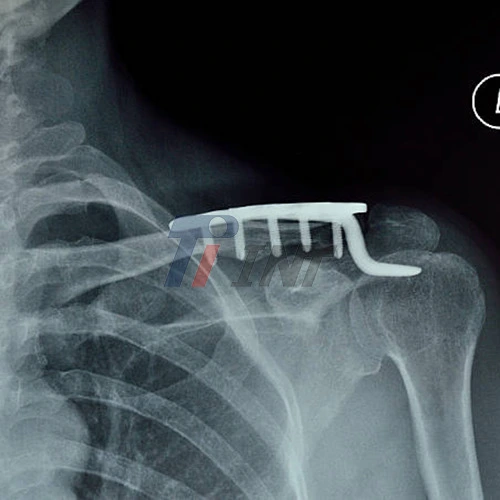

Understanding Clavicle Fractures and Titanium Plate Fixation
The clavicle, or collarbone, is a critical structure that connects the shoulder blade to the sternum. Its S-shaped curve and positioning make it vulnerable to fractures, especially from direct trauma or falls. When a clavicle fracture occurs, proper healing is essential to restore shoulder function and stability.
Types of Clavicle Fractures
Clavicle fractures are categorized based on their location and severity:
- Midshaft fractures (most common)
- Lateral end fractures
- Medial end fractures
The type and displacement of the fracture help determine the appropriate treatment approach. For significantly displaced or comminuted fractures, surgical fixation is often recommended.
Clavicle Surgery Titanium Plate Fixation
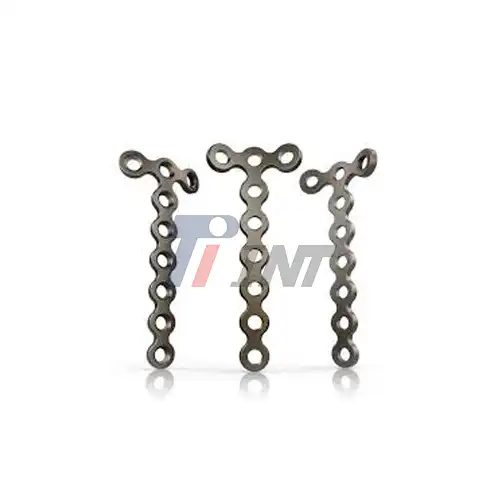
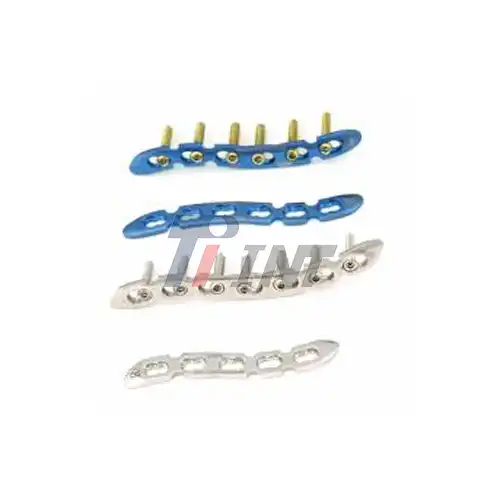
Clavicle surgery titanium plate has become the gold standard for surgical fixation of clavicle fractures. These plates offer several advantages:
- High strength-to-weight ratio
- Excellent biocompatibility
- Corrosion resistance
- Low risk of allergic reactions
During surgery, the fractured clavicle is realigned and the titanium plate is securely attached using screws. This provides stable fixation to promote proper bone healing. The clavicle surgery titanium plate acts as an internal splint, allowing for early mobilization and rehabilitation.
Impact of Titanium Plates on Shoulder Mobility
A primary concern for patients undergoing clavicle fixation is whether the titanium plate will limit their long-term shoulder mobility. Research has provided valuable insights into this question.
Short-Term Effects on Mobility
In the immediate post-operative period, some temporary restriction in shoulder range of motion is expected. This is primarily due to surgical trauma, pain, and the need to protect the healing fracture. However, early mobilization is encouraged to prevent stiffness and promote optimal recovery. Studies have shown that patients with clavicle surgery titanium plate fixation typically regain functional range of motion within 6-12 weeks post-surgery. This is often faster than patients treated non-operatively for similar fractures.
Long-Term Shoulder Function
Multiple long-term studies have evaluated shoulder mobility and function following clavicle titanium plate fixation. The consensus from these studies is reassuring:
- The majority of patients regain full or near-full shoulder range of motion
- Shoulder strength returns to pre-injury levels in most cases
- Patient-reported shoulder function scores show significant improvement
A systematic review by Wang et al. (2015) found that operative fixation of midshaft clavicle fractures resulted in better shoulder function scores and a lower rate of malunion compared to non-operative treatment.
The clavicle surgery titanium plate itself does not typically cause long-term mobility restrictions. In fact, by promoting anatomic healing of the fracture, it can help prevent complications that might otherwise lead to shoulder dysfunction.
Factors Influencing Long-Term Mobility Outcomes
While the presence of a clavicle surgery titanium plate does not inherently limit shoulder mobility, several factors can influence long-term outcomes:
Surgical Technique
Proper plate positioning and surgical technique are crucial for optimal results. An experienced clavicle surgery titanium plate factory will produce plates designed for anatomic fit, minimizing the risk of impingement or soft tissue irritation.
Surgeons must carefully consider plate placement to avoid:
- Impingement on the acromion
- Interference with the acromioclavicular joint
- Excessive soft tissue stripping
Rehabilitation Protocol
Appropriate post-operative rehabilitation after the use of a clavicle surgery titanium plate is essential for regaining full shoulder mobility. This typically involves:
- Early passive and active-assisted range of motion exercises
- Gradual progression to strengthening exercises
- Return to sport-specific activities as healing progresses
Adherence to rehabilitation protocols helps prevent stiffness and promotes optimal shoulder function. Patients who engage actively in their rehabilitation tend to achieve better long-term mobility outcomes.
Complications
While rare, certain complications can impact long-term shoulder mobility:
- Infection
- Nonunion or malunion
- Hardware irritation
- Complex regional pain syndrome
Prompt recognition and management of these complications is crucial to minimize their impact on shoulder function. In most cases, even if hardware removal is required, long-term mobility is not significantly affected.
Patient Factors
Individual patient characteristics can influence mobility outcomes:
- Age
- Pre-existing shoulder conditions
- Compliance with post-operative instructions
- Overall health and bone quality
Older patients or those with compromised bone quality may require additional considerations to optimize their outcomes. However, studies have shown that even in these populations, clavicle surgery titanium plate fixation can lead to good functional results.
Conclusion
The evidence overwhelmingly suggests that clavicle surgery titanium plates do not significantly affect long-term shoulder mobility when properly utilized. In fact, by providing stable fixation and promoting anatomic healing, these plates often contribute to better functional outcomes compared to non-operative treatment for displaced fractures.
Patients can be reassured that with appropriate surgical technique, rehabilitation, and follow-up care, they can expect to regain full or near-full shoulder mobility following clavicle titanium plate fixation. The key lies in choosing an experienced surgeon and a high-quality clavicle surgery titanium plate factory to ensure optimal results.
For those seeking further information on clavicle surgery titanium plates or to explore options for your orthopedic implant needs, please don't hesitate to reach out to our team of experts at export@tiint.com. We're committed to providing cutting-edge solutions that prioritize patient outcomes and long-term mobility.
FAQ
How long does it take to regain full shoulder mobility after clavicle surgery with a titanium plate?
Most patients regain functional range of motion within 6-12 weeks post-surgery. Full recovery can take 3-6 months, depending on individual factors and rehabilitation adherence.
Will the titanium plate need to be removed eventually?
In most cases, routine removal is not necessary. However, if the plate causes irritation or discomfort, it can be removed after the fracture has fully healed, typically after 12-18 months.
Are there any activities I should avoid with a clavicle titanium plate?
Once fully healed, most patients can return to all normal activities. However, it's best to consult with your surgeon regarding high-impact sports or activities with a risk of direct trauma to the clavicle.
References
1. Wang XH, Guo WJ, Li AB, et al. Operative versus nonoperative treatment for displaced midshaft clavicle fractures: a meta-analysis based on current evidence. Clinics. 2015;70(8):584-592.
2. Zlowodzki M, Zelle BA, Cole PA, Jeray K, McKee MD. Treatment of acute midshaft clavicle fractures: systematic review of 2144 fractures: on behalf of the Evidence-Based Orthopaedic Trauma Working Group. J Orthop Trauma. 2005;19(7):504-507.
3. Canadian Orthopaedic Trauma Society. Nonoperative treatment compared with plate fixation of displaced midshaft clavicular fractures. A multicenter, randomized clinical trial. J Bone Joint Surg Am. 2007;89(1):1-10.
4. Schemitsch LA, Schemitsch EH, Veillette C, et al. Function plateaus by one year in patients with surgically treated displaced midshaft clavicle fractures. Clin Orthop Relat Res. 2011;469(12):3351-3355.
5. Wijdicks FJ, Van der Meijden OA, Millett PJ, Verleisdonk EJ, Houwert RM. Systematic review of the complications of plate fixation of clavicle fractures. Arch Orthop Trauma Surg. 2012;132(5):617-625.
_1753429726760.webp)
_1752820927376.webp)
_1751956867796.webp)