
How do GR1 titanium medical bars compare to other titanium grades for surgical use?


 2026-06-09 09:10:10
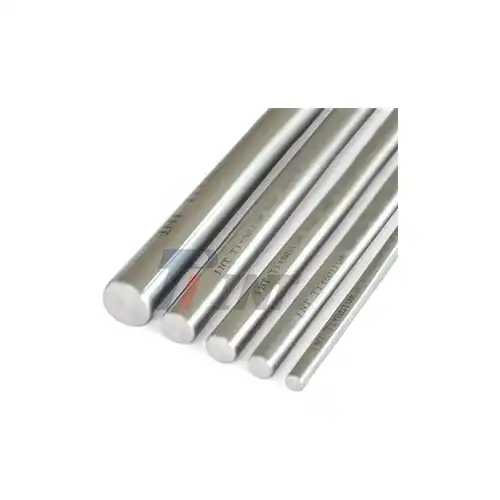
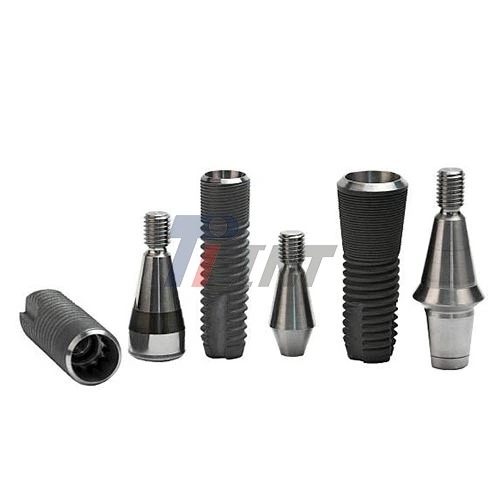
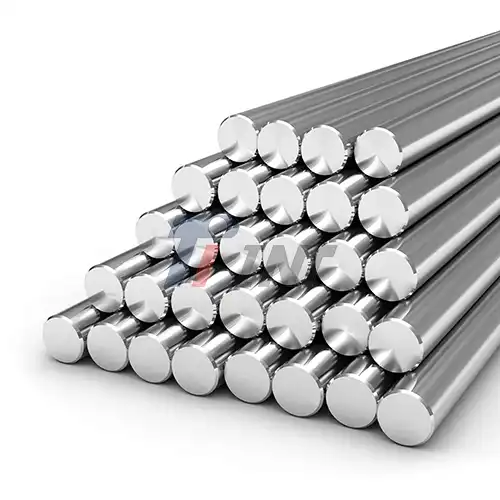
The Gr1 Titanium Medical Bar is the highest type of titanium that you can buy for surgical uses. It is very flexible and compatible with living things. This unalloyed material meets ASTM F67 and ISO 5832-2 standards and has very few intermediate elements. For example, the oxygen content is limited to 0.18% and the iron content is below 0.20%. This makes it easier to shape than stronger alloys. Gr1 Titanium Medical Bar is the best material for medical device makers who need to make complex shapes for cranial reconstruction or maxillofacial implants because it is very flexible and doesn't corrode in physiological environments. This makes it the best choice when ductility is more important than maximum tensile strength.
|
|
|
Introduction to GR1 Titanium Medical Bars and Their Role in Surgical Applications
Picking the correct titanium grade has a direct effect on how well surgery goes, how long the device lasts, and how long it takes for the government to approve it. We've been working with medical device makers since 2003, and we've seen how the specifications of a material affect everything from how well it can be machined to how safe it is for patients.
Understanding GR1 Titanium Medical Bar Specifications
When it comes to widely pure titanium bars, Gr1 Titanium Medical Bar is the lightest and most workable grade. Its alpha-phase microstructure keeps an elastic modulus of about 103 GPa, which is closer to natural bone than stronger options. This lowers the stress-shielding effect that can make osseointegration less successful. The substance creates a solid TiO2 oxide film that is only 1 to 10 nanometers thick. This film is completely immune to chloride-rich body fluids and does not release any harmful ions.
Material Selection's Impact on Surgical Device Performance
Strength vs. usability is a basic choice that medical gadget makers have to make. The tensile strength of GR5 titanium alloy (Ti-6Al-4V) is very high—more than 895 MPa. However, it breaks when it is cold-formed into complex skeletal shapes. We've sold Gr1 Titanium Medical Bar to companies that make orbital floor grids that doctors can bend during surgery to fit the shape of each patient's bones, which they couldn't do with harder grades. This adaptability includes tooth healing caps, housings for medical devices, and temporary fixing parts that don't have to withstand high mechanical loads but must be able to be shaped.
Comparing Common Titanium Grades in Healthcare
There are different types of results in the medical titanium market. GR2 titanium is slightly stronger than GR1 titanium, but it is still very flexible, so it can be used for basic surgery instruments. GR4 raises the amount of oxygen in the body to make dental implant bodies stronger when they need to hold more weight. GR5, a titanium metal with 6% aluminum and 4% vanadium, is mostly used in medical devices that have to hold weight, like hip stems and bone screws. Gr1 Titanium Medical Bar, on the other hand, finds its place where thin cross-sections, complicated shapes, and complete biocompatibility all come together. Knowing these differences helps buying managers match the qualities of materials to the needs of specific devices, which saves money and time and keeps things running smoothly.
Key Properties of GR1 Titanium Medical Bars and Their Surgical Advantages
Biological and functional properties of commercially pure titanium grades come straight from the chemicals that make them up. Because we've been making things for decades, we've perfected quality control procedures that make sure every heat lot has the same traits.
Mechanical Properties Tailored for Delicate Surgical Environments
The tensile strength of Gr1 Titanium Medical Bar is between 240 and 410 MPa, and its elongation is more than 24%. This means that it has enough structural stability while still allowing for a lot of plastic bending before breaking. The material has a yield strength of about 170 MPa, which is enough for non-load-bearing uses. Its density of 4.51 g/cm³ makes devices lighter than those made of stainless steel. The low hardness (120–140 HV) makes accurate cutting easier and increases tool life, which lowers the cost of production. These qualities make them perfect for making skull plates that need to be contoured during surgery, where doctors shape the implants by hand to fit the patient's anatomy without using special tools.
Superior Biocompatibility and Corrosion Resistance
Biocompatibility is more than just the material not being harmful; it also includes how it interacts with live flesh over long periods of time after implantation. Because GR1 titanium isn't alloyed, there are no worries about the release of vanadium or aluminum ions, which are small elements found in GR5 that can sometimes cause hypersensitivity reactions in people who are more likely to be affected. Even though the body's electrical environment is very harsh, the spontaneous oxide layer stays intact even when the pH level changes from 3 to 12. Clinical proof shows that there is no corrosion product buildup in the surrounding tissue even after decades of implantation. This is a level of performance that cobalt-chromium metals have a hard time regularly meeting.
Advantages Over Conventional Surgical Materials
Gr1 Titanium Medical Bar performance data is better than 316L stainless steel, which has been used for a long time in surgery tools. Titanium is compatible with magnetic resonance imaging, which gets rid of artifacts that get in the way of diagnostic images. Its paramagnetic qualities also stop implants from moving during MRI treatments. The substance can be sterilized over and over again in an autoclave, gamma irradiation, or ethylene oxide without losing its shape or surface. In salty settings, crevice rust in stainless steel devices can happen, releasing nickel ions that cause inflammatory reactions. These technical differences directly lead to fewer complications, longer device service lives, and better patient outcomes, all of which affect medical device makers' choices about what to buy.
Comparative Analysis: GR1 Titanium vs Other Titanium Grades for Surgical Use
To back up their choices about which materials to choose, procurement managers need hard facts on performance. The following similarities bring together technical details and real-world production issues.
Chemical Composition and Mechanical Performance Differences
Gr1 Titanium Medical Bar has titanium in it, along with very small amounts of iron (0.20%), oxygen (0.18%), carbon (0.08%), and hydrogen (0.015%). As the oxygen content goes up, the material changes into GR2 (0.25% oxygen), GR3 (0.35% oxygen), and GR4 (0.40% oxygen), each time giving up flexibility for strength. GR5 adds aluminum and vanadium alloying elements that trigger beta-phase stability. This makes the tensile strength get close to 930 MPa, but it loses the ability to be cold-formed, which is what made GR1 useful.
This difference in composition makes different use cases possible. For example, GR1 is best for reconstructive surgery that needs to be shaped precisely, GR4 is best for dental implants that need to be strong and easy to work with, and GR5 is best for high-stress orthopedic uses like femoral stems that are loaded repeatedly at more than 3000 Newtons.
Benchmarking Against Alternative Biomaterials
Cobalt-chromium alloys are better at resisting wear on surfaces that move together, but they also have very high elastic moduli (around 240 GPa), which is more than twice as stiff as titanium and speeds up bone loss by protecting it from stress. Zirconia ceramics are very biocompatible, but they are still very weak, which means that they can only be used for simple compression-loaded posts. Polyetheretherketone is good for radiolucency but not good for osseointegration without changing the surface. Gr1 Titanium Medical Bar is in a special category because it has mechanical properties that are more like real bone, has been shown to fuse with bone through direct bone-to-implant bonding, and can be made in a variety of ways, from subtractive machining to precision die casting.
Cost-Efficiency and Long-Term Investment Considerations
The price of raw materials puts Gr1 Titanium Medical Bar between cheap stainless steel and expensive GR5 metal. Commercially pure titanium bars are priced about 40% less than Ti-6Al-4V ELI prices right now, but they are more expensive than austenitic steel. Total cost study, on the other hand, shows a different picture: GR1's better machinability cuts cycle times by 15–25% compared to harder titanium grades, which lowers the cost of making each part.
Because the material doesn't corrode, it doesn't need to be coated, which adds extra steps to the making of steel parts. Longevity of the device avoids expensive revision treatments, which is a factor that is becoming more important in value-based healthcare buying systems. When manufacturers have to meet quality standards and cost-conscious customers, they find that GR1 gives them the best lifetime value. This is especially true for moderate-volume production runs where machine investments need to be justified.
Procurement Considerations for GR1 Titanium Medical Bars in Global B2B Markets
Setting up reliable supply lines for medical-grade materials requires a close look at each source. We've worked with clients from around the world for more than 20 years, so we know what kind of paperwork and quality control is needed to make sure that a device can be sold easily.
Supplier Evaluation and Certification Requirements
Suppliers who are qualified must show that they follow the ISO 13485:2016 standards for medical device quality management systems. They must also make sure that the process controls go beyond the basic ISO 9001 standards for manufacturing. Medical bars are different from industrial-grade bars sold under ASTM B348 because they have different chemical compositions and mechanical properties. Gr1 Titanium Medical Bar is one such example, meeting the specific requirements for surgical use.
ASTM F67 approval makes sure that these qualities meet the requirements for surgical implants. European markets need EN 10204 3.1 Mill Test Certificates that show where the titanium sponge came from, the results of the mechanical tests that were done on that batch, and the heat number. We keep these certificates for all of the products we make because we bought spectroscopic analysis tools and mechanical testing labs that check each lot of materials independently before they are shipped.
Ordering Logistics and Supply Chain Efficiency
Depending on the bar's thickness and other specifications, the Minimum order quantities can be anywhere from 50 to 500 tons. Standard lead times are between 6 and 8 weeks for stock sizes and between 10 and 14 weeks for special sizes that need dedicated production runs. When you buy in bulk, the price per kilogram drops by 8–15%, and you can be sure that your goods will be distributed during times when titanium sponge is in short supply.
Our transportation network can handle both grouped container shipments for regular production runs and fast air freight for prototype development or sudden production gaps. Understanding these factors early on in the product development process helps keep schedules from getting thrown off during the device approval and market launch phases, which can be very expensive.
Custom Manufacturing and Technical Support Services
Comprehensive material providers do more than just sell raw bar stock. They also provide value-added services that speed up the development of devices. Precision centerless grinding can get circle specs as close as ±0.025mm, which means that parts that need to fit perfectly don't need any extra work. In automated production cells, less material is wasted when custom length cutting is done according to approved squareness standards.
We offer expert advice on heat treatment settings, surface finish optimization, and compatibility with specific sterilization processes. This is based on the knowledge we've gained from working with implant makers in a wide range of surgical fields. These support services are especially helpful for new medical device companies that don't have their own materials experts. They effectively add to their engineering staff without having to pay for set extra costs.
Application Scenarios and Case Studies of GR1 Titanium Medical Bars in Healthcare
Real-world performance data is a better way to back up choices about which materials to use than theoretical specs alone. In practical settings, the following cases show how Gr1 Titanium Medical Bar can be used to improve things.
Reconstructive Maxillofacial Surgery Applications
In order to rebuild the skull after an accident or tumor removal, doctors need materials that can be shaped to fit irregular bone defects during surgery. A European company that makes maxillofacial devices moved from pre-contoured GR5 plates to GR1 mesh systems. This let doctors shape implants exactly to match templates made from computed tomography.
Because the material was flexible, it could be shaped by hand without the need for special tools. This cut the time needed for surgery by 22 minutes on average per treatment. Post-operative imaging showed that all sides of the implant were in full touch with the bone. This is a very important part of avoiding infection and supporting vascular integration. The clinical success led to more surgeons using the device and the company making it getting a bigger part of the market.
Dental Implant Component Manufacturing
Healing abutments and cover screws are temporary parts that are taken out once osseointegration is complete. This means that maximum strength is not needed, and machinability has a direct effect on the cost of production. A dental implant company in North America switched from making healing caps out of GR4 titanium to using Gr1 Titanium Medical Bar instead. This cut cycle times by 18% because the tools needed less force and wear.
The softer material had better surface finishes right off the lathe, so there was no need for extra cleaning. The clinical results were the same as with earlier GR4 components, but the prices of making them went down by 12%, which increased the gross margins on these high-volume accessories. This case shows how matching the qualities of a material to its purpose improves both clinical success and the ability to make money.
Emerging Trends in Medical Titanium Technology
More and more, additive manufacturing methods use titanium powder as a material. Commercially pure grades are becoming popular for making implant shapes that are specific to each patient. The layer-by-layer fusion process changes the microstructural properties of the bars compared to worked bars, so they need to be tested to make sure they have the same mechanical properties and biocompatibility as traditional forms.
Surface modification methods, such as plasma electrolytic oxidation, make micro-roughened surfaces that help bones adhere more quickly without changing the makeup of the main material. Regulatory paths are still changing to deal with these new ways of making things, which is good for sellers who spend money on characterization studies and technical paperwork that backs up customer requests. When medical device companies work with material sources that can do research, they get a leg up on the competition when it comes to bringing new goods to market.
Conclusion
To choose between commercially pure titanium grades and alloyed options, you have to weigh the mechanical needs against the needs of production and clinical performance. Gr1 Titanium Medical Bar is a unique type of medical material because it is very flexible and biocompatible, making it ideal for situations where making complicated shapes is more important than having the highest tensile strength.
It meets the standards of ASTM F67 and ISO 5832-2, which means that it will be accepted by regulators around the world. Its better corrosion resistance and MRI compatibility also give it long-term therapeutic benefits over other biomaterials. When purchasing titanium, people in charge of buying things should look at more than just price. They should also look at things like full quality certifications, technical support, and the reliability of the supply chain. This is because the performance of the material has a direct effect on how well the device works and how well the patients do.
FAQ
Q1: How does GR1 differ from GR5 for load-bearing implants?
A: With the addition of aluminum and vanadium, GR5 titanium alloy has about 2.5 times the tensile strength of Gr1 Titanium Medical Bar. This makes it ideal for bone screws and femoral hip stems that are subjected to high cycle loads. For these uses, GR1 isn't strong enough, but it works great in non-load-bearing repair devices where formability is more important than final strength.
Q2: Can GR1 titanium bars undergo welding processes?
A: Gr1 Titanium Medical Bar that is sold in stores is very easy to join together using tungsten inert gas or laser welding methods with the right protective atmospheres. Since GR5 doesn't have any alloying elements, the process factors are simpler. However, proper fixturing and contamination control are still needed to keep the material from becoming weaker from absorbing gases from the air while being exposed to high temperatures.
Q3: What surface finish specifications suit medical applications?
A: For parts that need safe contacts, medical device makers usually ask for centerless ground surfaces with Ra values below 0.8 micrometers. Smoother finishes, between 0.2 and 0.4 Ra, are best for moving surfaces or aesthetic uses. Rougher finishes, on the other hand, may be used for made parts where the surface texture doesn't affect how they work or how they meet regulatory requirements.
Partner with an Experienced Gr1 Titanium Medical Bar Manufacturer
Baoji INT Medical Titanium Co., Ltd. has been making medical-grade titanium products that meet the strict requirements of surgery device makers around the world for more than 30 years. Our full ISO 13485:2016 and CE certifications prove that we have quality control systems that are meant to work with medical devices. Also, all of our Gr1 Titanium Medical Bar are fully compliant with ASTM F67 and come with lot-specific Mill Test Certificates that make sure they can be tracked all the way back to the manufacturer.
We offer customized sizes, precision grinding services, and expert advice to help with product creation from the first prototype to mass production. As a reliable provider for the orthopedic, dental, and reconstructive surgery markets, we know the rules and performance standards that are important for medical uses to work well. Get in touch with our team at export@tiint.com to talk about the materials you need and find out how our technical help and on-time delivery can make your supply chain stronger.
References
1. American Society for Testing and Materials. (2013). "Standard Specification for Unalloyed Titanium, for Surgical Implant Applications (UNS R50250, UNS R50400, UNS R50550, UNS R50700)." ASTM F67-13.
2. International Organization for Standardization. (2016). "Implants for Surgery — Metallic Materials — Part 2: Unalloyed Titanium." ISO 5832-2:2018.
3. Brunette, D.M., Tengvall, P., Textor, M., & Thomsen, P. (2001). "Titanium in Medicine: Material Science, Surface Science, Engineering, Biological Responses and Medical Applications." Springer-Verlag Berlin Heidelberg.
4. Niinomi, M. (2008). "Mechanical biocompatibilities of titanium alloys for biomedical applications." Journal of the Mechanical Behavior of Biomedical Materials, 1(1), 30-42.
5. Rack, H.J., & Qazi, J.I. (2006). "Titanium alloys for biomedical applications." Materials Science and Engineering: C, 26(8), 1269-1277.
6. Elias, C.N., Lima, J.H.C., Valiev, R., & Meyers, M.A. (2008). "Biomedical applications of titanium and its alloys." Journal of the Minerals, Metals and Materials Society, 60(3), 46-49.
_1753429726760.webp)
_1752644608314.webp)
_1752463324629.webp)
_1751956094730.webp)
_1751620280646.webp)
_1750210463958.webp)