
How Titanium Plates Help Heal Wrist Injuries?


 2025-12-31 11:55:03
Wrist injuries can be debilitating, affecting our daily activities and quality of life. When severe fractures or complex wrist conditions occur, surgical intervention becomes necessary. In such cases, titanium plates have emerged as a game-changer in wrist surgery, offering numerous benefits for patients and surgeons alike. This article delves into the world of titanium plate in wrist surgery, exploring their advantages, applications, and the healing process they facilitate.
|
|
|

The Role of Titanium Plates in Wrist Surgery
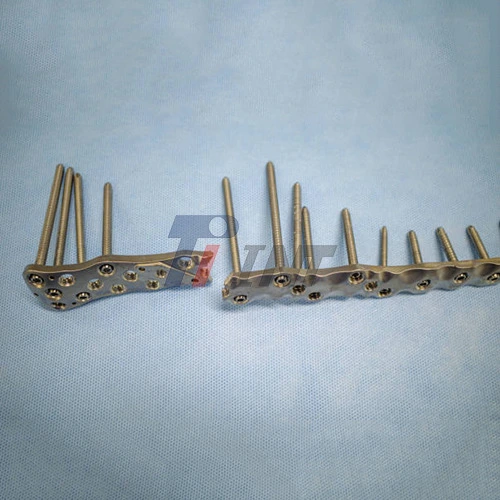
Titanium plates play a crucial role in the surgical treatment of wrist injuries. These medical devices are designed to provide stability and support to fractured bones, allowing them to heal properly. The use of titanium plates in wrist surgery has revolutionized the field of orthopedics, offering improved outcomes for patients suffering from various wrist conditions.
Wrist fractures, particularly those involving the distal radius, are among the most common orthopedic injuries. When these fractures are severe or displaced, surgical intervention using titanium plates becomes necessary. The plates are carefully positioned across the fracture site, securing the bone fragments in their correct anatomical position. This stability is crucial for proper healing and restoration of wrist function.
Titanium plates come in various shapes and sizes, tailored to fit the unique anatomy of the wrist. Surgeons can choose from a range of plate designs, including volar locking plates, dorsal plates, and fragment-specific plates. This versatility allows for precise and customized treatment of different types of wrist fractures and conditions.
The biocompatibility of titanium makes it an ideal material for use in wrist surgery. Titanium plates are well-tolerated by the body, reducing the risk of adverse reactions or rejection. This property is particularly important in the wrist, where the plates may need to remain in place for an extended period or even permanently.
Advantages of Titanium Plates for Wrist Healing
The use of titanium plate in wrist surgery offers numerous advantages that contribute to improved healing and patient outcomes. Let's explore some of the key benefits:
- Enhanced Stability: Titanium plates provide superior stability to fractured wrist bones. This stability is crucial for proper healing, as it prevents excessive movement at the fracture site. By keeping the bone fragments in their correct position, titanium plates allow for optimal bone union and reduce the risk of malunion or non-union.
- Accelerated Healing: The stability provided by titanium plates can lead to faster healing times. By minimizing movement at the fracture site, the plates create an environment conducive to bone formation and remodeling. This can result in a quicker return to normal activities for patients.
- Improved Functional Outcomes: Titanium plates help restore the normal anatomy of the wrist, which is essential for preserving function. By maintaining proper alignment of the bones, these plates contribute to better range of motion and strength in the wrist following surgery.
- Durability: Titanium is known for its exceptional strength-to-weight ratio. Titanium plates used in wrist surgery are durable enough to withstand the stresses placed on the wrist during daily activities. This durability ensures long-term stability and reduces the risk of implant failure.
- Biocompatibility: As mentioned earlier, titanium's biocompatibility is a significant advantage. The body's tissues tolerate titanium well, minimizing the risk of inflammation or rejection. This property contributes to better overall healing and reduces the likelihood of complications.
- Radiolucency: Titanium plates are relatively radiolucent, meaning they allow X-rays to pass through them. This property is valuable for post-operative monitoring, as it enables surgeons to assess bone healing without the plates obscuring the view.
- Reduced Risk of Infection: Titanium has natural antimicrobial properties, which can help reduce the risk of post-operative infections. This is particularly important in wrist surgery, where infections can lead to serious complications and impaired healing.
- Minimally Invasive Options: Advancements in titanium plate in wrist surgery design have led to the development of minimally invasive surgical techniques. These approaches can result in smaller incisions, less soft tissue damage, and potentially faster recovery times for patients.
The Healing Process with Titanium Plates
Understanding the healing process when titanium plates are used in wrist surgery can help patients set realistic expectations and actively participate in their recovery. Let's explore the typical stages of healing and what patients can expect during this journey:
- Immediate Post-operative Period: Following wrist surgery with titanium plate fixation, patients typically experience some pain, swelling, and limited mobility. The wrist is usually immobilized in a splint or cast to protect the surgical site and allow initial healing to begin.
- Early Healing Phase: In the first few weeks after surgery, the body begins to form new blood vessels and soft callus around the fracture site. The titanium plate provides the necessary stability for this process to occur effectively.
- Bone Formation: As healing progresses, the soft callus is gradually replaced by hard callus. This process, known as ossification, leads to the formation of new bone tissue. The titanium plate continues to provide stability during this critical phase, ensuring that the bone heals in the correct position.
- Rehabilitation: Once sufficient healing has occurred, patients typically begin a more intensive rehabilitation program. This may include progressive range of motion exercises, strength training, and functional activities.
- Bone Remodeling: Over the following months, the newly formed bone undergoes remodeling. This process involves the reshaping and strengthening of the bone tissue. The titanium plate remains in place during this phase, ensuring long-term stability.
- Long-term Outcomes: In many cases, titanium plate in wrist surgery can be left in place indefinitely without causing problems. However, some patients may opt for plate removal once complete healing has occurred, typically after a year or more.
Conclusion
Titanium plates have revolutionized the treatment of wrist injuries, offering a reliable and effective solution for complex fractures and other wrist conditions. Their unique properties, including strength, biocompatibility, and versatility, make them an invaluable tool in the orthopedic surgeon's arsenal. As with any surgical procedure, the use of titanium plate in wrist surgery requires careful consideration and should be discussed thoroughly with a qualified orthopedic surgeon.
For those interested in learning more about medical titanium products, including the titanium plates used in wrist surgery, Baoji INT Medical Titanium Co., Ltd. offers a wealth of expertise and high-quality materials. With over 30 years of experience in the research, development, and production of titanium materials, INT is at the forefront of medical titanium technology. To explore their range of products or discuss specific requirements, interested parties can reach out to INT at export@tiint.com.
References
1. Hak DJ, Althausen P, Hazelwood SJ. Locked plate fixation of osteoporotic fractures. J Orthop Trauma. 2010;24(11):711-717.
2. Orbay JL, Fernandez DL. Volar fixed-angle plate fixation for unstable distal radius fractures in the elderly patient. J Hand Surg Am. 2004;29(1):96-102.
3. Souer JS, Ring D, Matschke S, Audige L, Marent-Huber M, Jupiter JB. Comparison of functional outcome after volar plate fixation with 2.4-mm titanium versus 3.5-mm stainless-steel plate for extra-articular fracture of distal radius. J Hand Surg Am. 2010;35(3):398-405.
4. Arora R, Lutz M, Hennerbichler A, Krappinger D, Espen D, Gabl M. Complications following internal fixation of unstable distal radius fracture with a palmar locking-plate. J Orthop Trauma. 2007;21(5):316-322.
5. Egol KA, Kubiak EN, Fulkerson E, Kummer FJ, Koval KJ. Biomechanics of locked plates and screws. J Orthop Trauma. 2004;18(8):488-493.
_1753427753918.webp)
_1752462620877.webp)
_1751956867796.webp)
_1750663253486.webp)
_1749447504716.webp)