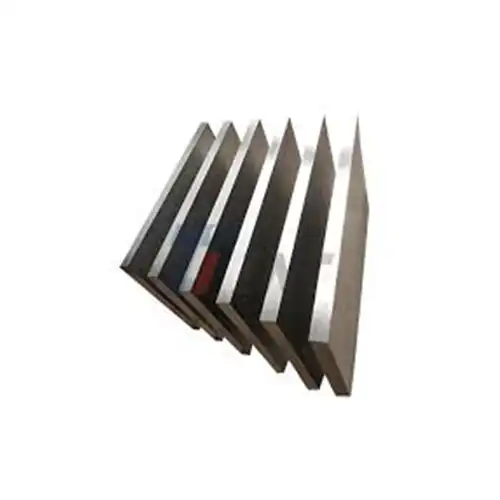

How to choose a high-quality 3mm titanium sheet for aerospace projects?


 2026-06-22 10:56:51
It is important to know the exact balance between structural rigidity and weight savings when choosing the right titanium sheet 3mm for aircraft uses. A titanium sheet that is 3 mm thick is usually made by cold rolling and vacuum annealing. It is the best combination of stiffness and ductility, without the extra weight of thicker plates or the structural problems that come with smaller sizes. Unlike 0.5 mm foils that can't hold weight or 6 mm plates that add extra mass, this thickness solves the main problem that aircraft engineers face: making materials as strong as possible while also being resistant to corrosion in harsh chemical conditions. You can make smart procurement choices if you understand these technical standards and how they fit with the needs of your project.
|
|
|
Understanding the Core Properties of 3mm Titanium Sheets
Defining the 3mm Titanium Sheet Specification
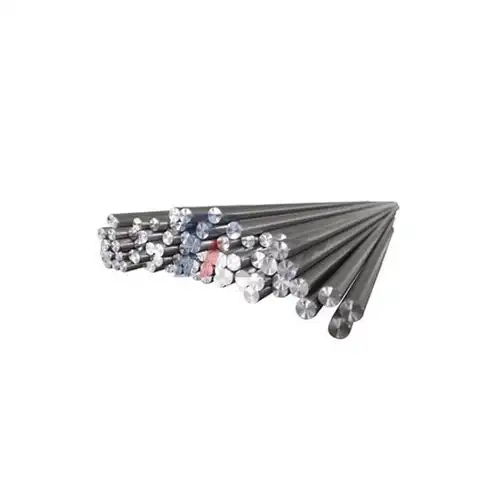
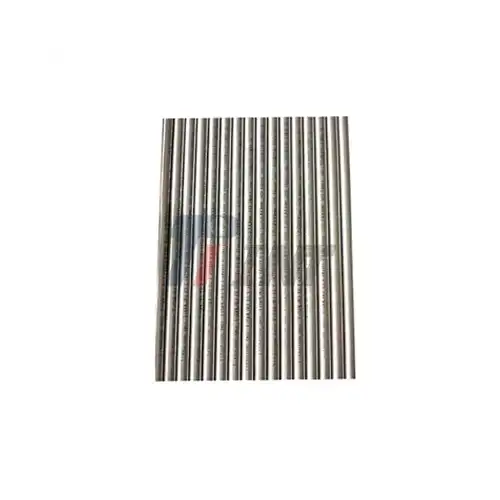
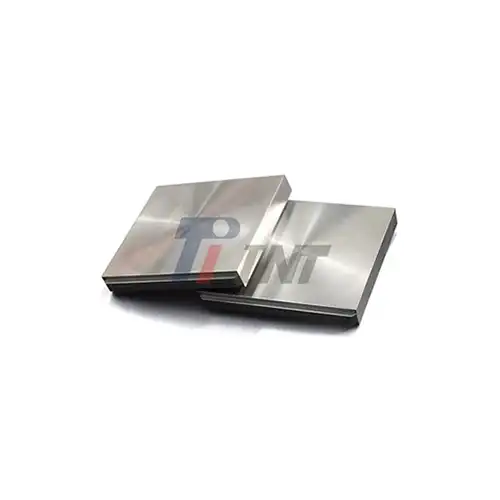
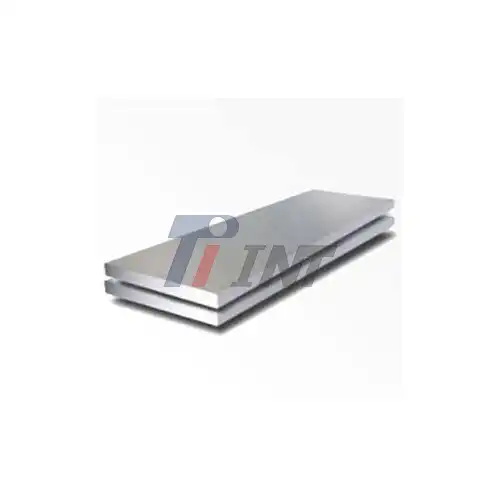
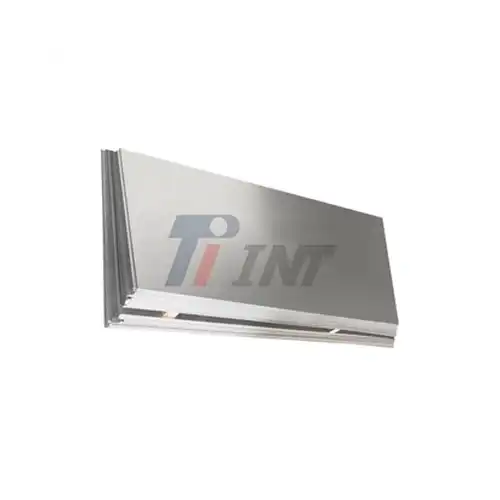
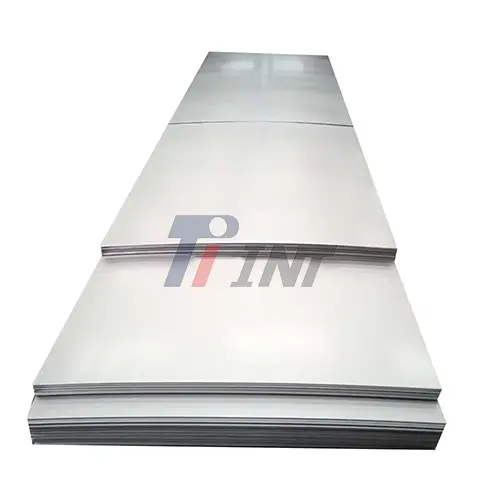
Precision-rolled and flat-milled, the titanium sheet 3mm has a normal metric width of 3.0 millimeters, which is about 0.118 inches. This gauge is right in the middle of the important line between thin gauge and plate standards, which gives structure engineers special benefits. Controlled cold rolling and vacuum annealing are used in the production process to make sure that the parts are the right size and have the right microstructure for aerospace uses.
Common Titanium Grades for Aerospace Applications
Commercially pure (CP) titanium and certain titanium alloys are mostly used in aerospace projects. Grade 2 CP titanium is very resistant to rust and not very strong, so it can be used for non-structural parts and fastening systems. The tensile strength of Grade 5 titanium alloy (Ti6Al4V) is much higher than that of aluminum alloys, which usually run from 140 to 480 MPa. It is between 895 and 930 MPa. To choose between these grades, you need to think about how much weight you need to carry and the weather.
Mechanical and Physical Properties Impact
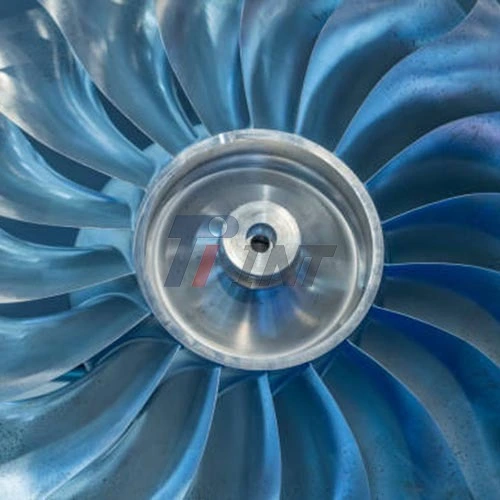
Titanium sheets have tensile strengths that have a direct effect on how well they work in spacecraft. Depending on the heat treatment, Ti6Al4V metals can reach tensile strengths of 345 to 1380 MPa. This is much higher than stainless steel options, which are much heavier. The material's natural oxide formation forms a barrier that stops rust and corrosion in places with lots of air. However, this feature needs to be carefully thought through in places like vacuums where oxidation can't happen naturally.
Comparative Analysis with Alternative Materials
Titanium has clear benefits over standard aerospace materials when it comes to material choices. Titanium is about 45% lighter than stainless steel but has the same level of strength. This means it uses less fuel and can carry more. When compared to aluminum, titanium is more resistant to rust and keeps its shape at higher temperatures. Because the material is biocompatible, it can also be used in places where chemical inertness is needed. However, pure titanium is still hard to find and expensive to make.
Critical Criteria for Evaluating 3mm Titanium Sheets for Aerospace Use
Essential Certifications and Standards Compliance
For aerospace-grade titanium sheet 3mm to be traceable and work consistently, it has to go through a lot of testing steps. Aerospace Material Specifications (AMS), ASTM International standards, and ISO certifications are what quality security is based on. These certificates show that materials meet certain standards for chemical composition, mechanical properties, and controls for the production process. Suppliers should give full mill test results that show the alloy's make-up, records of its heat treatment, and a way to track back to its raw material sources.
Mechanical Performance Parameters
To evaluate mechanical properties, you have to look at a lot of things that are all linked. Tensile strength is the most stress that a material can take before it breaks, and yield strength is the most stress that causes the material to permanently change shape. When aircraft parts are loaded and unloaded over and over again during flight, fatigue resistance becomes very important. The 3mm gauge is thick enough to stop wear cracks from spreading while still being able to be shaped into complicated shapes.
Dimensional Accuracy and Surface Quality
Consistency in thickness across sheet measurements has a direct effect on how well parts work and how efficiently they are made. For 3mm sheets, aerospace standards usually say that the width must be within ±0.1mm of what is specified. It doesn't matter what the surface looks like; scratches, pits, or inclusion flaws can all become stress concentration places that cause the material to fail early. Surface finish needs vary by application. For example, polishing finishes are needed on parts that need to be smoother in the air or more resistant to rust.
Environmental Compatibility Considerations
Titanium doesn't rust because it has a natural oxide layer that forms and grows back when it gets broken in oxygen-rich settings. Titanium is great for parts that will be exposed to marine atmospheres, hydraulic fluids, or chemicals because it forms a safe shield. But it's still important to understand the limits of the world. Titanium can rust quickly without its protective oxide layer in places with no air or a vacuum. The choice of material is also affected by how stable it is at different temperatures. This is because different types keep their mechanical traits at different temperature ranges.
Manufacturing Process Quality Indicators
The ways used to make sheets have a big effect on the quality of the finished result. Work-hardening effects happen during cold rolling, which makes things stronger but may make them less flexible. Vacuum annealing reduces stresses inside the material and makes the nanostructures work best for certain sets of properties. Suppliers who use modern manufacturing tools with quality tracking systems that work in real time show that they are dedicated to providing consistent product quality. Keeping records of production factors like rolling plans, annealing temperatures, and cooling rates makes manufacturing rigor clear.
Comparing 3mm Titanium Sheets from Leading Suppliers and Brands
Evaluating Supplier Qualifications and Experience
There are well-known companies in the titanium supply market that have been specializing in aerospace for decades. Companies like ATI and Timet have built their names by consistently delivering high-quality work and having a wide range of certifications. When looking at possible providers, check how long they've been working with aircraft customers, see if they have any quality management system certifications (ISO 9001, AS9100), and see how stable their supply chain is. Companies that supply metals and have their own testing labs can offer professional help in addition to just supplying materials.
Understanding Pricing Structures and Value Propositions
Grade, quantity, certification needs, and source placement all affect the price of titanium sheet 3mm. Because it is easier to make and has less metal, Grade 2 CP titanium usually costs less than Ti6Al4V. Costs often go down when you buy in bulk, but the minimum order amounts may be more than what you need for your job right now. Total cost of ownership analysis needs to look at more than just the price of the materials. It also needs to look at lead times, the availability of expert help, and the reliability of the supply.
Supply Chain Logistics and Delivery Capabilities
Buying things from other countries adds a layer of complexity to transportation that slows down projects. Suppliers who have been exporting for a while know what paperwork is needed for customs processing, shipping insurance, and details of delivery. Lead times range from 4 to 12 weeks, based on the type of material, the requirements, and the production plan at the time. Setting up ties with several qualified providers makes the supply chain more resilient to disruptions and keeps prices competitive.
Customization and OEM Service Availability
For many aircraft uses, special sheet sizes, surface treatments, or property certifications are needed in addition to what is normally available. Suppliers that offer OEM services can give you sheets that are cut to your exact measurements, special heat treatments, or testing methods that are made just for your needs. This feature cuts down on costs for handling that comes after and speeds up the manufacturing process. Talking about customization options with potential suppliers during the initial review process helps you find partners who can grow with your project needs as they change.
Practical Applications and Suitability of 3mm Titanium Sheets in Aerospace Projects
Structural Component Applications
Titanium sheet 3mm is used a lot in semi-structural aircraft parts where losing weight improves performance in a measured way. This measure is used to make sure that bulkhead supports, floor panels, and entry covers are strong enough without being too heavy. Because the material is strong for its weight, designers can make it thinner than metal options while still holding the same amount of weight. This directly saves fuel on airplanes.
Heat Exchanger and Thermal Management Systems
Because they don't rust and let heat flow through them, 3mm titanium sheets are useful for building heat exchangers. Titanium is resistant to damage from hydraulic fluids and changes in temperature, which makes it useful for weather control systems and aerospace hydraulic systems. The 3 mm thickness makes the sheet stiff enough for fastening while still letting heat move easily across the surface.
Fastening and Bracket Systems
A lot of clamps, clips, and other fastening parts are needed for aerospace structures to keep systems in place without adding extra weight. By cutting 3mm titanium sheets into brackets and mounting gear, connection points can be made that won't rust and will stay in place for the life of the airplane. Because the material is easy to shape, complicated shapes can be made by pressing or hydroforming it.
Real-World Performance Case Studies
Manufacturers of airplanes have reported big weight saves when titanium parts are used instead of metal ones. During a project to repair the inside of a commercial airplane, aluminum galley parts were changed with Ti6Al4V sheets. This cut the weight by 38% and made the food preparation areas more resistant to corrosion. Titanium sheet parts have been used in military aircraft's landing gear fairings, which has cut down on repair times because it is better at resisting corrosion in harsh operating settings.
Understanding Material Limitations
Titanium has some benefits, but it also has some problems that buying workers need to be aware of. Because the material reacts easily with machines, it needs special tools and slower cutting speeds than aluminum. Titanium bits can start fires because they are very reactive at high temperatures that are created when cutting or machining. To keep titanium from getting contaminated or weak, it needs to be welded in a neutral atmosphere. These handling factors affect the total cost of production in addition to the cost of buying materials.
How to Procure a High-Quality 3mm Titanium Sheet: Step-by-Step Guide
Defining Technical Requirements
Starting the buying process with well-written specs stops mistakes that cost a lot of money and delays in the project. Describe the grade of material that is needed (CP Grade 2, Ti6Al4V, or another metal), the allowed size variations, the surface finish that is needed, and any approval standards that apply. Include minimum tensile strength, yield strength, and elongation rates in the list of mechanical property standards. Include any specific testing needs, like chemistry analysis, non-destructive testing, or checking the titanium sheet 3mm properties.
Conducting Supplier Evaluation
In order to find a qualified seller, you need to look at more than just price quotes. Ask for customer referrals and project portfolios as proof of experience in the aerospace business. Check the licenses of the quality management systems that are important for aircraft supply chains, especially those that meet AS9100 or similar standards. Talk about industrial processes, quality control routines, and available testing tools to get a sense of technical skills. Knowing how much a seller can make helps you make sure they can meet your volume needs and shipping dates.
Requesting and Evaluating Samples
Sample review gives real proof of a supplier's skills before agreeing to large amounts of production. Ask for models that are exactly what you need, including the right size, finish, and approval paperwork. Do an incoming review to check the uniformity of the thickness, the quality of the surface, and the accuracy of the dimensions. Think about having a third party test the product to make sure that the mechanical qualities and chemical make-up match the certification papers. Recording the results of testing samples sets the quality standards for all production orders.
Critical Questions for Supplier Verification
By asking specific questions, you can find out how knowledgeable and reliable a seller is. Find out more about tools that can track output from raw materials to finished goods. Find out how they handle nonconforming materials and how they take appropriate action. Talk about how flexible their production schedules are and how they can handle faster supplies if project deadlines get squished. During the whole production process, make sure that the warranty terms, return policies, and availability of expert help are all clear.
Managing the Ordering Process
Structured processes are needed for efficient buying from quotation to delivery. Send thorough requests for quotes that include details like quantities, shipping needs, and payment terms. Carefully look over the quotes and compare not only the prices, but also the wait times, payment terms, and certifications that are included. Send out purchase orders with full specs that include any sample reviews or quality standards that have been agreed upon. Make rules for how to talk to each other about work changes and shipping alerts.
Quality Control and Inspection Procedures
Receiving review keeps bad materials from getting into production, which saves your project. Make inspection plans that include checking the dimensions, judging the quality of the surface, and looking over the certification documents. Use accurate micrometers to check the uniformity of the sheet thickness in several places to make sure it stays within the allowed ranges. Check surfaces in good lighting for flaws like scratches, pits, spots, or stains that could mean there were problems during processing. Make sure that all of the licensing paperwork has the necessary test results, proof of the material's grade, and information on how to track it. By writing down check results, you can make quality records that meet the needs of the aircraft quality system.
Conclusion
To pick a good titanium sheet 3mm for aircraft projects, you need to know a lot about the qualities of the material, evaluate suppliers carefully, and follow strict buying procedures. The 3mm gauge strikes the best balance between strength and weight, especially when ordered in the right grades, such as Ti6Al4V for high-strength uses or Grade 2 for parts that need to be resistant to rust.
Verifying seller certifications, doing thorough sample evaluations, and putting in place strong quality control processes are all important for successful procurement. Choosing the right materials and working with the right suppliers is an investment that pays off in lower upkeep costs, longer-lasting parts, and better system performance. Procurement pros can easily find titanium materials that meet the high standards needed for aerospace uses by using structured evaluation criteria and keeping an eye on certification compliance.
FAQ
Q1: Can 3mm titanium sheets be used across various aerospace components?
A: Titanium sheet 3mm is used in many aircraft uses, such as for brackets, heat exchanges, fastening systems, and semi-structural parts. The exact suitability depends on the design needs, the load requirements, and the environmental factors. If a structural part needs to carry main loads, it might need thicker gauges or a different metal. On the other hand, this thickness saves weight for non-structural uses.
Q2: How do titanium sheet prices compare to stainless steel and aluminum?
A: Because they are harder to get and have special production needs, titanium products are more expensive than stainless steel and aluminum. The price of materials is usually three to five times higher than the price of similar metal sheets and two to three times the price of stainless steel. Total lifecycle cost study, on the other hand, usually favors titanium because it requires less upkeep, lasts longer, and performs better because it is lighter.
Q3: What certifications verify aerospace-grade quality?
A: Titanium used in aerospace must meet AMS (Aerospace Material Specifications) and ASTM International standards, and suppliers must have quality system certifications like AS9100. Certifications for materials should list their chemical make-up, mechanical qualities, heat treatment settings, and how they can be tracked back to their original mill sources. Third-party testing verification gives you more proof that the materials you're using meet the standards than the paperwork your supplier gives you.
Partner with Baoji INT Medical Titanium Co., Ltd. for Your Titanium Sheet Requirements
Baoji INT Medical Titanium Co., Ltd. has been in the titanium business for more than 30 years and can help aircraft and medical procurement workers who are very picky. Our ISO 9001:2015 and ISO 13485:2016 certifications show that we are dedicated to quality management excellence. We can also produce titanium sheet 3mm in a range of types, such as CP titanium and Ti6Al4V ELI metal. We offer full approvals for materials, expert advice on how to choose materials, and processing services that are specifically designed to meet your needs. Our experience working with companies that make medical devices immediately applies to aerospace uses that need the same level of accuracy, traceability, and performance stability. To talk about your project needs, get material samples, or get specific quotes from a reliable supplier, email our technical team at export@tiint.com.
References
1. Donachie, Matthew J. "Titanium: A Technical Guide, 2nd Edition." ASM International, Materials Park, Ohio, 2000.
2. Boyer, Rodney, Gerhard Welsch, and E.W. Collings. "Materials Properties Handbook: Titanium Alloys." ASM International, 1994.
3. Lutjering, Gerd and James C. Williams. "Titanium, 2nd Edition: Engineering Materials and Processes." Springer-Verlag Berlin Heidelberg, 2007.
4. Schutz, R.W. and Thomas, D.E. "Corrosion of Titanium and Titanium Alloys." ASM Handbook Volume 13B: Corrosion: Materials, ASM International, 2005.
5. Peters, Manfred, et al. "Titanium and Titanium Alloys: Fundamentals and Applications." Wiley-VCH Verlag GmbH, Weinheim, Germany, 2003.
6. Froes, Francis H. "Titanium: Physical Metallurgy, Processing, and Applications." ASM International, Materials Park, Ohio, 2015.
_1751955824855.webp)