
How to select the right titanium bar for dental implants


 2026-06-24 11:32:20
It is very important to pick the right titanium bar for medical use in dental implant making to make sure the implants work well, follow the law, and keep patients safe. It is hard for companies that make dental products and original equipment manufacturers (OEMs) to find materials that are both safe and effective physically. Before making a choice, you need to know more about the metals, especially Ti-6Al-4V ELI (Grade 23) and pure titanium grades that meet strict standards like ASTM F136 and ISO 5832. Buying teams have to check more than just the chemicals. They have to check the seller's credentials, the quality of the finish, the accuracy of the measurements, and the proof that the goods can be tracked. How well the device works, how quickly it bonds with the bone, and how well the patient does in the long run will all depend on this choice. This is why it's so important to pick the right material when making tooth implants that last.
|
|
|
Understanding Titanium Bars in Medical and Dental Applications
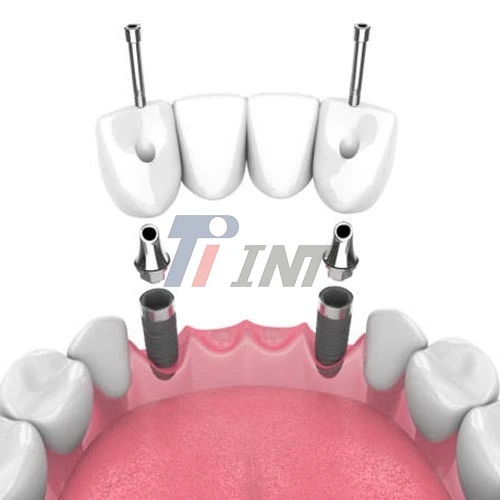
Dental implant systems are put together with medical-grade titanium bars, which are one of a kind and can't be made from any other metal. The natural oxide layer of the material keeps it from rusting, even in the tough mouth environment, where enzyme activity and changing pH levels test the security of the implant all the time.
Biocompatibility and Osseointegration
The titanium bar for medical use is very good at sticking to living things. Steel that isn't titanium is different because it has a thick layer of titanium dioxide on its surface that helps bone cells stick together. Over time, implants can bond directly with jawbone tissue, without having to go through a fibrous covering. This is known as osseointegration. More than 95% of people who have had surgery with the right type of titanium have had it work for 10 years.
Mechanical Properties for Dental Applications
It is about 110 GPa for titanium metals, which is much closer to the 10–30 GPa range for human bone than the 200 GPa range for stainless steel. This closeness makes it less likely that stress buffering effects will happen, which can lead to bone loss around implants. It is very hard to wear down, even after being loaded and emptied many times during mastication, and its tensile strength is more than 860 MPa. These technical details make sure that implants won't break after years of useful stress.
Corrosion Resistance in Oral Environments
Rusting is most likely to happen in holes in the mouth. The pH levels in saliva change, and biofilms of bacteria make it hard for things to stay fixed. On medical titanium bars, the oxide film that isn't doing anything stops pitting corrosion and crack corrosion. The film forms back right away if it gets scratched. By being able to fix itself, implants keep their shape over time and stop the release of ions that could lead to inflammation responses.
Criteria for Selecting the Right Titanium Bar for Dental Implants
Procurement managers have to deal with a lot of different technical needs when they are looking for titanium goods. When making a choice, healthcare needs must be weighed against the cost and ability to make the product.
Medical-Grade Certifications and Standards
Checking for compliance is what responsible buying is all about. Either ASTM F136 (Ti-6Al-4V ELI) or ASTM F67 (commercially pure titanium grades 1-4) must be met by titanium bars meant for implants. ISO 5832-2 and ISO 5832-3 are the same around the world. For suppliers, Mill Test Certificates that meet EN 10204 3.1 standards should be given. These certificates should list the chemical make-up, mechanical properties, and heat treatment conditions. Those who are certified to ISO 13485:2016 use medical device quality management systems, and those who are certified to ISO 9001:2015 can promise quality in general.
Grade Selection: Ti-6Al-4V ELI vs. Commercially Pure Titanium
Iron and oxygen levels in titanium bar for medical use like Grade 23 (Ti-6Al-4V ELI) must be less than 0.25% and 0.13%, respectively, in the interstitial space. Grade 23 has aluminum and vanadium working together. Because it says "Extra Low Interstitial" on the label, this Grade 5 material is more flexible and less likely to break. This makes it great for parts of tooth implants that need to be strong enough not to break. Even though they are weaker, commercially pure types don't rust as easily and are often used for implant areas that will be in close contact with flesh. The choice is based on what the implant form needs and what causes stress.
Dimensional Precision and Surface Quality
To make tooth implants, Swiss-type CNC cutting is often used, which needs very accurate measures. Bars that are centerless and have ISO h8 or h7 specs keep runout to a minimum when cutting at high speeds. This is important for making sure that the threads are precise for implant support. Most of the time, surface finish standards for bar stock say that Ra values should be less than 1.6 μm. It is important that there is no alpha case on the surface. Alpha case is an oxygen-rich layer that forms during high-temperature processing and is rigid. It creates places where cracks can start, which shortens the wear life.
Customization Capabilities
More and more, implant makers need measures that aren't standard in order to get the best material back when they machine. It's better for businesses to work with suppliers who can make sizes, lengths, and surface treatments just the way the business wants them. For some uses, it's best to work with metal in a cold environment that increases its yield strength. For others, it's easier to shape metal that has been softer. Being able to find specs that are just right cuts down on waste and makes things go faster.
Comparing Titanium Bars with Alternative Materials for Medical Use
People who care about price can choose what to buy better when they know what titanium does better than other materials.
Titanium vs. Stainless Steel
316L stainless steel is easier to work with and costs less, but it's not good for long-lasting implants. People who are allergic to nickel might also be allergic to stainless steel. Because it has a higher range of flexibility, it can cushion stress, which could lead to bone loss around implants. As long as the rust protection is good enough for short-term fixes, it's not as good as titanium when it comes to long-term implants. Titanium can also be used with MRIs since it is not magnetic. On the other hand, stainless steel makes images look bad.
Titanium vs. Cobalt-Chrome Alloys
So that they don't break down as quickly, cobalt-chrome metals are used for areas that move in joints. But they are not as good for dental implants because they are stiffer (240 GPa) and can let metal ions out. Titanium implants are lighter and more comfy for patients because they are less dense than steel implants (8.3 g/cm³ vs. 4.5 g/cm³). The price gap between titanium and cobalt-chrome has decreased as better ways to make titanium have been found.
Supplier Reliability Assessment
Success for titanium bar for medical use isn't just based on the quality of the stuff; the seller's skills also play a big role in how the deal goes. If you want to make sure you get your goods on time, look at possible partners and see if they can meet your number needs, their wait times, and the way they handle shipping. If a seller has their own testing lab, they can check materials more quickly. You can be sure that the quality of the goods will stay the same from batch to batch because you have long-term ties with well-known sources.
Procurement Best Practices for Medical-Grade Titanium Bars
Buying strategically is more than just looking at prices per kilogram. It lowers risk and raises the total cost of ownership.
Supplier Qualification Process
Make sure you carefully look into the quality systems, production methods, and tracking systems of any possible suppliers. Ask for proof that the medical device has been bought before and for records of checks by government agencies. Chemical tests, mechanical tests, and microstructural tests should all be done on the sample to make sure it meets the standards. Make it easy for people to talk to each other about making changes to how things are done and why they aren't meeting standards.
Balancing Cost and Quality
You should care about price, but when it comes to health care, the cheapest option isn't always the best. It's a waste of time and effort to find flaws in the material after it has been made, and the process may even be held up. To find the best service, you should add up all of their costs, which should include rates for return, cutting time, and rejection. It's often better for your business to buy from well-known sources where the quality stays the same, even if the unit prices are higher.
Order Structuring and Inventory Management
The price per unit goes down when you buy in bulk, but it costs more to store the goods and there is a greater chance that you will run out. Custom contracts with set release times keep these things in balance. Some sellers let buyers swap items, but the buyer doesn't own the items until they are used. For just-in-time shipping to work, you need to be able to depend on your suppliers and have as little operating cash as possible.
Baoji INT Medical Titanium Co., Ltd.: A Trusted Partner
Because Baoji INT Medical Titanium Co., Ltd. has been in the medical titanium business since 2003, they know a lot about giving dental implant makers exact titanium materials. Our titanium bars are commercially pure and come in Ti-6Al-4V ELI. We can make them to fit your needs. All of them are made with quality methods that are accepted by EU CE, ISO 13485:2016, and ISO 9001:2015. We send all the information that is needed to keep track of each package, like Mill Test Certificates that meet foreign standards. Our expert team can help you pick the right materials for your R&D and production needs. They can also set the right cutting parameters and check that the work is done properly.
Ensuring Optimal Outcomes: Post-Selection Considerations
Getting the right material is just the beginning of making a tooth implant that works.
Sterilization Compatibility
After being made, titanium bar for medical use and implants must be able to handle being cleaned without breaking. This method of cleaning with steam at 121–134°C is used most of the time, and titanium doesn't have any issues with it. Parts that are sensitive to temperature can be sterilized with ethylene oxide (EtO). Gamma rays can be used to clean titanium, but they might mess up some processes that happen on the surface. Check the ways to clean the product while it's being made to avoid problems you didn't expect.
Biomechanical Performance Validation
For a clinical study to work, the material must be able to withstand the stress on the body. Finite element analysis helps figure out how stress will be spread in implant designs before a sample is made. Possible failure modes are found by testing for fatigue under simulated mouth loading conditions. Tests of accelerated rust in fake spit make sure that the stability will last for a long time. Steps like these take time, but they keep people safe, save money on refunds, and stop problems that could cost a lot of money.
Common Procurement Pitfalls
A lot of mistakes are made that lower the quality of implants. It gets less tough to crack when you can't tell the difference between Grade 5 and Grade 23. Fatigue failure will happen too quickly if you don't talk about alpha case reduction. If you trust sources that don't have the right medical gadget certifications, you might not follow the rules. If you don't check new materials well, bad materials can get into production. You can avoid these issues by making sure that the buy specs and quality control methods for incoming goods are strong.
Conclusion
There are a lot of things to think about when picking the right titanium bar for medical use for dental implants. These include the grade of the material, the source certifications, the size standards, and the bar's long-term dependability. Ti-6Al-4V ELI and commercially pure titanium types are the most biocompatible, won't rust, and are strong enough for the tough environment in the mouth. You should think about what the seller can do and how well the item works before you buy it. You need to look at certificates, tracking, ways to make it your own, and help from experts. Working with well-known sources that know what medical devices need lowers risk and makes the process of making implants go more easily. In order to find materials that meet legal standards and give people better clinical results, manufacturers should use research-based selection criteria and avoid making common mistakes.
FAQ
Q1: Why is titanium preferred over stainless steel for dental implants?
A: Titanium is more safe than stainless steel that has nickel in it, and it causes fewer allergic responses. Less movement makes it harder for the body to handle stress, which helps bones bond together better. It takes decades for titanium to rust, so it stays stable in the mouth. It's not magnetic either, so MRIs can use it.
Q2: How can I verify a supplier's certifications are legitimate?
A: Bring the actual certificates with you. They should have your registration number and the seal of the awarding body on them. Use the online records of the organizations that awarded the certificates to check them directly. You should check with your sources to see how they handle quality. Read the Mill Test Certificates to make sure they follow certain rules, like ASTM F136 or ISO 5832. This will make sure that goods can be traced back to certain runs of production.
Q3: Can titanium bars be customized for specific dental implant designs?
A: Of course. A titanium bar for medical use can be made to order in terms of its diameter, length, surface finish, and heat treatment conditions. Custom sizes help the material get more done when it's being cut, which means less trash. Any changes made to the surface can help the bone bond better with the tooth. Tell your companies' expert teams about your specific needs so that they can come up with standards that will help your manufacturing process.
Partner with Baoji INT Medical Titanium Co., Ltd. for Certified Dental Implant Materials
Baoji INT Medical Titanium Co., Ltd. is a dependable titanium bar for medical use producer with more than twenty years of specialized experience serving dental implant makers worldwide. We sell pure titanium bars and Ti-6Al-4V ELI that is made with great care and has full ISO 13485:2016, ISO 9001:2015, and EU CE certifications. Our professional customer service team helps you pick out materials, write down requirements, and keep quality records so that the buying process goes more quickly. You can change the measures, the wait time is short, and you can keep track of all packages. Send us an email at export@tiint.com to talk about your specific needs, get full data sheets, or set up samples to test. At inttitanium.com, you can see all of our medical-grade titanium products and learn how our commitment to quality and customer service can help you make better tooth implants.
References
1. Brunette, D.M., Tengvall, P., Textor, M., & Thomsen, P. (2012). Titanium in Medicine: Material Science, Surface Science, Engineering, Biological Responses and Medical Applications. Springer-Verlag Berlin Heidelberg.
2. Niinomi, M. (2008). Mechanical biocompatibilities of titanium alloys for biomedical applications. Journal of the Mechanical Behavior of Biomedical Materials, 1(1), 30-42.
3. Steinemann, S.G. (1998). Titanium—the material of choice? Periodontology 2000, 17(1), 7-21.
4. Elias, C.N., Lima, J.H.C., Valiev, R., & Meyers, M.A. (2008). Biomedical applications of titanium and its alloys. Biological Materials Science, 60(3), 46-49.
5. Long, M. & Rack, H.J. (1998). Titanium alloys in total joint replacement—a materials science perspective. Biomaterials, 19(18), 1621-1639.
6. ASTM International (2013). ASTM F136-13: Standard Specification for Wrought Titanium-6Aluminum-4Vanadium ELI Alloy for Surgical Implant Applications. ASTM International, West Conshohocken, PA.
_1753429726760.webp)
_1750663525879.webp)
_1753926673602.jpg)