
Milling Titanium for Dental Implants: Which Spindle?


 2026-04-23 09:15:23
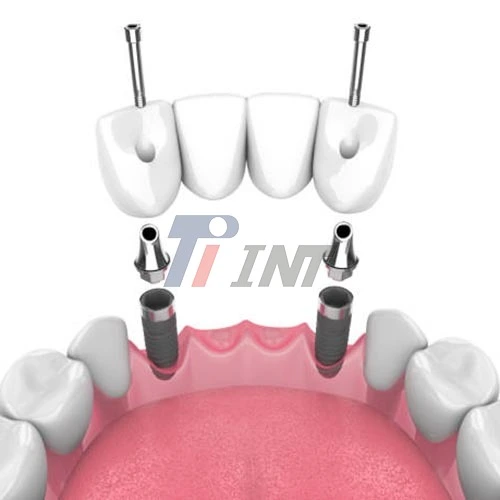
Choosing the right spindle for milling titanium in dental uses has a direct effect on the accuracy and quality of the finished prosthetics. To make milled titanium bar dental parts like implant-supported bars or custom abutments, the spindle needs to have enough power, keep the RPM fixed between 5,000 and 20,000, and keep vibrations to a minimum so that the titanium alloy doesn't get micro-fractures. High-frequency spindles with ceramic bearings and good cooling systems make sure that Grade 5 (Ti-6Al-4V) and Grade 23 (Ti-6Al-4V ELI) materials cut the same way every time. This keeps tolerances tight, which is important for passive-fit frames in full-arch repairs and reduces tool wear.
|
|
|
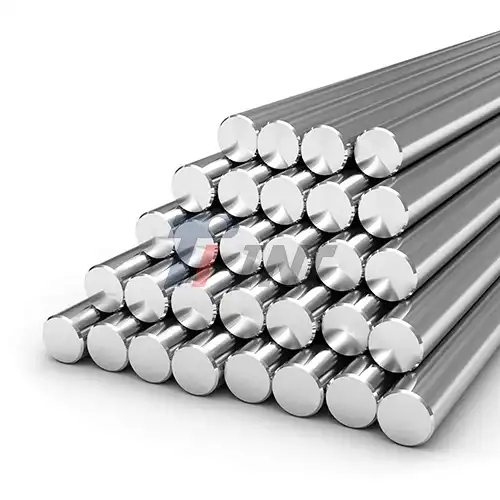
Understanding the Unique Demands of Titanium Machining in Dental Manufacturing
In dental implantology, titanium metals have become the gold standard because they are so biocompatible, don't rust, and are very strong. But cutting these materials presents unique problems that buying managers and production engineers need to think about in a planned way.
Why Titanium Poses Machining Challenges
Titanium doesn't transfer heat well, so when it's milled, the heat stays at the cutting edge instead of spreading out through the piece. This increase of heat can lead to early tool failure, work hardening of the material surface, and errors in the dimensions. The fact that titanium reacts chemically at high temperatures makes things even more difficult because it likes to stick to cutting tools, creating built-up edges and bad surface finishes.
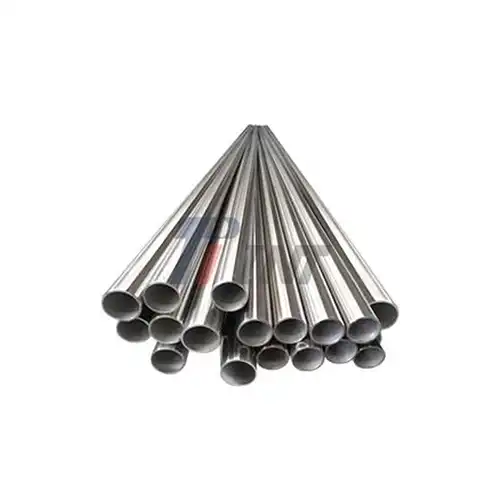
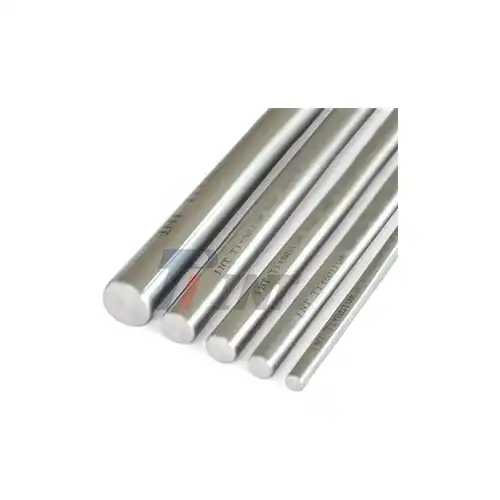
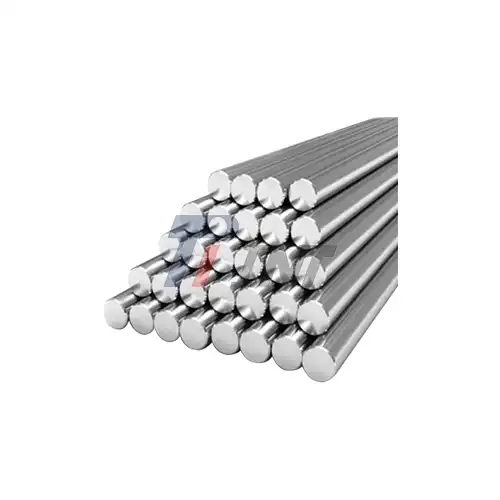
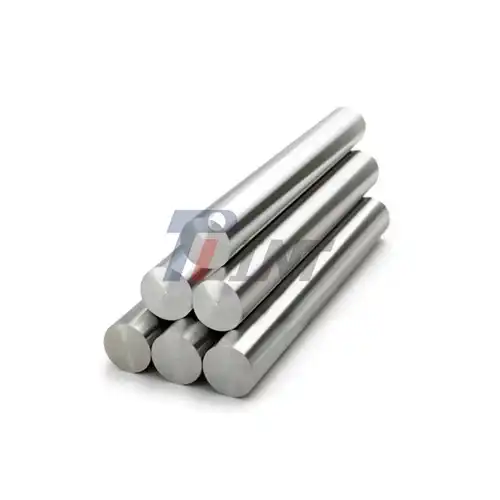
Medical device makers who work with titanium bars, rods, or blanks for dental frames need to keep these properties in mind. Picking the right spindle technology is very important because it has a direct effect on cutting stability, heat management, and, in the end, the level of accuracy needed for implant parts that need to be accurate to the micron level.
The Critical Role of Spindle Selection
In milling, the spindle is the most important part because it turns spinning power into accurate cutting action. When working with medical-grade titanium for oral uses, the spindle has to balance a lot of different performance traits. High-speed capabilities allow for efficient removal rates of material, but the system must remain stiff to avoid noise that could damage the surface. Cutting forces stay the same at different levels of cut when there is enough power, and dimensional drift doesn't happen during long production runs when there is thermal stability.
Dental labs and factories that make milled titanium bar dental implants usually use CNC milling centers with spindles that are either belt-driven or direct-drive. While belt-driven systems are cheaper and easy to maintain, they may cause small changes in speed when they are under load. Direct-drive designs are better for high-value medical parts where tolerances are very important because they offer better precision and dynamic reaction.
Understanding Global B2B Procurement Challenges in Medical Titanium Sourcing
When purchasing titanium parts and machining solutions for making dental devices, procurement teams face many problems that go beyond just comparing prices. Complexity in the supply chain, the need to follow rules, and the need to be able to track materials all add to the number of factors that need to be considered when making a choice.
Navigating Supply Chain Disruptions and Material Consistency
There are many steps in the global titanium supply chain that change the metal, from making sponges to casting ingots, shaping, and finally making blanks. Each step adds a chance for changes in the mechanical qualities, grain structure, and amounts of impurities. Medical equipment companies that need regular batches for FDA or CE certification need to work with providers that have strict process controls and lots of quality documentation.
Recent problems in the supply chain have shown how weak single-source buying methods are. These days, purchasing managers know how important it is to have sellers who keep enough goods on hand, have multiple ways to make things, and are honest about lead times and capacity limits. Verification of raw material certificates, heat treatment records, and measurement inspection reports are musts when looking at titanium bar sources for dental milling.
Compliance Requirements Across International Markets
Medical-grade titanium goods that are going to be used to make tooth implants have to meet a lot of different standards at the same time. The ASTM F136 standard says what the Ti-6Al-4V ELI (Extra Low Interstitial) metal must be made of and what its mechanical properties must be. The ISO 5832-3 standard says the same thing. The FDA's Quality System Regulation (21 CFR Part 820) and the EU Medical Device Regulation (MDR 2017/745) require makers and their material sources to keep more records and make sure they can be tracked.
Suppliers who keep their ISO 13485:2016 approval show that they have quality control systems that are in line with the needs of medical devices. This approval shows that they can give regulatory audits the lot tracking, process validation records, and material safety paperwork that they need. Noncompliance has costs that are much higher than the saves that are made at first by choosing uncertified providers. These costs include production delays and market withdrawal.
Strategic Sourcing Practices for Titanium Milling Equipment and Materials
For dentistry manufacturing buying strategies to work, technical requirements, quality control procedures, and long-term business goals must all be in line with each other. Production managers need to look at sources with a broad view that includes not only the prices of materials right now but also the total cost of ownership over the lifecycle of the product.
Supplier Evaluation Beyond Price Metrics
When buying things in the old-fashioned way, focusing on unit price alone means missing important value drivers that affect how efficiently the whole process works. Smart buying teams look at sources in a number of different areas when they are looking for milled titanium bar dental parts or raw materials. How quickly production problems are fixed when cutting problems happen depends on how well technical help is available. The ability to work together on research and development (R&D) lets people come up with better material specs or processing factors that cut down on waste and raise yields.
Lead times and logistics prices are affected by how close two companies are to each other, but global sourcing can give you access to specific materials or processing skills that aren't available in your own country. The best approach balances these factors by dividing vendors into groups based on how they help the business gain a competitive edge. These groups can be strategic partners, chosen suppliers, or transactional sources. Strategic partners are more involved, and they work together on things like capacity planning and joint efforts to make things better.
Material Specification and Customization Requirements
Titanium materials are often needed by companies that make dental implants in certain shapes, finishes, or ranges of mechanical properties that are specific to their manufacturing methods and end product designs. Standard bar stock might not be the best place to start when making complicated milled frames or one-of-a-kind abutments. Customization services from suppliers, like near-net-shape forging, precision centerless grinding, or surface treatment, make it possible for downstream efficiency gains that support higher prices.
When buying titanium blanks for CAD/CAM dentistry milling, the specs should include information about the grain structure orientation, residual stress patterns, and surface oxide features that affect how easy the blanks are to machine and how well the finished part works. Suppliers who know a lot about metals can tell you what the best conditions are for the material based on the grinding strategy, tool choice, and surface finish you need. With this consultative method, the connection between the buyer and the seller changes from buying goods to working together on engineering projects.
Leveraging Advanced Machining Technology for Titanium Dental Components
Precision machining technology and medical-grade materials work well together, which lets companies make their goods stand out by offering better quality, stability, and production efficiency. Spending money on the right milling tools pays off in the form of less waste, faster cycle times, and better control over the dimensions.
Spindle Technology Considerations for Titanium Milling
High-performance dentistry milling centers made for working with titanium have spindles that are specially built to handle the heat and mechanical needs of these alloys. Spindle speed affects the surface finish that can be achieved and the tools that can be used. Fine finishing of implant-abutment surfaces works best at speeds over 15,000 RPM with small-diameter carbide tools. Roughing processes that remove bulk material may work best at speeds between 3,000 and 6,000 RPM with bigger, stronger cutters.
Modern CNC dental milling systems usually come with spindle motors that give 3–7 kW of constant power and have torque curves that are designed for the 5,000–12,000 RPM range, which is where most titanium milling takes place. Ceramic hybrid bearings are hard and don't expand as much when they get hot or cold, so they can keep their radial runout limits tighter over a wider range of temperatures. Advanced lubrication systems and good chip removal stop contaminants from getting in, which speeds up the wear on bearings. Purchasing managers should ask how often the bearings need to be replaced and what the rotational runout should be across the working speed range.
Cutting Tool Integration and Process Optimization
Milling success isn't just based on the spindle's abilities; the whole cutting system has to work well together. When compared to standard taper systems, tool holder interfaces like HSK (Hollow Shank Taper) or Capto offer better stiffness and concentricity. This directly leads to better surface finishes and more accurate measurements on titanium parts. Shorter tool overhangs keep bending to a minimum, and well-balanced tool groups lower vibrations that can cause chatter in titanium's small stable cutting zones.
Companies that make milled titanium bar dental frames are using more and more custom toolpaths that are best for titanium's unique qualities. Using a trochoidal milling strategy keeps the tool engaged and the chip thickness constant. This spreads heat more evenly and makes the tool last longer. When compared to regular milling, climb milling direction lowers work hardening. However, the machine needs to be strong to handle cutting forces. Using high-pressure coolant to move through the spindle and tool body helps remove chips better while keeping the cutting zone's temperature in check.
Building Trust Through Material Transparency and Quality Assurance
In the medical device industry, where product mistakes can have big effects on patient safety and legal liabilities, things are closely watched. Dental implant makers must show that they have strict quality controls all along their supply lines, from where they get their raw materials to making sure the finished product is safe.
Certification and Traceability Documentation
When medical-grade titanium is used to make dentistry devices, each batch must have full material tracking that connects the finished part to the mill heat number that made it. This chain of paperwork makes it possible to act quickly if performance problems related to the material are found during post-market tracking. Reliable titanium providers keep digital records of each bar stock or blank, linking each one to its material certificates, mechanical test results, and chemical makeup analysis.
While ISO 9001:2015 and ISO 13485:2016 certifications are basic quality management standards, medical device makers should make sure that sellers actually use these systems, rather than just keeping certifications as marketing credentials. Supply deals with audit rights clauses let third parties check on-site on a regular basis how things are made, how quality is controlled, and how records are kept. Suppliers who are open and willing to let customers audit their systems show that they believe in their quality systems and are truly committed to working with customers.
In-Process Quality Controls and Statistical Process Monitoring
In addition to checking the material as it comes in, companies that mill titanium dental parts must also have strong controls in place to find any differences in size or flaws on the surface before they add a lot of value through cutting. Statistical process control charts show trends that suggest tool wear, temperature drift, or material inconsistencies that need to be fixed. CNC milling centers that have automated measurement systems built in allow for 100% checking processes for critical dimensions without slowing down production.
Passive-fit implant systems need very precise measurements because many joint connections have to line up at the same time without putting any stress on the structure. These measurements must be accurate to within 20 microns. Getting this level of consistency across production batches rests on factors that can be controlled at different stages of the process, such as the state of the material, the stability of the machine's temperature, the rate of tool wear, and the repeatability of the fixturing. When manufacturers use Cpk values to show how capable their processes are, they show measurable quality assurance that sets their products apart in competitive buying reviews.
How Baoji INT Medical Titanium Supports Advanced Dental Manufacturing
Our business has been focusing on medical-grade titanium materials for over twenty years, which makes us a valuable partner for dental device makers who want to make sure their products are of the highest quality and follow all regulations. Our vertically integrated skills cover everything from processing raw materials to making precise parts. This lets us offer full technical help that goes beyond just supplying materials.
Medical-Grade Material Expertise and Customization
Our factories make both commercially pure titanium and Ti-6Al-4V ELI (Grade 23) metals that are specially made for use in medical implants. These materials are carefully made to make sure that the amounts of oxygen, nitrogen, and carbon are just right so that they are biocompatible and still easy for dentistry makers to work with. Every package comes with a material certificate that shows full chemistry analysis, mechanical property tests, and the ability to track back to the original ingot sources.
We know that standard bar stock might not work for all uses, so we offer customization services like precise diameter grinding, specific length cutting, and surface treatment that are made to fit your machine processes. Our metallurgical team can help production engineers figure out the best ways to work with materials for their specific milling strategies, tool choices, and part shapes. This expert teamwork often finds ways to change the specifications of materials in a way that shortens your cycle times or makes your tools last longer.
Quality Systems Aligned with Medical Device Requirements
Our buildings have EU CE, ISO 13485:2016, and ISO 9001:2015 standards, which show that they have quality management systems that are built to work with medical device supply chains. These systems make sure that every production lot goes through strict checking procedures. Tests for material properties, surface quality, and dimensions are all recorded in digital files that can be accessed. Batch traceability connects produced goods to manufacturing factors and sources of raw materials, which lets you quickly answer any quality questions that come up later.
We know that buying things in the medical field isn't just about technical specs; it's also about how reliable the supply is and how stable the relationship is. As part of our inventory management, we keep safety stock of frequently requested materials. This reduces the amount of time that customers have to wait when demand changes. Our customers can plan their operations with confidence because they know that material supply will meet their obligations to downstream customers and marketing partners.
Conclusion
When choosing the right spindle technology for milling titanium dental parts, you need to find a balance between speed, torque, heat stability, and precision retention across the specific working parameters your applications need. milled titanium bar dental frames that support full-arch restorations rely on machining systems that can keep the quality at the micron level while dealing with the thermal and mechanical problems that these materials have. When using strategic buying methods, all of a supplier's qualities are evaluated, including how well they follow regulations, how well they can help with technical issues, and how easily materials can be customized. When manufacturers work with skilled medical-grade titanium providers, they get access to metallurgical knowledge, quality documentation systems, and a reliable supply chain.
FAQ
What spindle speed range works best for milling Grade 5 titanium dental bars?
The best spinning speeds rely on the job and the size of the tool. When using larger diameter end mills for roughing, the best speeds are usually between 3,000 and 6,000 RPM. When using smaller tools for finishing, the best speeds are between 10,000 and 15,000 RPM. The most important thing to keep in mind is keeping the right surface feet per minute (SFM) for the cutting tool material. For carbide tools on Ti-6Al-4V metal, this is usually between 250 and 350 SFM. At these speeds, your wheel needs to have enough force to keep the tool from deflecting and chip formation even during the cut.
How does spindle cooling affect titanium milling quality?
When grinding titanium, accurate measurements and tool performance are directly affected by how well the wheel is cooled. Titanium doesn't transfer heat well, so heat builds up at the cutting edge. If the machine isn't cooled properly, this heat can move to the spindle bearings and case. Thermal expansion changes the shape of the cut part and speeds up the wear on the bearings. High-performance dentistry milling centers have both spindle cooling circuits and through-tool coolant supply. This keeps the machine's working temperatures stable while chip evacuation and heat management at the cutting zone are taken care of.
Can standard dental milling spindles handle continuous titanium production?
Standard mills that were made mostly for milling zirconia or PMMA may not be able to handle the mechanical and heat needs of ongoing titanium processing. Titanium has stronger cutting powers and more stable heat than these materials, so it might be able to handle more work than the duty cycle values of spindles designed for lighter loads. Manufacturers who want to make a lot of titanium should ask for industrial-grade wheels with strong bearing systems, enough power levels, and cooling capacity designed for metal cutting uses instead of ceramic or polymer processing.
Partner with Baoji INT Medical Titanium for Superior Dental Manufacturing Materials
To get consistent quality in your milled titanium bar dental parts, you should start by getting approved medical-grade materials from a source with a lot of experience. Baoji INT Medical Titanium Co., Ltd. has been working in the titanium business for more than 30 years, specializing in medical device uses. Our Grade 5 and Grade 23 titanium alloys are made to meet the standards set by ASTM F136 and ISO 5832-3. They also come with full material certificates and batch tracking paperwork that meet FDA and CE rules. We know what dental makers need in terms of machining features and can change the material specs, surface conditions, and geometries to make your production more efficient. Get in touch with our technical team at export@tiint.com to talk about how our medical titanium materials can help you meet your goals for making dental devices and improve your place as a reliable milled titanium bar dental provider.
References
1. Donachie, M.J. (2000). Titanium: A Technical Guide, 2nd Edition. ASM International, Materials Park, Ohio.
2. Ezugwu, E.O. and Wang, Z.M. (1997). "Titanium Alloys and Their Machinability: A Review." Journal of Materials Processing Technology, 68(3), 262-274.
3. Rack, H.J. and Qazi, J.I. (2006). "Titanium Alloys for Biomedical Applications." Materials Science and Engineering C, 26(8), 1269-1277.
4. Elias, C.N., Lima, J.H.C., Valiev, R., and Meyers, M.A. (2008). "Biomedical Applications of Titanium and Its Alloys." Biological Materials Science, 60(3), 46-49.
5. Geetha, M., Singh, A.K., Asokamani, R., and Gogia, A.K. (2009). "Ti Based Biomaterials: The Ultimate Choice for Orthopaedic Implants – A Review." Progress in Materials Science, 54(3), 397-425.
6. Wang, K. (1996). "The Use of Titanium for Medical Applications in the USA." Materials Science and Engineering A, 213(1-2), 134-137.
_1753926673602.jpg)
_1752463990252.webp)