The Benefits of Using Titanium for Brain Surgery


 2025-12-24 08:55:30
Brain surgery is a delicate and complex procedure that requires the utmost precision and care. In recent years, the use of titanium in neurosurgical procedures has revolutionized the field, offering numerous advantages for both surgeons and patients. This article explores the remarkable benefits of using titanium for brain surgery, with a particular focus on titanium plate for brain surgery.
|
|
|

The Unique Properties of Titanium in Neurosurgery
Titanium has emerged as a game-changer in the medical field, especially in neurosurgery. Its exceptional properties make it an ideal material for various surgical applications, including the creation of titanium plates for brain surgery. Let's delve into what makes titanium so special:
Biocompatibility: One of the most crucial aspects of any material used in medical implants is its ability to coexist harmoniously with the human body. Titanium excels in this regard, as it rarely triggers adverse reactions or rejections by the body's immune system. This biocompatibility ensures that titanium plates for brain surgery can remain in place for extended periods without causing complications.
Strength-to-weight ratio: Despite being incredibly strong, titanium is remarkably lightweight. This unique combination makes it perfect for use in brain surgery, where minimizing additional weight on delicate brain structures is paramount. Titanium plates for brain surgery provide robust support without placing undue stress on surrounding tissues.
Corrosion resistance: The human body is a complex environment with various fluids and chemicals that can potentially corrode implants. Titanium's exceptional resistance to corrosion ensures that titanium plate for brain surgery maintain their structural integrity over time, reducing the risk of implant failure or the need for revision surgeries.
Osseointegration: Titanium has a remarkable ability to bond with bone tissue, a process known as osseointegration. This property is particularly beneficial in brain surgery, as it allows titanium plates to form a strong, stable connection with the skull, providing long-term support and protection.
Non-ferromagnetic: Unlike some other metals, titanium is non-ferromagnetic. This characteristic is crucial for patients who may need to undergo MRI scans after surgery. Titanium plates for brain surgery do not interfere with magnetic fields, allowing for clear and accurate imaging without compromising patient safety.
Applications of Titanium Plates in Brain Surgery
Titanium plates play a vital role in various neurosurgical procedures. Their versatility and unique properties make them indispensable tools in the hands of skilled neurosurgeons. Here are some key applications of titanium plates for brain surgery:
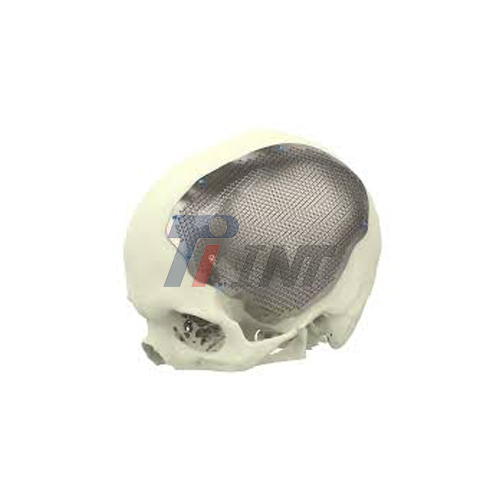
Cranial reconstruction: Following procedures that require the removal of a portion of the skull, such as decompressive craniectomy, titanium plates are used to reconstruct and protect the brain. These plates provide a durable and secure barrier, safeguarding the brain from external trauma while allowing for proper healing.
Skull fracture repair: In cases of severe skull fractures, titanium plates offer an effective solution for stabilizing and repairing the damaged bone. The plates can be precisely shaped and fitted to the contours of the patient's skull, ensuring optimal healing and cosmetic outcomes.
Tumor removal: When brain tumors are surgically removed, the resulting defect in the skull may need to be addressed. Titanium plate for brain surgery can be used to fill these gaps, restoring the skull's structural integrity and protecting the underlying brain tissue.
Aneurysm clipping: In the treatment of cerebral aneurysms, titanium clips are often used to isolate the aneurysm from normal blood flow. While not plates per se, these clips demonstrate the versatility of titanium in neurosurgery.
Craniofacial reconstruction: For patients with congenital skull deformities or those who have suffered severe facial trauma, titanium plates can be used in complex craniofacial reconstruction procedures. The malleability of titanium allows surgeons to create custom-fitted plates that restore both function and aesthetics.
Advantages of Titanium Plates in Brain Surgery
The use of titanium plates for brain surgery offers numerous advantages that contribute to improved patient outcomes and surgical success. Let's explore these benefits in detail:
Enhanced surgical precision: Titanium plates can be precisely engineered and customized to fit each patient's unique anatomy. This level of precision allows neurosurgeons to achieve optimal results, ensuring proper alignment and support for the brain and skull.
Reduced risk of infection: The biocompatibility of titanium, coupled with its smooth surface, minimizes the risk of bacterial colonization and subsequent infections. This is crucial in brain surgery, where infections can have severe consequences.
Improved healing and recovery: The osseointegration properties of titanium promote faster and more effective healing. As the bone tissue bonds with the titanium plate, it creates a stable and secure environment for recovery, potentially reducing the overall recovery time for patients.
Long-term durability: Titanium plate for brain surgery are designed to last for many years, if not a lifetime. Their resistance to corrosion and fatigue means that patients can enjoy long-term protection without the need for frequent replacements or revisions.
Minimal interference with imaging: The non-ferromagnetic nature of titanium allows for clear post-operative imaging, including MRI and CT scans. This is crucial for monitoring recovery and detecting any potential complications early on.
Reduced thermal conductivity: Titanium has low thermal conductivity, which helps maintain a stable temperature around the surgical site. This property can be beneficial in preventing temperature-related complications during and after surgery.
Aesthetic considerations: While not the primary concern in brain surgery, the use of titanium plates can lead to better cosmetic outcomes. The plates can be contoured to match the patient's skull shape, minimizing visible irregularities and promoting a more natural appearance.
Versatility in application: Titanium plates for brain surgery come in various shapes and sizes, allowing surgeons to address a wide range of neurosurgical challenges. From small, intricate plates for delicate procedures to larger plates for extensive reconstructions, titanium offers unparalleled versatility.
The field of 3D printing is also opening up new possibilities for creating highly customized titanium plates for brain surgery. This technology allows for the production of complex, patient-specific implants that perfectly match the individual's anatomy, potentially leading to even better surgical outcomes and reduced operating times.
Conclusion
In conclusion, the use of titanium plates for brain surgery represents a significant advancement in neurosurgical techniques. The unique properties of titanium, combined with ongoing research and technological developments, continue to improve patient care and surgical outcomes. As we look to the future, it's clear that titanium will play an increasingly important role in pushing the boundaries of what's possible in brain surgery.
For those interested in learning more about medical titanium products, including titanium plate for brain surgery, Baoji INT Medical Titanium Co., Ltd. offers a wealth of expertise and high-quality solutions. With over 30 years of experience in the research, development, and production of titanium materials, INT has established itself as a leader in the medical titanium industry. To explore their range of products or discuss specific requirements, interested parties can reach out to INT at export@tiint.com.
References
1. Titanium in Medicine: Material Science, Surface Science, Engineering, Biological Responses and Medical Applications. Springer, 2001.
2. Journal of Neurosurgery: "Use of titanium implants in neurosurgery." Volume 94, Issue 4, 2001.
3. Materials Science and Engineering: C, "Titanium for medical applications: A review." Volume 108, 2020.
4. Neurosurgical Review: "Titanium cranioplasty and the prediction of complications." Volume 36, Issue 2, 2013.
5. Acta Neurochirurgica: "Titanium cranioplasty in neurosurgery." Volume 159, Issue 10, 2017.
_1752462199458.webp)
_1749191822714.webp)