
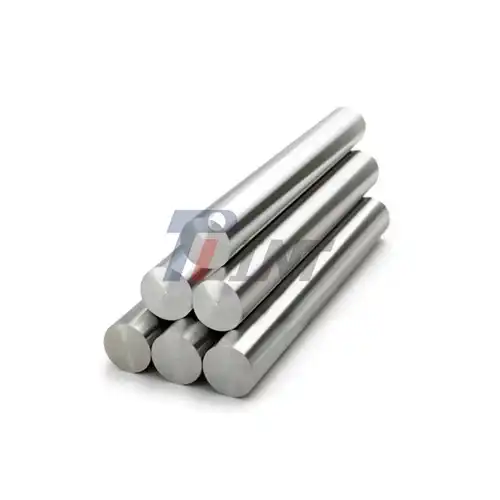
Why is titanium used in brain surgery?


 2025-12-26 08:46:21
Brain surgery is a complex and fragile method that requires accuracy, expertise, and the most progressed therapeutic innovations accessible. Among the different materials utilized in neurosurgery, titanium stands out as a favored choice for numerous applications, especially in the frame of titanium plate for brain surgery. This article delves into the reasons why titanium has become an indispensable material in neurosurgical procedures and explores the benefits of using titanium plates in brain surgery.
|
|
|


The Unique Properties of Titanium in Medical Applications
Titanium has developed as a progressive fabric in the therapeutic field, particularly in neurosurgery. Its interesting combination of properties makes it a perfect choice for brain surgery applications. Titanium is famous for its extraordinary strength-to-weight proportion, which implies it's unimaginably solid yet surprisingly lightweight. This characteristic is pivotal in brain surgery, where each gram of things and the requirement for solidness are fundamental.
Moreover, titanium boasts excellent biocompatibility, a property that sets it apart from many other materials. When used in titanium plate for brain surgery, it demonstrates a remarkable ability to integrate with human tissue without causing adverse reactions. This biocompatibility significantly reduces the risk of rejection or inflammation, which is vital in the sensitive environment of the brain.
Another noteworthy property of titanium is its corrosion resistance. In the moist, oxygen-rich environment of the human body, many metals would corrode over time. However, titanium forms a protective oxide layer on its surface, making it highly resistant to corrosion. This durability ensures that titanium plates used in brain surgery remain stable and functional for extended periods, reducing the need for follow-up surgeries to replace or adjust implants.
Furthermore, titanium is non-ferromagnetic, meaning it's not affected by magnetic fields. This property is crucial for patients who may need to undergo MRI scans after surgery. Unlike some other metals, titanium plates do not interfere with MRI imaging, allowing for clear and accurate post-operative monitoring of the brain.
The Role of Titanium Plates in Brain Surgery
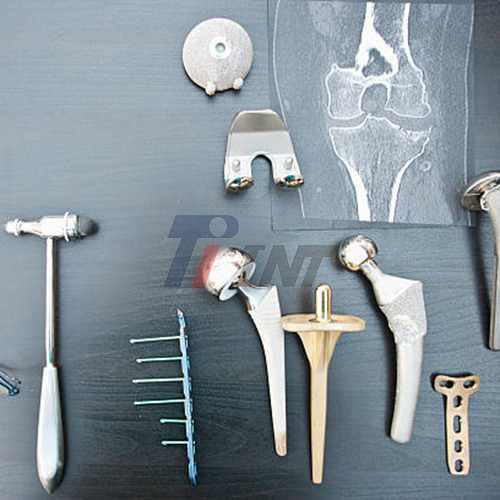
Titanium plates play a significant part in different neurosurgical methods. One of the essential applications of titanium plate for brain surgery is in cranioplasty, a method to repair cranium abandons. These abandonments may result from injury, tumor evacuation, or decompressive craniectomy. In such cases, titanium plates are utilized to reproduce the cranium, giving assurance to the brain and reestablishing the skull's auxiliary judgment. The versatility of titanium allows for the creation of custom-shaped plates that perfectly fit the patient's skull contour. This customization is achieved through advanced 3D printing technologies or precise machining processes. The ability to create patient-specific implants ensures a better fit, improved aesthetic outcomes, and potentially faster recovery times.
In addition to skull reconstruction, titanium plates are used in various other neurosurgical applications. They serve as fixation devices in procedures such as aneurysm clipping, where they help secure clips in place to prevent bleeding from ruptured blood vessels in the brain. Titanium plates are also employed in spinal neurosurgery, providing stability and support in cervical fusion procedures.
The use of titanium plates in brain surgery has significantly improved surgical outcomes. These plates offer superior stability, helping to maintain the position of bone flaps or implants during the healing process. This stability is crucial for proper healing and can lead to better long-term results for patients. Moreover, the low profile of titanium plates minimizes their visibility under the skin, addressing aesthetic concerns that patients may have post-surgery. This feature is particularly important in craniofacial surgeries where visible implants could affect a patient's appearance and self-esteem.
Advancements in Titanium Plate Technology for Neurosurgery
The field of neurosurgery is always advancing, and so is the innovation behind titanium plate for brain surgery. Recent advancements have further enhanced the efficacy and safety of these implants, pushing the boundaries of what's possible in neurosurgical interventions. One significant advancement is the development of porous titanium plates. These plates feature a micro-porous structure that mimics the natural architecture of bone. This design promotes osseointegration – the direct structural and functional connection between living bone and the surface of the implant. Porous titanium plates encourage bone ingrowth, leading to a stronger and more stable connection between the plate and the surrounding bone tissue.
Another innovative development is the incorporation of bioactive coatings on titanium plates. These coatings can include materials such as hydroxyapatite, which is similar in composition to natural bone mineral. Such coatings further enhance the biocompatibility of the plates and can promote faster healing and integration with the surrounding tissue. Researchers are also exploring the potential of drug-eluting titanium plates. These progressed inserts seem to be planned to discharge antimicrobials or other restorative operators straightforwardly at the surgical location, possibly lessening the chance of post-operative diseases or complications.
The advent of 3D printing technology has revolutionized the production of titanium plates for brain surgery. This technology allows for the creation of highly complex and patient-specific implants with unprecedented precision. 3D-printed titanium plates can be designed to match the exact contours of a patient's skull, leading to better outcomes and reduced surgery times.
Furthermore, ongoing research is investigating the use of shape-memory titanium alloys in neurosurgery. These materials have the ability to change shape in response to temperature changes, potentially allowing for minimally invasive insertion of plates that can then expand or conform to the desired shape once in place. As innovation proceeds to development, we can anticipate seeing indeed more inventive applications of titanium in neurosurgery. These advancements guarantee to advance progress in surgical results, diminish complications, and upgrade the quality of life for patients experiencing brain surgery.
Conclusion
The utilization of titanium in brain surgery, especially in the frame of titanium plates, has revolutionized neurosurgical strategies. Its one-of-a-kind properties – quality, gentility, biocompatibility, and erosion resistance – make it a perfect fabric to utilize in the delicate environment of the brain. From skull reconstruction to aneurysm clipping, titanium plates have proven their worth in various neurosurgical applications.
For those interested in learning more about medical titanium products, including titanium plate for brain surgery, Baoji INT Medical Titanium Co., Ltd. offers a comprehensive range of high-quality titanium materials. With over 30 years of experience in the research, development, and production of titanium materials, INT provides cutting-edge technology and insights into the titanium market. For more information, please contact us at export@tiint.com.
References
1. Zanotti, B., Zingaretti, N., Verlicchi, A., Robiony, M., Alfieri, A., & Parodi, P. C. (2016). Cranioplasty: Review of Materials. Journal of Craniofacial Surgery, 27(8), 2061-2072.
2. Kuttenberger, J. J., & Hardt, N. (2001). Long-term results following reconstruction of craniofacial defects with titanium micro-mesh systems. Journal of Cranio-Maxillofacial Surgery, 29(2), 75-81.
3. Winder, J., & Bibb, R. (2005). Medical Rapid Prototyping Technologies: State of the Art and Current Limitations for Application in Oral and Maxillofacial Surgery. Journal of Oral and Maxillofacial Surgery, 63(7), 1006-1015.
4. Wang, X., Xu, S., Zhou, S., Xu, W., Leary, M., Choong, P., Qian, M., Brandt, M., & Xie, Y. M. (2016). Topological design and additive manufacturing of porous metals for bone scaffolds and orthopaedic implants: A review. Biomaterials, 83, 127-141.
5. Niinomi, M. (2008). Mechanical biocompatibilities of titanium alloys for biomedical applications. Journal of the Mechanical Behavior of Biomedical Materials, 1(1), 30-42.
_1753926673602.jpg)
_1752643437358.webp)
_1750668839491.webp)