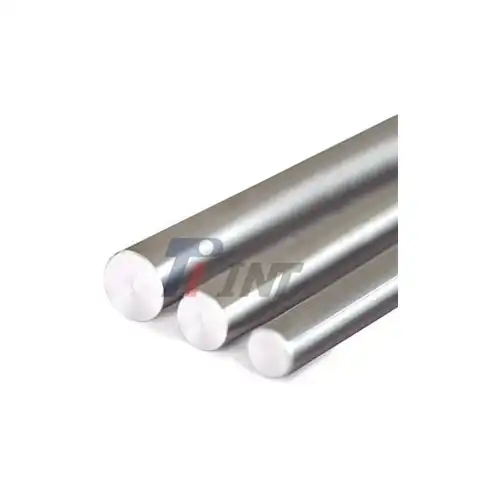
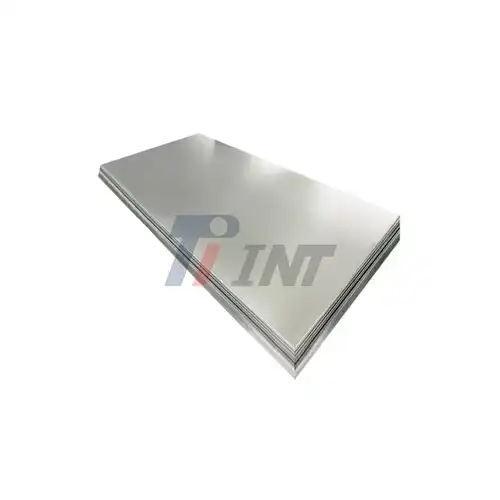
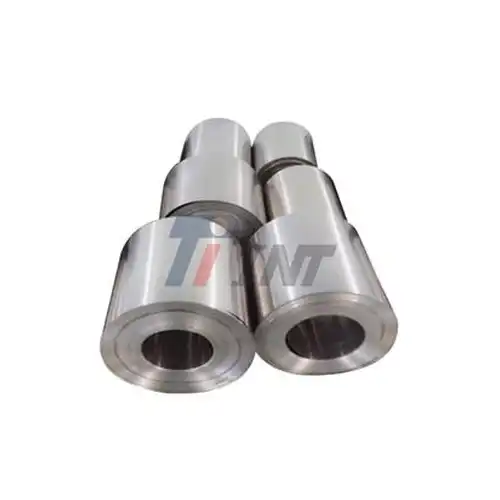
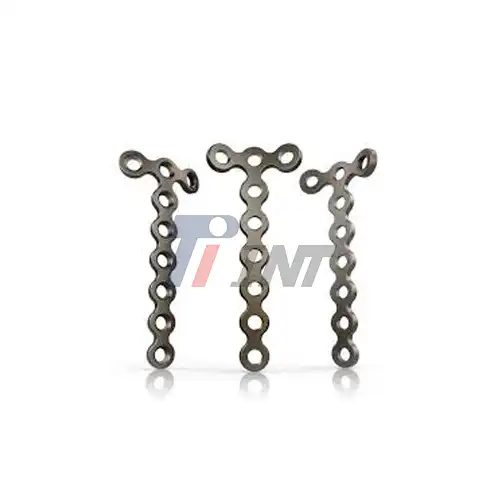
Titanium Bar – A Flexible and High-Strength Metal for Your Needs


 2026-06-08 14:28:05
Medical titanium bar is clearly the best choice for people who make medical products and need materials that can handle high temperatures and pressures. This special raw material is great for surgery implants, medical devices, and precision tools because it works well with living things and has a lot of the same mechanical properties as bone. Every day, buying managers have to deal with big problems that our titanium bars help them solve. These implants don't have to worry about being rejected, don't need stress protection, which breaks down bone, and are stable over time in physiological settings where stainless steel can't hold up.
|
|
|
Understanding Medical Titanium Bars: Properties, Types, and Applications
Defining Medical-Grade Titanium Materials
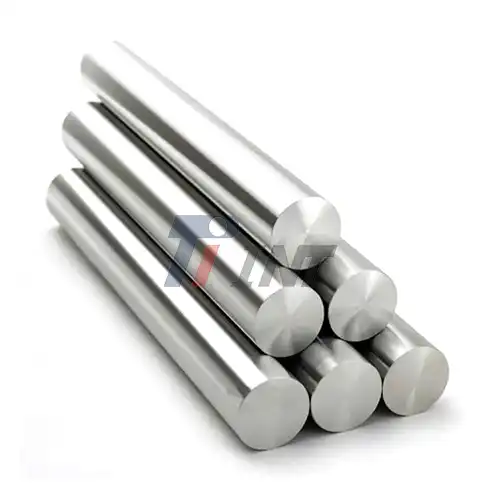
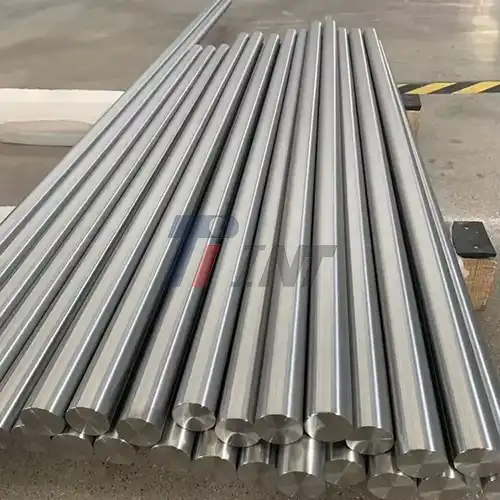
Medical titanium bar represent round pieces of high-precision metal that were made to be used in medical situations. These bars are different from industrial ones because they are made with vacuum arc remelting and controlled thermomechanical processes to make sure the microstructures are perfect. Most of the time, medical grades like Ti6Al4V ELI (Extra Low Interstitial, Grade 23) and pure titanium for sale are used. The metal Ti6Al4V is made up of 6% aluminum and 4% vanadium. It's strong and won't hurt live things. This stuff is called ELI because it has less oxygen, nitrogen, and iron in it. This makes it much more bendable and less likely to break, which are both important for implants that are put in and taken out of the body many times.
Pure titanium grades (1-4) get stronger as more oxygen is present. Grade 4 is the most widely pure option and has the best mechanical performance. There are various uses for every grade. When you need the most shapeability, Grade 1 is best. When you need more strength without losing its resistance to rust, Grade 4 is best.
Material Properties That Define Performance
The things about a material that decide how well it works directly relate to the way titanium bars look. The physical characteristics have a direct effect on how well they work for medical reasons. The density is only 4.51 g/cm³, which is not nearly as high as stainless steel's 8 g/cm³ density. Because permanent implants are lighter, patients will have less to carry while they heal, and they will also feel better. This means that Ti6Al4V ELI can hold as much weight as much harder materials. Its tensile strength is at least 895 MPa.
Titanium is not like silver or cobalt-chromium metals because it has an elastic toughness of only about 110 GPa, which is only half of that of those metals. When used in orthopedics, this feature is very important because materials with moduli closer to real bone (10–30 GPa for cortical bone) spread stress more evenly across the contact between the bone and implant. A stress buffering event takes place when the device is very stiff compared to the bone. This means that the implant loads that the bone would normally carry. Over time, this breaks down the bone and lets the implant come loose.
Manufacturing Excellence and Quality Control
When making medical-grade titanium bars, you need to be very careful with the process, much more so than when making regular bars for industry. Vacuum arc remelting technology is often used for more than one melting step in the manufacturing process. This fixes any problems and makes sure that the chemicals are the same all over the bar. By hot working at controlled temperatures, the grain structure is fine-tuned. Through cold working and annealing steps, the metal is then made to meet the exact technical requirements set by international standards like ASTM F136 and ISO 5832-3.
As part of quality assurance, the size is checked, the mechanical properties (such as tensile strength, stretch, and hardness) are tested, the chemical makeup is studied, and the microstructure is examined. Health care products are checked to make sure they follow the rules for each batch. Either a polished or sanded surface is chosen based on the need. Sandblasted surfaces help devices that touch bone fuse together better, while polished surfaces make moving parts less likely to rub against each other.
Applications Across Medical Specialties
Orthopedic care is the main application for medical titanium bars. Titanium is used to make hip and knee replacement parts, spine fusion bars, impact plates, and intramedullary nails because it has a unique set of qualities. Tooth implants are another important use. These are made of titanium screws that are put into the jawbone and act like real tooth roots. The material is safe, which means it can join with bone directly through osseointegration. This means that there is no need for glues or cements.
Because surgery tools made from titanium bars don't rust, they can be cleaned many times before they break. Non-ferromagnetic materials can be used with MRIs, which is a big plus over stainless steel options. They are used in cardiovascular applications like heart valve parts and pacemaker housings. 3D-printed custom implants made from titanium bar stock are one of the new uses. These implants can be made in any shape needed for each patient and improve the effects of surgery.
Why Choose Medical Titanium Bars? Benefits and Performance Advantages?
Superior Biocompatibility Minimizes Patient Risk
The most important thing to think about when picking graft materials is how well they work with living things. Medical titanium bar works very well in this area because it makes a stable layer of titanium dioxide (TiO₂) when it comes in touch with air. Metal ions can't get into the nearby tissues because of this passive oxide film. This stops the allergic and inflammation responses that often happen with stainless steels that have nickel in them. Titanium implants have been studied in humans for many years and have been shown to work well with the body over time with few negative effects on tissue. This backs up their reputation as the best for permanent implants.
What it is made of doesn't combine with human fluids or the immune system because it is bio-inert. This stability is very helpful for people who need implants that will last a lifetime, since the material could break down over time and need surgery to fix it. Cobalt-chromium alloys can sometimes make people allergic to metal, but titanium doesn't generally do that. In short, this makes it easier for more people to get implants.
Corrosion Resistance Extends Implant Lifespan
The human body is one of the worst places you can think when it comes to technical things. A lot of metals are broken down very quickly by proteins, chloride ions, and the pH levels of body fluids. Titanium's protective oxide layer comes back quickly after being scratched or broken. This means that even when it's being used physically, it doesn't rust. Being able to fix itself means that implants will stay in good shape for many years.
Tests done in the lab show that titanium doesn't rust when it's exposed to fake body fluid, but stainless steel does rust very quickly when the same conditions are used. Because implants don't rust, they last longer, which means they don't need to be fixed as often and don't have to pay as much for that. Implants that hold weight will keep working well for as long as they're supposed to because the material doesn't lose any of its mechanical properties.
High Strength-to-Weight Ratio Enables Optimal Design
The strength-to-weight ratio tells you how useful a material is by dividing its tensile strength by its mass. In terms of ratio, titanium has about 76 kN·m/kg, which is about 20% more than stainless steel, which has about 63 kN·m/kg. Ti parts can be just as strong as stainless steel ones, but they can be a lot lighter. People with spinal implants are less likely to be in pain, people with implants in their limbs need less energy to move, and doctors who use better-designed tools are less likely to get tired during long treatments.
While still being able to hold a lot of weight, our titanium bars put the least amount of stress on the body as a whole. This quality is particularly helpful when the item needs to be light, like during cranial surgery, where heavy items could be painful or damage the structure. Because small but strong devices can be made, surgery can be done with less damage, which helps people heal faster.
Fatigue Resistance Ensures Long-Term Reliability
In medical implants, stress patterns that happen over and over again can wear down materials over time, even if the highest stress is less than their ultimate tensile strength. Every year, people move, which puts millions of loads on their hip and knee joints. Because titanium is very hard to wear down, it can handle these repeated stress cycles without breaking or cracking.
It takes about half as much force to stretch Ti6Al4V ELI as it does to pull it apart. This is a lot higher than what many other materials can handle. Because of this feature, there is less chance of a severe implant failure. This keeps the patient safer and makes the device last longer. During everyday tasks and high-impact sports, implants are put on and taken off in a lot of different ways. This means that the materials must be strong enough to handle these different kinds of stress without breaking too quickly.
Low Elastic Modulus Promotes Bone Integration
It's hard to protect against stress when you're doing hip implantology. Sometimes, when the implant is much stiffer than the bone, it can carry loads that the bone would normally have to carry. The bone doesn't get the muscular input it needs to stay dense because of this. This breaks down the bone around the implant, which could cause it to come loose and need surgery to fix.
Titanium is stiffer than bone (about 110 GPa), but not as stiff as stainless steel (200 GPa) or cobalt-chromium (240 GPa). This is much more like what the body needs. Having the right moduli helps the stress be spread out more evenly between the bone and the implant. This lets the bone grow and adapt better around the implant. Studies in humans have shown that titanium implants work better with the bone and don't protect against stress as well as stronger choices. This will make things better in the long run.
Customization Flexibility Supports Innovation
These days, making medical products needs materials that can bend and shape in different ways to fit each need. There are a lot of different sizes of our titanium bars. They are 6 mm thick, 150 mm long, and 1000 mm wide. This lets manufacturers pick the best shapes for CNC cutting jobs while wasting as little material as possible. Design professionals can pick the best surface qualities for each job by picking from a variety of surface finishes, such as smooth and rough ones.
Original equipment manufacturers (OEMs) can use this freedom to create complicated implant designs that work with new ways of performing surgery. Start with high-quality titanium bar stock that has uniform mechanical properties and exact measurements. This will allow you to make custom implant forms that best spread stress, help bone grow, or fit the anatomy of each patient.
How to Select the Best Medical Titanium Bar for Your Needs?
Evaluating Application-Specific Requirements
It is important to think about the processing, biological, and technical needs when picking the right titanium type. The commercially pure types of titanium are the weakest and least likely to rust or react with living things. In other words, they work best for tooth implants and other uses that don't put a lot of weight on them. Ti6Al4V and Ti6Al4V ELI are the best materials for body parts that have to hold a lot of weight and are subject to a lot of cycle forces because they are much harder and less likely to break down over time.
Selecting the right medical titanium bar is affected by the program setting. Pure titanium of Grade 1 or Grade 2 that is sold in stores is best for tools that need to be as flexible as possible for difficult shaping jobs. The mechanical properties of Ti6Al4V ELI are better than those of other materials. This is important for parts that are stressed a lot, like bone screws and plates. The people in charge of buying things can pick materials that meet performance goals without spending too much.
Performance Parameters and Grade Comparison
There are big differences in how well a gadget works between grades when it comes to mechanical features. If you pull on Ti6Al4V ELI, it will break, but it can also stretch by at least 10%. This lets it bend a lot and keeps it from breaking so easily when hit. Grade 4 titanium that is sold in stores has a tensile strength of about 550 MPa. This is strong enough for many uses but not for hip implants that are under a lot of stress.
All medical grades are very good at stopping rust, but commercially pure grades work a little better because they don't have any alloying elements. All medical grades are safe for long-term placement, as shown by biocompatibility testing that meets ISO 10993 standards. This has been shown in clinical trials for many years. When making the final choice, the needs for professional ability are weighed against the needs for cost and ease of use.
Supplier Selection and Quality Benchmarks
It's just as important to choose the right service as it is to choose the right medium. Those who make medical products that people trust keep certificates that show they follow quality control systems designed for that purpose, such as ISO 13485:2016. With this license, you can be sure that the seller follows strict quality controls. These controls include risk management, design controls, and government-set standards for tracking.
There should be a material approval with every package that notes the chemicals used, the mechanical properties, and the history of heat treatment. Test reports from approved labs show that the standards have been met by a third party. Supply chain issues that could slow down plans for making or developing a product are less likely to happen if you have long-term relationships with providers based on stable quality, on-time delivery, and quick technical support.
Cost Considerations and Procurement Strategy
The price of materials depends on a lot of factors, including the type of metal, the width, the quantity, and the market state, which impacts the availability of raw materials. Usually, Ti6Al4V ELI costs more than widely pure grades because it has to be made in a more difficult way and has to follow stricter rules about what it is made of. It is possible to make specific production runs when you buy in bulk, which can save you money because the cost per unit goes down a lot.
Look at more than just the item's purchase price to get an idea of how much it costs to own it all together. When quality is stable, there is less machine scrap and repair work. If shipping is solid, there won't be any delays in production. Getting expert help while a product is being made speeds up the time it takes to get to market. Small price differences between companies are often worth it for these extra services, especially when making new goods that need experts to know a lot about the materials.
Procurement Guide: Buying Medical Titanium Bars with Confidence
Identifying Trusted Purchasing Channels
It's much better to buy medical titanium bar from well-known manufacturers directly than to go through brokers. Wholesalers can't make changes to goods, but manufacturers can. They also keep better records and offer better customer service. Talk to people in the same business as you and read reviews from past customers to find out about a possible supplier's production skills, quality systems, and name in the market.
When you go to medical device trade shows, you can meet sellers in person, see how things are made on factory tours, and meet other people in your business who can share their buying experiences. Medical supplies-focused B2B sites have lists of approved providers that can be searched. Still, you should do a lot of study to be sure that the sellers are qualified and have the right credentials.
Understanding Order Parameters and Lead Times
Minimum order sizes vary by seller and product, but depending on the width and grade, they are generally between a few hundred kilograms and several tons. For unique production runs, bigger minimum orders may be needed if the requirements aren't standard. This could include non-standard diameters, specific length needs, or special surface treatments. If you buy things based on these minimums, you'll save the most money and make sure you have enough for your production needs.
There are many steps that go into lead times, such as taking orders, planning production, making goods, checking them for quality, and sending them. Most orders from well-known manufacturers can be shipped in 4 to 6 weeks. However, it could take 12 to 16 weeks for special orders that need more work. If you plan ahead and keep some raw materials on hand, you can avoid supply problems without taking up too much cash.
Negotiation Strategies for Bulk Orders
It's possible to get better prices and terms if you say you'll buy a lot. Suppliers can plan their production more efficiently when they know how much demand there will be. Customers who buy from them for a long time often get price cuts. You can deal with changing production needs and get better prices for big orders by making contracts that offer volume every three or twelve months and delivery times that are flexible.
Terms of payment play a big role in keeping track of cash flow. A 30% deposit is usually required, and the rest is due before the shipment. However, if you have a good relationship with the seller, they may be willing to accept net-30 or net-60 terms, which are better for your working capital. When you do business with new sellers abroad, letters of credit are a good way to protect both sides.
Quality Assurance and Compliance Verification
By following the steps for checking new materials, you can be sure that they meet the standards. As part of basic checks, the sizes should be measured, the surface should be looked for flaws, and the certifications should match the specs that were bought. To do a more thorough check, items could be put through chemistry tests, metallographic tests, or mechanical tests. When looking into new sources or making sure that important production runs are safe, this is very helpful.
Legal requirements say that you must keep detailed records of tracking. This lets you find the root cause of any quality problems that happen. Records for production should connect approvals for raw materials to serial numbers for produced goods so that it is possible to keep track of each group of materials. This lets specific products be recalled if big problems are found after they've been made, which is very helpful for regulatory checks.
Industry Leaders and Brand Insights: Trusted Medical Titanium Bar Suppliers
Global Manufacturing Excellence
The medical titanium supply landscape encompasses manufacturers worldwide, with concentrations in regions possessing established titanium production infrastructure. Leading providers differentiate themselves through consistent quality, comprehensive product portfolios, and technical expertise supporting customer product development. Businesses such as Baoji INT Medical Titanium Co., Ltd. use this method well. They've been making medical titanium bar for more than 30 years, and since 2003, they've mostly been used in medicine.
Some companies have been in business for a very long time and have built up their quality processes, production skills, and customer ties that go back decades. This shows that supply lines are stable and that businesses are committed to the medical device markets, which need to keep spending money on tools, licenses, and skilled workers. If a seller has been around for a while, you can get an idea of how well they can support goods over their long, often decades-long lifecycles in medical products.
Critical Certifications and Regulatory Compliance
A company that makes medical products must have ISO 13485:2016 approval as a minimum quality system standard. It shows that they have risk management, design rules, and process evaluation in place that are useful for healthcare. This approval shows that the quality system standards are still being met by regular third-party checks, as long as it is kept up to date by experts in the field.
Materials have to meet certain standards, like ASTM F136 (Ti6Al4V ELI), ASTM F67 (commercially pure titanium), and ISO 5832-3 (related standards in Europe). These standards spell out the requirements for makeup, mechanical strength, and biocompatibility. Suppliers should show test results for each batch of goods to show that they meet the rules. Extra approvals, such as CE marking for sales in Europe or FDA company registration for sales in the U.S., show that the product follows the rules in those countries.
Value of Long-Term Partnerships
You can get a lot out of having strategic relationships with sellers that go beyond just buying things. When you use collaborative R&D help, you can pick the best materials for a product while it's still being made. This could improve its performance or lower its cost. The provider uses what they've learned from helping many customers with their projects to give expert advice on things like machine settings, heat treatment needs, and picking the right surface treatment.
Support after the sale, like fast orders for prototypes, small-batch runs to help with clinical trials, and flexible shipping plans that can adjust to changes in production, shows that the seller wants the customer to be successful. An extra service is usually worth more than a small price difference. This is especially true for companies that are coming up with new ideas for medical goods of the future that need to know a lot about the subject while they are being made.
Transparency and Traceability Build Trust
When all the paperwork is clear, people are more likely to believe that the products are of good quality and follow the rules. Suppliers with a good name give full proof of materials for every production lot. Some of these are chemical composition studies, test reports for mechanical properties, and a description of how the materials were worked with. This paperwork helps customers follow the rules and meets the needs of quality systems that need to keep track of supplies.
It shows that you believe in your quality processes and real skills if you are willing to let customers do audits, tour the plant, and talk about how the products are made. If your providers are open about how they make things, how they check quality, and how they're always trying to get better, it means they want to work with you as a partner, not just as a customer.
Conclusion
Getting the right medical titanium bar is very important for the gadget to work well, the patient to do well, and the business to do well. Because it is safe, has good mechanical properties, and can be worked on in many ways, titanium is the best material for medical uses like hip implants and surgery tools. Buyers can make smart decisions that meet technical goals, follow the law, and keep costs low if they know about changes in grades, performance traits, and providers' skills. Getting good materials from trustworthy sources is worth it because your gadgets will last longer, get governmental approvals more easily, and have a better reputation in the market. No matter how much better medical technology gets, titanium will always be at the center of making care better for patients all over the world.
FAQ
Q1: Why should I choose titanium over stainless steel for medical implants?
A: Titanium is better than stainless steel when it comes to hospital implants. Titanium is better for living things than stainless steel, and the nickel that is in a lot of steel metals almost completely stops allergic reactions. Titanium is about 50% less stiff when it is stretched than steel. In other words, it doesn't protect as well against stress, which can cause bone loss around implants. In physiological conditions, titanium is also less likely to rust than stainless steel. This stops the ions from leaving and causing swelling or damage to the implant. Because of these advantages, titanium is often chosen over other materials, even though it costs more at first.
Q2: How do manufacturers ensure biocompatibility and safety standards?
A: Medical titanium is made with a lot of checks and balances to make sure it is safe. The process of vacuum arc remelting gets rid of impurities that could harm living things. A study of the alloying elements' chemical make-up shows that they stay within the narrow ranges required by standards such as ASTM F136. Materials must pass biocompatibility tests that follow the rules set by ISO 10993 before they can be used in medicine. This checks for damage, pain, and sensitivity. People who are certified by ISO 13485 use quality systems that are designed to make medical equipment.
Q3: What customization options and lead times should I expect?
A: You can pick from sizes between 6 mm and 150 mm, lengths between 1000 mm and 3000 mm, and different surface finishes, such as polished or sandblasted, from reliable stores. It will take longer to make if you need something that isn't in stock, like a certain thickness, length, or surface treatment. Instead of 4 to 6 weeks, it usually takes between 12 and 16 weeks. When customization needs are talked about early on in the product development process, providers can tell customers what's possible and how to make the standards work best while still meeting performance needs and keeping costs and delivery times in mind.
Partner with Baoji INT Medical Titanium Co., Ltd. for Your Medical Titanium Bar Supplier Needs
Baoji INT Medical Titanium Co., Ltd. brings over three decades of specialized expertise in producing medical-grade titanium materials that meet the most demanding international standards. Our comprehensive product line encompasses pure titanium, Ti6Al4V, and Ti6Al4V ELI bars in lengths ranging from 6 mm to 150 mm, all certified under ISO 9001:2015, ISO 13485:2016, and EU CE regulations. We understand the critical importance of consistent quality, reliable delivery, and comprehensive technical support throughout your product development and manufacturing cycles.
Our engineering team provides expert consultation on material selection, processing optimization, and quality assurance protocols that streamline your supply chain while ensuring regulatory compliance. Reach out to our team at export@tiint.com to discuss how our medical titanium bar solutions can support your next innovation. We stand ready to provide samples, technical documentation, and customized quotations tailored to your specific project requirements.
References
1. Niinomi, M. "Mechanical Properties of Biomedical Titanium Alloys." Materials Science and Engineering: A, 2008, Volume 243, Pages 231-236.
2. Geetha, M., Singh, A.K., Asokamani, R., and Gogia, A.K. "Ti Based Biomaterials: The Ultimate Choice for Orthopedic Implants – A Review." Progress in Materials Science, 2009, Volume 54, Pages 397-425.
3. Long, M. and Rack, H.J. "Titanium Alloys in Total Joint Replacement – A Materials Science Perspective." Biomaterials, 1998, Volume 19, Pages 1621-1639.
4. ASTM International. "ASTM F136-13: Standard Specification for Wrought Titanium-6Aluminum-4Vanadium ELI Alloy for Surgical Implant Applications." ASTM Book of Standards, 2013.
5. Branemark, P.I., Hansson, B.O., Adell, R., et al. "Osseointegrated Implants in the Treatment of the Edentulous Jaw: Experience from a 10-Year Period." Scandinavian Journal of Plastic and Reconstructive Surgery Supplementum, 1977, Volume 16, Pages 1-132.
6. ISO Technical Committee. "ISO 5832-3:2016 Implants for Surgery – Metallic Materials – Part 3: Wrought Titanium 6-Aluminum 4-Vanadium Alloy." International Organization for Standardization, 2016.
_1752819172472.webp)
_1752462620877.webp)