
Titanium Grades Explained: Choosing the Right Material


 2026-08-10 09:05:23
When sourcing materials for surgical implants and medical devices, selecting the appropriate titanium rod medical grade directly impacts patient safety, regulatory compliance, and device longevity. This guide demystifies the distinctions between commercially pure titanium and advanced alloys, empowering procurement managers, R&D engineers, and OEM manufacturers to make informed decisions. Understanding these nuances ensures your medical devices meet stringent biocompatibility requirements while delivering reliable performance in orthopedic, dental, and surgical applications.
|
|
|
Understanding Medical Grade Titanium Rods: Properties and Uses
For long periods of time, titanium rod medical materials are a special kind of biomaterial that is made to work inside the human body. These materials, unlike industrial titanium, go through strict vacuum arc remelting and controlled processing to get the consistent microstructures that are needed for implantable devices.
Key Titanium Grades in Medical Applications
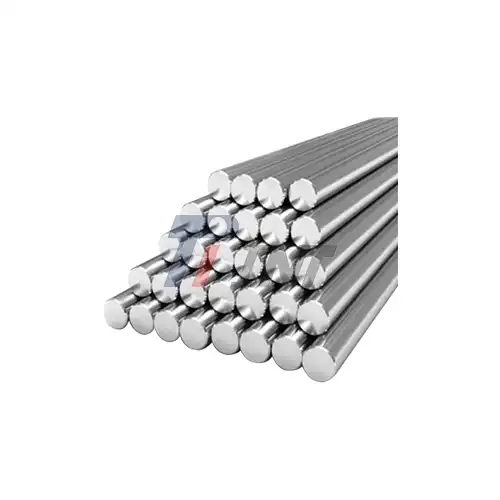
There are five main types of titanium used in medicine. Each has its own mechanical and biological qualities. Grade 1 and Grade 2 are commercially pure titanium that is very resistant to rust and safe for living things. Through osseointegration, which is when living tissue bonds directly to the implant surface without the need for fibrous wrapping, these grades fit in with human bone perfectly. Because they have a lower yield strength, they can be used for non-load-bearing tasks like dental abutments and cranial plates.
Aluminum and vanadium metals are added to Grade 5 (Ti-6Al-4V), which gives it a tensile strength of up to 860 MPa and a yield strength of 795 MPa. This better mechanical performance helps orthopedic devices that hold weight, like femoral stems and spinal fusion cages. The material's value of elasticity is close to 110 GPa, which is closer to cortical bone than stainless steel options. This means that it doesn't protect against stress as well, which can cause bone to break down.
Grade 23 (Ti-6Al-4V ELI) changes the Grade 5 makeup by having extra-low interstitial material, which lowers oxygen to below 0.13% and iron to below 0.25%. This improvement makes the material more flexible and less likely to break, which is very important for implants that are loaded and unloaded many times. Palladium is added to Grade 7 to make it more resistant to corrosion in harsh environments, but its higher cost makes it less likely that it will be widely used.
Clinical Applications and Sterilization Protocols
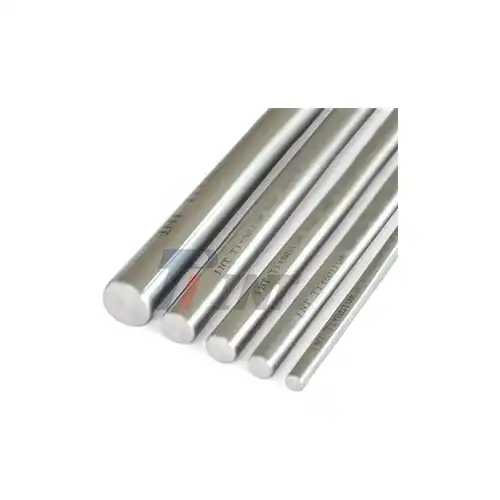
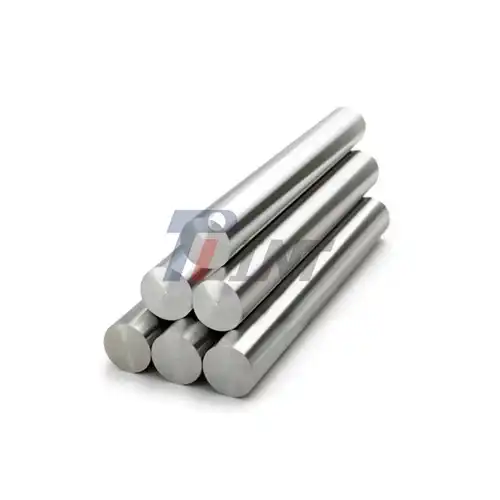
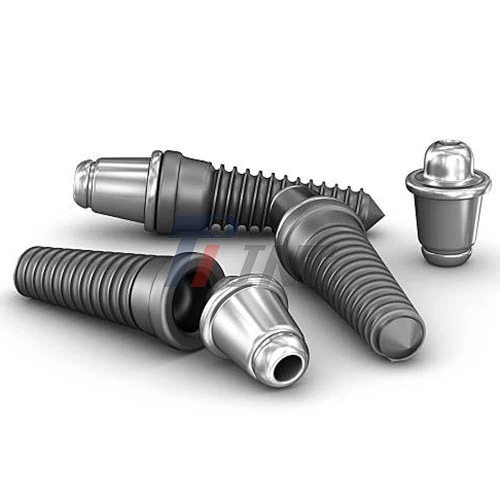
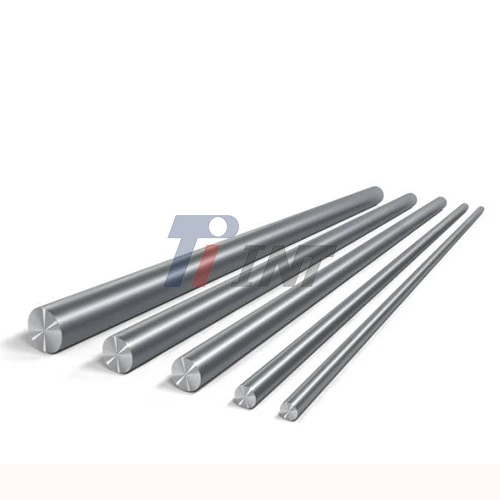
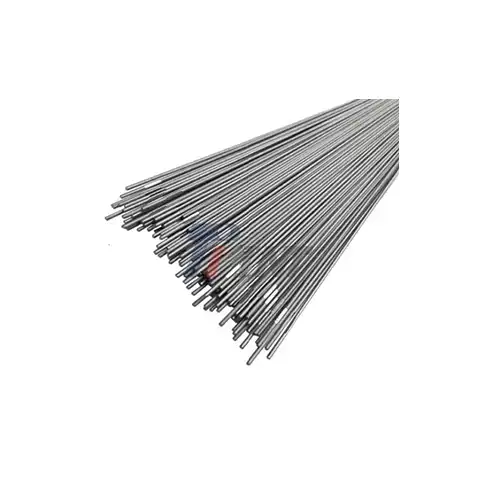
For fracture fixation, joint replacement parts, and spine instrumentation, orthopedic doctors use titanium rods with diameters ranging from 3 mm to 100 mm. Professional dentists use bars with smaller diameters to make implant posts and instruments. Expanding titanium rods made for treating scoliosis in kids show how versatile the material is; they can be adjusted as kids grow to avoid having to have more surgeries.
Methods of sterilization must protect the material's inactive oxide layer, which naturally stops rusting. Sterilization in an autoclave at 134°C is still the norm, but gamma irradiation and ethylene oxide processes work better for some types of devices. Passivation after grinding according to ASTM F86 gets rid of surface iron contaminants and strengthens the protected oxide layer. For materials to be sold in the U.S., they must be certified to meet ISO 5832-2, ISO 5832-3, ASTM F136, and ASTM F67 standards, and they must also have FDA 510(k) clearance.
Comparing Titanium Grades for Medical Rods: Benefits and Limitations
To choose between pure titanium and alloyed versions, you have to weigh a lot of performance factors against the needs of the application. We've seen over many years of manufacturing that fully understanding these trade-offs is often a key part of making titanium rod medical buying choices.
Pure Versus Alloyed Titanium Performance
Grade 1 and Grade 2 that are commercially pure do very well in biocompatibility tests, showing very little cell damage and tissue discomfort. An oxide layer forms on them naturally and is 2 to 5 nanometers thick. This makes them very resistant to rusting by body fluids for more than 20 years. Their tensile strength, which ranges from 240 to 390 MPa, however, means they can only be used in situations with low mechanical stress.
Ti-6Al-4V metals meet the strength needs of load-bearing situations. A Grade 5 hip replacement stem can handle forces of up to 3000 Newtons during normal walking cycles while still being flexible enough to avoid breaking easily. The 10% extension property lets the material stretch in a controlled way instead of breaking in a big way. The higher ductility of Grade 23 makes it even less likely that it will break under dynamic loading conditions like cervical spine plates.
Material Comparison Against Alternative Metals
Stainless steel 316L has lower material prices, but it has some problems in the lab. It hurts patients more in surface implants because it is denser than titanium (8.0 g/cm³ vs. 4.5 g/cm³). People who are sensitive to chromium and nickel can have hypersensitivity responses when they come out of stainless steel. Titanium's neutral oxide layer stops ions from coming out. Cobalt-chromium alloys are better at protecting articulating joint surfaces from wear than titanium, but they can't bond to bone like titanium can.
Imaging artifacts are less noticeable in MRI exams when non-metallic alternatives, like carbon fiber composites, are used instead. But because they can't osseointegrate, they need to be fixed with press-fit or cement. Titanium is non-ferromagnetic, so it doesn't change much in an MRI and can directly attach to bone, which is better for long-term support.
Certification Impact on Procurement Strategy
Getting ISO 13485:2016 certification shows that a company knows how to run a quality control system for medical products. By proving traceability from the heat number of the raw material to the arrival of the finished product, this approval lowers the risk of buying something. Mill Test Certificates that are in line with EN 10204 3.1 provide chemical composition verification, which proves that the material is real. For important implant uses, buyers should ask for proof of vacuum arc remelting because this second melting process gets rid of macrosegregation and makes the implant last longer.
Price considerations reflect these quality differentials. Commercially pure Grade 1 titanium usually costs 15–25% less than Grade 5, while the strict processing needed for Grade 23 makes it cost 20–30% more than standard Grade 5. But the costs of certification and following the rules often go beyond the differences in the prices of the raw materials. This means that seller approval is the main cost driver.
How to Choose the Right Titanium Grade for Your Medical Applications?
From working with medical device makers for 30 years, we know that choosing the right titanium rod medical materials requires a methodical process that is in line with both clinical needs and production skills.
Application-Specific Material Matching
Grade 5 orthopedic trauma plates are strong enough to hold broken bones in place while keeping their profiles thin enough to avoid irritating soft tissues. A 3.5mm cortical screw made from Grade 23 has enough pullout power to fixate the metaphysis while also having better wear resistance during the 12–16 week healing time. Dental implant bodies with a width of 3 to 6 mm use Grade 4 commercially pure titanium because it has great osseointegration qualities and occlusal forces that are doable at or below 500 Newtons.
When making custom implants for maxillofacial reconstruction, the geometries often have to be made to fit the patient's body. When choosing a material for this project, biocompatibility and machinability are given equal weight. Grade 2 is better for making parts with complicated shapes, while Grade 5 is better for building parts that cover up bony flaws.
Supplier Qualification Criteria
In addition to checking the certification, procurement managers should look at how well the manufacturing process is controlled. When you combine vacuum induction melting with vacuum arc remelting, the chemicals are more evenly mixed than when you melt them in air. With ultrasonic tests, internal discontinuities that could grow into stress cracks can be found. Suppliers who offer material traceability that connects finished goods to the original ingot heat numbers make it easier to look into complaints and report them to the government.
Delivery dependability has a big effect on work schedules. We keep extra parts in stock in standard diameters ranging from 6mm to 80mm. This lets us ship regular orders within 2 to 4 weeks and handle emergency needs by processing them faster. Different manufacturing needs can be met by customizing the diameter tolerance ranges (±0.05mm instead of ±0.1mm) and the lengths that can be made up to 6 meters.
Negotiation Strategies for Volume Purchasing
Volume savings of 8 to 15% below spot pricing are common for annual purchase deals that secure 1-2 tonnes of material. These arrangements keep prices stable even if the market for titanium sponge changes, and they also make sure that materials will be available when supplies are low. Procurement teams should work out inspection procedures that set sample rates and criteria for acceptance. This will make getting inspections easier while still making sure quality.
Included technical help clauses in supply deals make them much more valuable. Our engineering team helps with developing material specifications, improving the machining process, and figuring out what went wrong when problems happen in the field. When suppliers work together in this way, they become development partners instead of just transactional vendors.
Advancements and Trends in Medical Grade Titanium Rods
The titanium rod medical environment is always changing because new materials are being developed and rules are being unified. This gives procurement plans both chances and problems.
Emerging Alloy Developments
Nanoparticles mixed with titanium (Roxolid®) are 40% stronger than Grade 4 pure titanium while still being biocompatible. This new technology allows for smaller implant sizes, which is especially helpful when bone loss makes it hard to place a traditional implant. Beta titanium alloys, such as Ti-15Mo-5Zr-3Al, have lower elastic moduli, which are close to 80 GPa. This means that they might be better at lowering stress shielding than standard alpha-beta alloys.
Plasma electrolytic oxidation is one type of surface modification technology that can be used instead of basic machining to make microporous surfaces that help bones fuse together faster. In tests on animals, these methods make the implants more stable at first and shorten the time it takes for them to heal by two to three weeks. But surface treatments need to be carefully tested to make sure they don't weaken fatigue strength by concentrating stress.
Regulatory Landscape Evolution
Europe's Medical Device Regulation (MDR) has made it more important to keep records for testing biocompatibility and material traceability. Manufacturers now need full material characterization, which includes trace element research to look for possible toxins. This change in the rules helps established suppliers with well-developed quality systems that can make the necessary paperwork.
The International Medical Device Regulators Forum (IMDRF) is working on global harmonization to make the approval process easier in all countries. When goods are launched abroad, they don't have to go through as many tests because the FDA, Health Canada, and other regulatory bodies recognize ISO 10993 biological evaluation standards. To avoid delays in approval, procurement teams should make sure that their suppliers keep their certifications up to date across all target markets.
Sustainability Considerations
Titanium is a good material for lifecycle assessments because it lasts a very long time. When implants last 20 years or more, they don't need to be replaced, which saves money and time and lessens the total impact on the environment of healthcare. Titanium doesn't corrode, so toxic metal ions don't get into nearby tissues. This keeps the surroundings clean during burning or decomposition.
Improving the economy of manufacturing is mostly about making vacuum melting and mechanical processes use less energy. Over the past ten years, we've put money into regenerative braking systems for forging presses and heat recovery from melting ovens. This has cut the amount of energy we use per kilogram of production by about 18%. Closed-loop refilling of coolant during cutting cuts down on the amount of water used and waste made.
Practical Guide: Buying Medical Grade Titanium Rods—Process and Best Practices
Understanding both regulatory standards and real source review methods is necessary to get certified titanium rod medical supplies.
Certification Verification Protocol
To begin, get up-to-date ISO 13485:2016 approval from a recognized registrar like BSI, TÜV, or a similar informed body. Make sure that the scope of the license clearly includes making titanium rods and not just trading metals in general. Ask for material certificates of conformance that show they meet the requirements of ASTM F67, F136, or F1472.
The heat number stamped on the delivered material should be shown on the Mill Test Certificate, and chemical analysis should confirm that the composition is within the limits set by the specifications. The results of tests on mechanical properties like tensile strength, yield strength, and stretch must meet basic standards and have enough room for error. Documenting grain size through ASTM E112 analysis makes sure that the material responds the same way in all future machining processes.
Custom Specification Development
When making medical devices, non-standard sizes are often needed to fit the design of each instrument or implant. It is important to give clear measurement tolerances when ordering custom rods so that they can be used in the next steps of the making process. For precision-turned parts, a centerless ground finish with a diameter tolerance of ±0.025mm is enough. For forging stock, hot-rolled material with a tolerance of ±0.5mm is enough.
The specifications for the surface finish should weigh the need for function against the cost. For things like tooth abutments where the texture of the surface affects how well it works, polished areas below 0.4 Ra are best. Finishes that are sandblasted between 1.6 and 3.2 Ra give most made implant parts a good enough surface quality for less money than finishing. We can customize the surface finish to fit the needs of your unique purpose, and you can get a sample before committing to full production.
Quality Assurance and Logistics
Set up procedures for inspecting incoming items that check important qualities like size accuracy, surface condition, and material identification. Positive material identification (PMI) with X-ray fluorescence spectroscopy proves the makeup of the alloy without damaging it when it is received. Plan the shipping methods so that the surfaces of the materials don't get damaged during transport. This can be done by using the right packaging, such as foam inserts and protective wrapping.
Lead time planning should take into account that regular orders take between 4 and 6 weeks to be made, but pressing needs can be handled more quickly. We keep extra 10mm, 12mm, 16mm, and 20mm rods in stock so that we can ship them quickly for testing or when production needs to be stopped for some reason. Getting export paperwork ready, like commercial invoices, packing lists, and certificates of origin, makes sure that international shipments go through customs smoothly.
Conclusion
When choosing the right titanium rod medical for your needs, you need to think about how well it works mechanically, whether it meets certification requirements, and how much it costs. For non-load-bearing uses, commercially pure grades are the best at resisting corrosion and integrating with bone. Ti-6Al-4V alloys, on the other hand, are needed for orthopedic trauma and joint replacement devices because they are very strong. The extra-low interstitial version of Grade 23 is the best mix of strength and flexibility for important implant uses. Successful purchasing plans focus on making sure suppliers are qualified by checking their certifications, seeing if they can provide technical help, and seeing proof that they can control the production process. As rules get stricter and new materials come out, working with experienced makers will make sure you have access to materials that meet the standards and help you reach your goals for developing medical devices.
FAQ
Q1: Why do medical titanium rods outperform stainless steel in implants?
A: Titanium is better at being biocompatible than stainless steel because it has an inert oxide layer that stops ions from escaping. Because the material has a lower elastic stiffness (110 GPa vs. 200 GPa for stainless steel), it doesn't protect against stress as well, which can lead to bone loss around implants. Titanium's osseointegration property allows direct bone bonding without fibrous tissue encapsulation, which makes the fixation more stable over time. Additionally, titanium's non-ferromagnetic qualities make MRI imaging safe after surgery, while stainless steel causes noticeable imaging artifacts.
Q2: How does titanium grade selection impact bone healing?
A: Grade selection mostly affects mending by how well it works with the bone tissue around it. Grades with elastic moduli closer to cortical bone (20–30 GPa) lower stress shielding and keep the normal loading patterns that help bones grow. The initial protein adsorption and following osteoblast adhesion are affected by the surface roughness traits that are affected by the material grade. Because Grade 23 is more flexible, it stops microcracks from forming when it's loaded and unloaded over and over again while the body heals. This keeps the body from producing garbage that could cause inflammatory responses and slow down osseointegration.
Q3: What sterilization methods suit medical titanium rods?
A: The most popular way to sterilize titanium is still in an autoclave at 121–134°C, which keeps the passive oxide layer in good shape. Gamma radiation between 25 and 40 kGy can sterilize the ends of devices without using heat, so it can be used on devices that have already been put together. Processing with ethylene oxide is good for parts that can't handle heat or moisture. After machining, passivation according to ASTM F86 using nitric acid solutions gets rid of surface iron contamination. This makes the metal more resistant to corrosion before it is sterilized. Do not use strong chemical cleaners that have chlorides in them because they can damage the protective film layer.
Partner with Baoji INT Medical Titanium Co., Ltd. for Certified Excellence
With more than 30 years of experience, Baoji INT Medical Titanium Co., Ltd. is the company you can trust to provide you with titanium rod medical supplies. We make a full range of titanium products, such as Grade 1, 2, 4, 5, and 23 rods with diameters from 3 mm to 100 mm and lengths that can be customized up to 6 meters. Our ISO 9001:2015, ISO 13485:2016, and CE certifications mean that we have strict quality control at every stage of production. In addition to our standard services, we also offer custom surface finishing, precise tolerance control (within ±0.025mm), and full material traceability paperwork to help you with your regulatory applications.
Our engineering team works with your R&D teams to make sure that the material specs, machining factors, and quality control procedures are the best they can be for your device. You can count on reliable shipping times, reasonable bulk pricing, and expert help that turns buying materials into a strategic relationship. Email our team at export@tiint.com to talk about your unique needs and get thorough quotes with samples that can be used for testing.
References
1. Rack, H.J. and Qazi, J.I. "Titanium Alloys for Biomedical Applications," Materials Science and Engineering: C, Volume 26, Issue 8, 2006, Pages 1269-1277.
2. Niinomi, M. "Mechanical Properties of Biomedical Titanium Alloys," Materials Science and Engineering: A, Volume 243, Issues 1-2, 1998, Pages 231-236.
3. Long, M. and Rack, H.J. "Titanium Alloys in Total Joint Replacement—A Materials Science Perspective," Biomaterials, Volume 19, Issue 18, 1998, Pages 1621-1639.
4. Geetha, M., Singh, A.K., Asokamani, R., and Gogia, A.K. "Ti Based Biomaterials, the Ultimate Choice for Orthopaedic Implants – A Review," Progress in Materials Science, Volume 54, Issue 3, 2009, Pages 397-425.
5. Brunette, D.M., Tengvall, P., Textor, M., and Thomsen, P. "Titanium in Medicine: Material Science, Surface Science, Engineering, Biological Responses and Medical Applications," Springer-Verlag Berlin Heidelberg, 2001.
6. American Society for Testing and Materials (ASTM) International. "ASTM F136-13: Standard Specification for Wrought Titanium-6Aluminum-4Vanadium ELI (Extra Low Interstitial) Alloy for Surgical Implant Applications," ASTM International, West Conshohocken, PA, 2013.
_1752817116199.webp)
_1750668472070.webp)