
Titanium Sheet for Custom Surgical Instruments


 2026-04-21 09:09:14
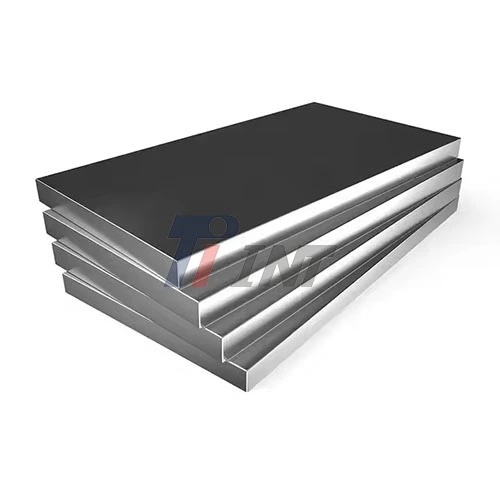
Titanium Sheet, which is highly valued for its excellent biocompatibility, corrosion resistance, and mechanical qualities, is now required to make special surgical tools. As a buying manager or research and development engineer, you know how important it is to choose materials that not only meet strict legal standards but also work well in harsh surgical settings. This detailed guide looks at how medical-grade Titanium Sheets can change the way surgery instruments are made. It addresses important issues like material approval, the ability to customize instruments, and the dependability of the supply chain. We want to give you the technical information and sourcing methods you need to make smart choices that improve the quality of your instruments, make sure you're following the rules, and eventually help your patients get better care while also making your production more efficient.
|
|
|
Understanding Titanium Sheets for Custom Surgical Instruments
When we talk about titanium materials used in medicine, we mostly talk about commercially pure (CP) Grades 2 and 5. These are the best materials for making surgery instruments. These materials are special because they have a mix of qualities that help medical gadget makers with their problems.
Key Material Grades and Their Properties
Commercially pure Grade 2 titanium is often chosen as the best material for medical tools that need to be easy to shape and resistant to corrosion. This type has a density of 4.51 g/cm³, which is about 45% lighter than stainless steel. It has a minimum bending strength of 275 MPa and is very flexible. The material naturally creates a solid layer of titanium dioxide (TiO2) oxide, which protects against body fluids, chloride ions, and sterilization chemicals that would quickly break down stainless steel tools.
Grade 5 titanium alloy (Ti-6Al-4V) is the strongest choice for tools that need to work well mechanically. This material is made for aircraft use and has yield strengths higher than 828 MPa. This means it can be used for surgical tools that are put under a lot of stress. The alloy's makeup of 6% aluminum to increase strength and 4% vanadium to improve properties at high temperatures makes a material with great fatigue resistance, which is important for devices that are put under a lot of stress over and over again.
Manufacturing Processes and Quality Standards
Specialized rolling, heating, and surface finishing steps are needed to make medical-grade Titanium Sheet products that meet strict industry standards. The initial sheet thickness is set by hot rolling at controlled temperatures between 850°C and 950°C. This is followed by several cold rolling passes that make the dimensions more accurate to within ±0.05mm. Vacuum annealing at carefully controlled temperatures gets rid of any remaining stresses and keeps the surface clean, which could hurt biocompatibility.
Finishing the surface is an important part of getting Titanium Sheets ready for making surgery instruments. Pickling in hydrofluoric-nitric acid solutions gets rid of the alpha case, which is a thin layer of brittle oxygen-rich material that forms during high-temperature processing. This keeps the material's mechanical properties the same throughout its width. Hydrogen content must be kept below 0.015% by manufacturers to avoid delayed hydrogen embrittlement, which can lead to catastrophic instrument failure while it is being used.
Certification Requirements for Medical Applications
International standards must still be followed by companies that make medical instruments. ASTM B265 says what chemicals are in Titanium Sheets, how they should be tested, and what their mechanical qualities are. ISO 5832-2 and ISO 5832-3 say exactly what materials can be used for medical implants. Medical device makers usually need full material tracking records, such as mill test reports (MTRs) that show the materials meet FDA biocompatibility testing standards according to ISO 10993. These certifications give you the peace of mind you need to pass strict compliance checks and keep your production plans on track.
Advantages of Titanium Sheets Over Other Metals in Surgical Instruments
Medical device makers are becoming more and more aware that Titanium Sheet can solve important problems with standard materials used for surgery instruments. Titanium was chosen over stainless steel, aluminum, or nickel alloys because it has measurable performance benefits that affect both the safety of the patient and the trustworthiness of the device.
Superior Corrosion Resistance in Surgical Environments
Surgical tools are often exposed to harsh chemicals used for cleaning, saline solutions, blood, and tissue fluids, all of which can damage them over time. In chloride-rich settings, stainless steel types 304 and 316 often break down due to pitting corrosion and crevice corrosion, which means they need to be replaced more often, which raises the cost over their lifetime. Titanium's self-healing oxide layer protects against chloride stress corrosion cracking, so instruments stay strong even after being sterilized thousands of times. Independent tests show that titanium tools keep their shape and surface finish quality for a lot longer than stainless steel ones, which means they need to be replaced 40–60% less often.
Weight Reduction and Ergonomic Benefits
When surgeons are tired after long procedures, it affects their accuracy and the result for their patients. Because titanium tools are 45% lighter than stainless steel ones, they put a lot less stress on doctors' hands and wrists, making it easier for them to keep control during long operations. This weight benefit is especially helpful for microsurgical and neurosurgical instruments that need to be handled very carefully in order to be effective. Manufacturers of orthopedic instruments say that moving to titanium handles for bone saws and drills cuts complaints of operator fatigue by more than half. This makes the surgery team happier.
Comparing Grade 2 and Grade 5 for Specific Applications
Which widely pure Grade 2 or Grade 5 alloy to use relies on how the instrument is supposed to work. Grade 2 is great for uses that need the best rust protection and cold formability. This makes it perfect for retractors, clamps, and tools with complicated curved shapes. The lower modulus of elasticity of the material (102 GPa vs. 200 GPa for steel) makes it flexible enough for medical tools and needle holders.
Grade 5 metal is used for things that need to be very strong and not wear down easily, like tools that are loaded and unloaded many times or that are under a lot of mechanical stress. The alloy's high strength-to-weight ratio and good fatigue qualities make it a good choice for bone chisels, rongeurs, and tools used in joint replacement surgeries. The structure of the material stays the same after being sterilized many times, without stress release or physical creep that happens with lower-quality materials.
Biocompatibility and Patient Safety Considerations
About 10 to 15 percent of the population is sensitive to nickel, which can cause allergic reactions when surgical tools made of stainless steel touch open tissues. Titanium's completely nickel-free makeup gets rid of this risk, giving people who are known to be sensitive to metals an extra safety cushion. The material is biocompatible, as shown by the fact that it has been used successfully in permanent implants for decades. This means that any tiny bits released during instrument wear will not harm living things.
Customization and Fabrication: Making Surgical Instruments from Titanium Sheets
To turn Titanium Sheet into precise medical tools, you need to use special fabrication methods that keep the material's properties while keeping the dimensions very close to each other. Knowing about these steps helps procurement teams choose the right material types and work together with manufacturing partners more effectively.
Cutting and Shaping Techniques
The best ways to make the first blanks for instruments out of Titanium Sheets are by water jet cutting or laser cutting. Water jet cutting is better than other methods because it doesn't use heat, so it doesn't change the microstructure of the base material. It can also cut to a range of ±0.1mm. This method of cold cutting works great for instruments with complicated shapes that need precise internal cuts or delicate features.
Laser cutting can handle simpler shapes more quickly, but it needs to be surrounded by nitrogen to stop rusting and the formation of heat-affected zones. Modern fiber laser systems that are specifically designed for working with titanium produce clean lines that don't need much extra finishing, which cuts down on the time it takes to make something. CNC punching is useful for making a lot of tools with features that are used over and over again, but die upkeep costs are higher than for steel processes because titanium hardens over time.
Forming and Machining Operations
When you bend Titanium Sheet, you need to pay close attention to its springback properties, which are its tendencies to partially return to its original shape after being shaped. Tooling needs to account for 10-15% more springback than stainless steel, and die designs need to account for overbending or special spring-back compensation. Warm forming at temperatures between 200°C and 400°C makes it much easier to shape tight-radius turns, but it makes the process more complicated.
For precision machining tasks like milling, turning, and drilling, you need tools with certain shapes and cutting settings. Sharp cutting tools with high positive rake angles keep the work from hardening too quickly, and using a lot of cutting fluid keeps heat from building up, which speeds up tool wear. Carbide tools with titanium-specific coats last three to four times longer than tools that aren't treated, which lowers the cost of cutting each piece.
Surface Treatment and Finishing Processes
As well as making titanium surgery tools look better, surface treatments also make them work better. Electropolishing takes off 5–10 microns of the surface, leaving a smooth, passive surface that is less likely to rust and easier to clean. In particular, this method works well for tools that need smooth, germ-proof surfaces with no cracks.
Anodizing creates colored oxide layers that are between 0.01 and 0.25 microns thick. This lets you identify instruments by color without affecting their biocompatibility. Type II anodizing uses optical interference to add artistic colors, and Type III hard anodizing makes the surface layers thicker and harder, making them more resistant to wear. Using nitric acid solutions for passivation processes improves the protective oxide layer, making sure that the instrument has the best corrosion protection for as long as it is used.
Welding and Joining Considerations
When titanium parts are joined together, they need to be surrounded by inert gas to keep the weld zones from becoming weak from air contamination. Gas tungsten arc welding (GTAW/TIG) with argon shielding lets you precisely put together tools made of more than one piece. When done correctly, the weld strengths can get close to the qualities of the base material. The weld zone stays oxygen-free thanks to trailing screens and backup purging. This stops the gold or blue coloring that means infection.
When joining thin-section parts, laser welding is better because it has small heat-affected zones and little warping. This method works well in automatic production settings where high-quality parts need to be made quickly and consistently. Using titanium screws or nails for mechanical fastening is useful in situations where the parts need to be taken apart for repair or replacement.
Procurement Guide: How to Source High-Quality Titanium Sheets for Surgical Instruments
To successfully buy Titanium Sheet, you need to do more than just get quotes from several sellers. Strategic buying helps companies form partnerships with makers that offer full technical support, uniform quality, and dependable delivery.
Evaluating Supplier Credentials and Capabilities
To start evaluating a source, make sure they have the right quality standards. For example, ISO 9001:2015 is for general quality management, and ISO 13485:2016 is for making medical devices. Good Manufacturing Practices (GMP) must be followed by suppliers to the medical field, and quality processes must be documented so that all materials can be tracked back to their source. Ask for proof that the product meets ASTM B265 standards and certificates of conformance (CoC) for recent production lots. These will show that the product's chemical make-up and mechanical traits meet the required levels.
Your manufacturing skills have a big effect on how easily you can get products that work with your production methods. Custom cutting services from suppliers cut down on trash and handling costs by sending Titanium Sheets in forms that are very close to the blanks for your instruments. To make sure the minimum order quantities are right for your production volumes, ask about the thickness ranges that are offered, the normal sheet sizes, and the minimum order quantities. You should be able to choose from mill finish, 2B bright annealed, or special finishes for the surface finish that best fits your needs so that you don't have to do as much extra work.
Understanding Pricing Structures and Lead Times
Titanium Sheet prices depend on a number of things, such as the grade, width, amount, and the state of the market for raw titanium sponge. When it comes to price per pound, Grade 2 commercially pure titanium is usually 15–25% less than Grade 5 alloy. However, the real costs of instruments depend on return rates and the amount of time needed for cutting. Tiered pricing discounts are usually available for sales of 100 kg, 500 kg, or 1000 kg, with breaks happening at those weights based on the supplier's price policies.
Lead times are very different depending on the supplier's production plans and the supply of materials. Stock grades and widths usually ship between 2 and 4 weeks, but sizes or specs that aren't standard may take 8 to 12 weeks from the time the order is confirmed. Keeping a smart stock of materials that are used often can help protect against problems in the supply chain and get better prices when you buy in bulk. Set up clear contact about shipping times and start vendor-managed inventory programs with high-volume suppliers to make sure that materials are always available.
Building Long-Term Supplier Partnerships
Instead of just buying materials, the most successful companies that make medical devices build smart ties with the companies that supply titanium. Long-term relationships let providers put time and effort into learning about your unique application needs so they can offer proactive technical support and quality improvements. Regular reviews of the business give people a chance to talk about future product development needs. This lets providers get special materials or processing capabilities ready ahead of time.
One thing that sets titanium sellers apart is their technical help. Partners with experience in materials engineering can suggest the best grades for new instrument designs, suggest ways to improve the production process, and quickly fix quality problems. Having access to samples of materials for testing and confirmation speeds up the product development process, and a supplier's readiness to keep loan inventory shows that they care about your success. Negotiating multi-year supply deals with price guarantee terms helps keep budgets stable and ensures priority allocation during times when materials are in short supply.
Future Trends and Innovations in Titanium Sheets for Surgical Instruments
The medical titanium business keeps growing by coming up with new materials, making production technology better, and changing government rules. By keeping up with these changes, your company will be able to take advantage of new chances while keeping its competitive edge.
Next-Generation Titanium Alloys
Materials scientists are working on making Titanium Sheet materials that are better for use in medical instruments. Beta-titanium alloys with niobium, tantalum, or molybdenum have better cold workability and lower modulus values that are closer to those of cortical bone. This makes them useful for making surgical tools. These metals have 20–30% better wear resistance than regular Ti-6Al-4V, but they still have the same level of biocompatibility and corrosion resistance.
Extra-low interstitial (ELI) versions of normal grades offer better ductility and fracture toughness, which is very important for tools that need to be bent tightly or are loaded with impacts. Grade 23 (Ti-6Al-4V ELI) has better mechanical qualities because the amounts of oxygen, nitrogen, and carbon are strictly controlled. It works better in tough situations and does a better job. Even though the cost of materials is 15-20% higher than with normal grades, the performance benefits make it worth it for high-value precision tools.
Advanced Manufacturing Technologies
More and more, additive manufacturing technologies are being used with standard sheet metalworking to make titanium surgical tools. Selective laser melting (SLM) and electron beam melting (EBM) make it possible to make complicated geometries that would be hard to make any other way. These include cooling channels inside, lattice structures, and custom tools made just for each patient. Due to higher prices per piece, additive manufacturing is best for low-volume unique applications right now.
However, as technology keeps getting better, more and more applications will be able to afford to use it.The best parts of both additive and subtractive manufacturing are used in hybrid manufacturing methods. Near-net-shape additive manufacturing makes basic instrument shapes that don't need much cutting afterward, which cuts down on waste and processing time. This method works especially well for instruments with complicated three-dimensional shapes, for which standard cutting would need a lot of setup time and special fixtures.
Sustainability and Regulatory Evolution
Medical gadget companies are trying to be more environmentally friendly, so environmental concerns are becoming more important when choosing where to get materials. Titanium is very durable and can be recycled over and over again, which is in line with the ideas of the circular economy. It is better for the earth over its entire lifecycle than disposable options. When suppliers start closed-loop recycling programs, makers can send back processing scrap to be remelted, which recovers the material's value and lowers its impact on the environment.
Regulatory agencies are still working to improve the biocompatibility testing requirements and tracking guidelines for materials used in medical devices. The European Medical Device Regulation (MDR) and updates to FDA advice papers stress the importance of fully describing materials and keeping track of the supply chain. Working with providers who have strong quality systems and full factory tracking is the best way to stay in line with changing rules, keep your access to the market, and avoid expensive product recalls.
Conclusion
Titanium Sheet products are the best material for making custom surgery instruments because they are resistant to corrosion, biocompatible, and have excellent mechanical performance that is needed in challenging medical settings. As we've seen in this guide, understanding material grades, fabrication methods, and smart sourcing approaches that ensure consistent quality and regulatory compliance are important for successful application. Choosing between Grade 2 and Grade 5 titanium relies on the needs of the tool, taking cost, shapeability, and strength into account.
Advanced manufacturing techniques, such as precise cutting, forming, and surface processes, turn raw materials into tools that meet strict requirements for size and function. Strategic relationships with suppliers that provide technical know-how, approved materials, and reliable delivery give your company a competitive edge that lets it make better surgery tools. As new materials and industrial technologies come out, it's important for your buying and engineering teams to know about new trends. This way, they can take advantage of next-generation solutions that improve product performance and meet changing market needs.
FAQ
What are the main differences between Grade 2 and Grade 5 titanium for surgical instruments?
Grade 2 commercially pure titanium is the most resistant to rust and has a yield strength of about 275 MPa. This makes it perfect for tools that need to be shaped in complicated ways and be resistant to chemicals. Grade 5 (Ti-6Al-4V) metal has a much higher strength—more than 828 MPa—and great resistance to fatigue, making it perfect for tools that are under a lot of mechanical stress. You can make your choice based on whether the instrument focuses on resistance to corrosion and ease of manufacturing (Grade 2) or maximum strength and reliability under repeated loading (Grade 5).
How does titanium resist repeated sterilization cycles?
Titanium naturally forms a stable, self-healing titanium dioxide oxide layer that makes it resistant to chemical cleaning, autoclaving, and other methods of cleansing. This passive layer stops corrosion from chloride-containing liquids, high-temperature steam, and chemicals that quickly break down stainless steel. When titanium tools are made correctly, they keep their shape and surface integrity even after thousands of cleaning rounds. They don't get pitting, crevice corrosion, or stress cracking, which can happen with other materials.
What customization options are available for titanium sheet specifications?
Titanium sheets from reputable sources come in widths between 0.5mm and 4.75mm, and the sheets' dimensions are more or less within 0.05mm of each other. Custom cutting services give materials that are almost exactly the same form as the blanks for your instruments. This cuts down on waste and processing time. You can choose a surface finish like mill finish, bright annealed, or special treatments that work best with certain manufacturing methods. A lot of sellers give out small samples so that you can test and confirm the quality before committing to large amounts.
Partner with Baoji INT Medical Titanium for Premium Surgical Instrument Materials
Baoji INT Medical Titanium Co., Ltd. has been making medical titanium products for over 20 years and is ready to help you make unique surgery instruments with certified, high-performance titanium sheet materials. Our wide range of products includes Grade 2 economically pure Titanium Sheets and Grade 5 Ti-6Al-4V ELI alloy sheets in different sizes. They are all made using quality systems that are ISO 9001:2015, ISO 13485:2016, and EU CE approved. For you to keep to your production plans, we know how important it is for materials to be consistent, for full paperwork to be kept and for deliveries to be made on time.
Our technical team can help you choose the right materials, figure out how to make them, and follow quality control rules that are specific to medical tool use. We are a well-known company that makes Titanium Sheets for medical device businesses all over the world. We offer flexible minimum order numbers, custom cutting services, and reasonable price structures that are made for both making prototypes and making a lot of them. Email our team at export@tiint.com to talk about your unique needs, ask for samples of materials, or get full quotes. Let our proven knowledge with medical titanium materials make your supply chain more reliable and make sure that the surgical tools you need are of the highest quality.
References
1. American Society for Testing and Materials. (2021). ASTM B265-20a: Standard Specification for Titanium and Titanium Alloy Strip, Sheet, and Plate. ASTM International.
2. International Organization for Standardization. (2019). ISO 5832-2:2018 Implants for Surgery - Metallic Materials - Part 2: Unalloyed Titanium. ISO Standards.
3. Rack, H.J. & Qazi, J.I. (2006). Titanium Alloys for Biomedical Applications. Materials Science and Engineering C, Volume 26, Issues 8-9, Pages 1269-1277.
4. Donachie, M.J. (2000). Titanium: A Technical Guide, 2nd Edition. ASM International Materials Park, Ohio.
5. Peters, M., Kumpfert, J., Ward, C.H., & Leyens, C. (2003). Titanium Alloys for Aerospace Applications. Advanced Engineering Materials, Volume 5, Issue 6, Pages 419-427.
6. Brunette, D.M., Tengvall, P., Textor, M., & Thomsen, P. (2001). Titanium in Medicine: Material Science, Surface Science, Engineering, Biological Responses and Medical Applications. Springer-Verlag Berlin Heidelberg.
_1755062186746.jpg)
_1751957234428.webp)
_1751956094730.webp)
_1750663525879.webp)